

The first time I visited Kyoto, I was lucky enough to give it five whole days. Truth be told, it still felt short: I moved around a lot and I did see the “main sights”, but I also left with the feeling of having only scratched the surface. Choosing what to see in Kyoto when you only have a few days is not easy.
In a way, that feeling is inevitable: Japan’s old capital packs more than 1,600 Buddhist temples and some 400 Shinto shrines. Nobody sees all of Kyoto, so the trick is choosing well.
That’s why, when someone asks us what to see in Kyoto, we answer the same way we do in our guide to what to see in Tokyo: it depends on your days. The good news is that the city organises itself quite naturally into routes, and two well-planned ones cover the essentials. Below we’ll go through which routes and which places we recommend depending on how many days you have to enjoy Japan’s former capital.
In this article9 sections
- What to see in Kyoto depending on how many days you have
- Zone 1 · Eastern Higashiyama and Gion: temples, historic streets and geishas in one day
- Zone 2 · Western Kyoto and Arashiyama: the shogun’s castle, the Golden Pavilion and the bamboo
- Zone 3 · Northern Higashiyama: the linear walk almost nobody prioritises
- Zone 4 · Central and southern Kyoto: the market, the palace and Japan’s tallest pagoda
- What else to see in Kyoto if you have more days
- What to see near Kyoto: day trips and extensions
- Practical tips for visiting Kyoto
- Frequently asked questions about what to see in Kyoto
What to see in Kyoto depending on how many days you have
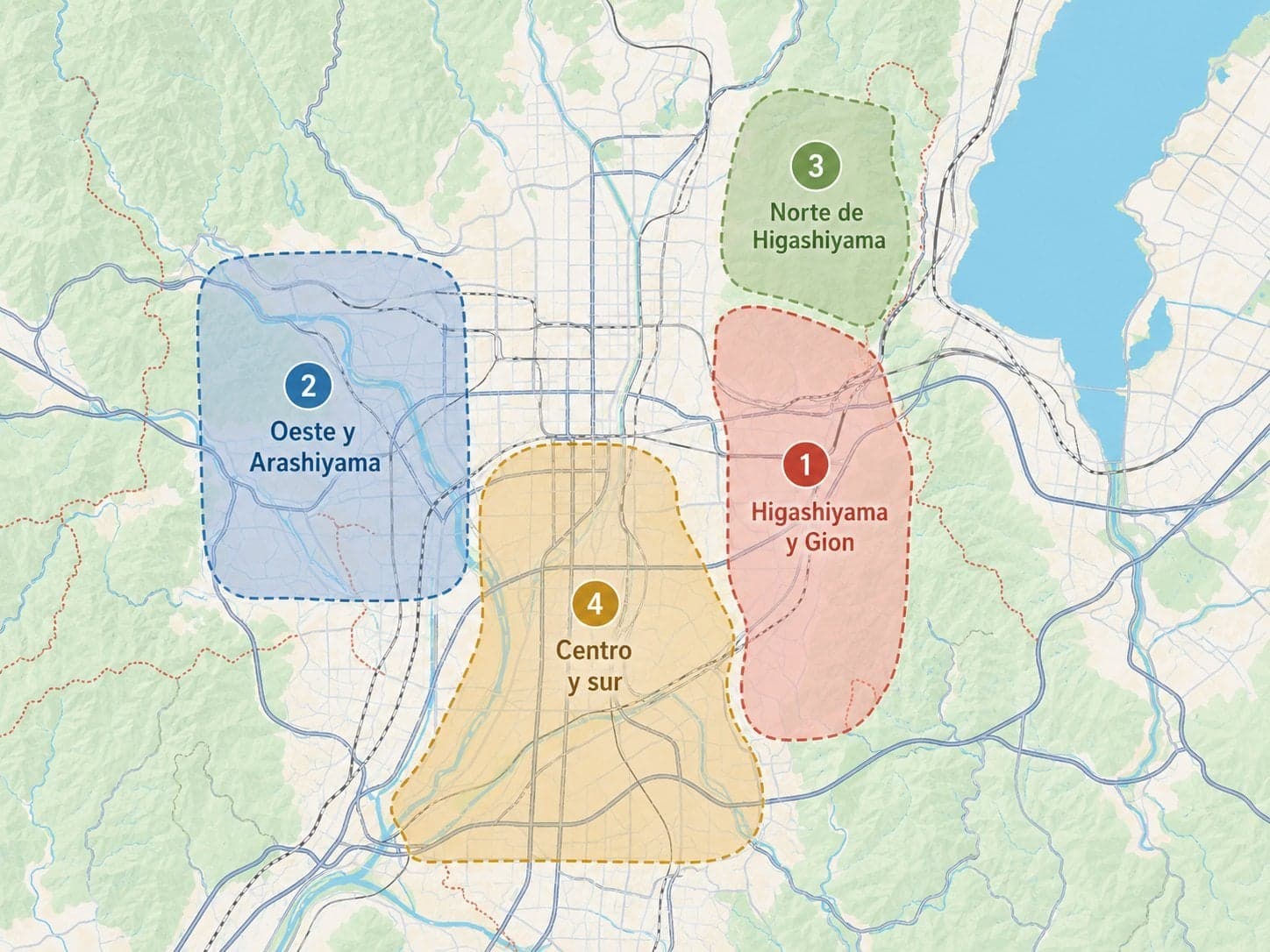

Above you have a map with the zones of Kyoto, and just below, a quick guide of suggestions depending on how many days you have. You can click through to the zones you want, or keep reading and see them all.
- For2daysZones 1 and 2: the two main axesZone 1: Eastern Higashiyama and Gion, and Zone 2: Western Kyoto and Arashiyama.
The city’s essentials, with no time to spare. - For3daysZones 1, 2 and 3: add the quiet stretchThe two above and, on the third day, we add Zone 3: Northern Higashiyama.
A lovely linear walk, usually with no queues. - For4daysAll four zonesEverything above plus Zone 4: Central and southern Kyoto: Nishiki Market, the Imperial Palace and the To-ji pagoda.
- For5or moreAll four zones plus day trips from KyotoWith the four zones covered, you can either catch up on the places you left pending, or take day trips from Kyoto: places like Uji, Kifune, or a trip to Nara (which deserves a full day of its own).
Kyoto punishes zigzagging, so unless you know exactly what you’re after and have plenty of time, we recommend focusing on one zone per day.
The city sorts itself into four zones, and with this in mind you won’t get lost.
- The eastern axis (Fushimi Inari, Kiyomizu-dera, Gion) is postcard Kyoto.
- The west (Nijo Castle, Kinkaku-ji, Arashiyama) is the Kyoto of the shogun and the bamboo.
- Northern Higashiyama (Ginkaku-ji, Philosopher’s Path, Nanzen-ji) is the quiet one.
- And the centre (Nishiki Market, Imperial Palace) is the Kyoto of everyday life.

Before we get into the zones and their places, here are a few practical pointers:
Kyoto in practice
- 🔴Where to sleepIn Kyoto. Osaka is cheaper, but it’s 30 min each way
- 🔴Getting aroundBus and subway. The subway-and-bus day pass costs 1,100 yen: it pays off from five rides up
- 🔴Get up earlyBetween 7:00 and 9:00 you have the city to yourself
- 🔴Admission feesFrom 500 to 1,300 yen per temple. Around 2,500 yen a day if you go into everything
- 🔴Rainy daysNishiki, Sanjusangendo, the Ninomaru Palace and the museums
- 🔴How much you’ll walk15,000 to 22,000 steps a day on the east and west axes
Zone 1 · Eastern Higashiyama and Gion: temples, historic streets and geishas in one day
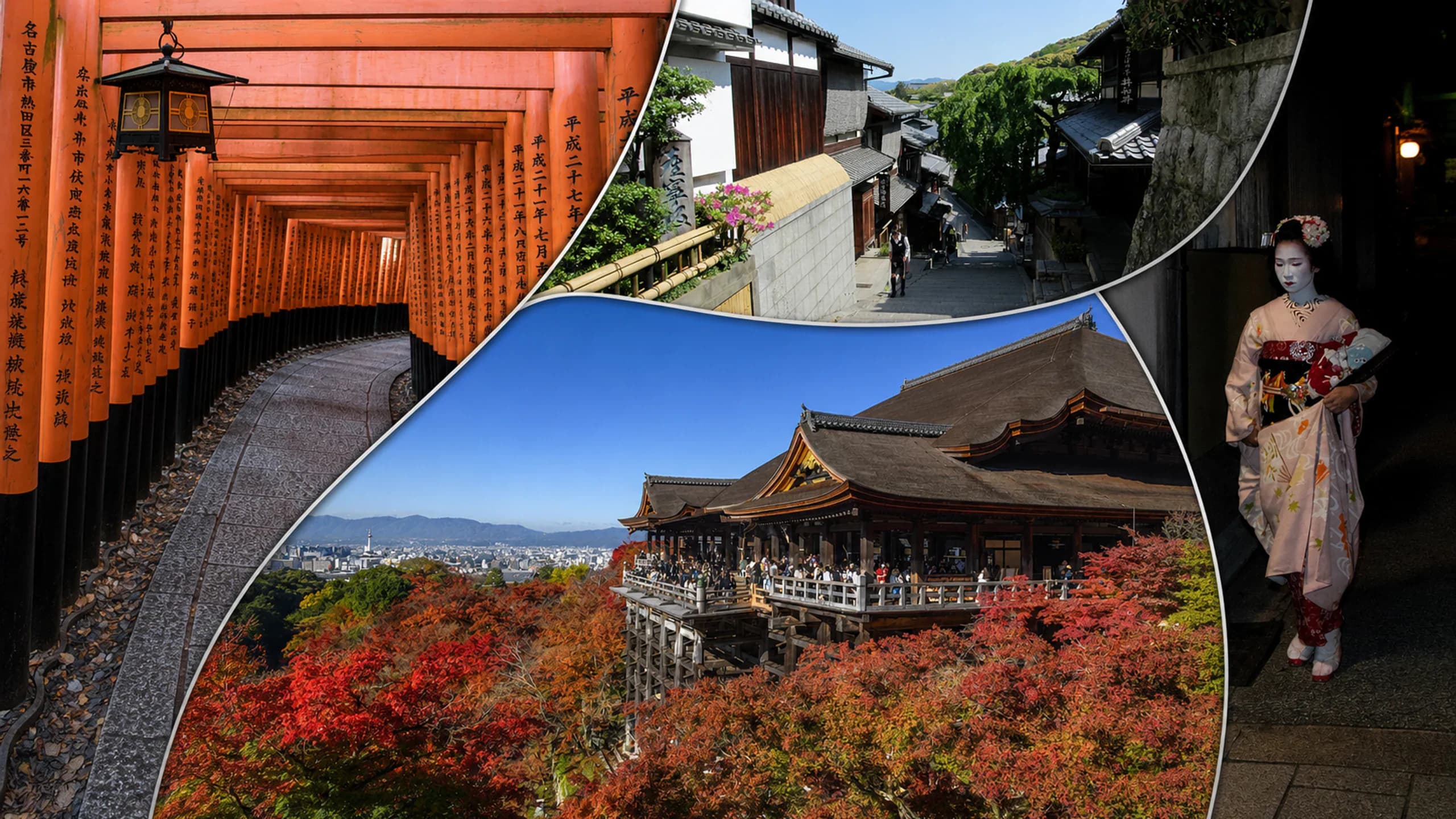
The eastern side is postcard Kyoto: the temple-covered mountainside, the cobbled streets and the geisha districts. It includes the places we visit on our Temples and Geishas tour. Almost all of it is walkable, and a good plan is to start as far south and as early as possible, then work your way north to end the day by the river as evening falls.
Let’s go through them, in the same order you’d walk them.
The zone at a glance
Short on time?
- Don’t missFushimi Inari, Kiyomizu-dera, the Sannenzaka slopes and the Gion area at dusk.
- OptionalSanjusangendo, Kodai-ji, Maruyama Park and Yasaka Shrine.
- If you only have half a dayFushimi Inari first thing and Gion at night, and let the rest go.
The eastern axis on foot: from Fushimi Inari to Pontocho
South to north and almost all on foot. The only train is at the start, to get down to Fushimi Inari.
Open the zone 1 route in Google Maps
The logic of the day is simple: start as far south and as early as you can, and move north as the city fills up. That way you stay ahead of the groups, which pour into Kiyomizu mid-morning. The reward is reaching Gion just as the lanterns come on, which is when the district turns properly beautiful.
It’s the route of our Temples and Geishas tour, in case you’d rather have us tell it to you on the ground.
Let’s look at the places in this zone one by one:
We do this zone with you
Fushimi Inari at dawn, the Higashiyama slopes and Gion at dusk: it’s exactly the route of our private tour, in English or Spanish and just for your group.
1. Fushimi Inari Taisha: the torii tunnels that climb the mountain
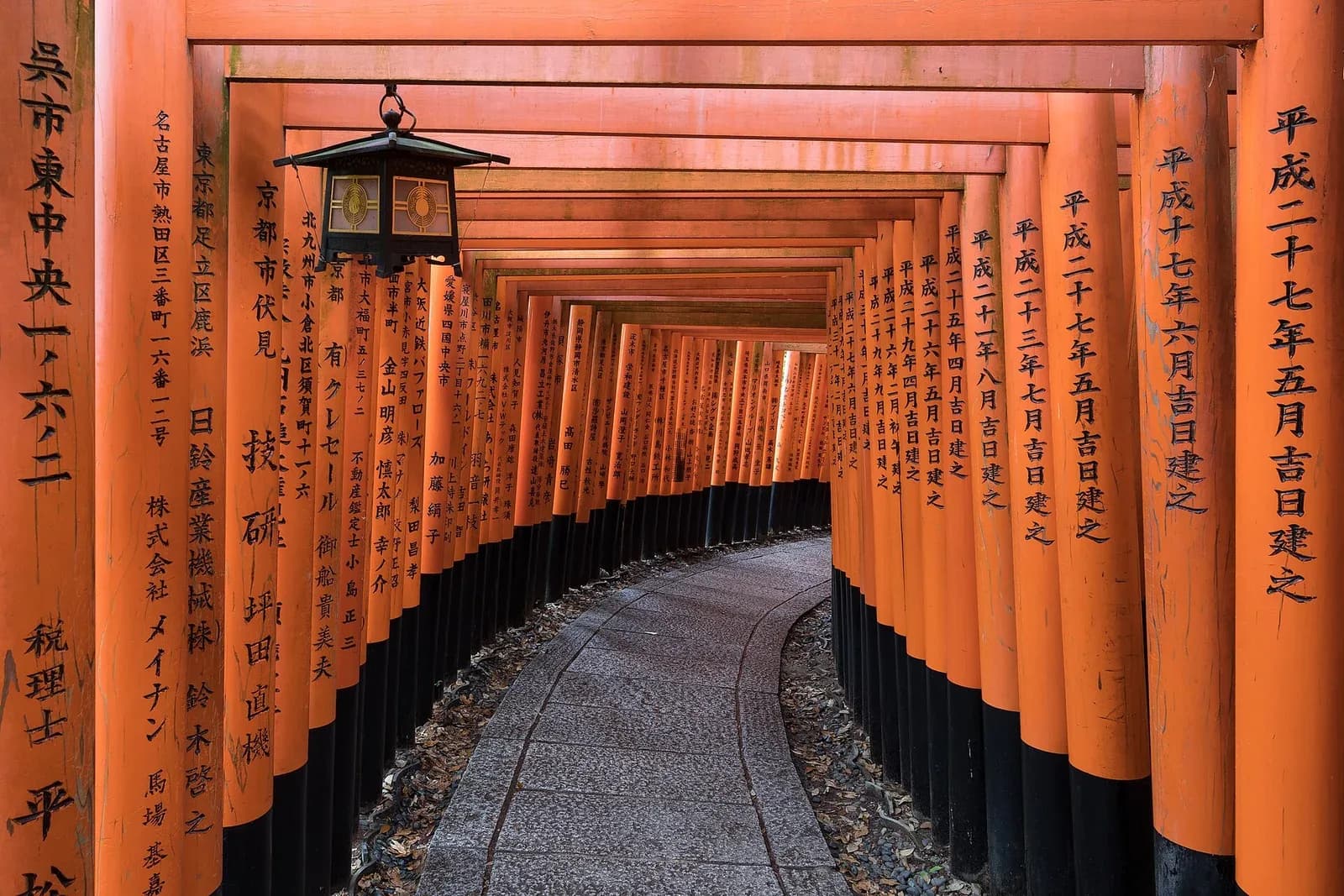
The shrine of the torii tunnels that climb up the mountain.
All over social media, this is one of the most impressive and magical places in Kyoto. If your legs and your schedule allow it, we recommend climbing at least part of the way — and if possible, to the top. It’s an effort, but the views and the sense of adventure more than make up for it.
It’s easily one of our favourite places, and we’ve dedicated a whole guide to it, with climb times, summer tips and the best hour to go. You can read the complete Fushimi Inari guide here.
メモNote
It’s free, open 24 hours and five minutes by train from Kyoto Station, so it always fits: first thing on day one, or even at night if you’ve run out of slots.
Next stop: Kiyomizu-dera, 15 minutes by train (Keihan line to Kiyomizu-Gojo) plus 15 walking uphill.
2. Kiyomizu-dera: the wooden terrace overlooking Kyoto
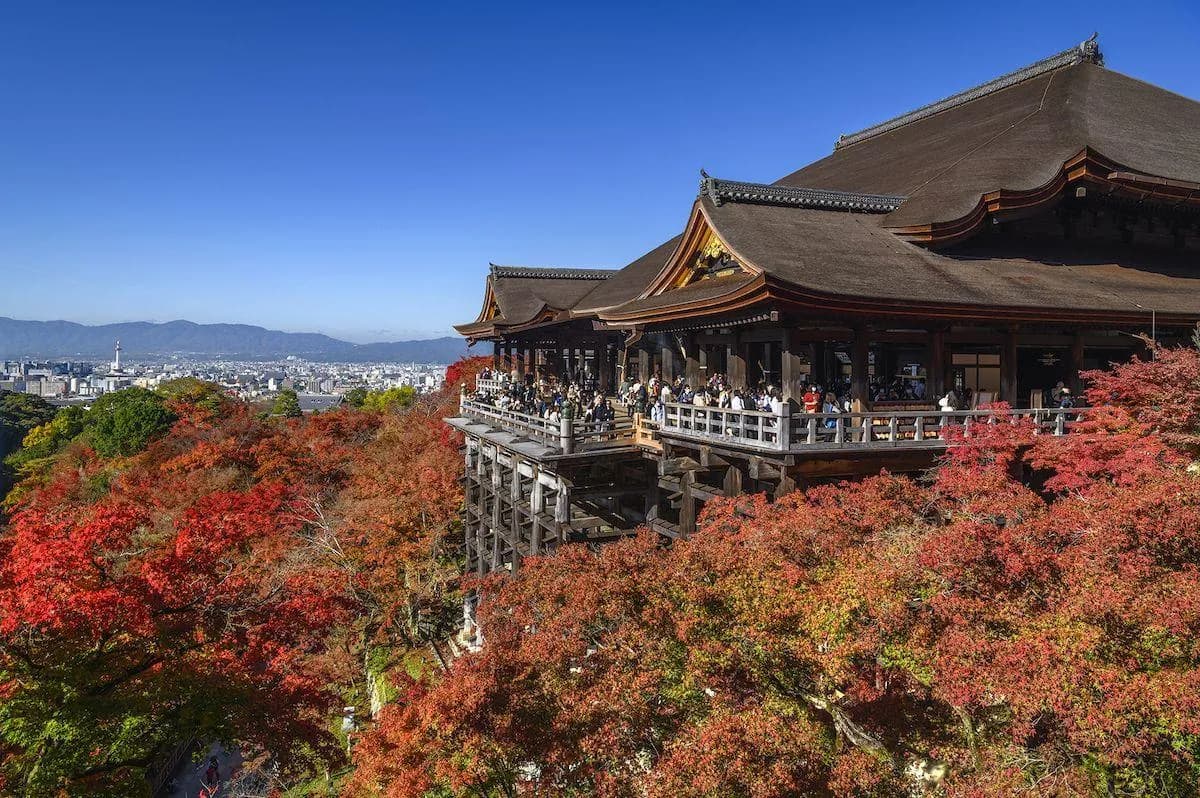
One of the most visited places in Kyoto and in all of Japan, Kiyomizu-dera (the temple of pure water) is built into the hillside, with its wooden terrace hanging out over the city.
Be warned: by ten in the morning, the Kiyomizu-zaka (the cobbled street that climbs to the temple) is already a river of people in both directions.
メモNote
Admission is 500 yen, it never closes, and it opens at 6:00 in the morning — go at that hour and you’ll have the terrace almost to yourself.
It was founded in 778 and the current buildings date from the 17th century. The terrace juts thirteen metres out over the slope on beams joined without a single nail, and that’s where an expression the Japanese still use today comes from: Kiyomizu no butai kara tobioriru, “to jump off the Kiyomizu terrace” — the equivalent of our “taking the plunge” (in the sense of making a very risky decision).
豆知識Fun fact
It was said that whoever jumped and survived would see their wish granted (best not to test it 😅). The temple’s own records document more than two hundred jumps during the Edo period, with a fairly high survival rate thanks to the vegetation below. Jumping was banned in 1872.
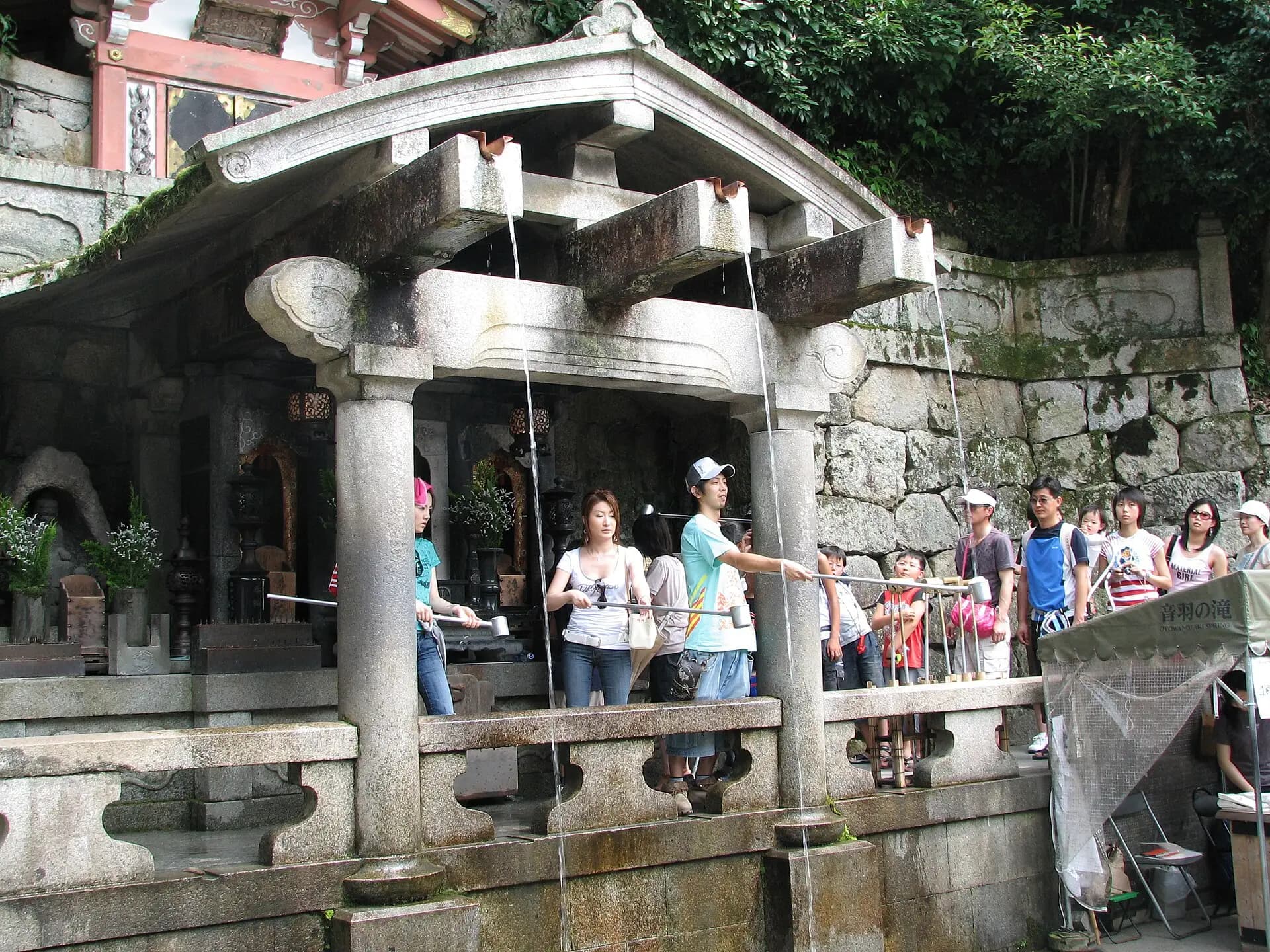
Here you’ll also find the Otowa waterfall, with three streams of water, and it’s said each stream grants something different (longevity, studies and love).
The unwritten rule is to drink from one, or at most two, because drinking from all three is considered greedy.
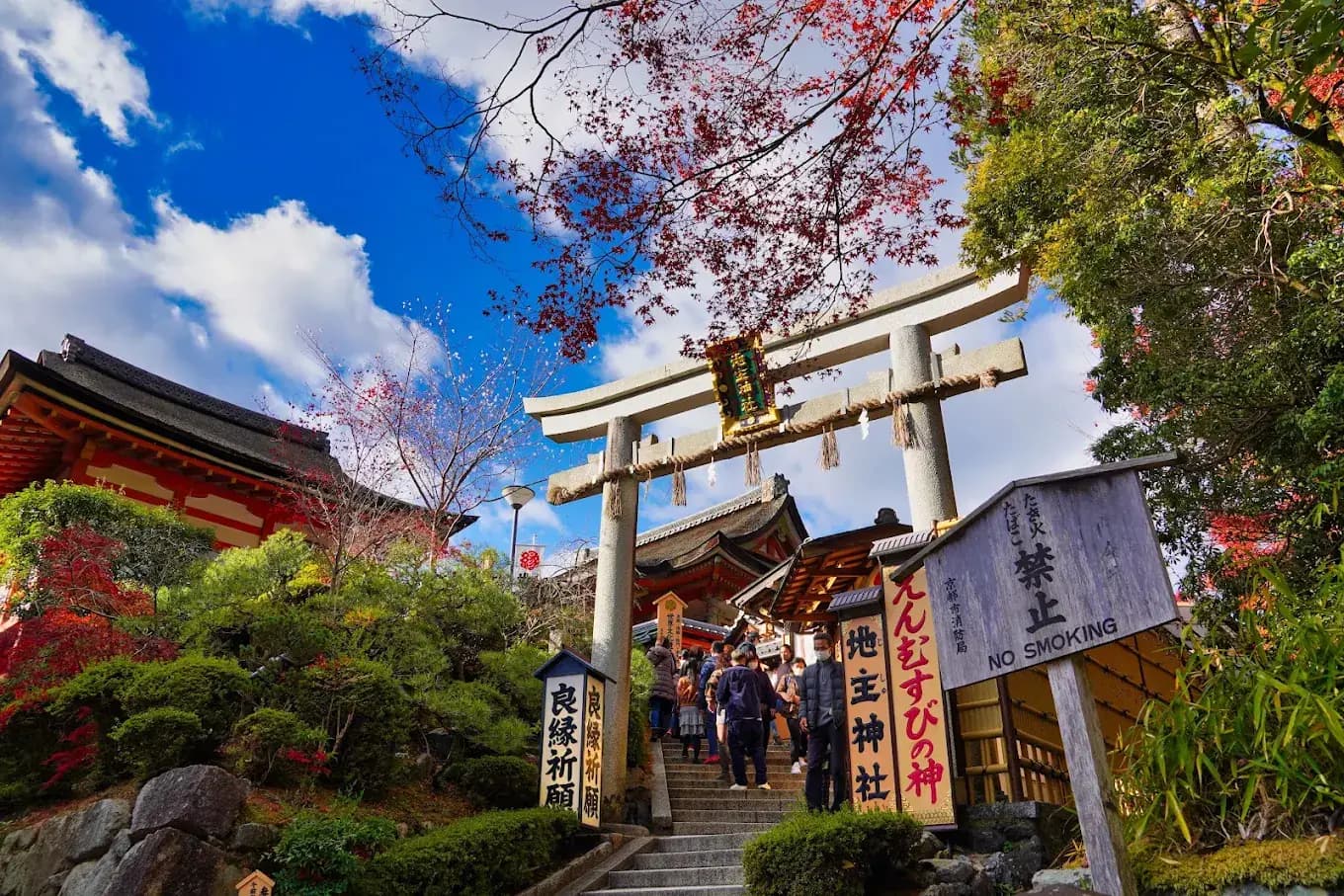
Inside the complex there’s also the Jishu Shrine, one of the “shrines of love”, with its two stones set eighteen metres apart that you’re meant to walk between with your eyes closed. This shrine has been in and out of renovation works for years: if you’re lucky and it’s open during your visit, it’s worth a look.
In spring and autumn there are night illuminations when the temple usually stays open until 21:30, though the dates change every year and are announced at short notice. It can be worth adjusting your plans to catch it if it works for you.
Next stop: Sannenzaka, heading down from the temple gate itself.
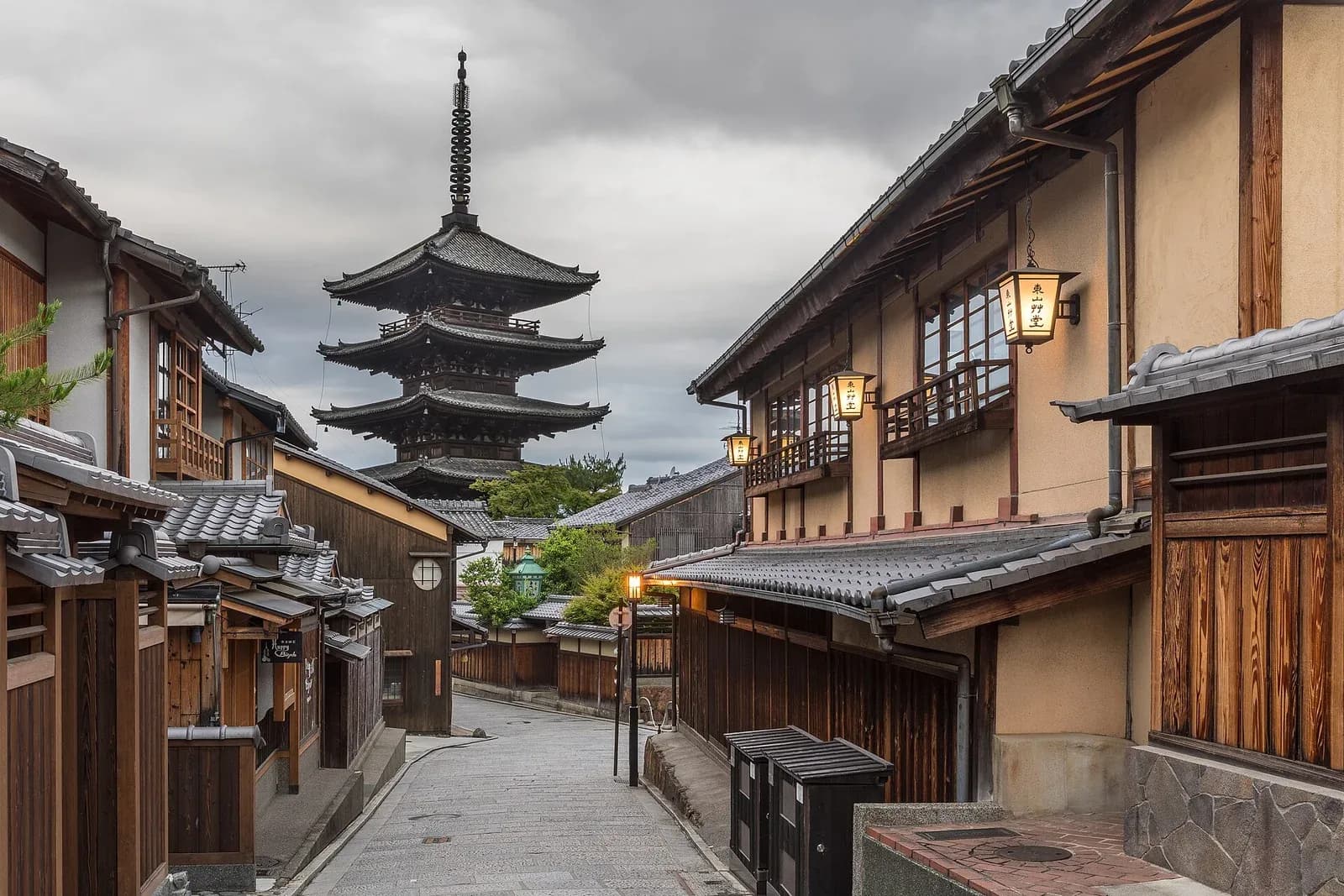
3. Sannenzaka and Ninenzaka: the cobbled slopes and the Yasaka Pagoda
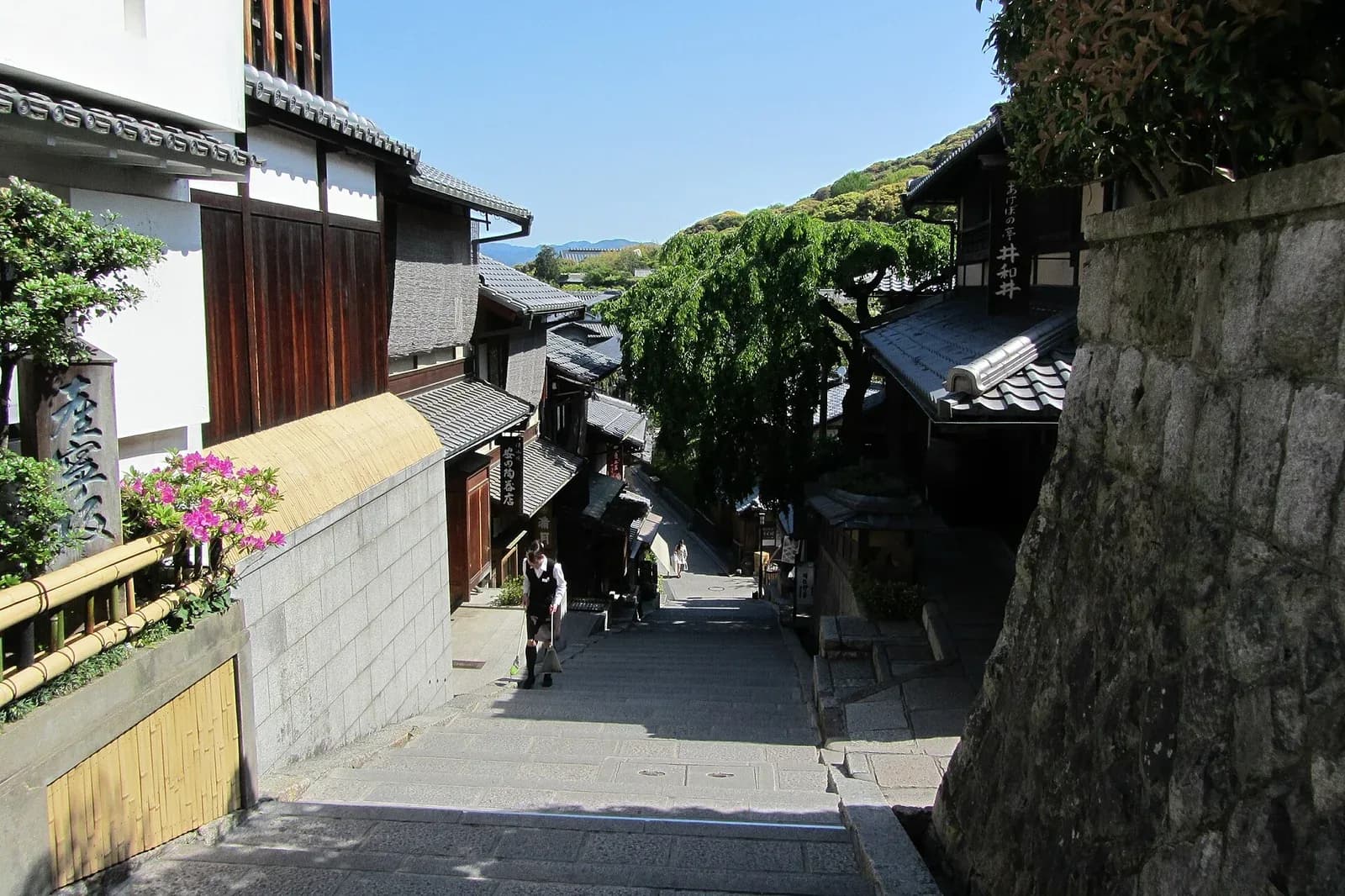
The two cobbled slopes that lead down from Kiyomizu-dera between wooden houses, ceramics shops and black-tiled roofs. It’s a protected area, which is why you won’t see a cable, a garish vending machine or a plastic sign: even the colour of the façades is regulated.
When the cobbles are wet, the superstition works rather well as a practical warning.
豆知識Fun fact
Sannenzaka literally means “the three-year slope”, and local superstition says that if you fall here, three years of bad luck await you (two on Ninenzaka).
One thing worth knowing before you pull out the camera: several of the alleys in this area are private property with photography banned, with signs warning about it and fines of up to 10,000 yen. Even if you spot the odd authorised photographer going in, best to respect the restrictions.
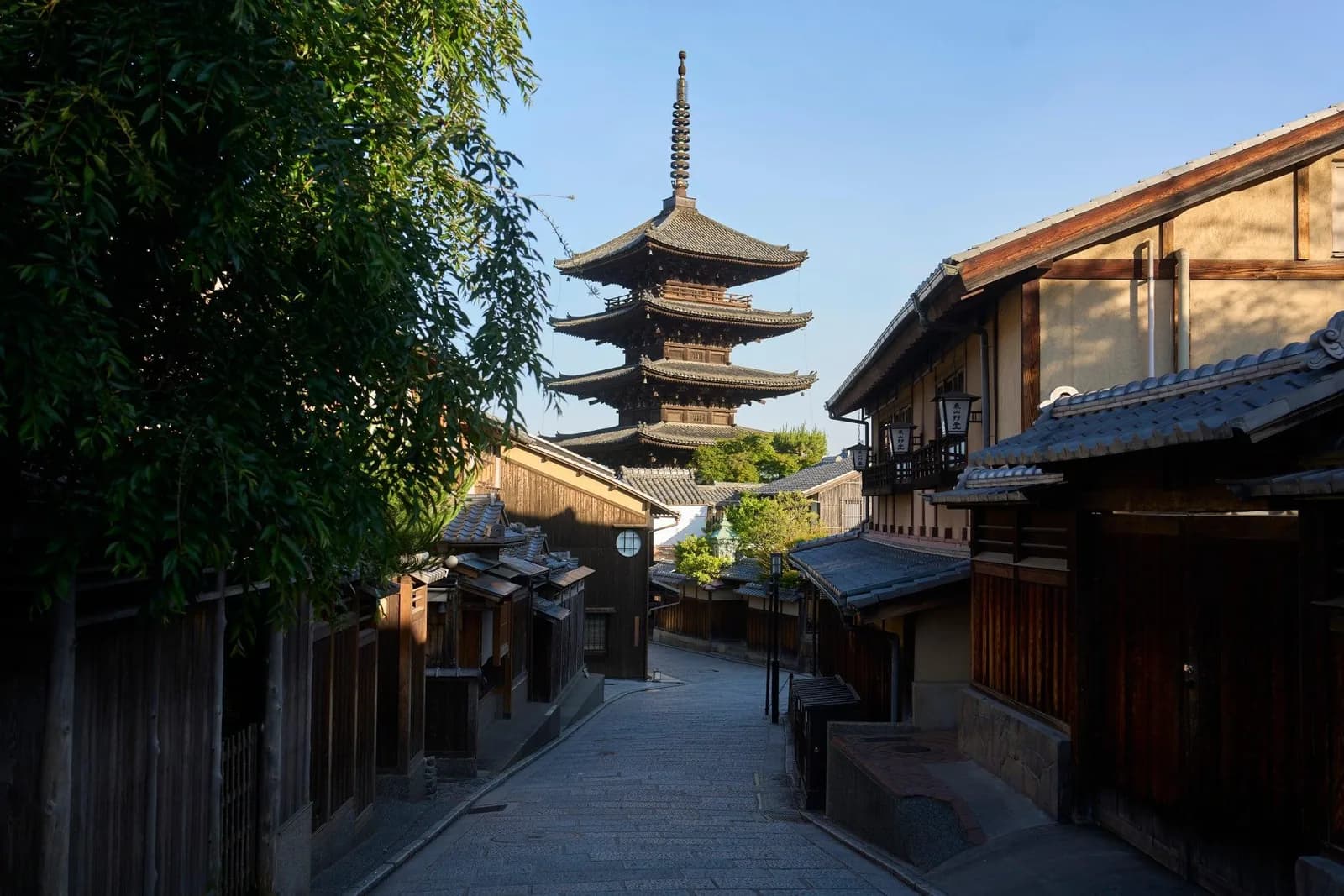
Walking down Yasaka-dori you reach the most repeated image of the city: the Yasaka Pagoda, which is actually all that remains of Hokan-ji temple — five storeys and about 46 metres. On some days you can go in and climb to the first level for 400 yen, something very few people do.
メモNote
The classic photo is taken either from above, before you arrive, or from the crossing below looking uphill.
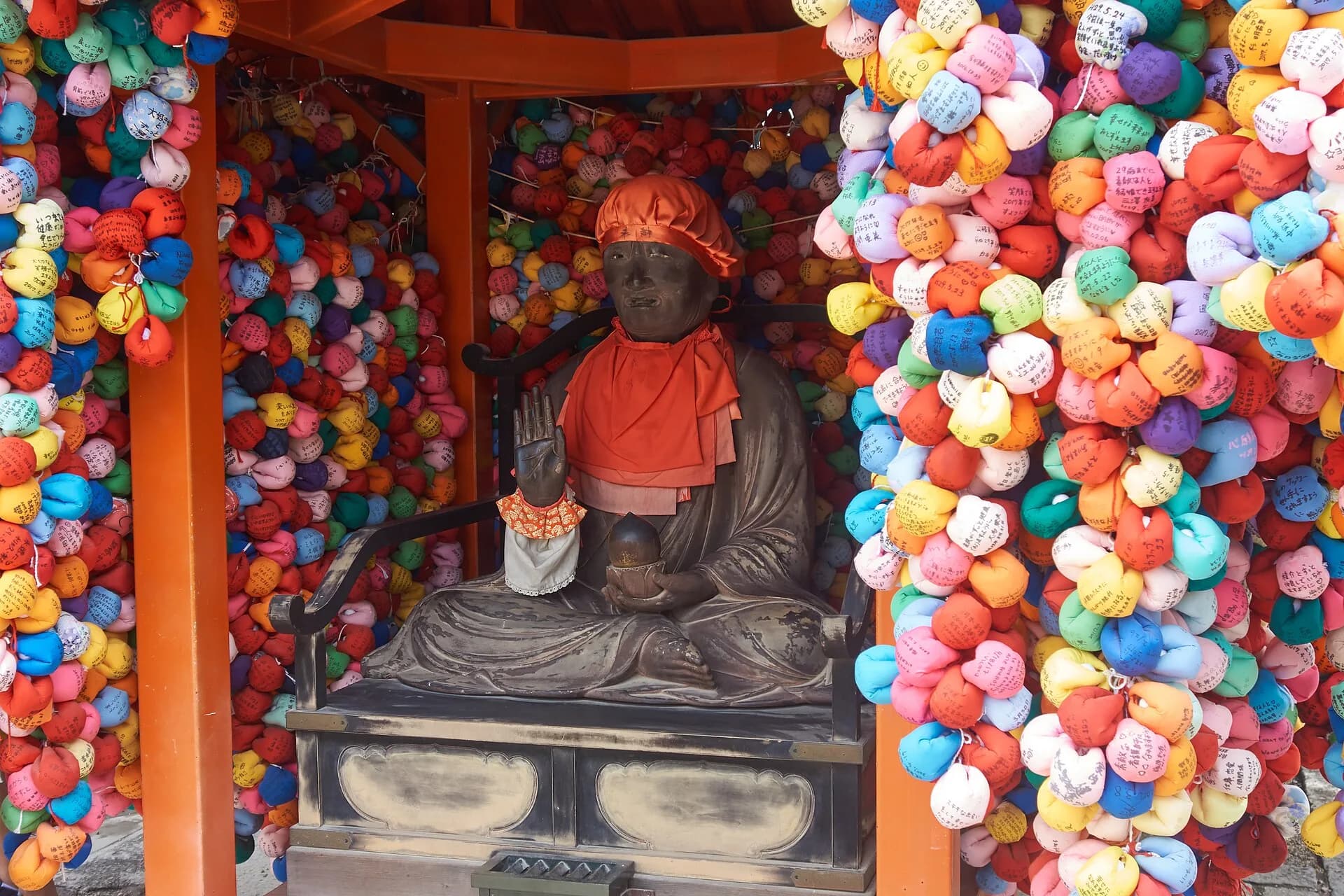
From here you can make 5-minute detours that are well worth it: the Yasaka Koshin-do, covered in colourful fabric balls (kukurizaru, bound monkeys that stand for a wish in exchange for giving something up), and the Ryozen Kannon temple, home to a 24-metre concrete Kannon built in memory of the fallen of the Second World War — almost always empty and quite striking.
And here’s a little secret: if you’re after one of the prettiest alleys in the area with no odd restrictions, it’s Ishibei-koji.
Next stop: Sanjusangendo (the 1,001 statues of Kannon in rows) or Kodai-ji, the temple dedicated to Toyotomi Hideyoshi.
4. Sanjusangendo: the 1,001 statues of Kannon in rows
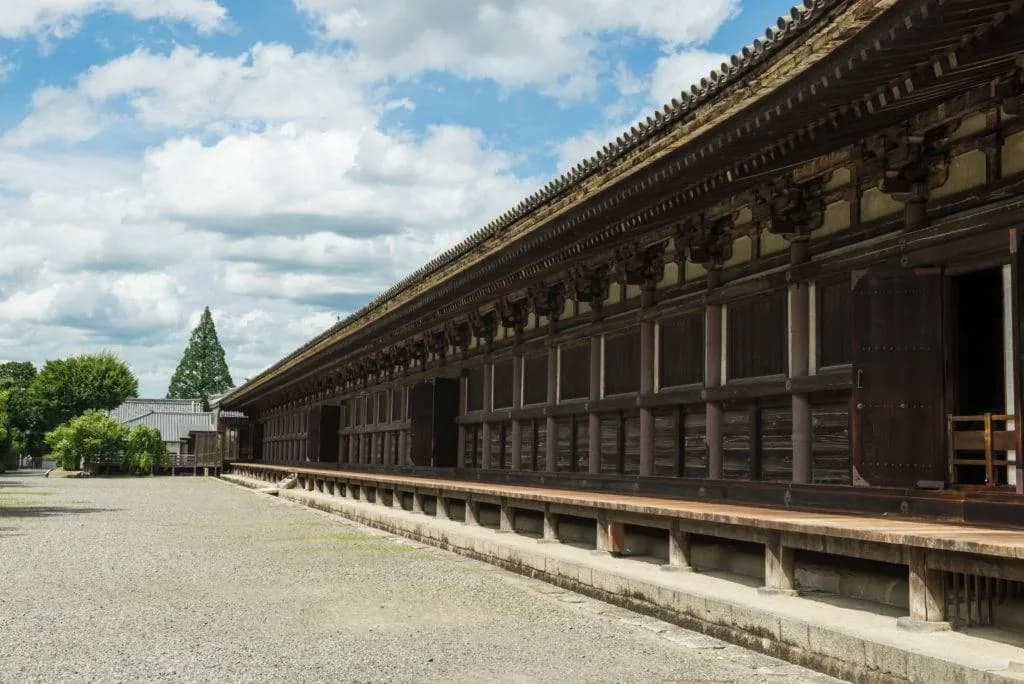
One of Kyoto’s great overlooked sights, it’s a fifteen-minute walk from the Kiyomizu area with admission at 600 yen. It is, without exaggeration, one of the most striking interiors in Japan.
It’s the longest wooden building in the country at 120 metres, and inside there are 1,001 statues of Kannon carved in the 12th and 13th centuries: one enormous central figure and a thousand human-sized ones lined up in ten rows, covered in gold leaf.
Each has forty-two arms and eleven faces, no two are alike, and tradition says that if you look carefully you’ll find among them the face of someone you know. In front, twenty-eight guardian deities with the gods of wind and thunder at either end.
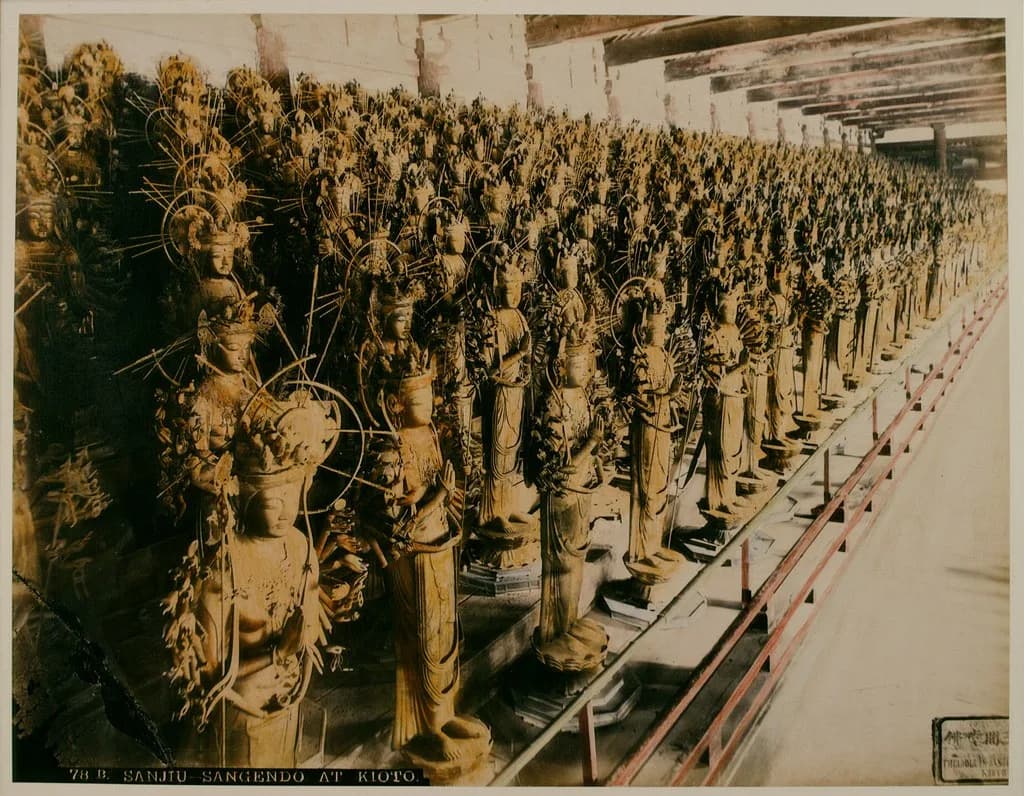
You can’t photograph the interior, and that makes it one of the few places in Kyoto where you’ll see two hundred people looking at something in silence instead of through a phone screen. It’s also a good place to visit on a rainy day.
In January the Toshiya is held here, an archery contest whose participants are girls turning twenty, dressed in kimono — if your dates line up, it’s a rare spectacle.
Next stop: back towards Higashiyama, to Kodai-ji or Maruyama Park.
5. Kodai-ji: gardens, bamboo and the memory of the Toyotomi
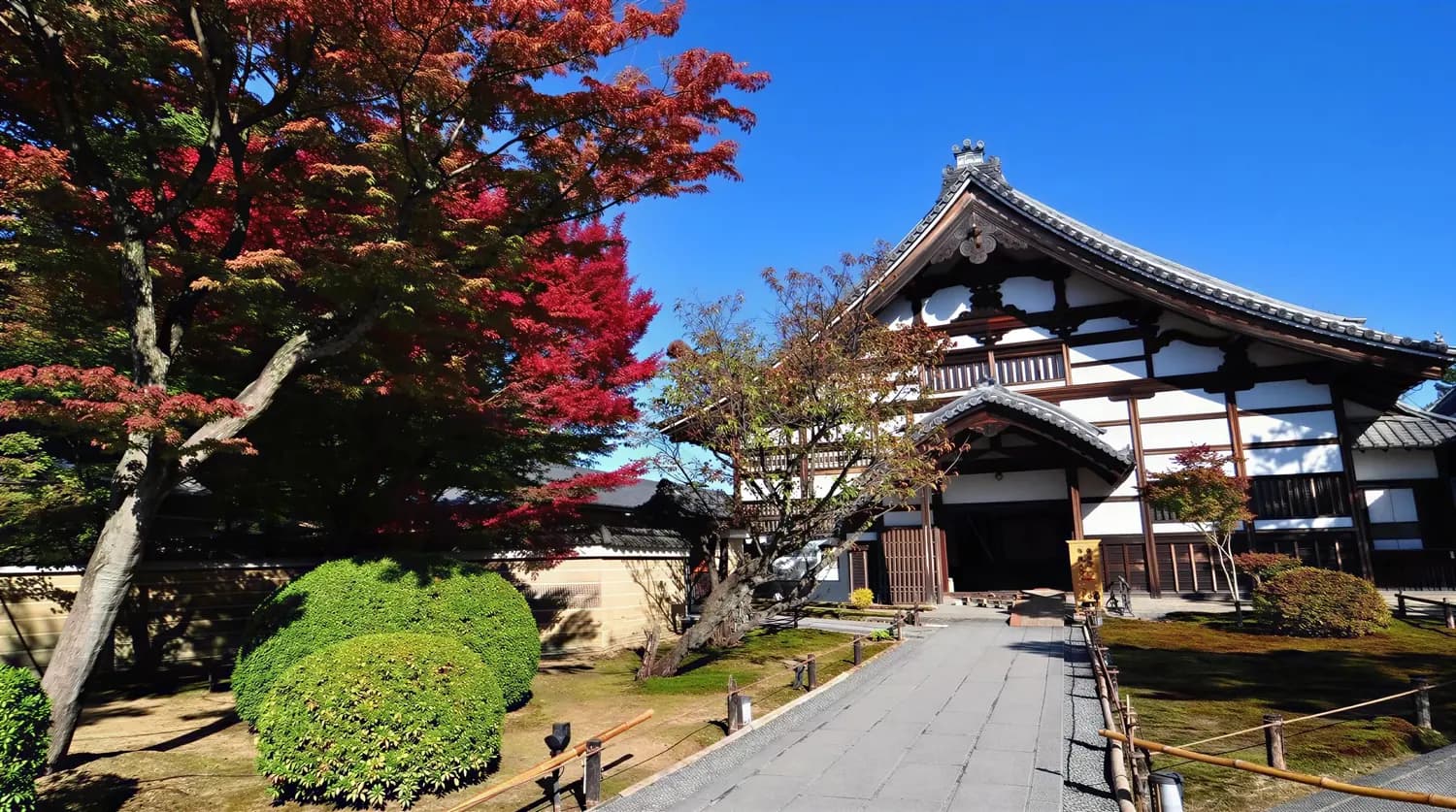
Beautiful gardens, a small bamboo grove and, above all, a fascinating story behind the place: it was commissioned in 1606 by Nene, the widow of Toyotomi Hideyoshi (the second of Japan’s three great unifiers, along with Oda Nobunaga and Tokugawa Ieyasu), to pray for her husband.
It was paid for by Tokugawa Ieyasu, the man who had wiped out the Toyotomi clan. Textbook Japanese politics: you fund your enemy’s memorial, keep his widow happy, and look good doing it.
The pond garden was designed by Kobori Enshu, one of the great landscape designers of the Edo period. Its quality ended up giving name to a style of its own: Kodai-ji maki-e.
メモNote
The grounds also hold the Otama-ya mausoleum, which preserves exceptional 17th-century maki-e decorations on lacquered wood, made by sprinkling gold or silver powder over wet lacquer.
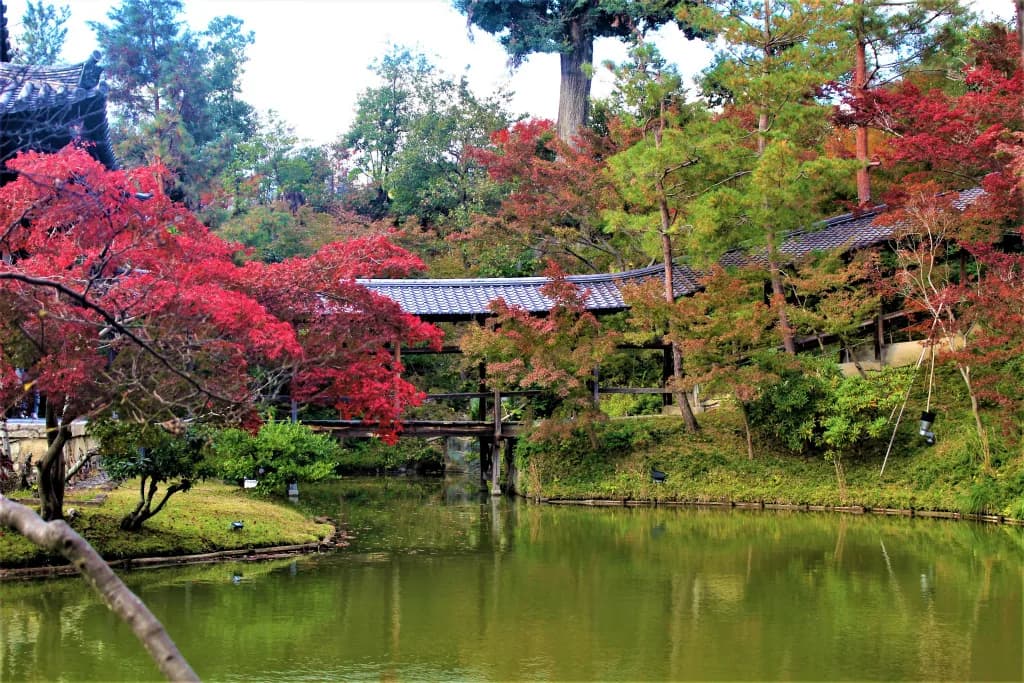
There’s also a bamboo grove here — nowhere near the size of Arashiyama’s, but usually empty, so if you’re too short on time for Arashiyama, this is a good plan B for bamboo.
In spring and autumn the temple opens at night with illuminations and contemporary art projections over the sand garden, one of those 17th-century-meets-21st-century combinations you sometimes stumble upon in Japan. Admission to the grounds is around 600 yen.
Next stop: Maruyama Park, a five-minute walk.
6. Maruyama Park: the mid-afternoon pause between temples
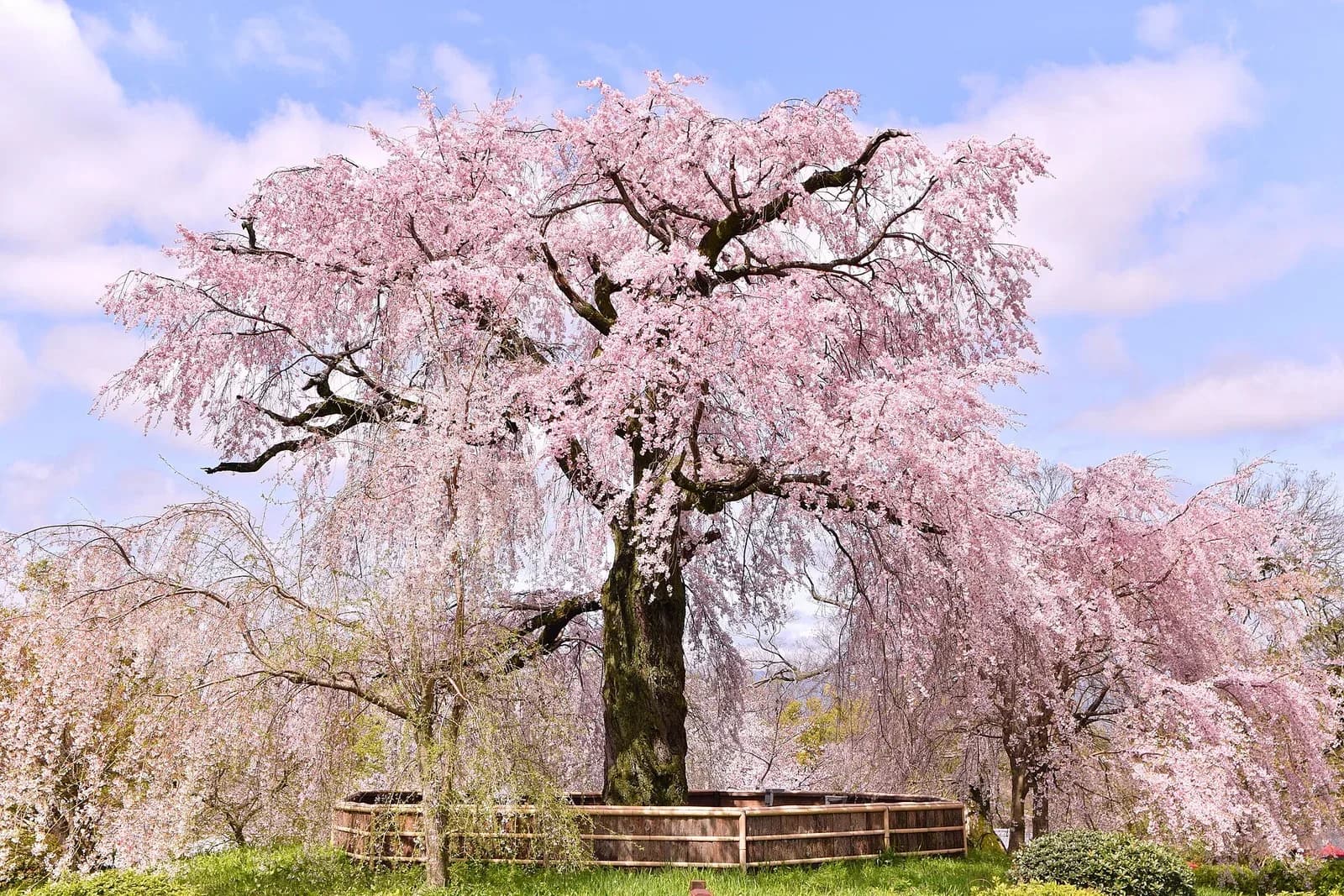
Kyoto’s oldest public park (1886), wedged between Yasaka Shrine, Chion-in and Kodai-ji. It’s free, it never closes, and it works beautifully as a mid-afternoon pause between temples.
Its famous resident is a tree: the Gion shidare-zakura, a huge weeping cherry that is lit up at night in season, drawing a local pilgrimage. It’s one of the few places in Kyoto where spring means festival mood into the small hours, with lanterns and food stalls all over the park.
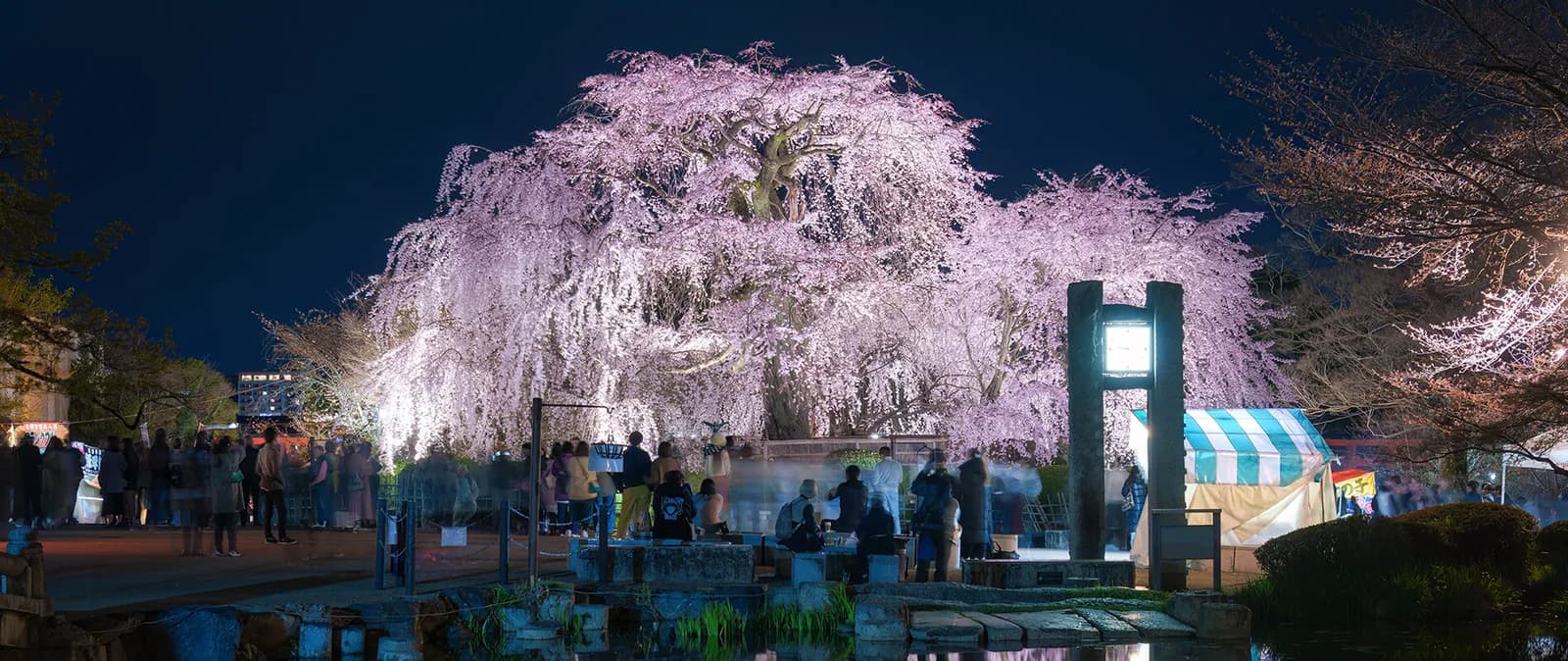
Outside those two weeks it’s simply a pretty, quiet park with a pond and herons — which is also just fine.
Next stop: Yasaka Shrine, at the western end of the park.
7. Yasaka Shrine: the orange gate between Higashiyama and Gion
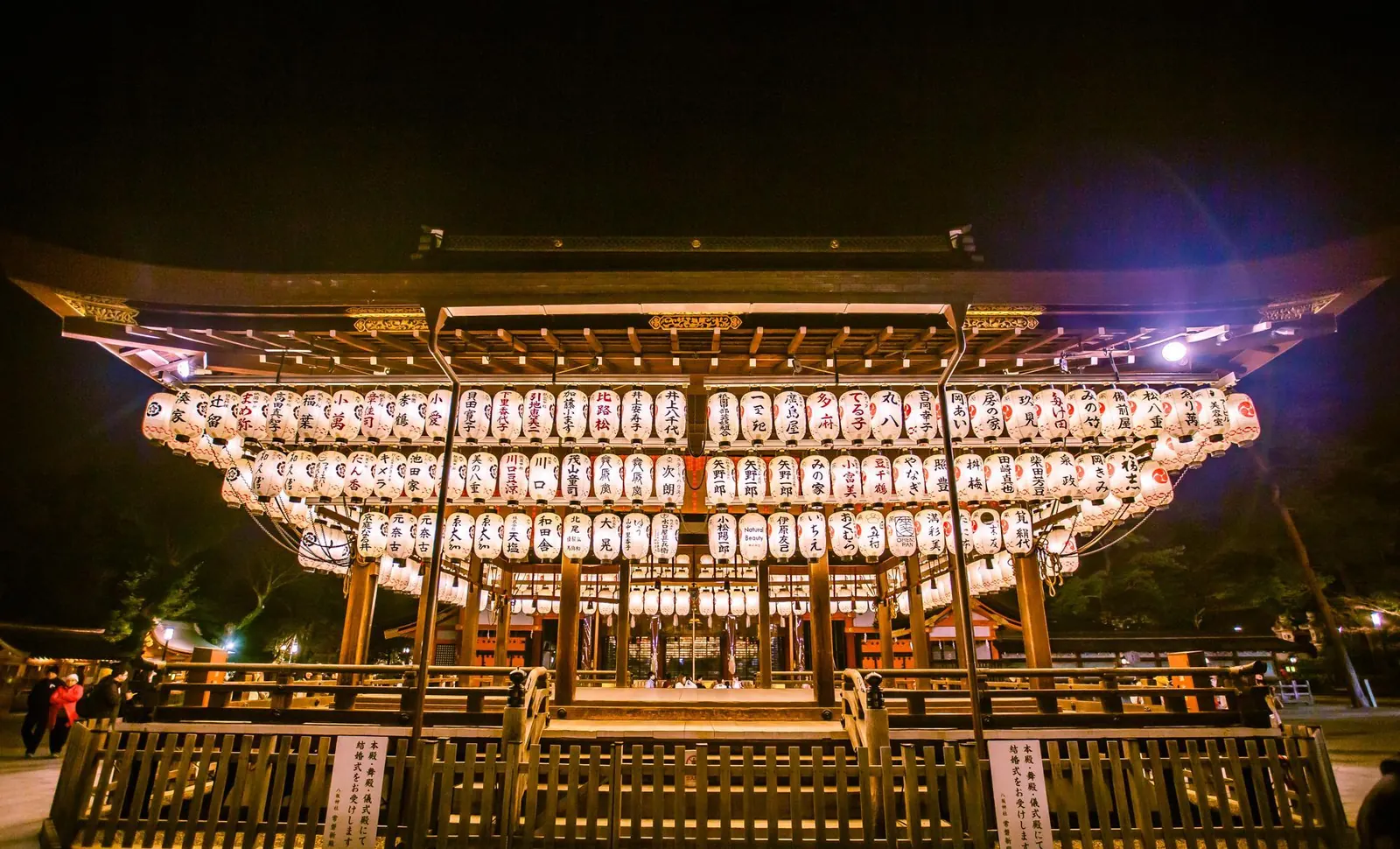
It sits right on the border between Higashiyama and Gion, it’s free and it never closes, which makes it one of the best night plans in the city: at nine in the evening, with the lanterns lit and hardly anyone around, it’s nothing like it is at midday.
It’s dedicated to Susanoo, the god of storms.
メモNote
It was founded in the year 656 and is the head shrine of some two thousand three hundred Yasaka shrines across Japan.
This is where the Gion Matsuri was born — Kyoto’s most famous festival and one of Japan’s most important. It runs through the whole month of July, and its origin goes back to the year 869, when it was held to pray for the end of an epidemic.
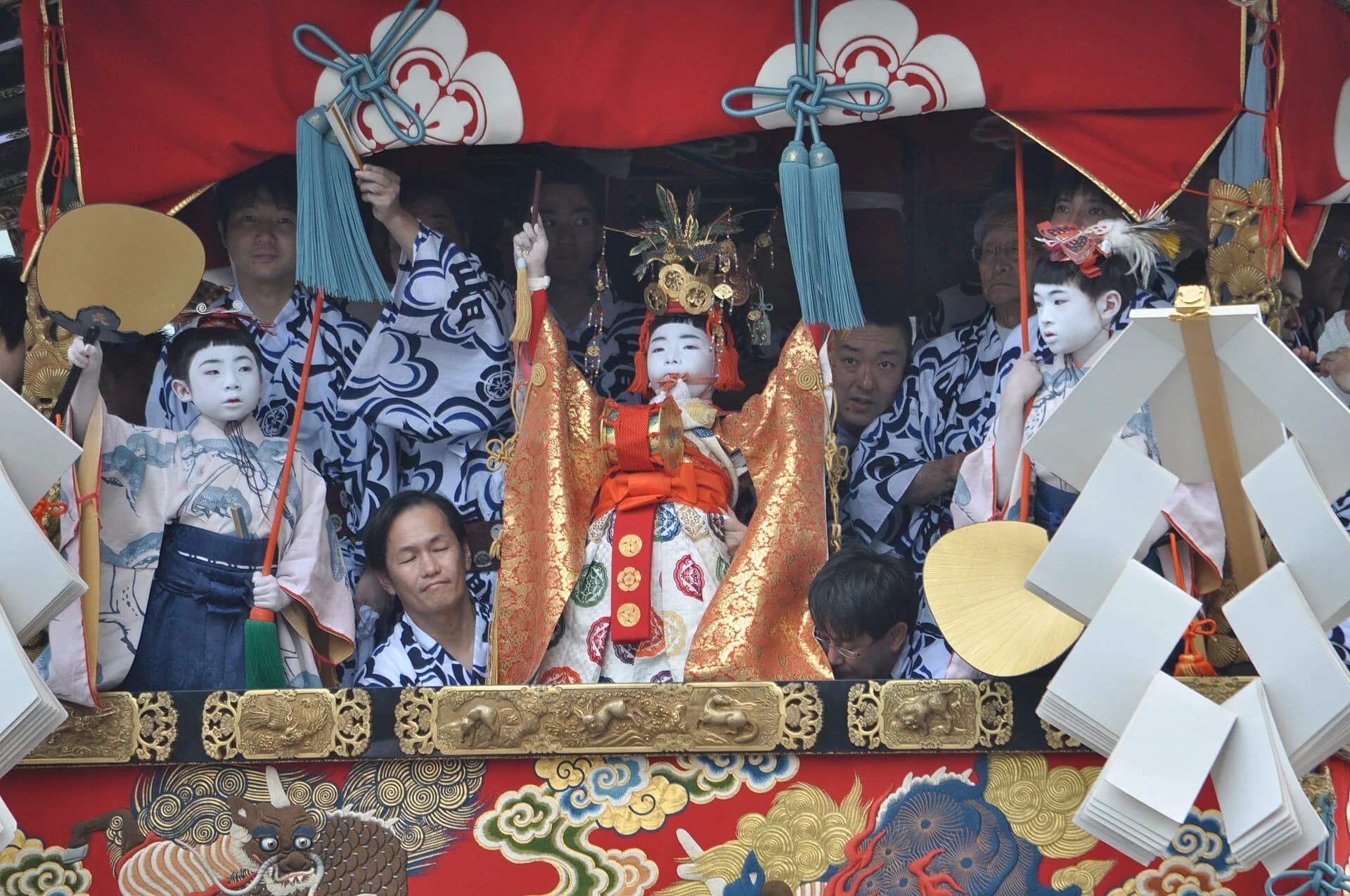
Its two float parades, on the 17th and 24th, are UNESCO Intangible Cultural Heritage: the largest floats weigh several tonnes, are assembled without a single nail and are moved by hand through the city centre. If you’re travelling in July, it may be worth trying to line your trip up with those dates.
And for the curious: in a side corner sits the small Utsukushi Gozen shrine, with a fountain of “beauty water”, where the custom is to pat a few drops of this water onto your face. You’ll see plenty of Japanese girls doing exactly that.
Next stop: Chion-in, a two-minute walk north.
8. Chion-in: the great temple of the Pure Land
One of the great centres of Japanese Buddhism and, even so, far less visited than it deserves. It’s the head temple of the Jodo school, Pure Land Buddhism, Japan’s most popular branch: it was founded by the monk Honen, who died on this very spot in 1212, and the temple was built by his disciple Genchi in 1234.
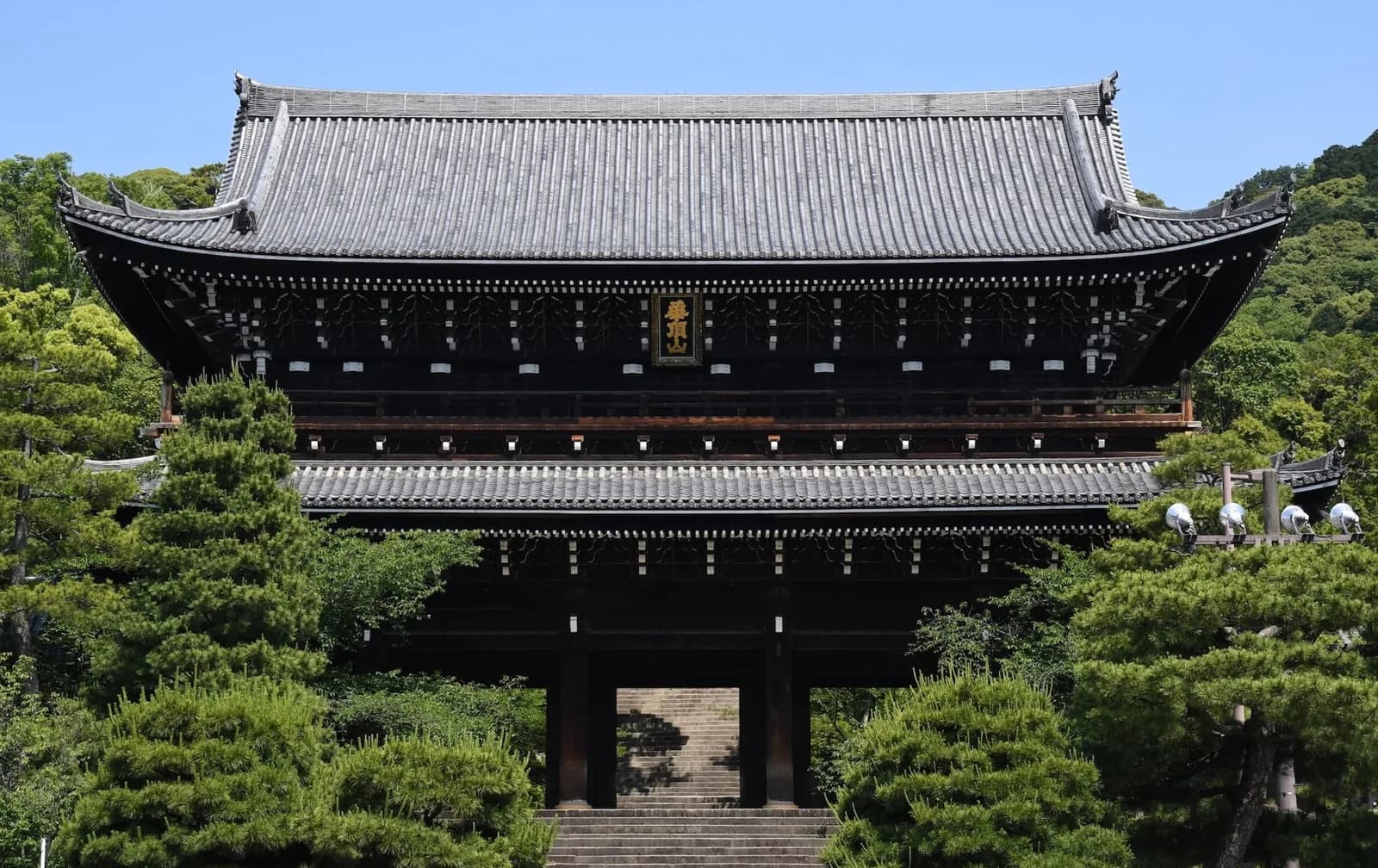
The first thing that overwhelms you is the Sanmon gate: 24 metres tall, from 1621, the largest wooden temple gate in all of Japan.
メモNote
You can see it for free from below, and during special openings you can climb inside.
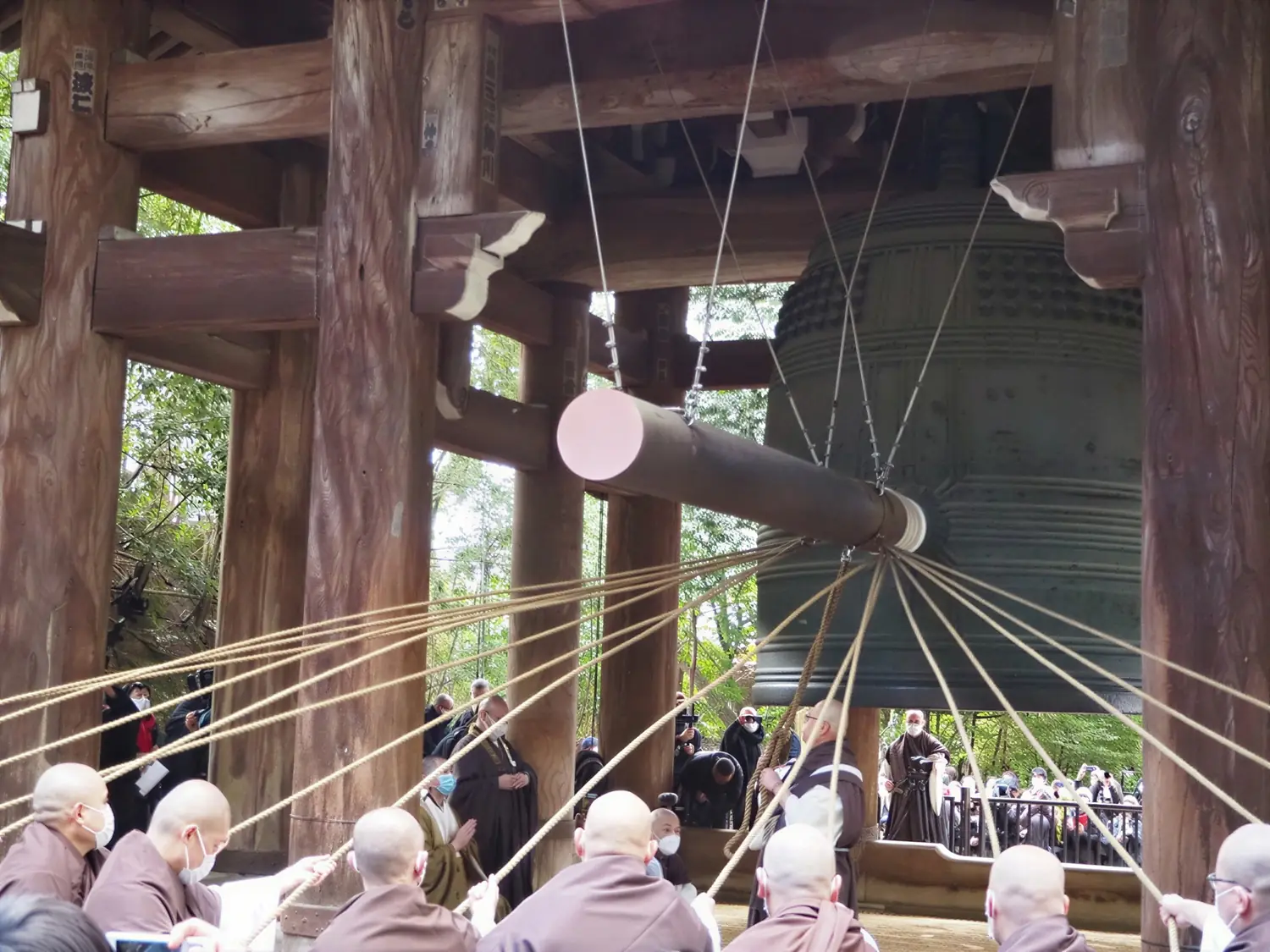
The other star is the bell inside the grounds: 70 tonnes, the heaviest of its kind in Japan.
豆知識Fun fact
On New Year’s Eve it’s rung 108 times (because, in Japanese Buddhist tradition, human beings have 108 bonno — 108 worldly desires, attachments and passions that cause suffering), and ringing it takes seventeen coordinated monks, one of them hanging face-up from the striker, in a scene broadcast on television across the country.
The corridors of the grounds also have floors that chirp underfoot, part of the temple’s seven wonders — among them a “forgotten umbrella from the 17th century” up in the eaves that nobody has wanted to touch for centuries.
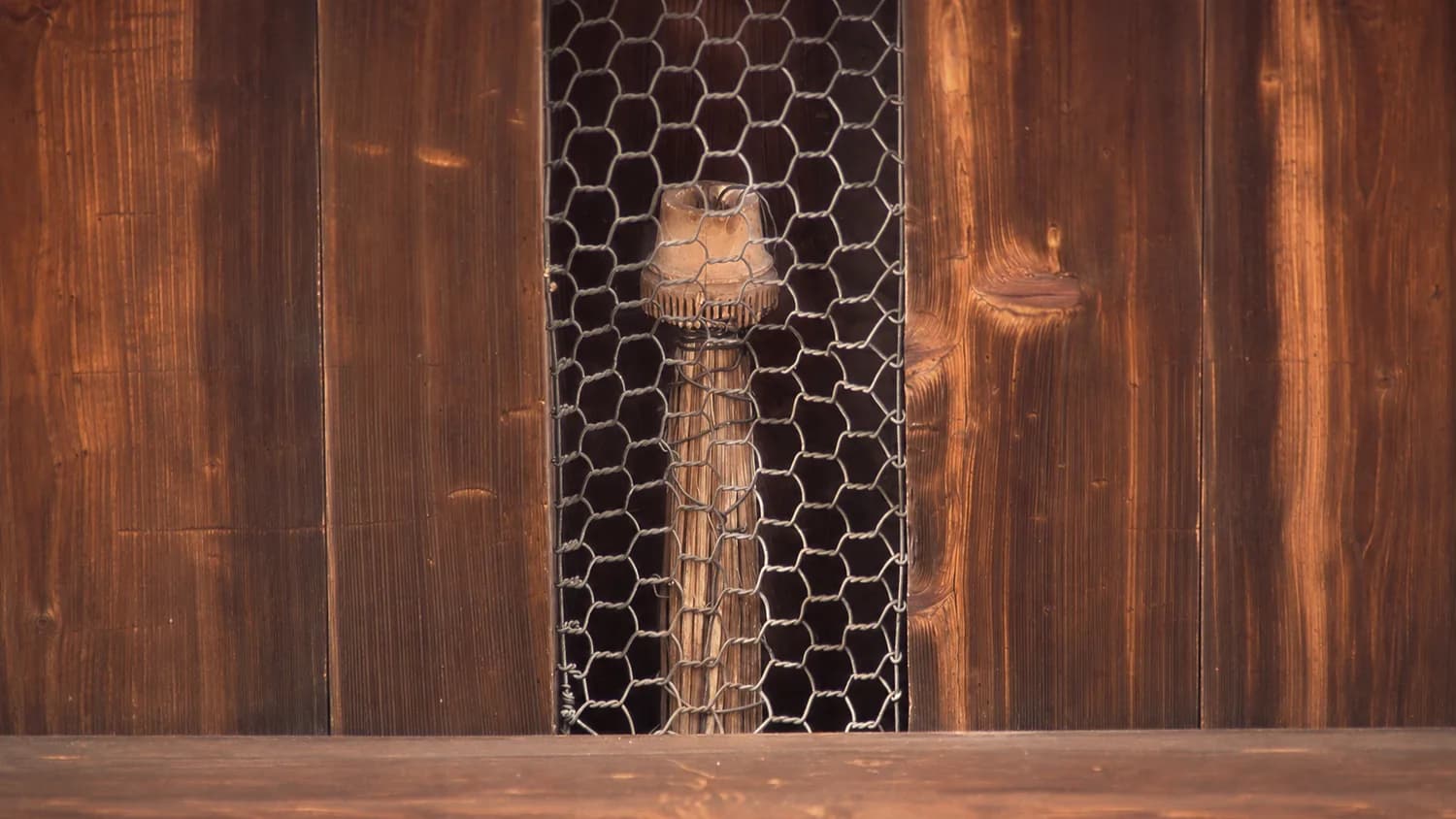
The main grounds are free and the gardens (Hojo and Yuzen-en) cost about 500 yen. It’s two minutes from Maruyama Park, so it’s no detour at all.
Next stop: Gion, down Higashi-oji towards Hanamikoji.
9. Gion: the district of teahouses and geiko
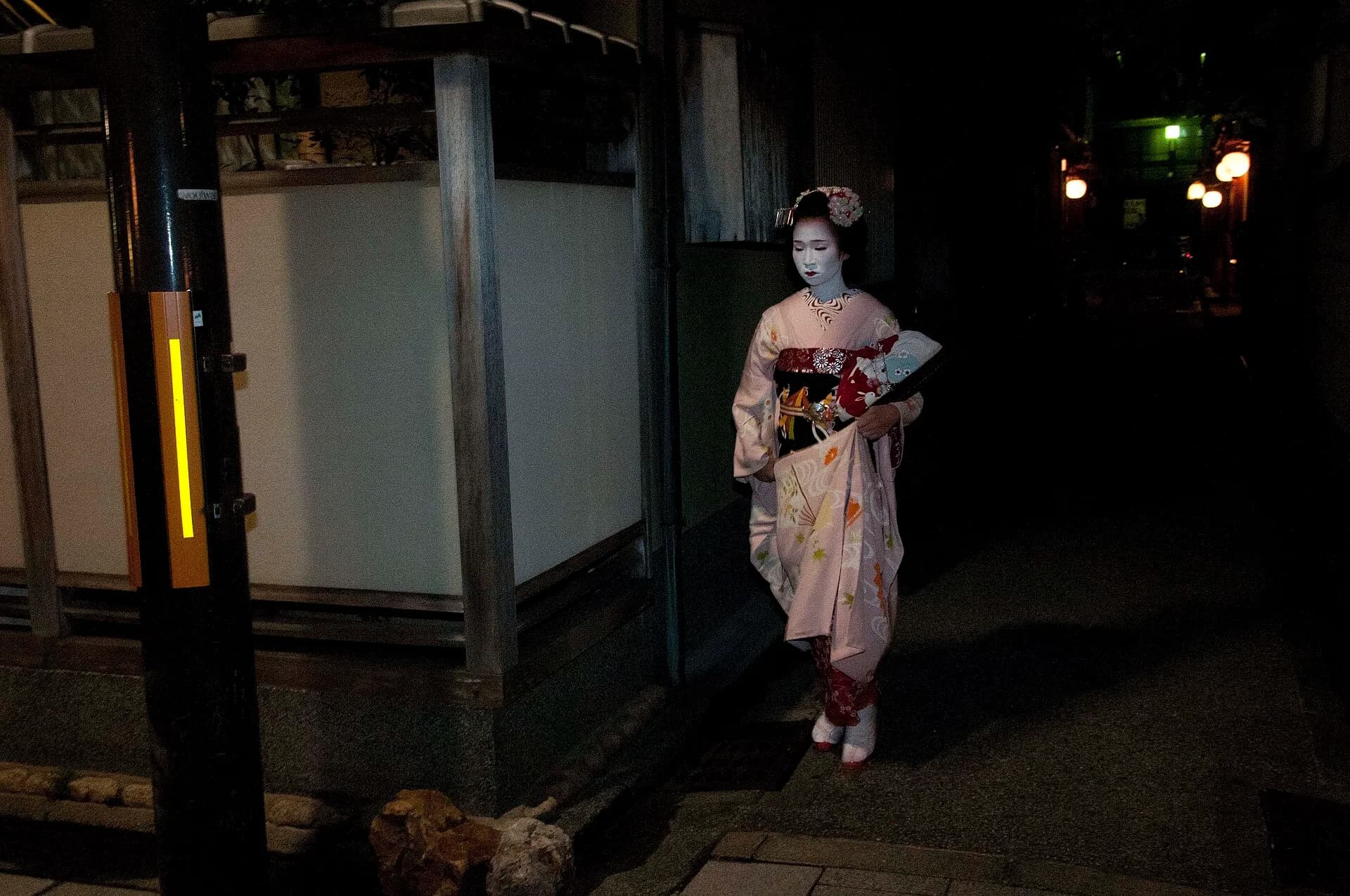
The geisha district. Or rather, the district of the geiko and the maiko, as they’re known in Kyoto: the geiko is the trained artist, the maiko her apprentice — the one with the long sleeves, the big hair ornaments and the tall wooden sandals. In the whole city there are barely a couple of hundred left, spread across five hanamachi or “flower districts”: Gion Kobu, Gion Higashi, Pontocho, Miyagawacho and Kamishichiken.
注意Heads-up
The main street is Hanamikoji, with its latticed wooden teahouses. The alleys branching off it are private property and entry has been banned since 2024 (you’ll see the sign).
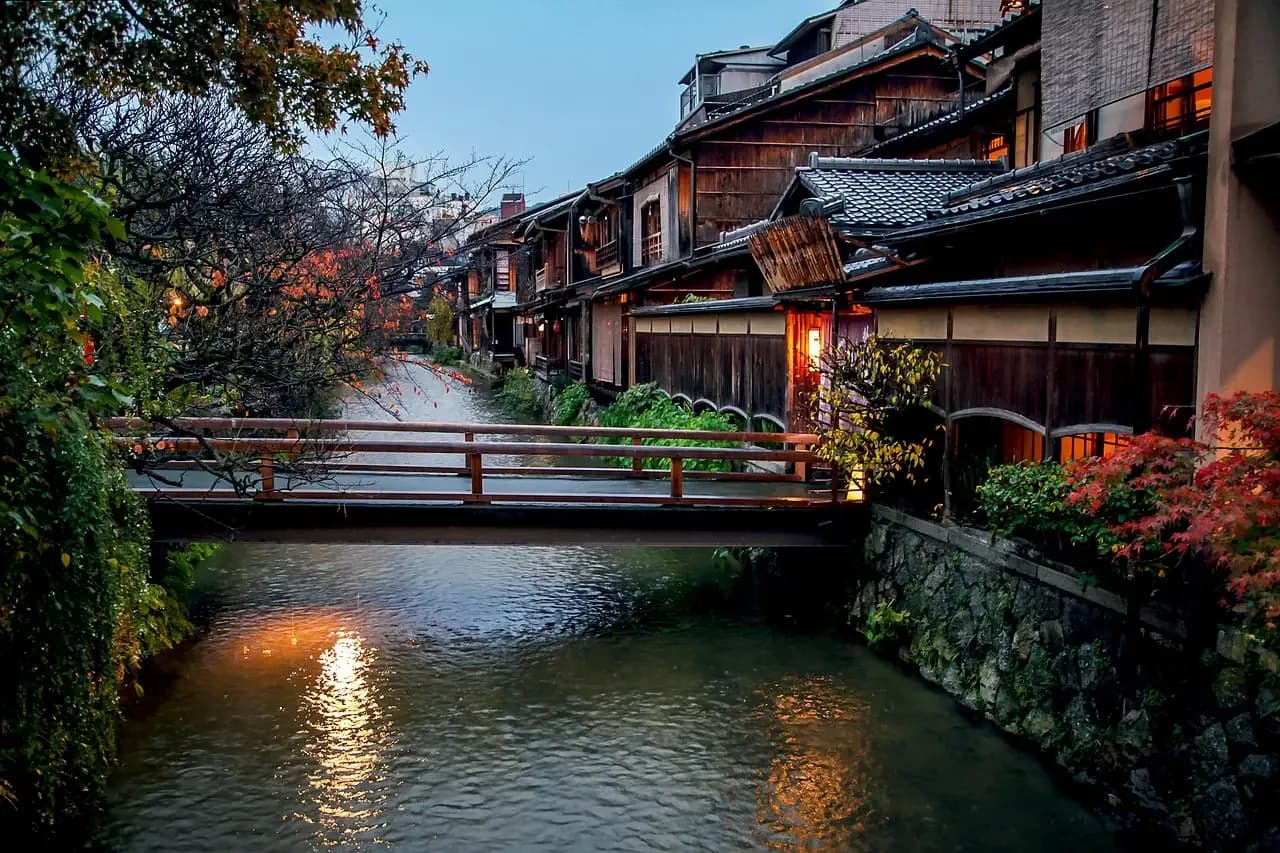
Two streets north of Hanamikoji is the Gion Shirakawa: a canal with willows, lantern-lit teahouses and stone bridges, all public streets, very beautiful and with half the crowds of other popular spots. At dusk it’s one of the best walks in the city.
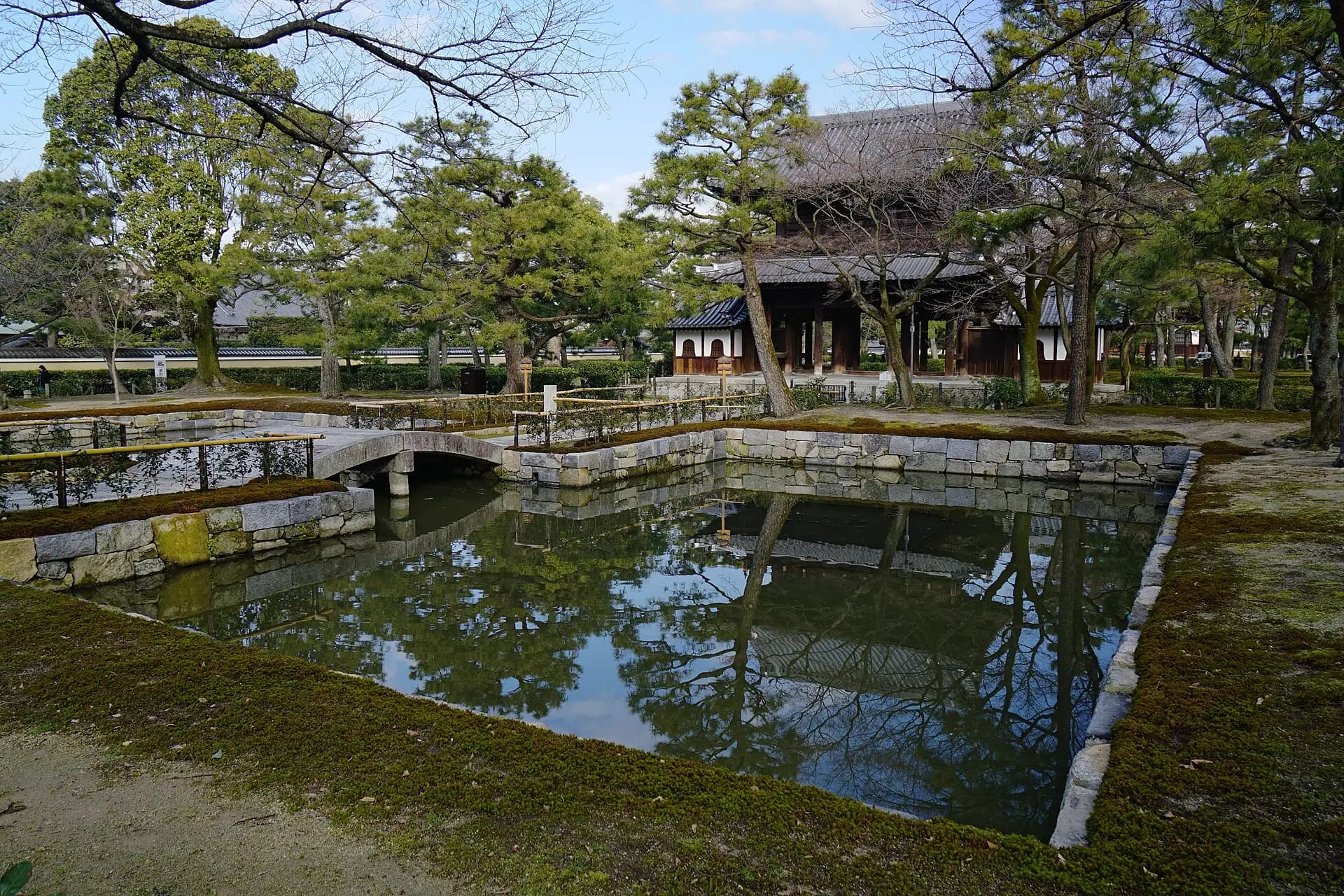
If you’re already in the district, five minutes away is Kennin-ji, Kyoto’s oldest Zen temple (1202). For about 800 yen you get the twin dragons ceiling, painted in 2002 for its 800th anniversary, and an immaculate sand garden, usually half empty — quite the contrast with the crowds two hundred metres away.
And one idea worth keeping in mind: people live and work in Gion, so the way to enjoy it is to look without intruding. In the FAQ at the end of this article we cover what realistic chances you have of crossing paths with a geiko, and how to do it without bothering anyone.
Next stop: Pontocho, crossing the Kamo River over the Shijo bridge.
10. Pontocho and the Kamo riverbank: the alley of lanterns
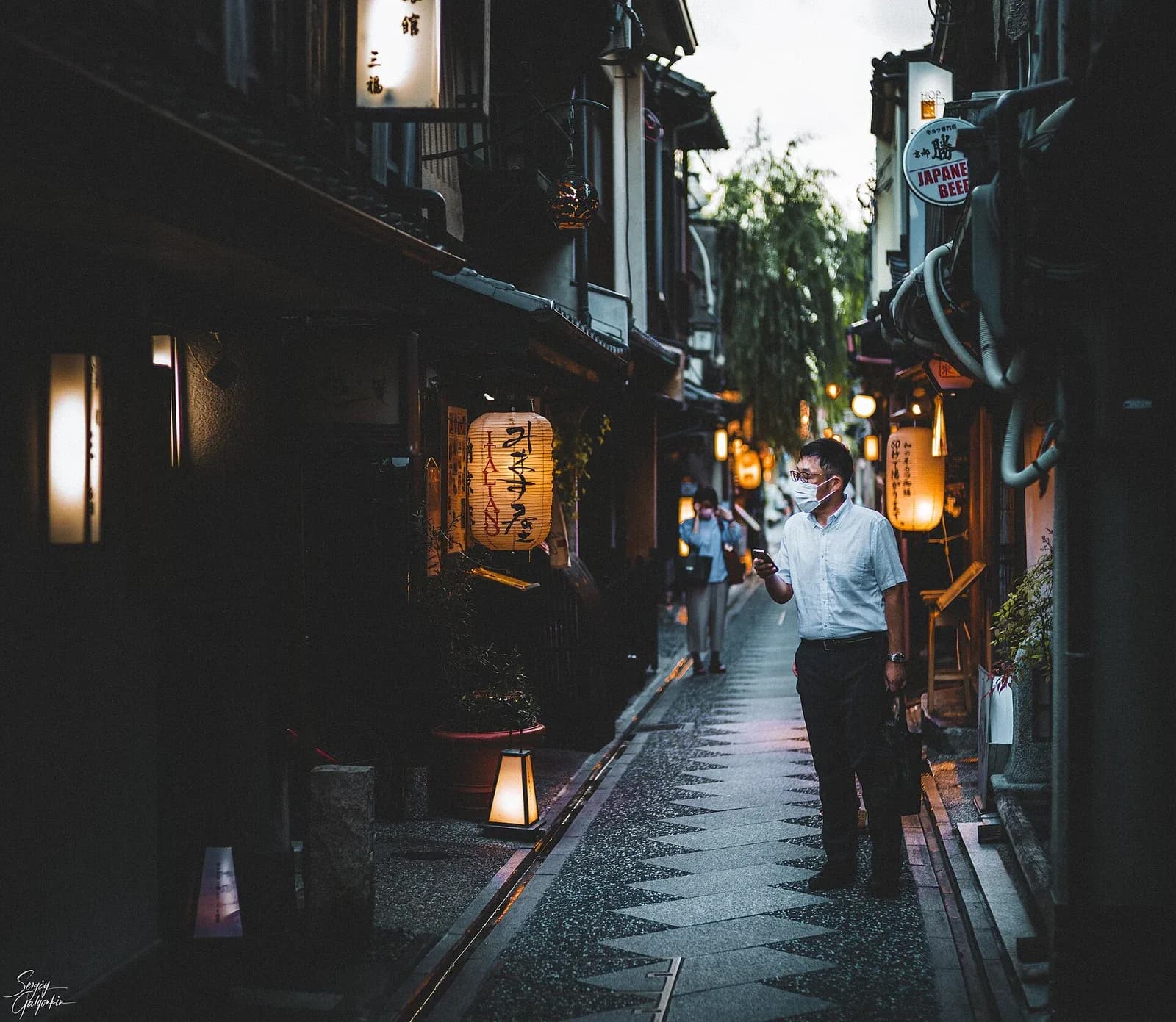
An alley of about 500 metres between Shijo and Sanjo, parallel to the river, so narrow that in places two people can’t walk abreast. At night, with the lanterns lit and the kitchens working in full view, it’s one of the loveliest scenes in the city.
豆知識Fun fact
If you look at the plaques on the façades, almost every establishment carries the same emblem, a bird (the chidori, a plover), which identifies the whole district. It’s Pontocho’s traditional crest, used to visually mark the district and its businesses — and once you notice it, you’ll see it everywhere.
From May to September the restaurants set up the yuka, wooden terraces suspended over the river where you dine in the open air.
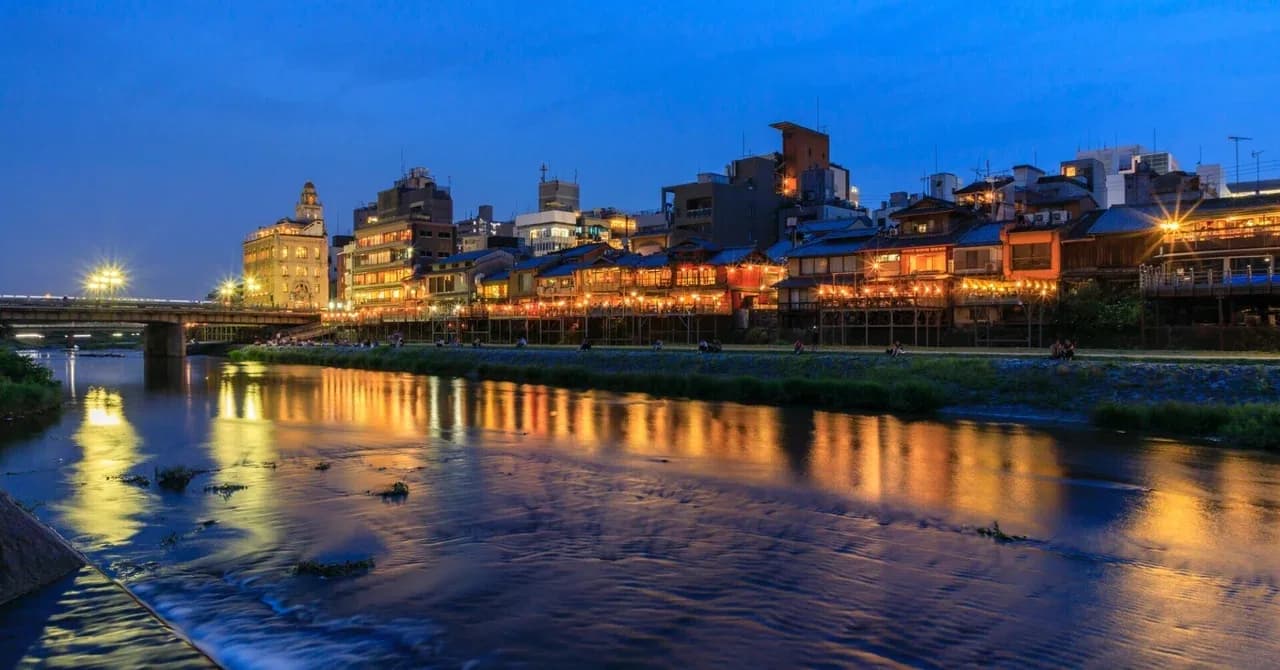
If you want to dine here, book well ahead, and bear in mind that it’s usually on the expensive side. It’s a centuries-old tradition and a very special experience.
At the end of the alley stands the Pontocho Kaburenjo, the district’s theatre, where the Kamogawa Odori — its geiko dance performance — is staged every May.

To finish, right next door, the banks of the Kamo River are Kyoto’s living room: students, buskers, herons and couples sitting at almost identical intervals from each other. Heading down with something to drink and watching the sunset over the western mountains is free, and it’s one of those moments that turn into unforgettable memories. In summer it’s also the only spot in the centre with any breeze at all.
End of the day. From here you have subway and buses to anywhere in the city.
別案Variations
- If it rains: Sanjusangendo and Chion-in are indoors and hold up well to a wet morning.
- In high season: move everything forward an hour; that’s enough.
- With reduced mobility: Fushimi Inari can be enjoyed without climbing, and Gion and Pontocho are flat.
Zone 2 · Western Kyoto and Arashiyama: the shogun’s castle, the Golden Pavilion and the bamboo
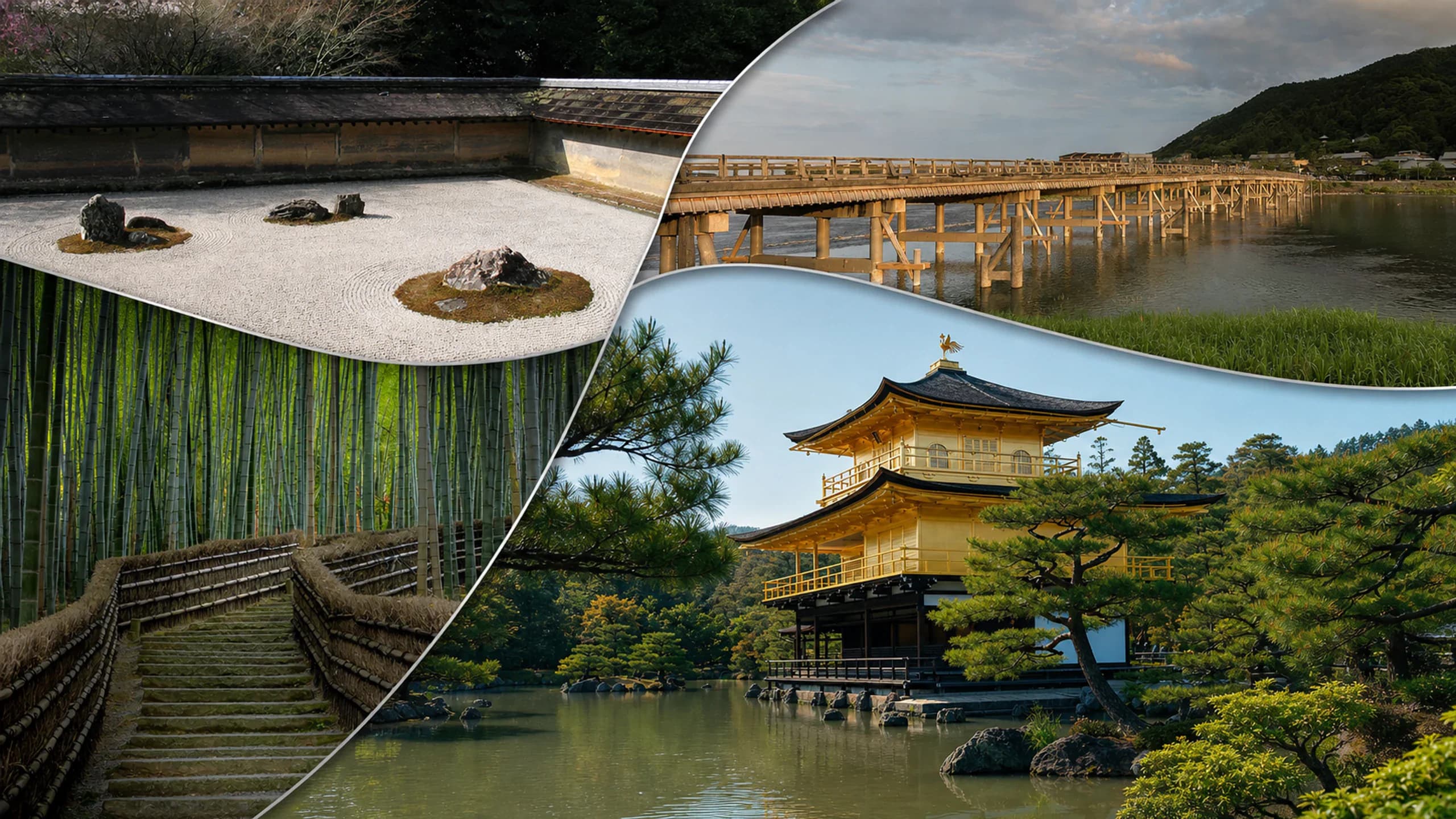
The west changes register: political power, gold and mountain scenery. Here you do need transport between stops, and the order matters. It takes in places like Nijo Castle, the famous Golden Pavilion, the striking Ryoan-ji temple and the Arashiyama bamboo grove, and the day can end watching the sunset over the river.
Next, we’ll go through these places and a few more, one by one.
The zone at a glance
Short on time?
- Don’t missKinkaku-ji and the bamboo grove.
- OptionalThe monkey park (a twenty-minute climb), Tenryu-ji’s Sogenchi garden and the Kimono Forest.
- If you only have half a dayGo straight to Arashiyama at dawn and leave Nijo for another time.
The western axis: from Nijo Castle to Arashiyama
This day does chain transport: the long stretches go by bus or train, the rest on foot.
Open the zone 2 route in Google Maps
This is a day that’s often tricky to plan, because it depends on where you’re staying and what you prioritise.
Although we present a route starting near central Kyoto (and perhaps near your accommodation), the reverse version — with the Arashiyama bamboo grove first thing in the morning (when it’s nearly empty) and the rest in the afternoon — also works very well, and in high season it may be the better option.
We do this zone with you
Three stretches with transfers and a bamboo grove you need to know when and how to visit. Our private tour sorts all this out for you, with a guide in English or Spanish.
11. Nijo Castle: where the shogun dissolved his own government
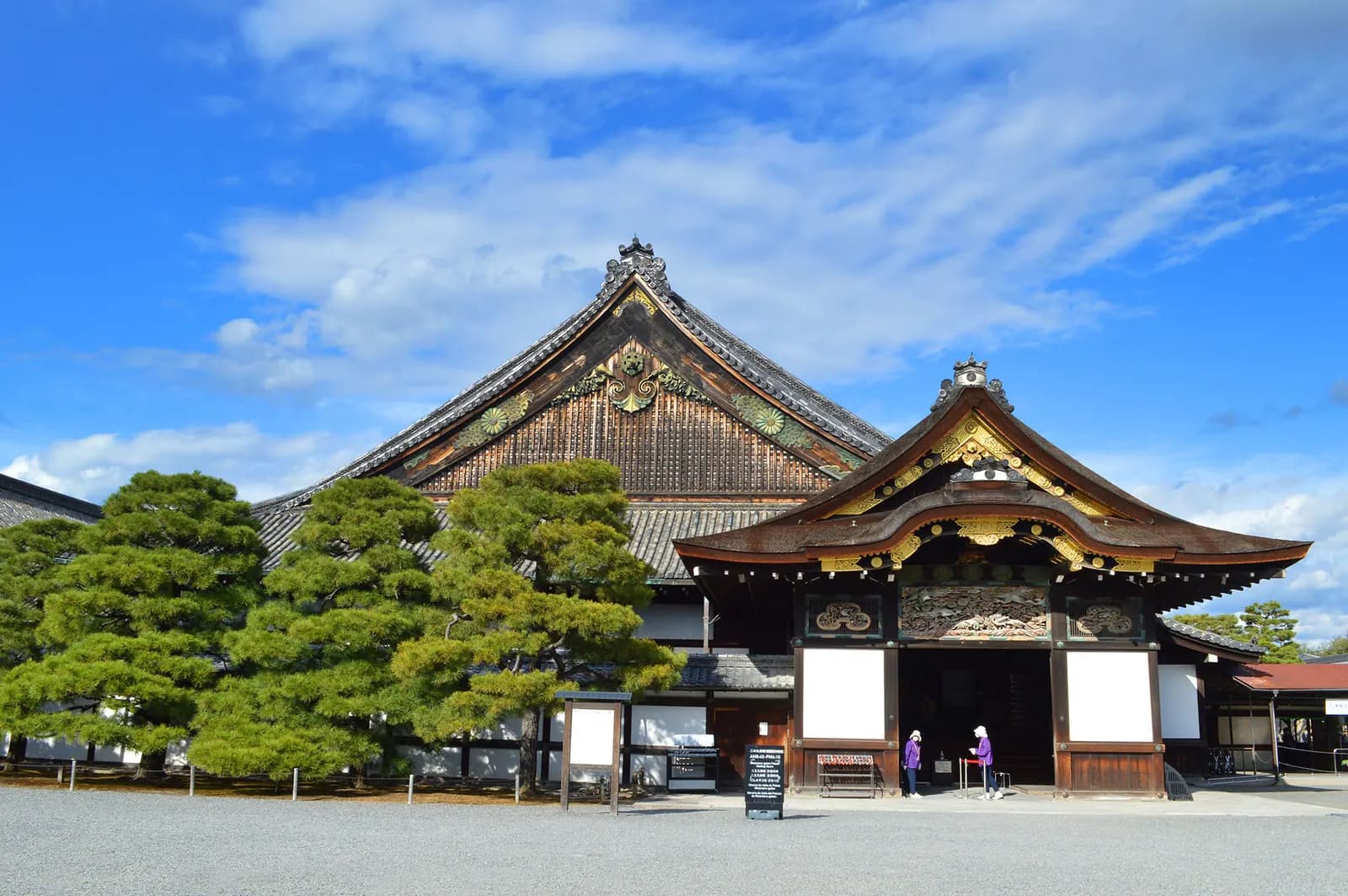
The shogun’s residence in Kyoto and the place where Japan’s political history makes the most sense. It opens at 8:45, closes at 17:00 with last entry at 16:00, and the combined ticket with the Ninomaru Palace costs 1,300 yen.
Tokugawa Ieyasu built it in 1603 and his grandson Iemitsu enlarged it in 1626 to receive the emperor, making it clear through sheer size who was really in charge. And the circle closed in the very same room: in 1867, in the Ohiroma of the Ninomaru Palace (the great hall for audiences and official receptions), the last shogun, Tokugawa Yoshinobu, announced the return of power to the emperor.
注意Heads-up
Keep in mind that the Ninomaru Palace closes on Tuesdays in January, July, August and December.
The visit is done in socks over the famous nightingale floors (uguisubari), which chirp underfoot. Legend says it was an anti-intruder system; historians debate whether it was intentional or simply wear on the metal clamps, but the effect is real and it’s impossible to cross the hall in silence.
Within the grounds there’s a second palace, the Honmaru, which occupies the castle’s central citadel — the most protected part, and the last to fall in any Japanese fortress.
メモNote
It’s visited separately, with advance online booking and a 1,000 yen ticket. It reopened in 2024 after almost two decades of restoration.
In spring the castle has some 300 late-blooming cherry trees and night illuminations, making it one of the city’s best options once everywhere else has lost its blossom.
Next stop: Kinkaku-ji, 25 minutes by bus (lines 12 or 59).
12. Kinkaku-ji, the Golden Pavilion: Kyoto’s most photographed temple
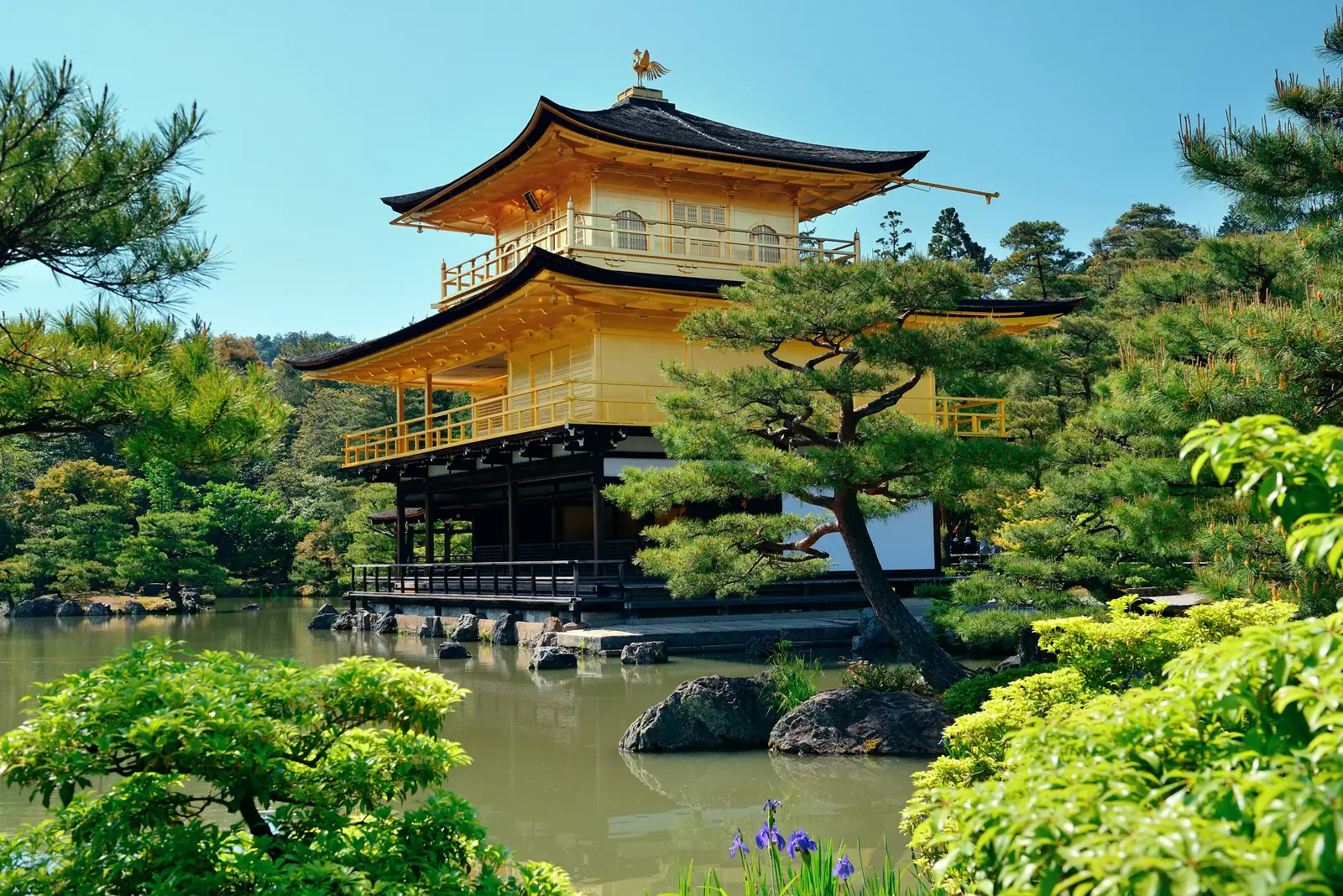
Probably the most photographed temple in Kyoto and one of Japan’s great tourist icons, Kinkaku-ji opens from 9:00 to 17:00 and admission costs 500 yen. It’s one of those places that look retouched in photos and even more so in person, especially if you arrive at nine sharp with the pond dead calm.
The two upper floors are covered in (real) gold leaf. Each floor follows a different architectural style (aristocratic, samurai and Zen), stacked like a statement of intent.
メモNote
It was the retirement villa of shogun Ashikaga Yoshimitsu and became a Zen temple after his death, in 1408.
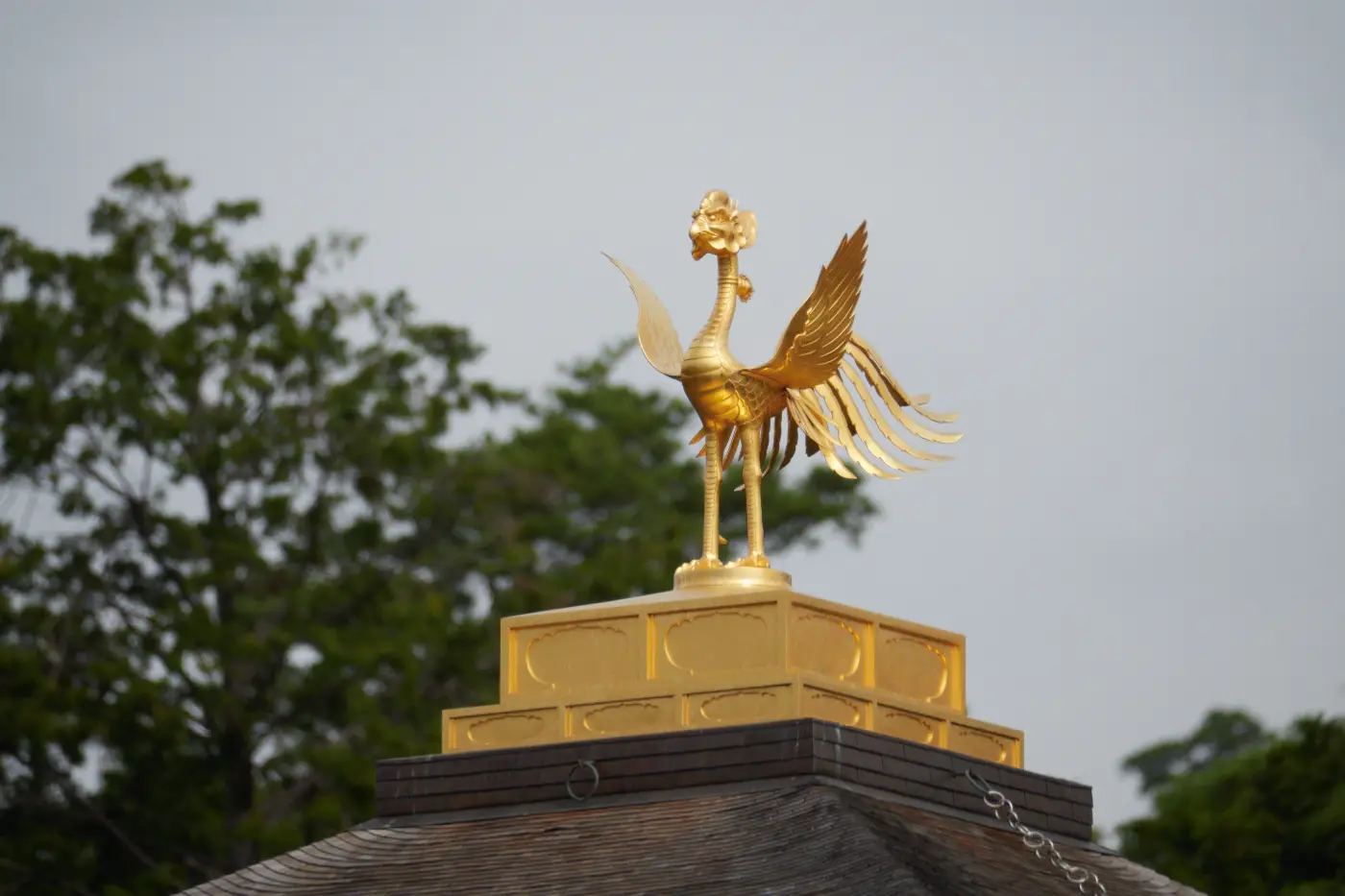
The building you see is from 1955. In 1950 a young novice monk set fire to it and it burned to the ground — an event that shocked the country and that Yukio Mishima turned into a novel (The Temple of the Golden Pavilion). In the 1987 restoration it was re-gilded with gold leaf five times thicker than the original.
The visit is a one-way circuit of about 25 minutes and you don’t go inside the building; at the end of the route there’s a tea garden where, for about 500 yen, you can sit down for a matcha — a good way to make the visit more than just a selfie.
Ryoan-ji temple is a 20-minute walk away, and it’s up next.
Next stop: Ryoan-ji, a 20-minute walk.
13. Ryoan-ji: the rock garden nobody has managed to explain
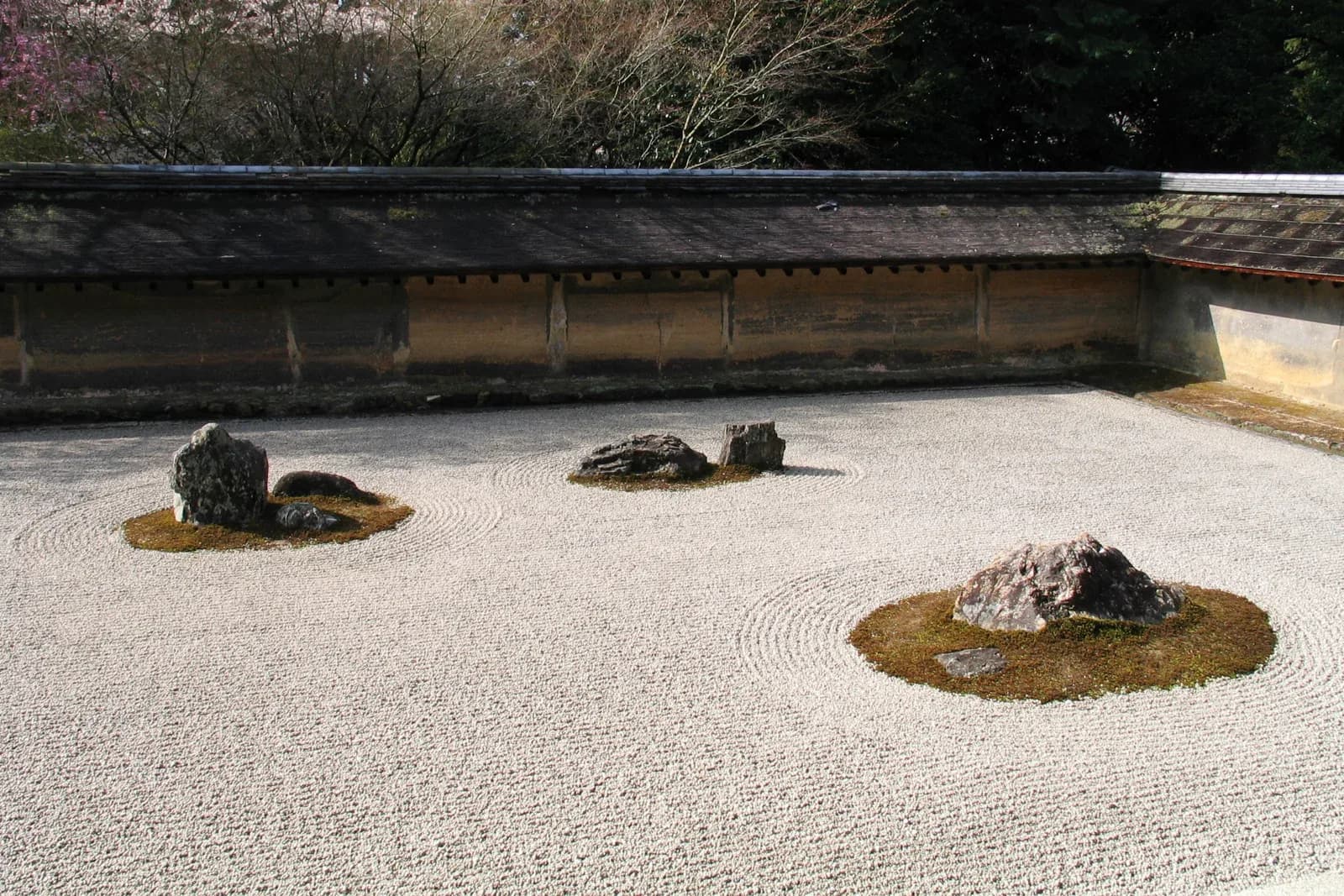
Perhaps the most famous Zen rock garden in the world.
Fifteen rocks in five groups on a raked gravel rectangle of about 25 by 10 metres, and the famous detail is that from the wooden veranda you can never see all fifteen at once: there’s always one hidden behind another. Nobody knows who designed it or exactly when, and in such a studied garden, that mystery is part of the appeal.
メモNote
Open 8:00 to 17:00 (8:30 to 16:30 in winter), 600 yen.
Two things to look at once you’ve tired of counting rocks. First: the far wall is lower than the entrance wall and the ground has a slight slope — a perspective trick to make the garden feel deeper than it is. Second: behind the building there’s a tsukubai, a stone water basin with four characters that only make sense if you add the square hole in the middle, reading ware tada taru wo shiru — “I only know that I have enough”. All of Zen summed up in four strokes.
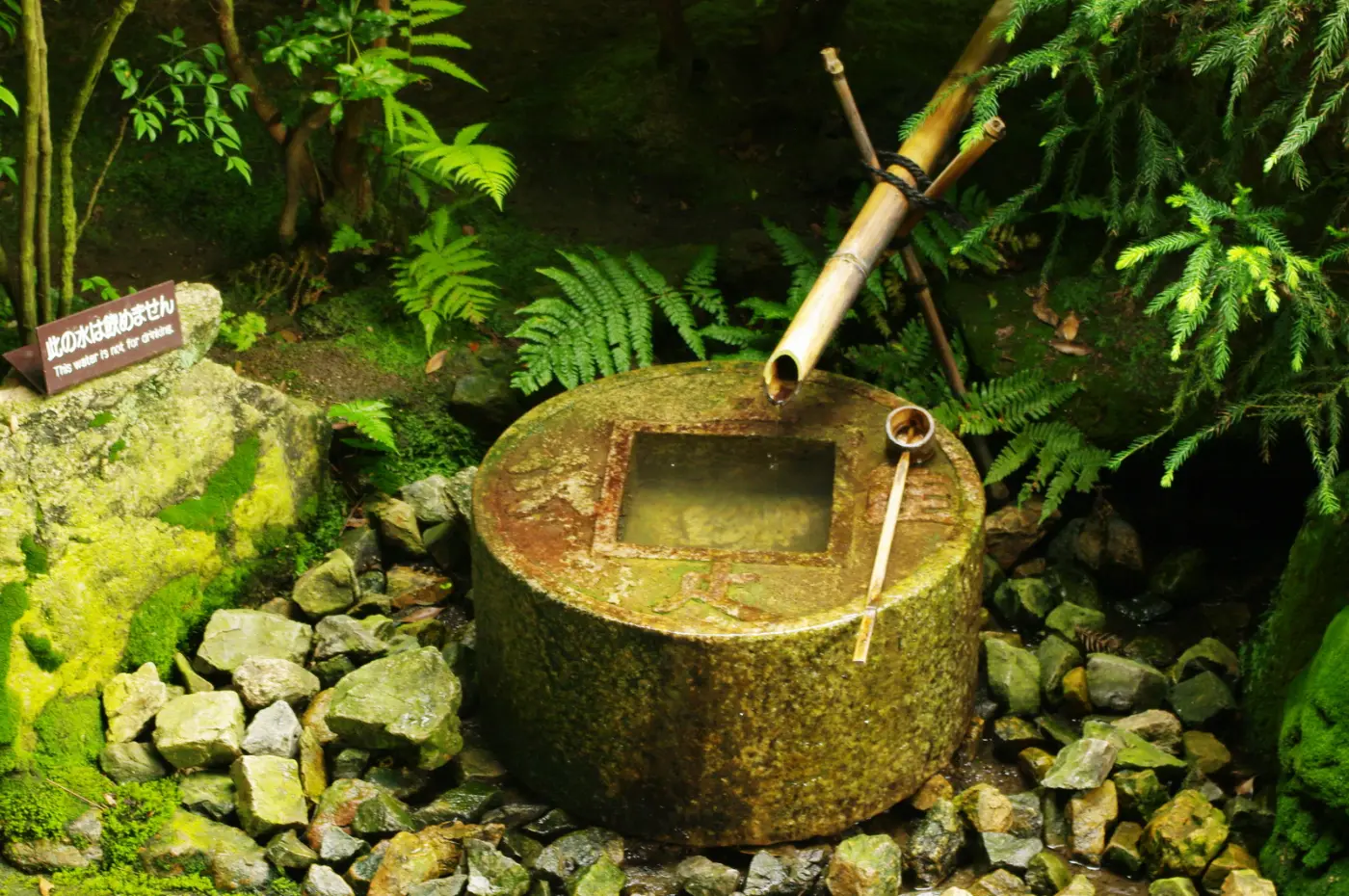
The visit ends at the dry garden, so the Kyoyochi pond by the entrance, created in the 12th century, is usually much quieter. If you can, the thing to do is sit on the veranda for ten minutes without worrying about photos: the garden is designed for exactly that, and standing up it isn’t the same.
Next stop: Arashiyama, 30 minutes by bus, or by train from Kitano-Hakubaicho.
14. Arashiyama bamboo grove: the ten minutes you have to earn
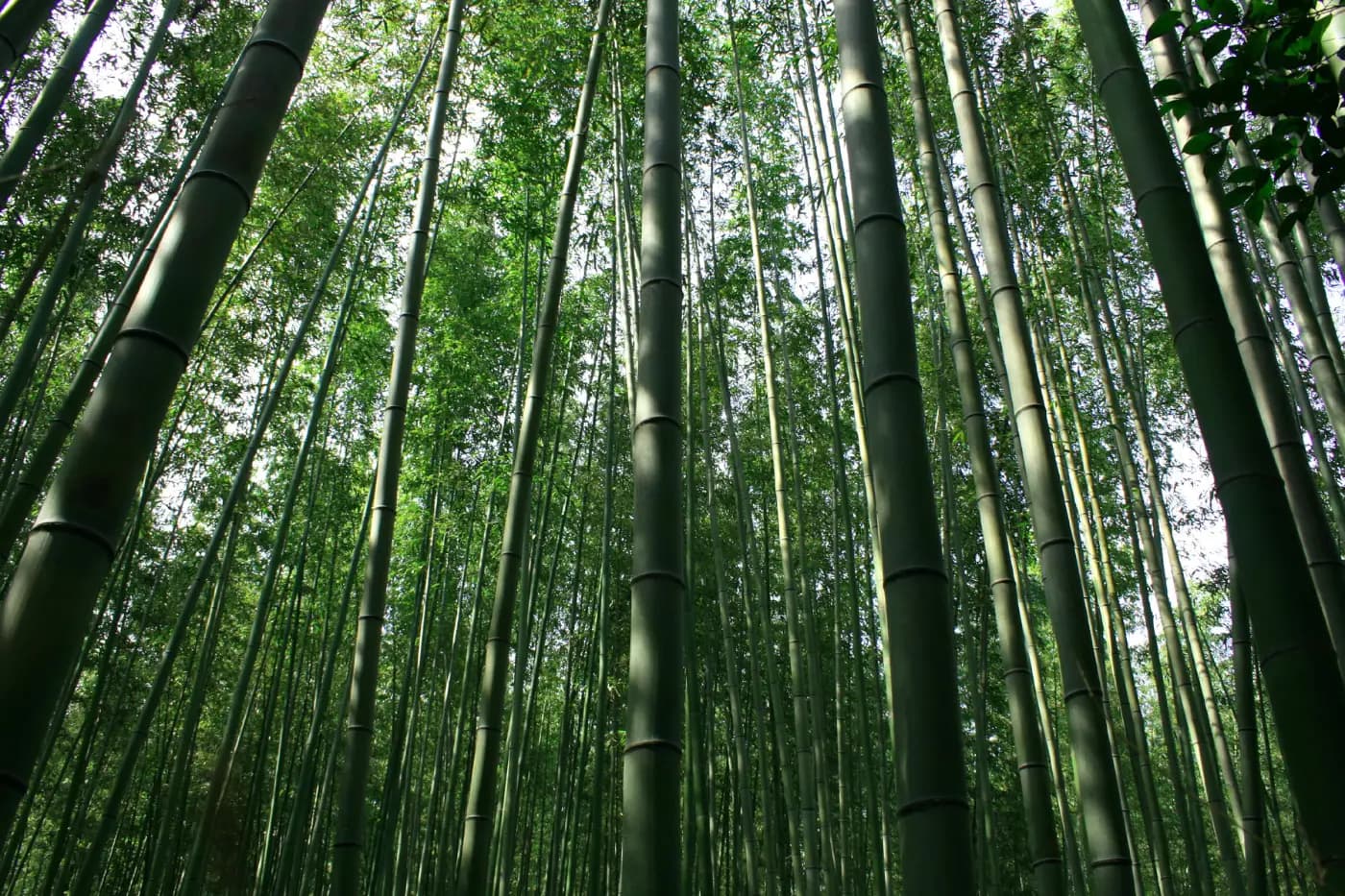
Free, open at all hours, and one of the places that strays furthest from the Instagram photos if you get the timing wrong: the empty shots you’ve probably seen are taken before seven in the morning; by half past nine it’s an avenue with human traffic in both directions. The main path is about 500 metres and takes ten minutes.
Go early and the place is hypnotic — and above all, it’s a place for listening: the creak of the swaying stalks is included in the official list of Japan’s “one hundred soundscapes” worth preserving, compiled by the Ministry of the Environment. With your eyes closed you understand it better than through a camera.
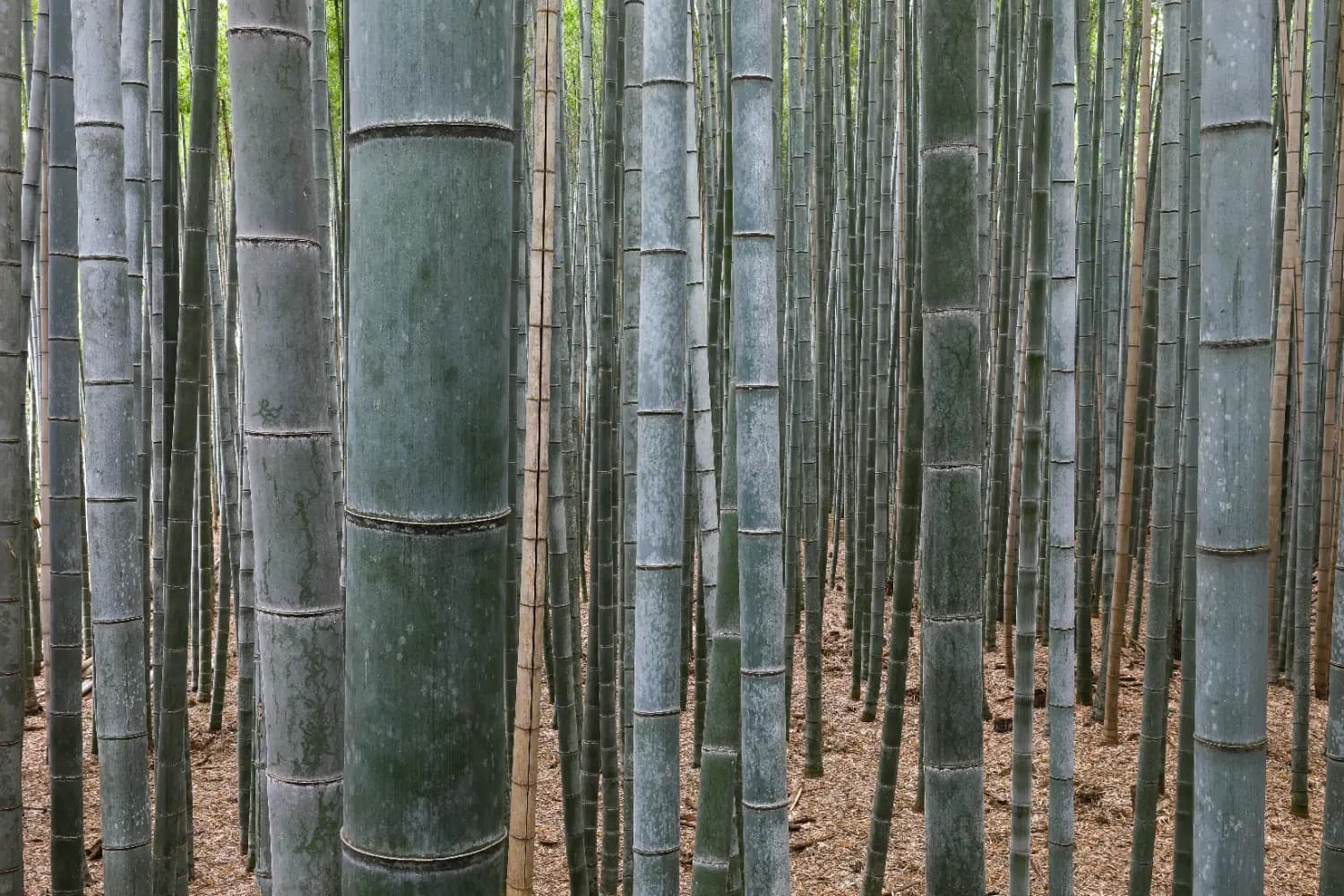
Three things turn this “ten minutes of bamboo” into a well-rounded half day:
- Nonomiya-jinja, at the entrance to the grove: a small shrine with torii of unstripped black bark, among the oldest of their kind in Japan, which appears in the Tale of Genji. Imperial princesses came here to purify themselves before serving at Ise.
- Okochi Sanso Villa, at the end of the path: the house and gardens of a Japanese silent-film actor, with views over the mountains and the city. About 1,000 yen with matcha and a sweet included. It’s usually nearly empty and a real pleasure.
- The Sagano scenic railway and the boat ride down the Hozu River, two hours at the oars through gorges down to the Togetsukyo bridge. In autumn, among the best things you can do in Kyoto.
Back at Randen station, the Kimono Forest awaits:
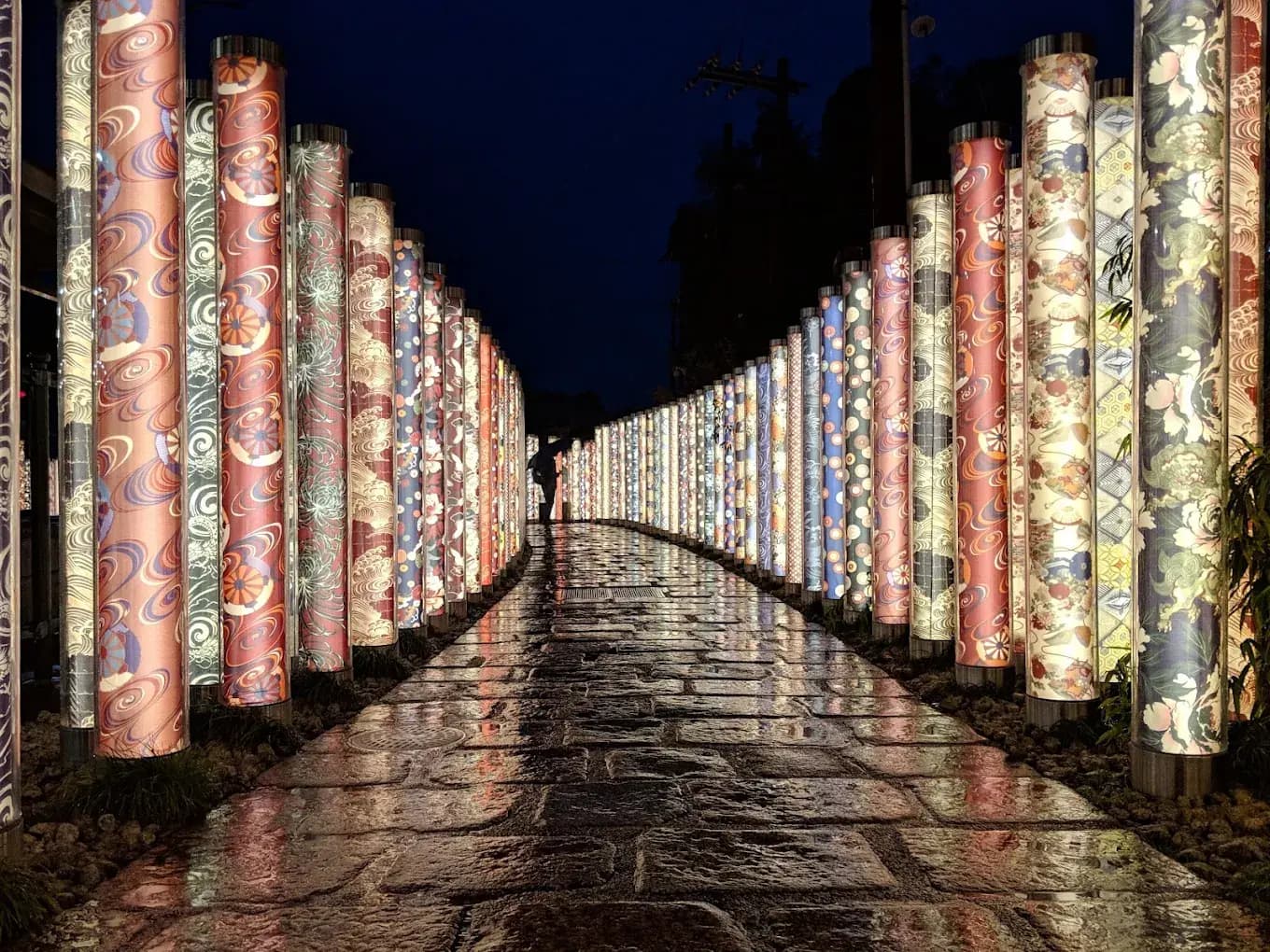
Hundreds of columns lined with kimono fabric that light up as night falls. It costs nothing and it’s on your way.
Next stop: Tenryu-ji, right beside the grove through its north gate.
15. Tenryu-ji: the garden that hasn’t changed in 700 years
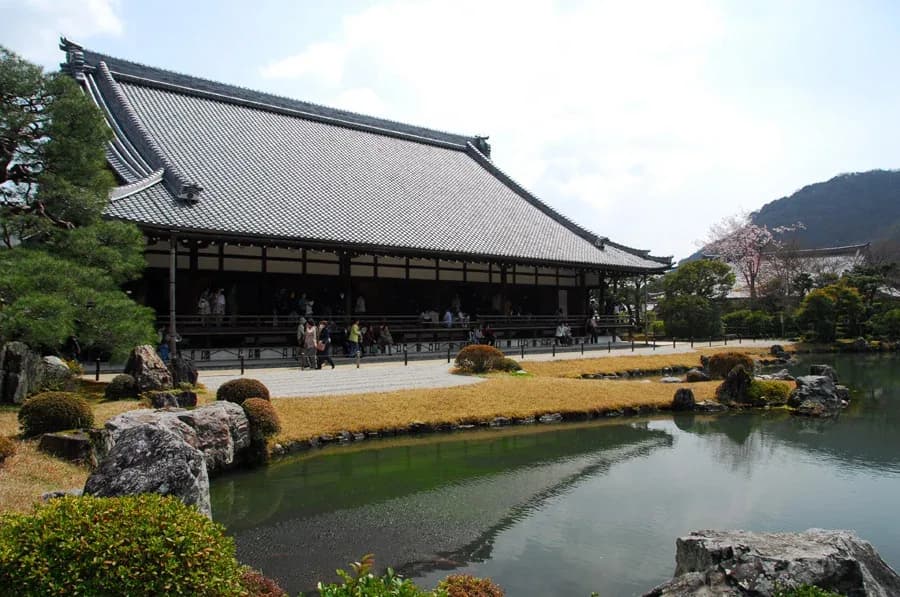
Arashiyama’s great temple, a World Heritage Site and first in the ranking of Kyoto’s five great Zen temples.
It was founded in 1339 for a “very Japanese” reason: shogun Ashikaga Takauji had it built to appease the spirit of Emperor Go-Daigo, whom he had just overthrown and who had died in exile. Since there was no money, the works were funded with trading ships to China, the tenryuji-bune. A temple paid for with foreign trade to calm a ghost.
メモNote
Entry to the garden costs about 500 yen, with supplements for the buildings and the dragon pavilion, and it sits right against the bamboo grove, so you can visit them back to back (the temple even has a direct gate from the grove).
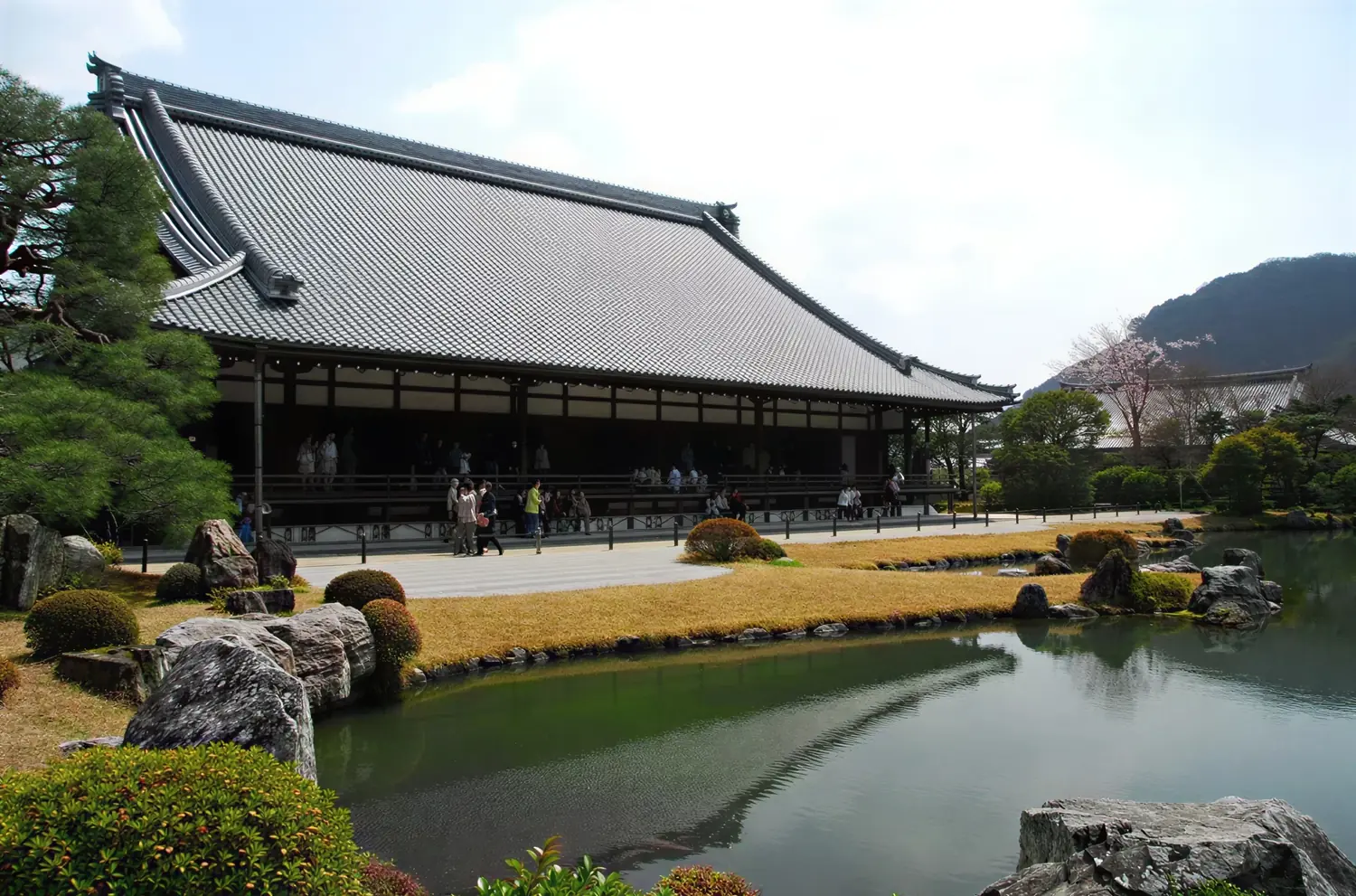
Among the most beautiful things here is the Sogenchi garden, designed by the monk Muso Soseki almost seven hundred years ago and preserved practically intact: it was the first place in all of Japan to receive official designation as a Site of Special Scenic Beauty. It applies the technique of shakkei, borrowed scenery: the Arashiyama mountains are part of the composition, so the garden seems to never end. And across the pond there’s a rock arrangement depicting a waterfall with a carp turning into a dragon — the Zen metaphor for enlightenment.
If the Hatto, the sermon hall, is open (weekends and special periods), it’s worth going in to see its cloud dragon ceiling, which follows you with its gaze from any point in the room.
Next stop: the Togetsukyo bridge, a five-minute walk towards the river.
16. Togetsukyo Bridge: the moon-crossing bridge
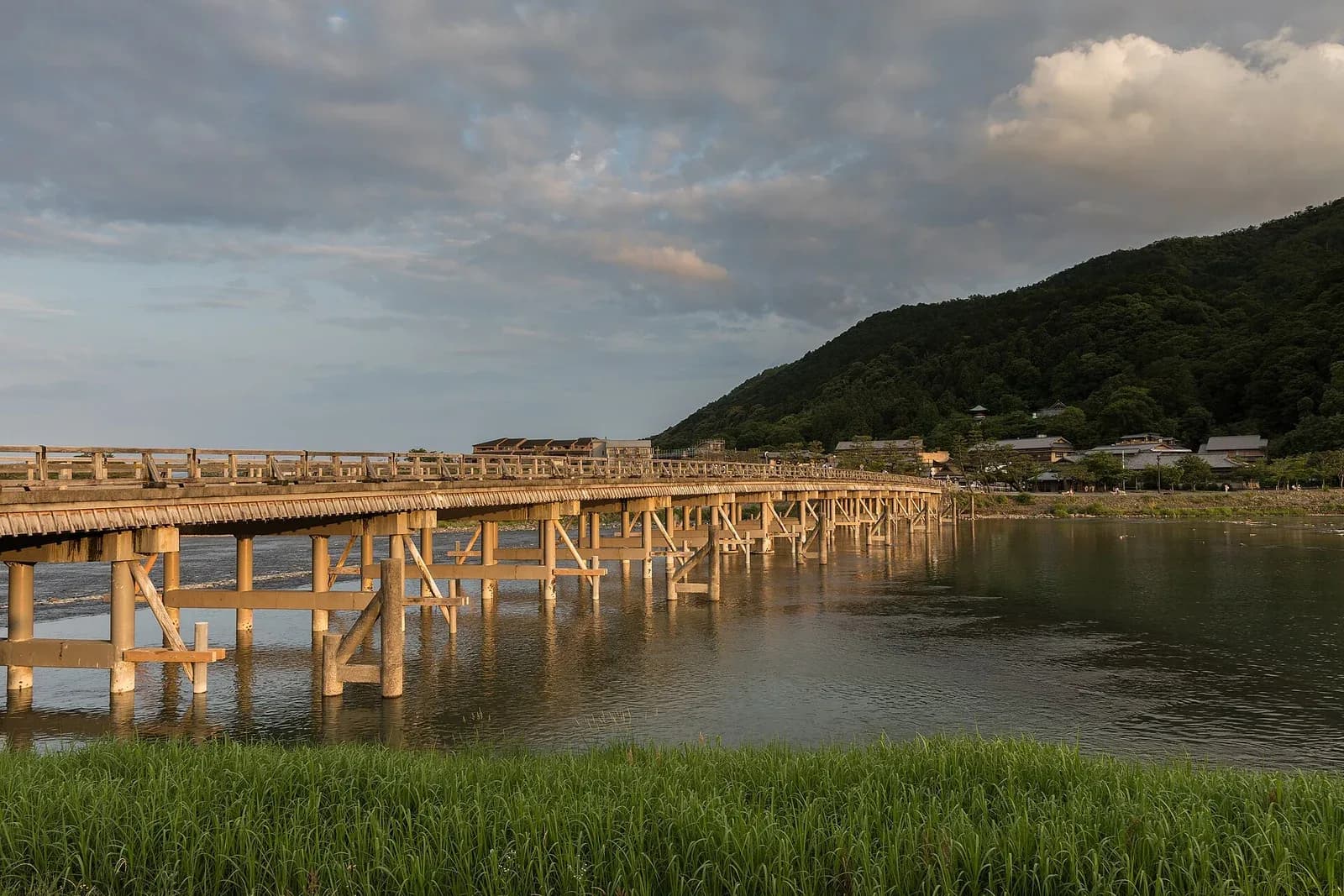
Arashiyama’s historic bridge, with the mountains behind. Its name means “the bridge that crosses the moon”, given by Emperor Kameyama in the 13th century when he watched the moon travel across it.
Here’s a detail that confuses everyone with maps: the same river changes its name three times. Upstream it’s the Hozu, at the bridge it’s the Oi, and downstream it becomes the Katsura.
メモNote
The current bridge is from 1934 — reinforced concrete clad in wood to keep the look — though there’s been a bridge here since the 9th century.
The best light is at sunset from the north bank, and in November, with the koyo (the autumn colour), it’s the postcard that illustrates half of Kyoto. At midday, on the other hand, it fills with people and rickshaws, so the quiet scene calls for first thing or last thing.
If you fancy stepping off the circuit, rowing boats are rented on the bank (an hour for about 2,000 yen).
Next stop: the Iwatayama monkey park, on the other side of the bridge.
17. Iwatayama Monkey Park: all of Kyoto from above
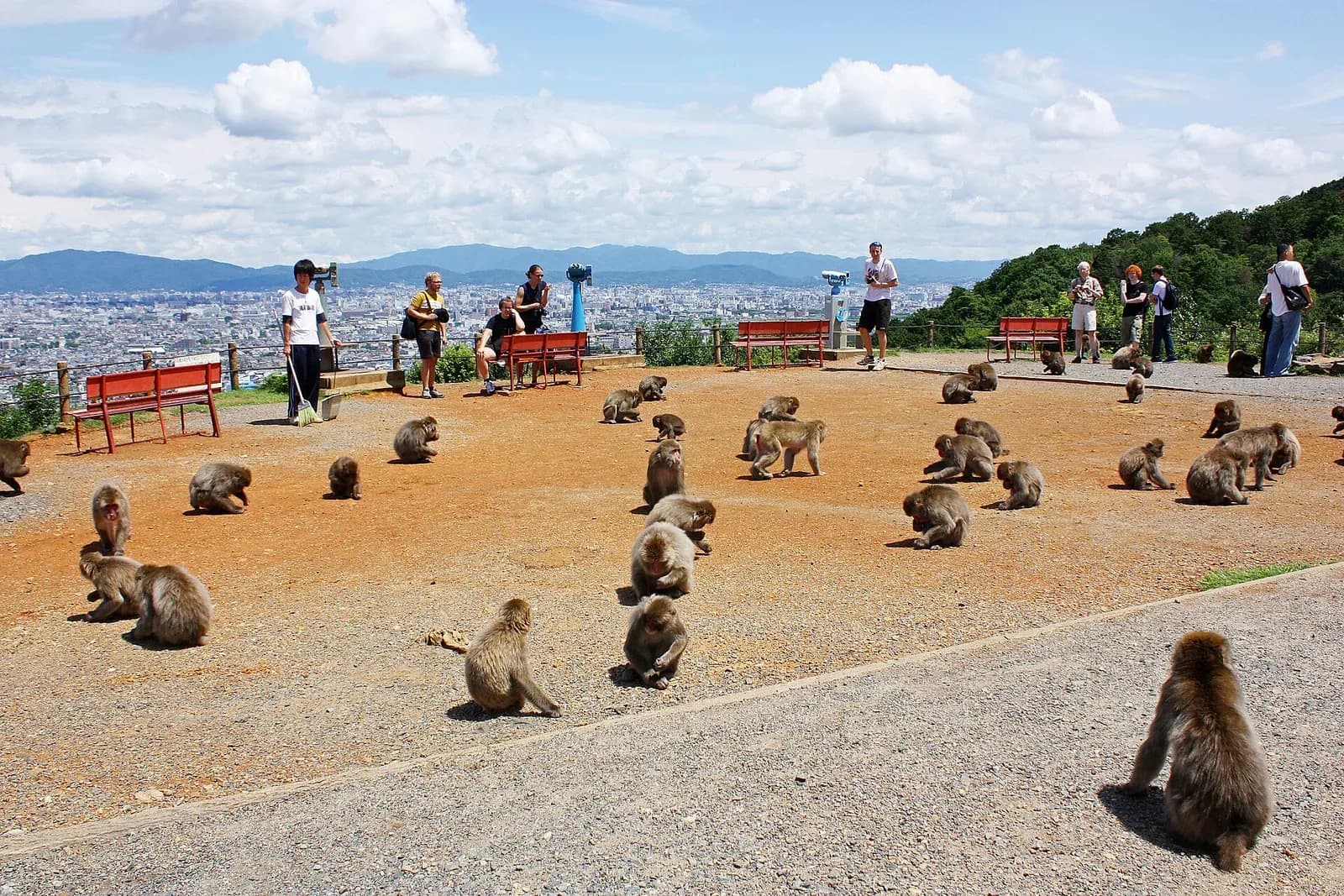
On the other side of the bridge there’s a short but steep climb (1.4 kilometres and 160 metres of elevation, about twenty sweaty minutes in summer) to a spot where you can see Japanese macaques roaming free and, at the top, one of the best panoramic views of Kyoto.
The park opened in 1957 and more than 120 macaques live on the mountain, every one identified and named since behavioural studies began in the 1950s. It’s one of the birthplaces of Japanese primatology, which was a world pioneer precisely for treating each animal as an individual with a biography.
メモNote
Open 9:00 to 16:30 (16:00 in winter), 550 yen.
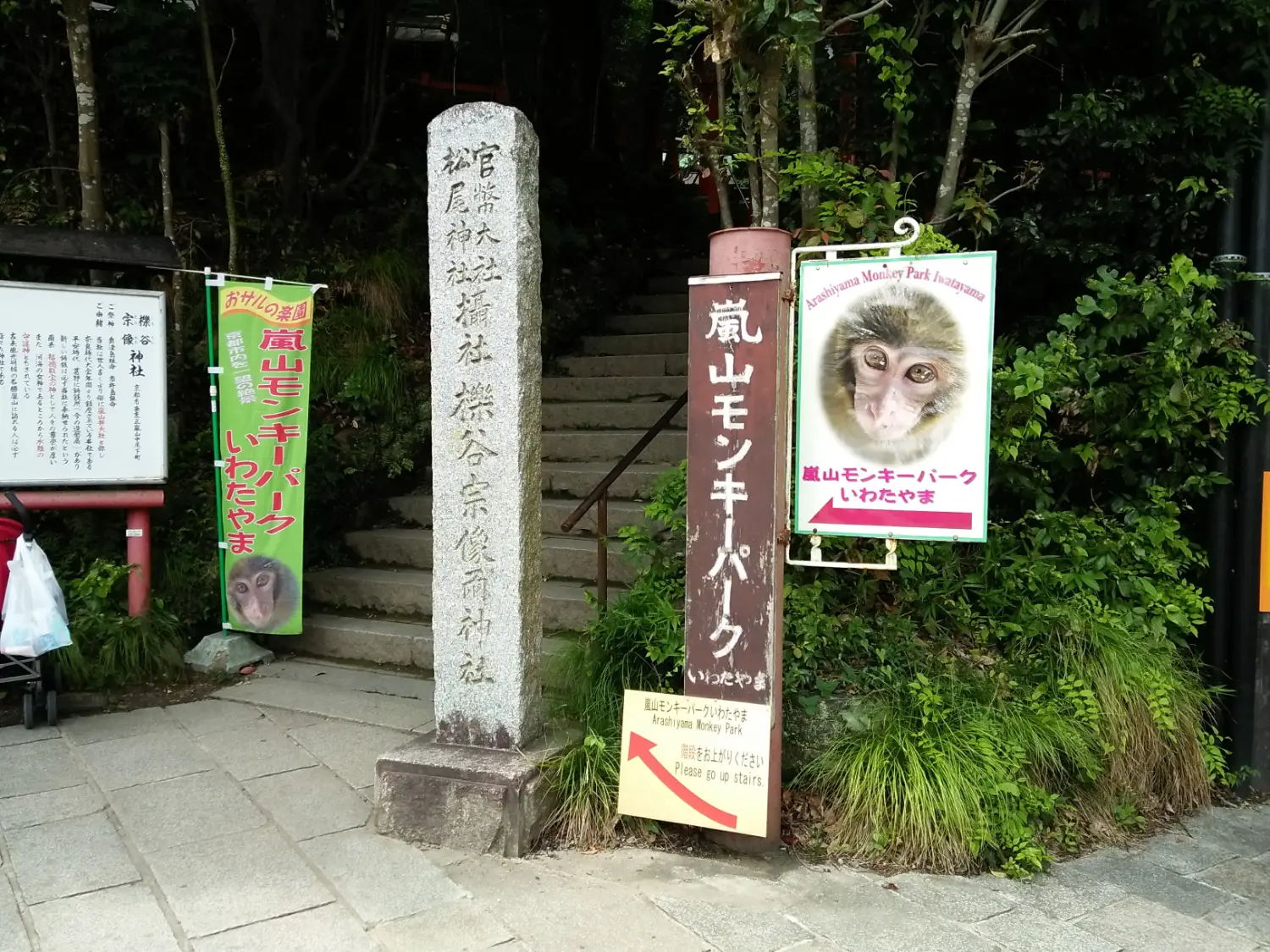
On entering, there are a few rules to follow: don’t stare into their eyes (to a macaque it reads as a challenge), don’t touch them, don’t carry food in sight, and feed them only from inside the hut, with what you buy there.
If you climb between May and July there are babies, and watching the mothers carry them around makes the walk worth it on its own.
End of the day. From Arashiyama station you’re back in the centre in half an hour.
別案Variations
- Fast route: Kinkaku-ji and the bamboo, and on to something else. Relaxed route: skip Nijo and add the Sagano scenic railway. If it rains: the Ninomaru Palace and Tenryu-ji are covered.
Zone 3 · Northern Higashiyama: the linear walk almost nobody prioritises
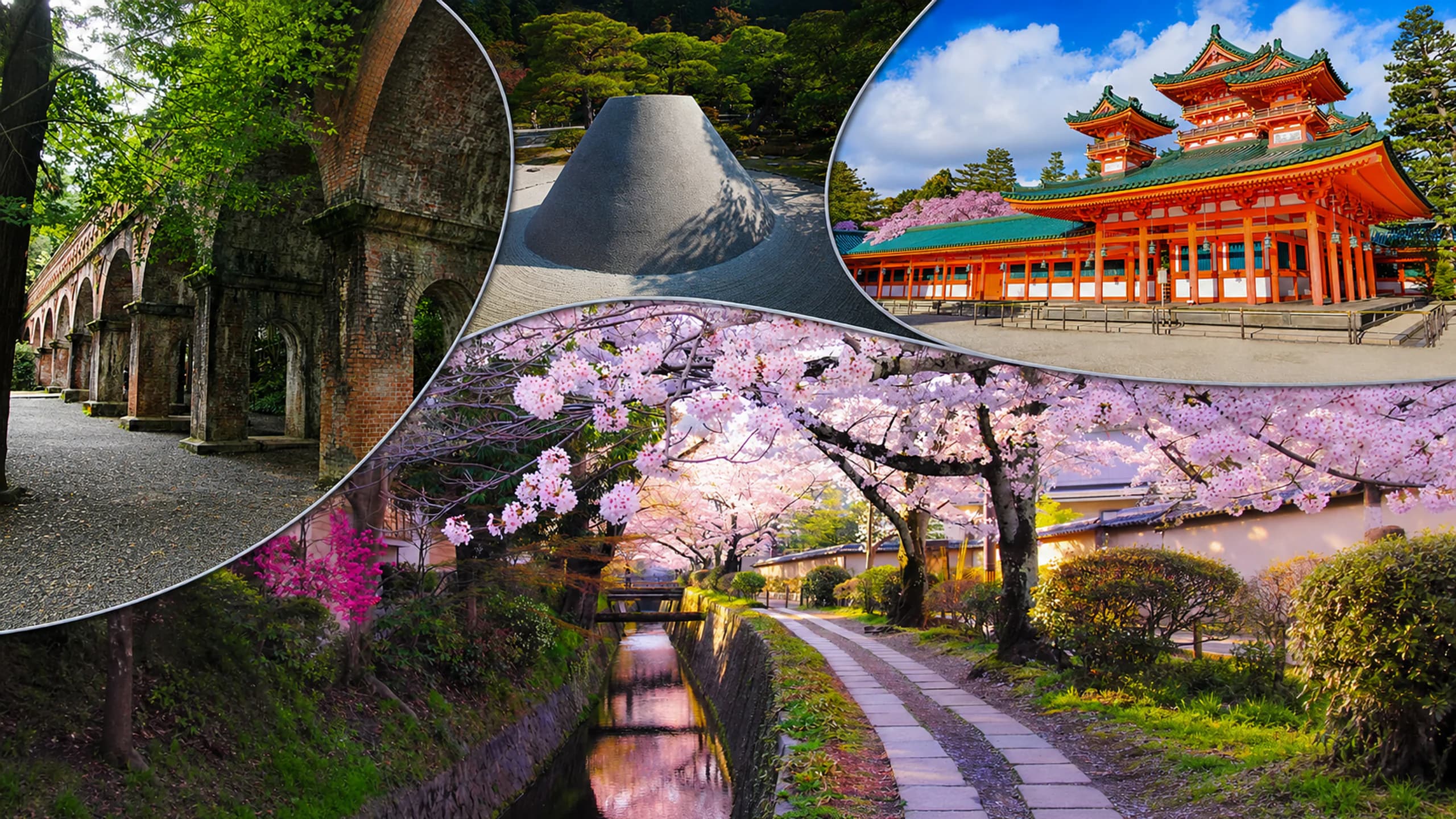
One of our favourite areas of the city and one of the least likely to appear in three-day itineraries. You walk the whole thing, north to south and downhill, and it chains together a huge temple, a pavilion, a canal, an aqueduct and a railway line that boats used to ride up.
You’ll see people, but you probably won’t queue at any point, and the difference from the Kiyomizu-dera area is very noticeable.
Here are the main stops along this walk.
The zone at a glance
Short on time?
- Don’t missGinkaku-ji and the Philosopher’s Path.
- OptionalThe Keage incline, Honen-in and the Shin-en garden of the Heian Shrine.
- If you only have half a dayGinkaku-ji and the walk down to Nanzen-ji.
Northern Higashiyama on foot: from Ginkaku-ji to Heian
North to south, downhill and without taking any transport. The canal itself is two kilometres.
Open the zone 3 route in Google Maps
It’s the most well-rounded of the four zones and the one fewest people prioritise — which is exactly why it works so well. You do it north to south, in a straight line and downhill, without boarding anything. Five or six hours of continuous strolling without a single queue. Let’s look at the specific places it covers.
We do this zone with you
Northern Higashiyama walks itself, but it changes completely with someone telling you what you’re looking at. We build the day at your pace.
18. Ginkaku-ji, the Silver Pavilion that never got its silver
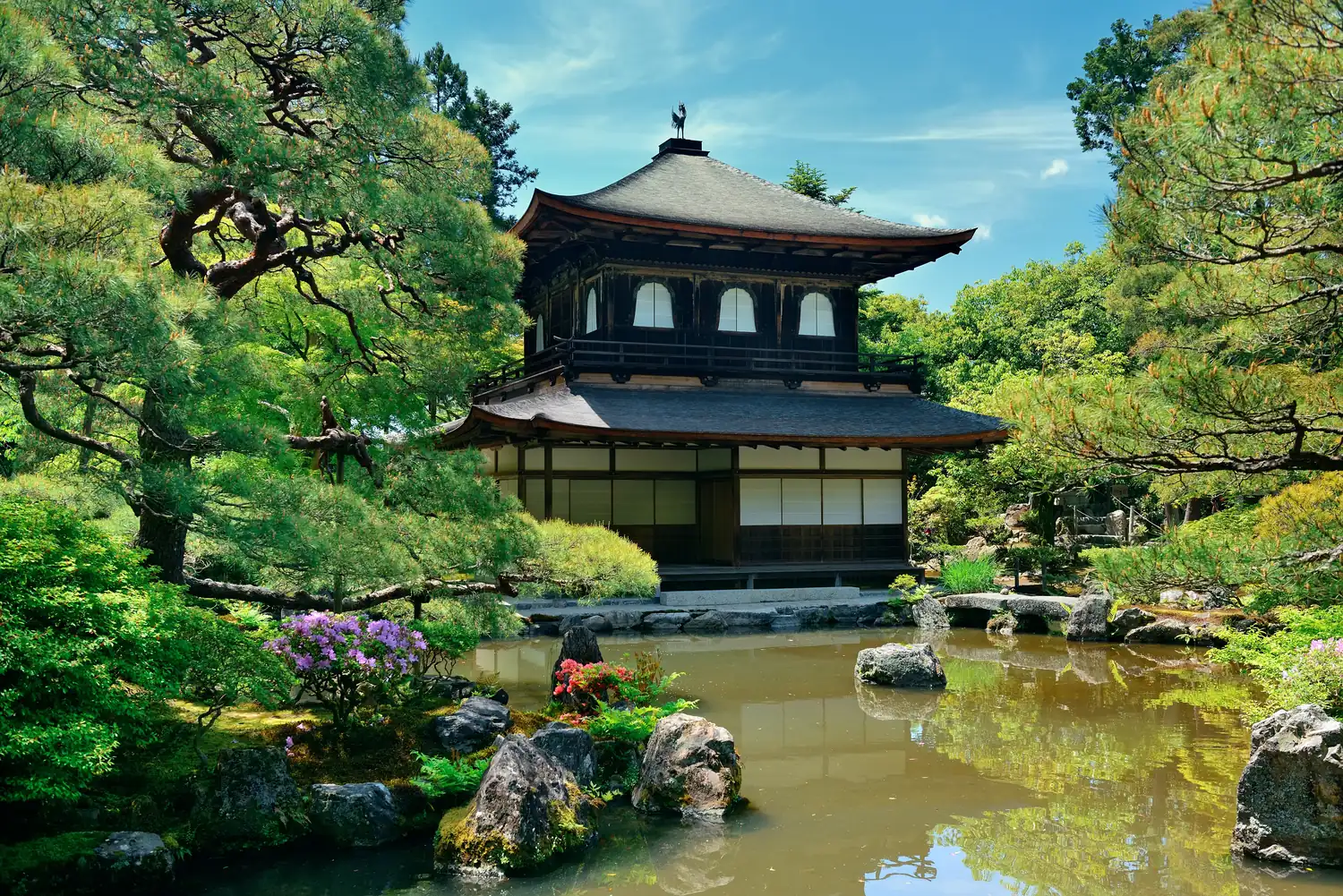
Ginkaku-ji is the counterpart of Kinkaku-ji (the Golden Pavilion): the Silver Pavilion, which in fact never got covered in silver — and perhaps that’s why it embodies so well the Japanese aesthetic of sober beauty. Open 8:30 to 17:00 (9:00 to 16:30 in winter).
Worth knowing if there are several of you.
メモNote
Outdated guidebooks still quote the old price: admission now costs 1,000 yen, double what it cost until 1 April 2026.
It was built in 1482 by shogun Ashikaga Yoshimasa, grandson of the Ashikaga Yoshimitsu who built the Golden Pavilion, and it holds one of the great ironies of Japanese history: while his city burned in the Onin War (eleven years of conflict that left 15th-century Kyoto in ruins), he devoted himself to aesthetics.
Out of that obsession came the Higashiyama culture — the birth of almost everything that feels essentially Japanese today: the tea ceremony, ikebana, noh theatre, shoin architecture (the tatami study room with alcove and paper windows, the basis of the traditional Japanese house) and the idea of wabi-sabi (the beauty of the imperfect and the ageing).
This temple’s four-and-a-half-tatami room (in Japan the tatami is a unit of measurement as well as a material), the so-called Dojinsai, is considered the origin of the tea room.
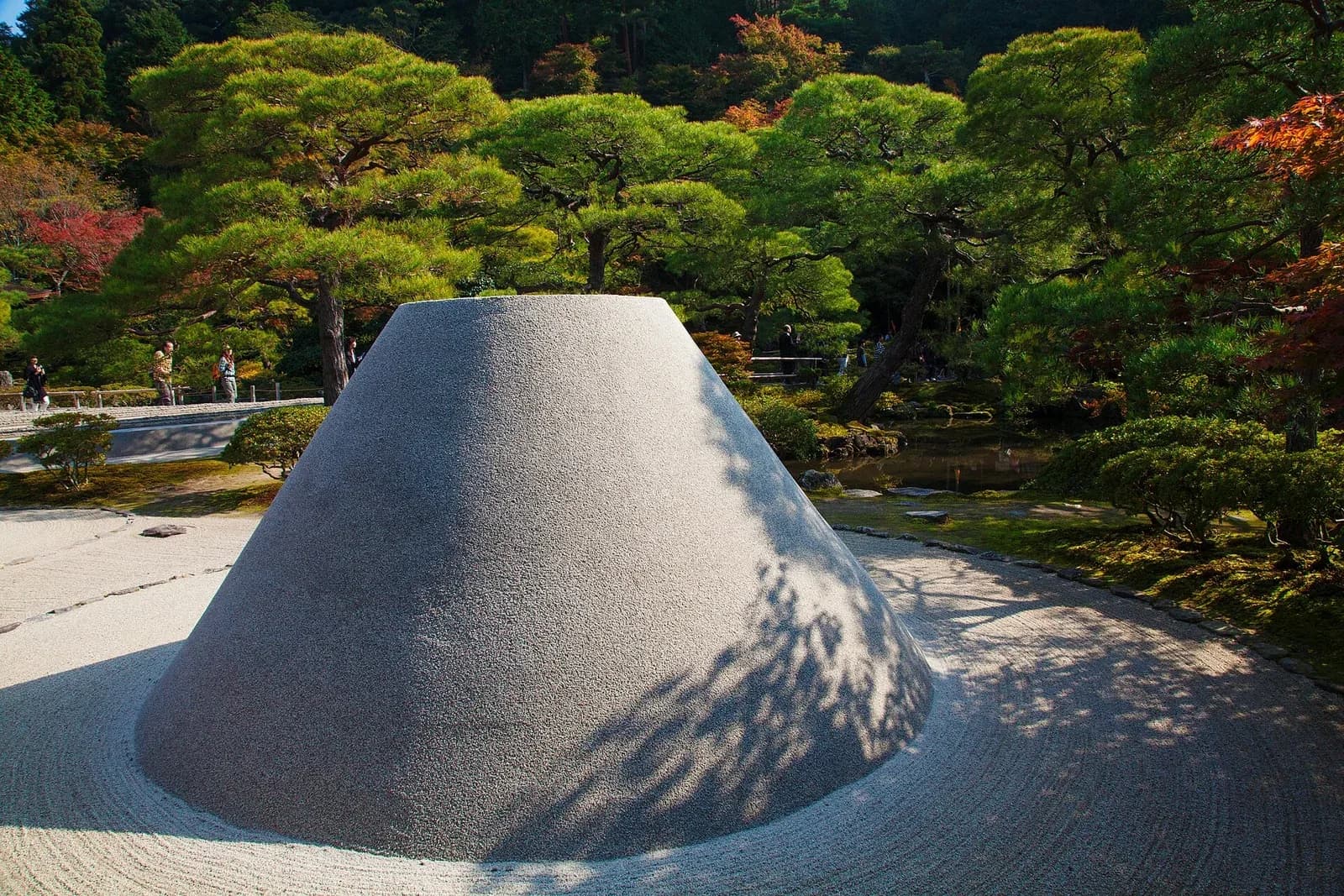
Inside there are two spots that ask to be visited slowly: the Ginshadan, a sea of raked sand, and the Kogetsudai, a two-metre cone of sand designed for moon-viewing. Both are raked by hand every morning. The circuit then climbs through a moss garden to a lookout with all of Kyoto at your feet, and right there the ticket pays for itself.
Next stop: the Philosopher’s Path starts right at the temple exit.
19. Philosopher’s Path: two kilometres of canal and cherry trees
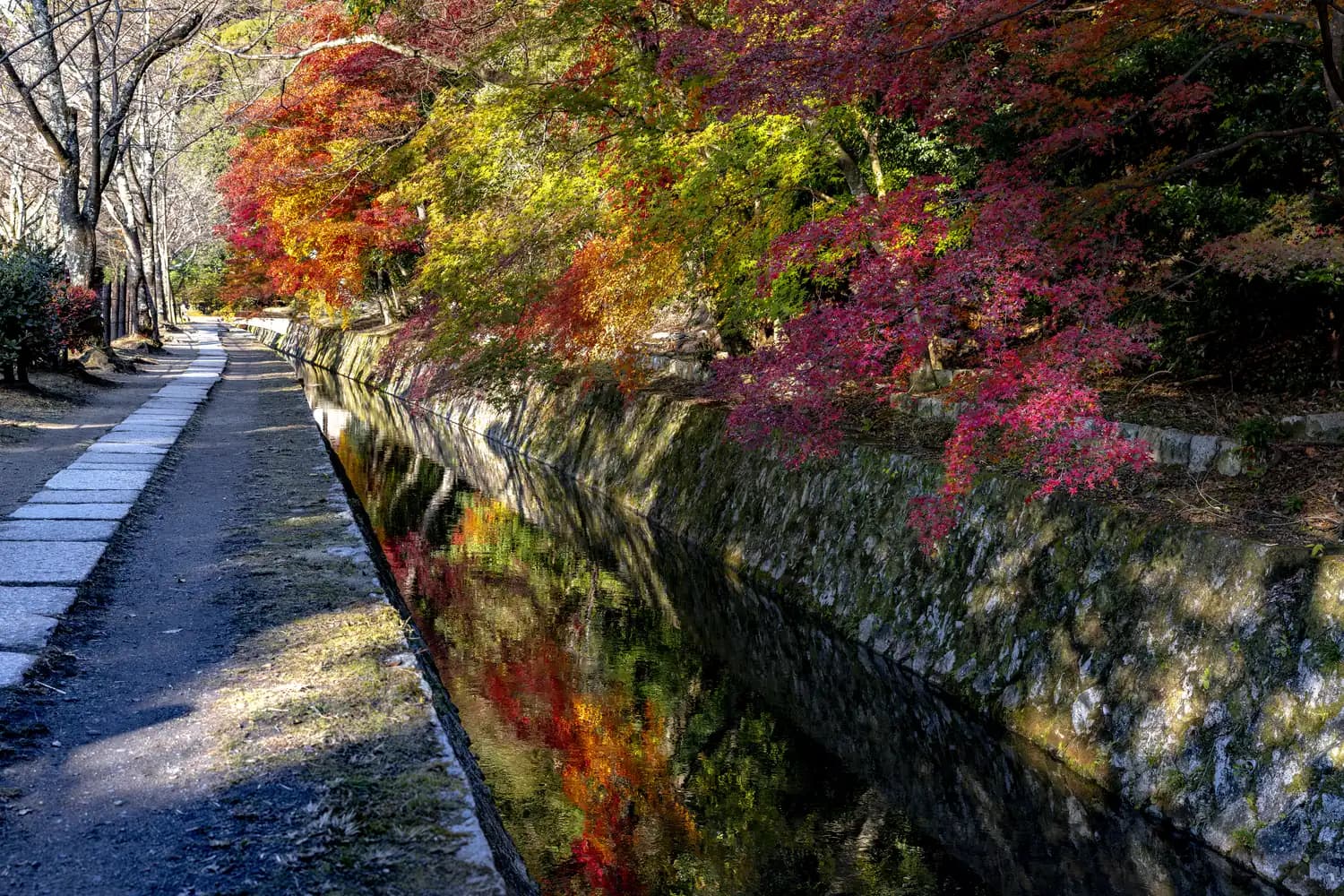
The Philosopher’s Path (in Japanese, tetsugaku no michi) is two kilometres of trail along a canal linking Ginkaku-ji with the Nanzen-ji area. The way to do it is north to south, from Ginkaku-ji: it’s downhill and you end up in the area with the best restaurants.
In season, going at seven in the morning makes a real difference. Outside the blossom weeks it’s a green, quiet walk where you’ll cross paths with more cats than people — a rather charming sight.
豆知識Fun fact
The cherry trees that made this walk famous were donated in the 1920s by the wife of the painter Hashimoto Kansetsu, and in April they form a tunnel of blossom over the water.
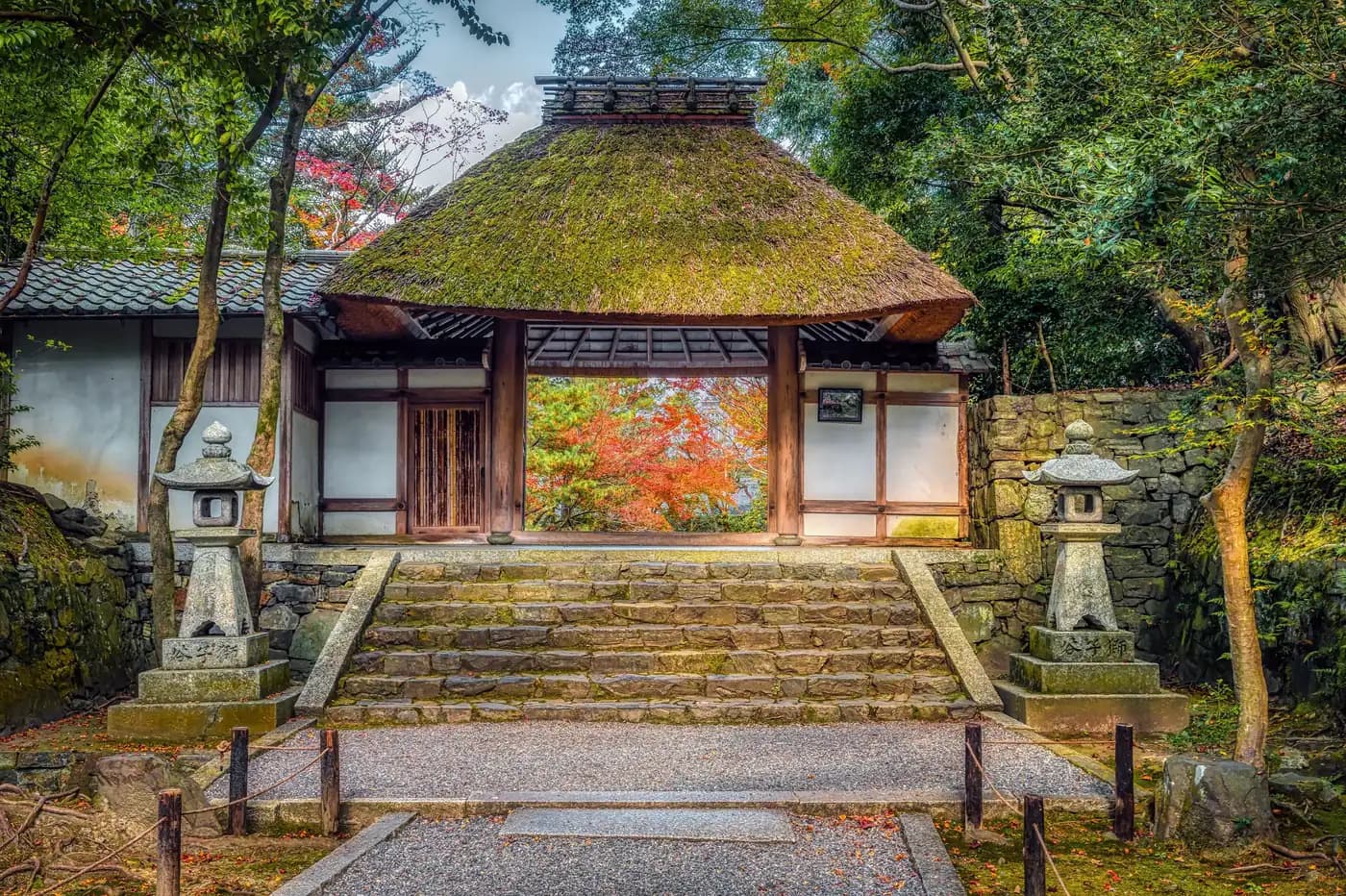
With barely any detour there are two more gems that are usually empty: Honen-in, with its mossy gate and two sand mounds the monks redesign every season, free and with a silence from another planet, and Eikando, which in November is probably the best maple temple in the city (for the momiji, the red leaves of autumn).
Next stop: Nanzen-ji, where the path ends.
20. Nanzen-ji: the Zen temple with a brick aqueduct running through it
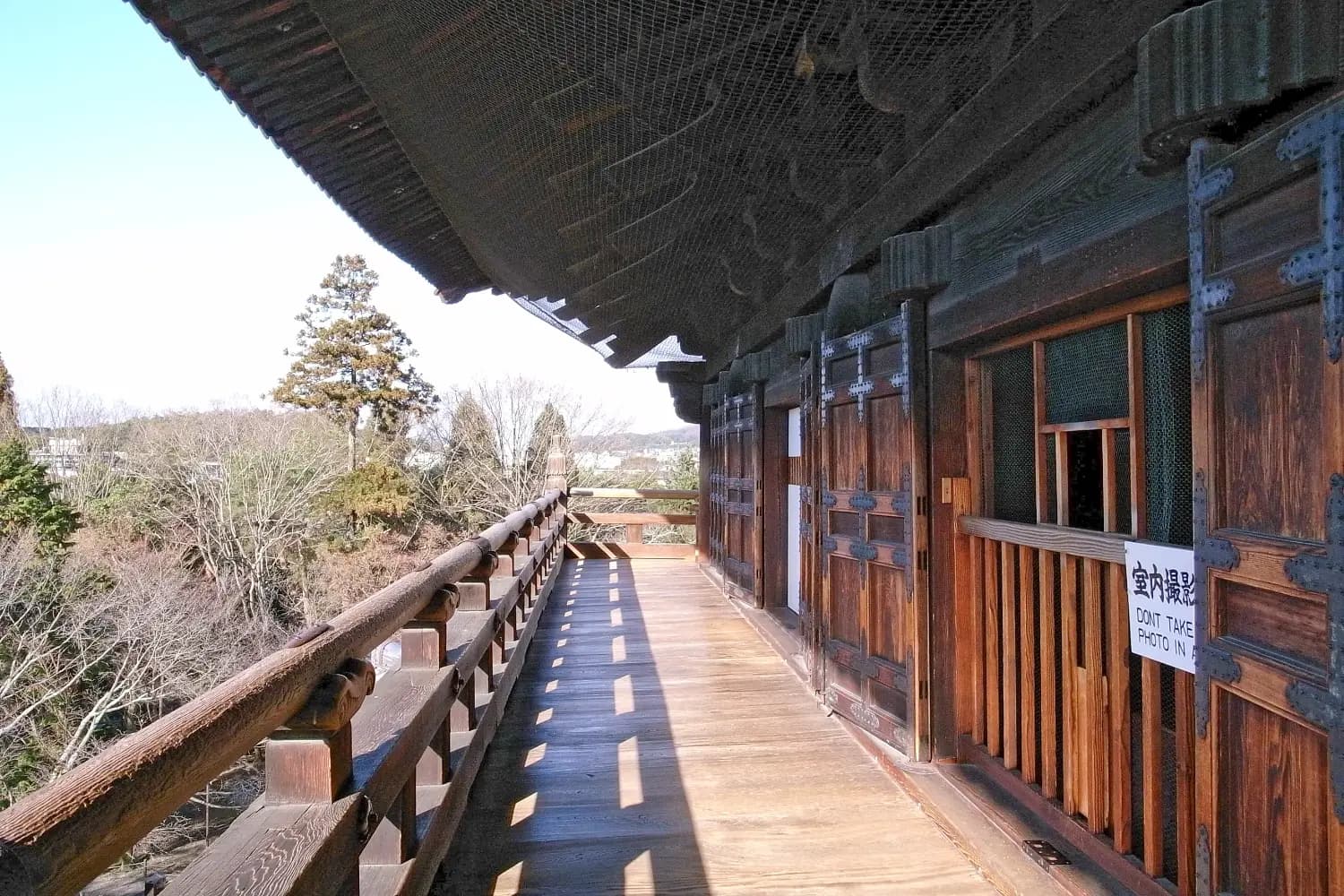
One of the most important Zen temples in Japan (in fact, in the official hierarchy of Japanese Zen it ranks above Kyoto’s so-called five great Zen temples) and one of our favourites, because the grounds are enormous, wooded, free and surprisingly calm.
You can wander without paying anything, and then there are three optional tickets of about 600 yen each: climbing the Sanmon gate, 22 metres with views over the rooftops and maples; the garden of the Hojo, the abbot’s residence, attributed to Kobori Enshu (one of the great landscape designers of the Edo period) and known as “the tiger crossing the water”; and the Nanzen-in subtemple, behind the aqueduct.
豆知識Fun fact
A nod many Japanese will recognise: in the celebrated kabuki play Sanmon Gosan no Kiri, the bandit Ishikawa Goemon gazes out over Kyoto from the top of this gate and exclaims «Zekkei kana!» (What a magnificent view!) — a line any Japanese person will recognise.
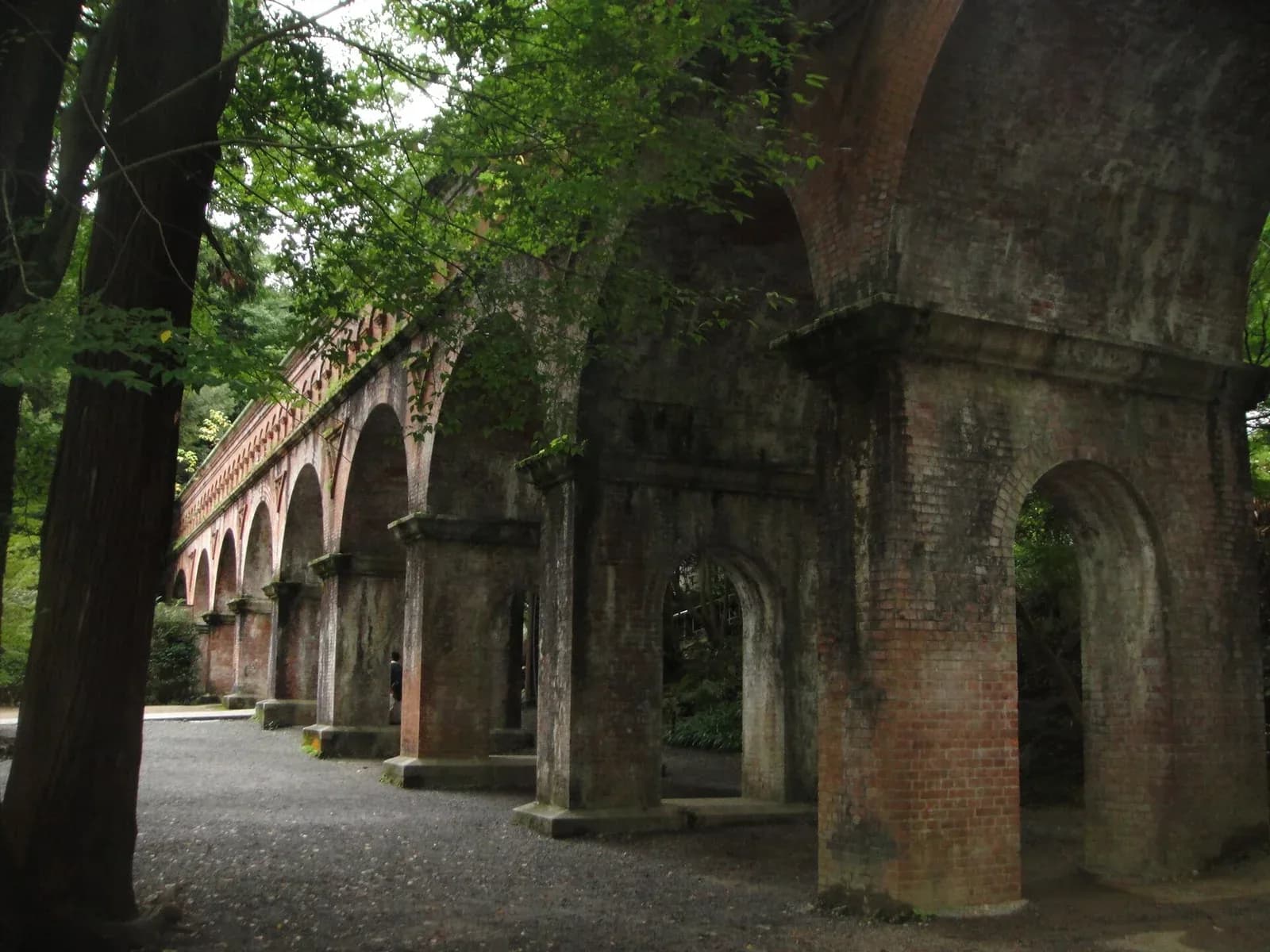
In the middle of the grounds comes a surprise: the Suirokaku, a brick aqueduct from 1890 that looks lifted from the Italian countryside and crosses the temple overhead. It’s part of the Lake Biwa Canal, a project that saved Kyoto: when the capital moved to Tokyo, the city was running out of a future, and they brought water from the neighbouring lake to drink, to move boats and, after a while, to power Japan’s first hydroelectric plant for public use.
What’s more, it’s still in service: the water you see running along the top is water in use, not decoration.
The contrast between Meiji brick and Zen wood isn’t easily repeated anywhere in Japan, and the photos come out beautifully.
Next stop: the Keage incline, two minutes from the aqueduct.
21. The Keage incline: rails among cherry trees
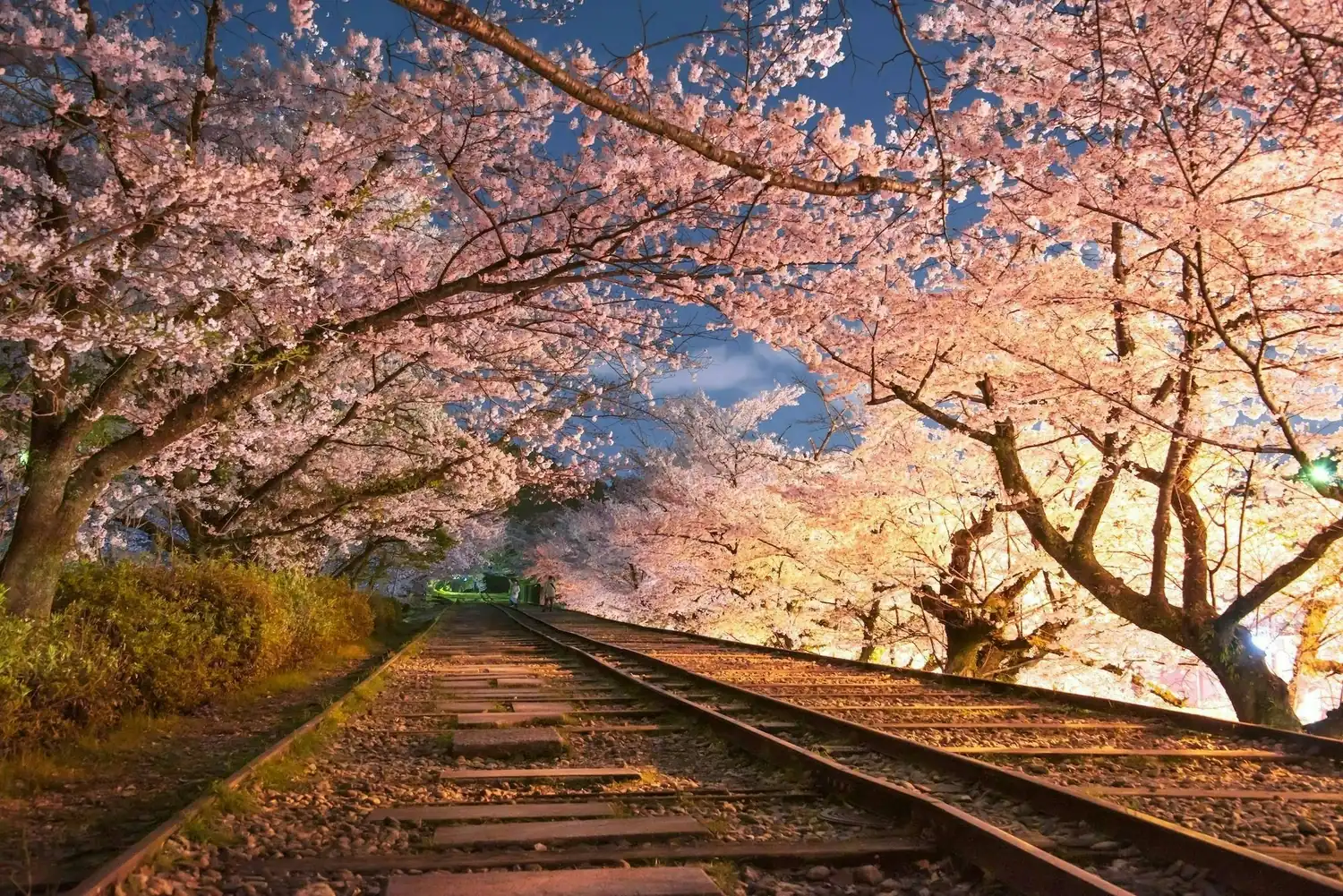
The Keage incline is an old sloping railway line turned promenade, two minutes from the Suirokaku aqueduct. And it wasn’t just any line: boats went up and down it. A trolley with its barge on top is still preserved so you get it at a glance.
Today you walk between the rusted rails, and in spring, surrounded by cherry blossom, it’s spectacular. It combines naturally with Nanzen-ji, because between the incline and the temple there’s a curious brick tunnel with its courses laid in a spiral, the so-called Nejirimanpo.
豆知識Fun fact
The Lake Biwa Canal had a 36-metre drop that boats couldn’t clear, so in 1891 they built this 582-metre ramp along which barges travelled mounted on cable-drawn trolleys.
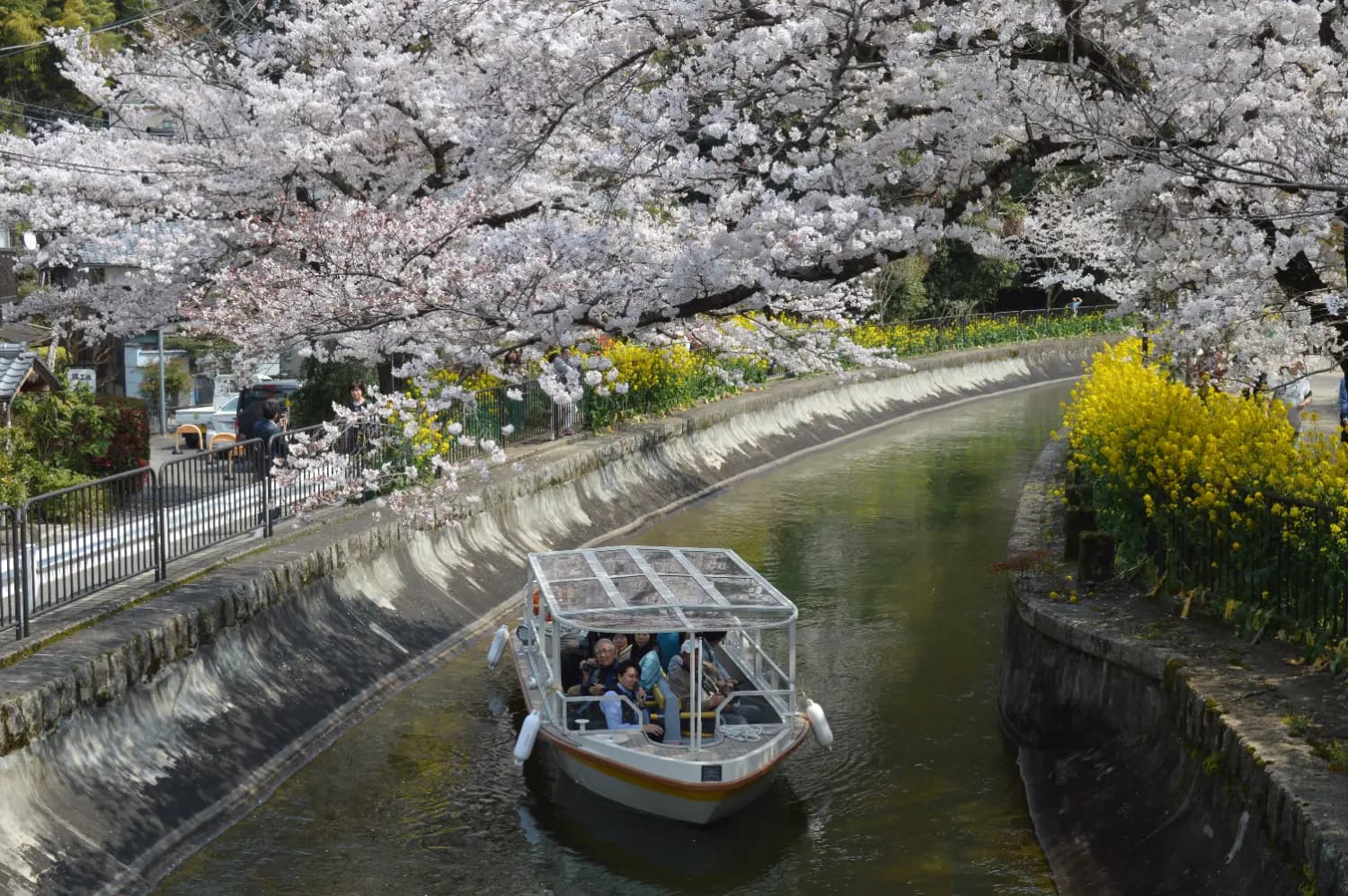
If you want to linger in the area, there are a couple of options nearby: the Lake Biwa Canal Museum, free and very well explained, and the canal cruise, which follows the original route between Otsu and Keage in spring and autumn. It’s paid, booking ahead is essential and seats sell out, but it’s one of the most original experiences in the city.
Next stop: Heian Shrine, a fifteen-minute walk.
22. Heian Shrine: a five-eighths replica of the original palace
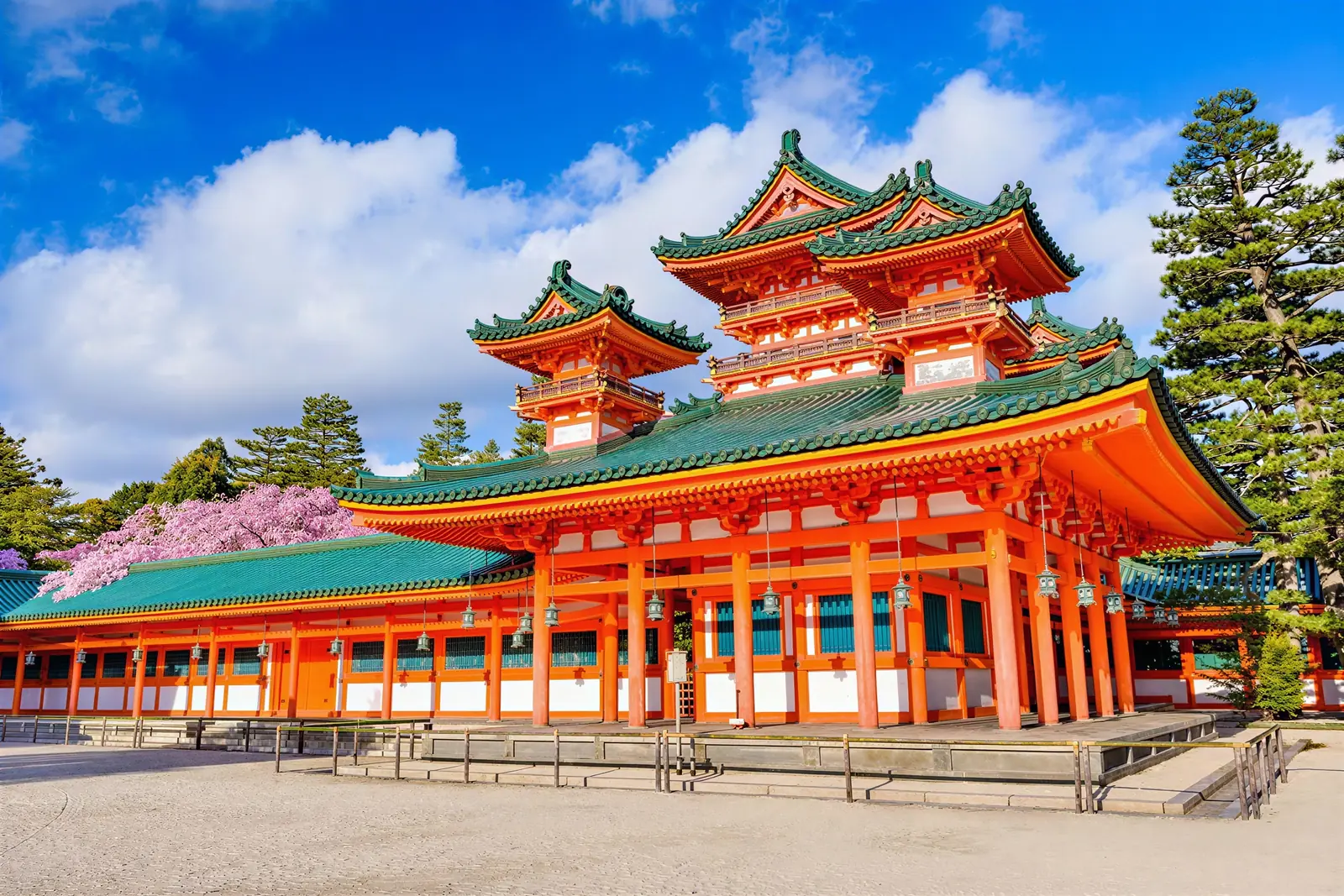
The Heian Shrine (Heian Jingu in Japanese) closes this route, and it sits far enough off the main circuits to be enjoyed in peace.
It is by far the most modern thing on this list: it was built in 1895 to celebrate 1,100 years since the capital moved to Kyoto, at a moment when the city was in low spirits because the emperor had left for Tokyo.
The main building is a five-eighths-scale replica of the 8th-century imperial palace, so what you’re looking at is a giant model of the original palace, with its loud vermilions and greens — exactly how buildings looked at the time, and perhaps not how we imagine ancient Japan today.
Its torii, from 1929 and 24 metres tall, stands several blocks away over the avenue and gives you the scale of what they were going for.
Few people and plenty of shade in summer.
豆知識Fun fact
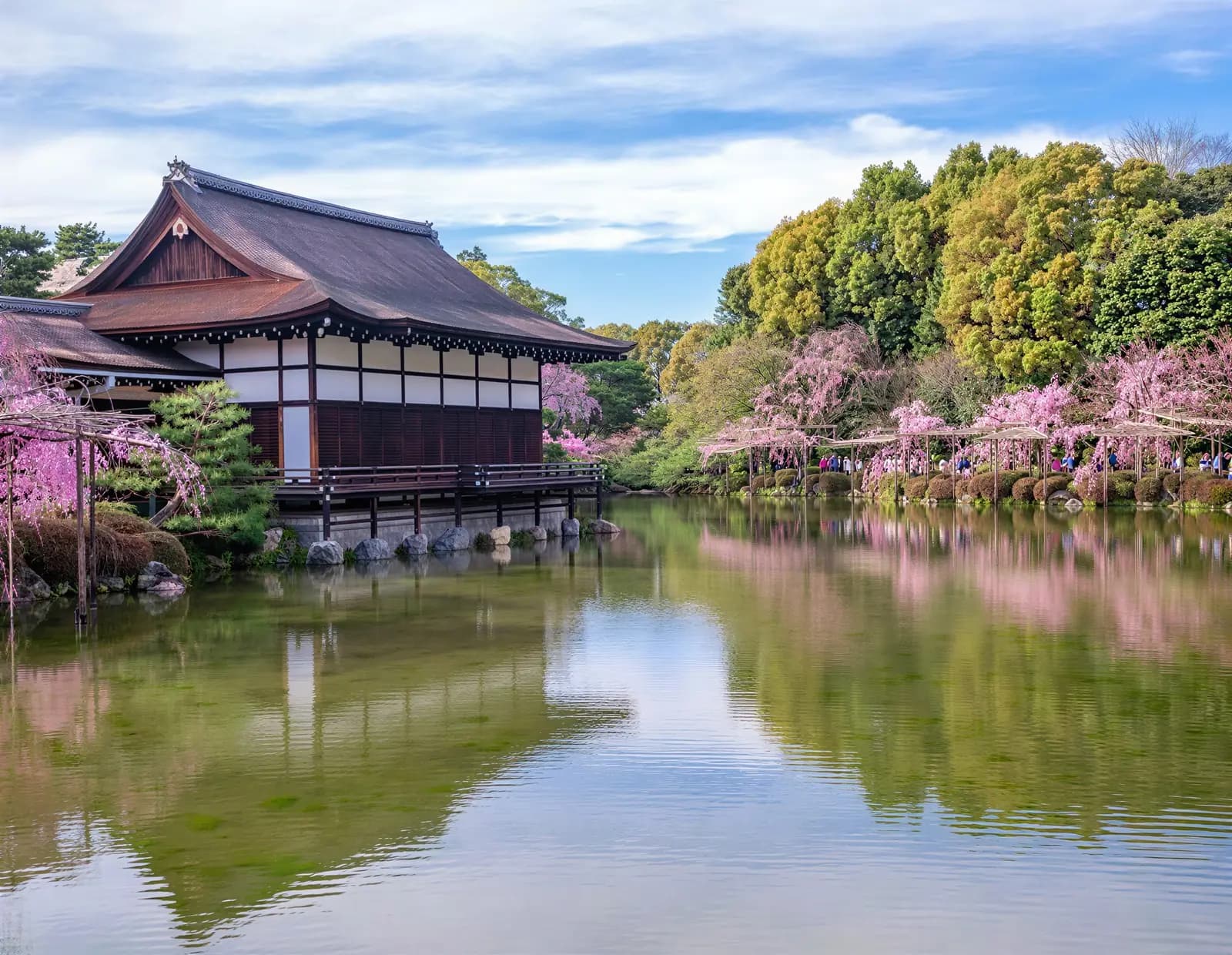
Inside is the Shin-en garden, the work of the great landscape designer Ogawa Jihei, with weeping cherries that in April are among the most beautiful in the city (Kawabata describes them in his novel The Old Capital), a pond you cross by stepping stones (which are old pillars from the Sanjo bridge) and a pavilion over the water.
If you’re in Kyoto on 22 October, you might like to know that this is where the Jidai Matsuri ends — one of Kyoto’s three great festivals: two thousand people parading in costumes from every era of Japanese history, in chronological order.
A festival that looks like a walking museum.
End of the day. From here, direct bus to the centre or to Kyoto Station.
別案Variations
- If it rains: the walk loses a lot; swap it for the centre. In April: do it first, before eight, because the canal fills up. With kids: the Lake Biwa Canal Museum is free and its models and boats tend to go down well with them.
Zone 4 · Central and southern Kyoto: the market, the palace and Japan’s tallest pagoda
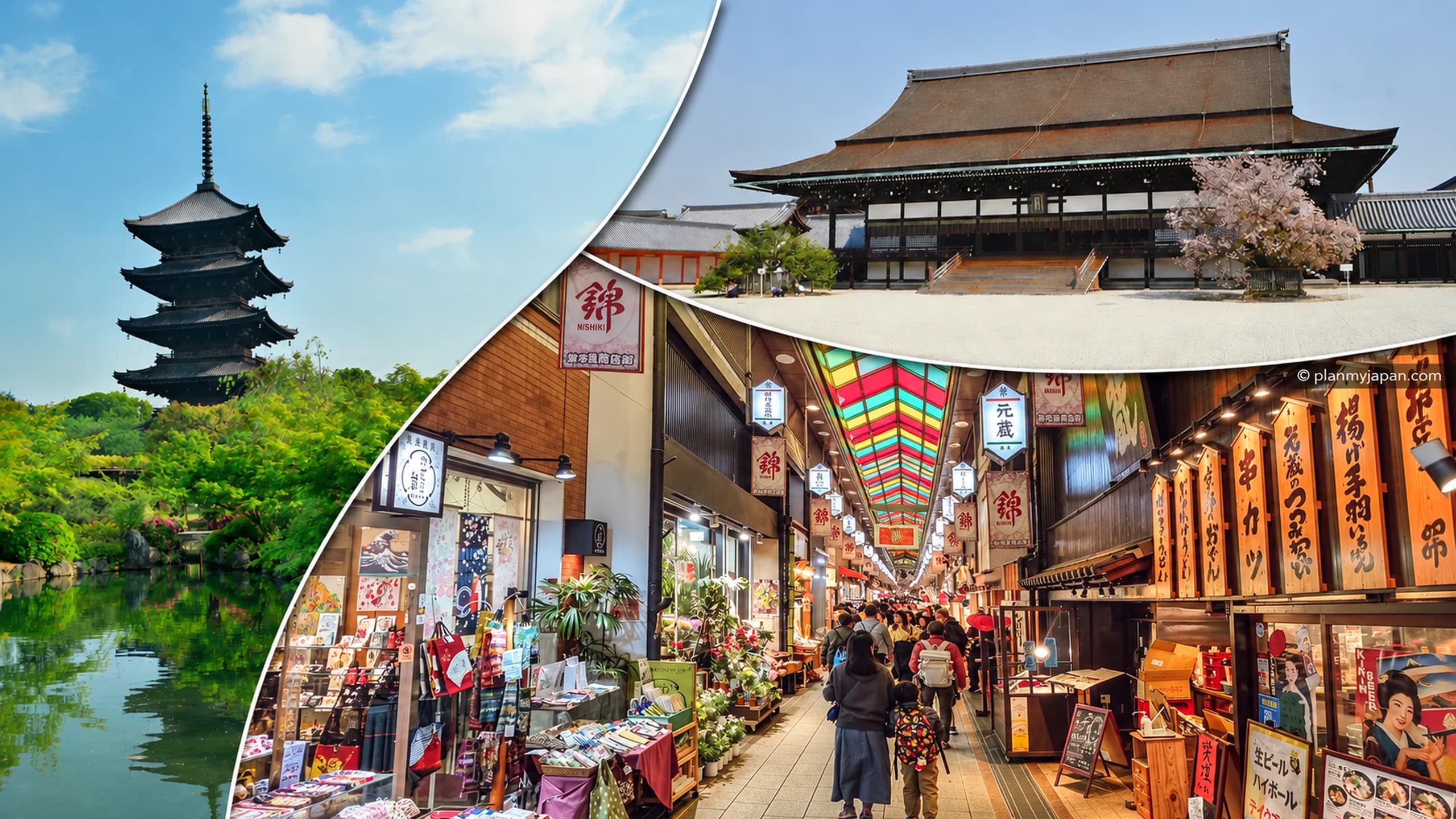
The last three places we’re going to present are the ones that best round out a fourth day: a four-century-old market, an imperial palace with free entry, and Japan’s tallest wooden pagoda, already on the way to the station.
Let’s see all three, one by one.
The zone at a glance
Short on time?
- Don’t missNishiki Market and the To-ji pagoda.
- OptionalThe Imperial Palace (free) and To-ji’s Kobo-ichi flea market, if you’re there on a 21st.
- If you only have two hoursNishiki and lunch.
The centre on foot: from Nishiki Market to the Imperial Palace and To-ji
From the market to the palace it's a fifteen-minute walk; to get down to To-ji, take the subway.
Open the zone 4 route in Google Maps
The centre may not be exactly postcard Kyoto, but it fits a fourth day beautifully. It’s the Kyoto that locals actually use: a four-century-old market, an enormous park where the city sits down to eat and, heading down towards the station, the temple where it all began.
We do this zone with you
Market, palace and pagoda in half a day, and the other half wherever you like. We design the route with you before you travel.
23. Nishiki Market: four hundred years as Kyoto’s pantry
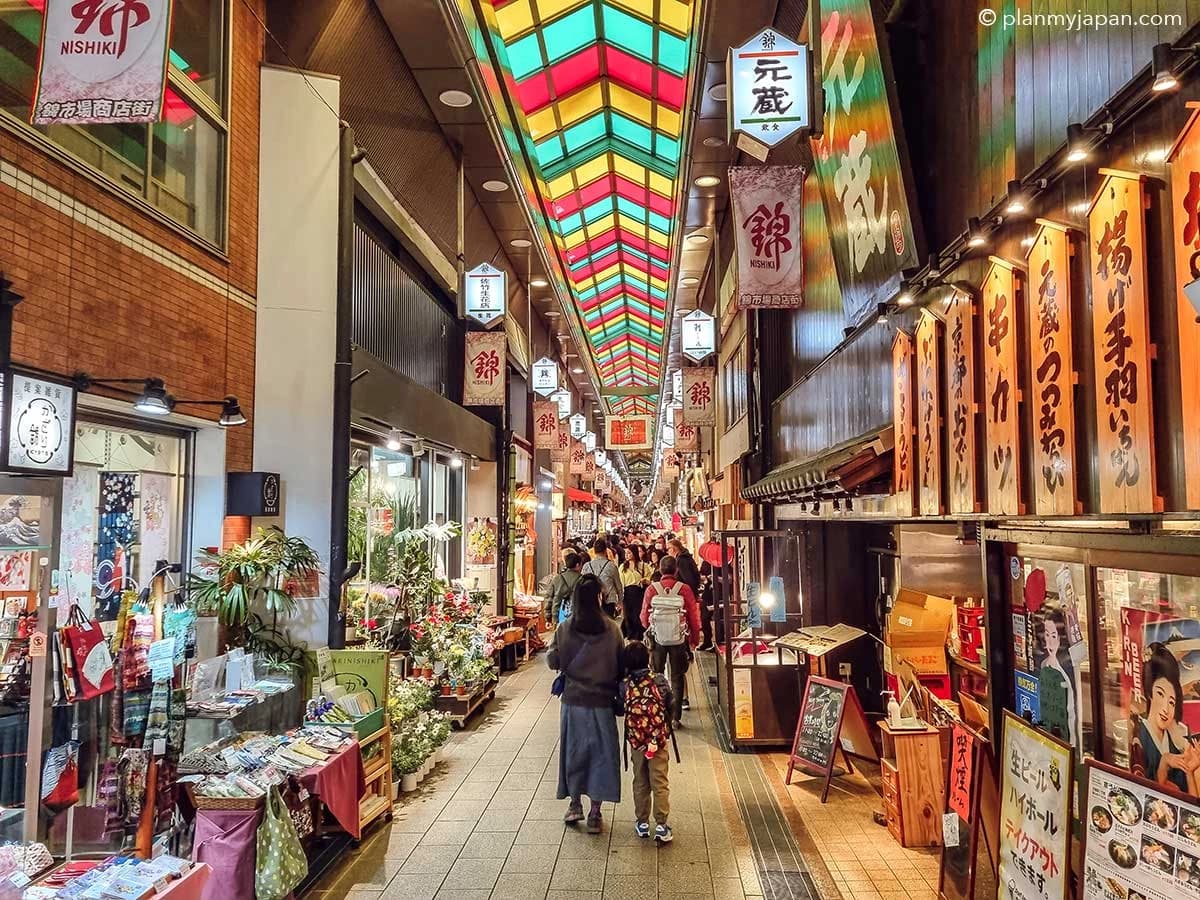
Nishiki Market is the city’s pantry: a covered corridor of about 400 metres with more than a hundred stalls selling pickles, sweets, tea, tofu and fish, under a stained-glass roof.
Its origin lies in fish: the first shop opened here around 1310, and the spot thrived because the well water in this area was especially cold, which made it possible to keep fresh produce in an inland city. Many businesses are still run by the same family generations later, and some say so on their signs.
メモNote
Hours vary by stall, generally 10:00 to 18:00, and many close on Wednesdays or Sundays.
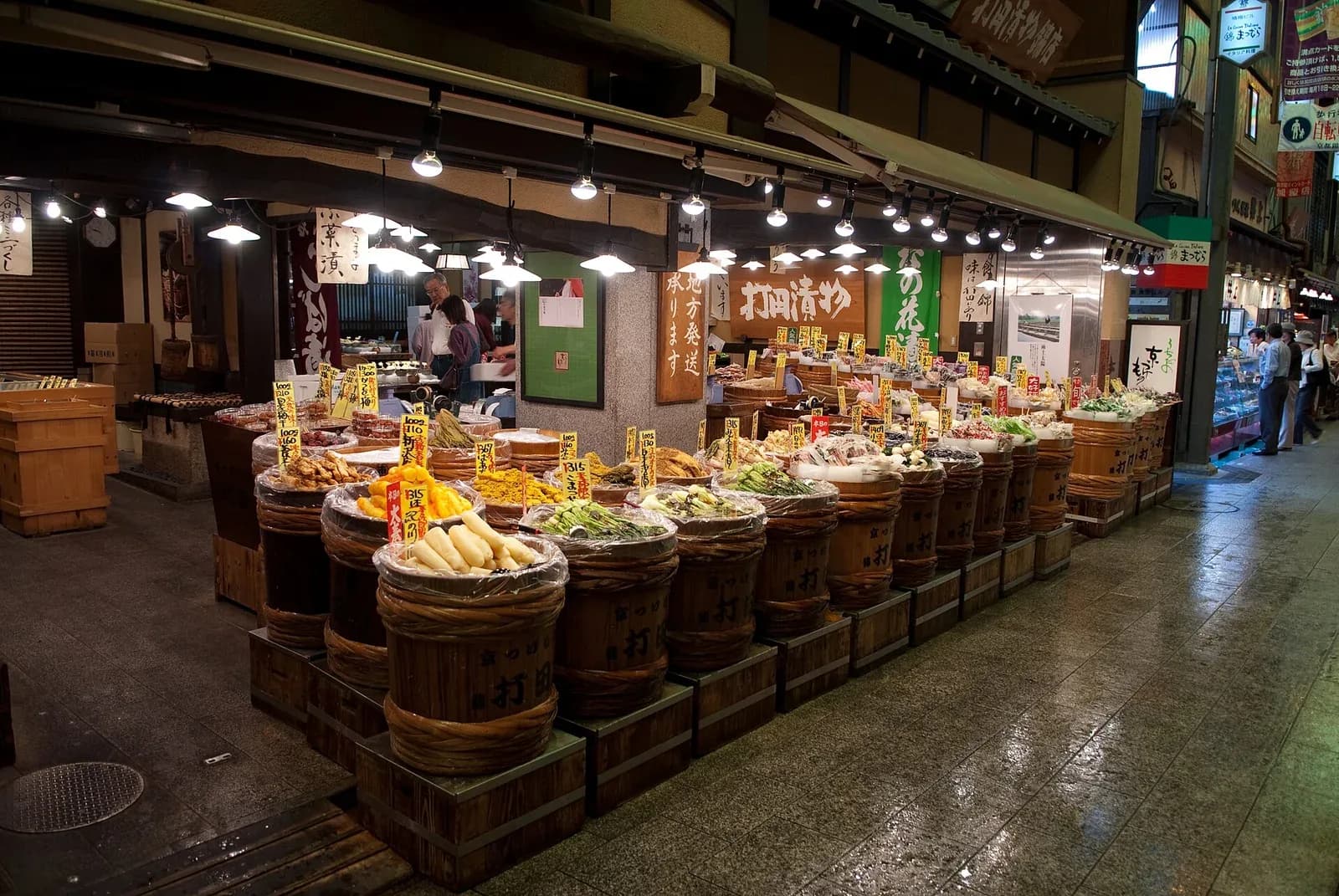
Nishiki has become quite touristy, so it pays to go knowing what to look for. The tsukemono, the pickles, are the city’s absolute speciality and almost every stall lets you try them.
They also have things like tamagoyaki, the soy-milk doughnuts and tako tamago. And for a good souvenir to take home, you can visit Aritsugu, a knife shop founded in 1560 where they’ll engrave whatever name you like on the blade right there.
コツLocal tip
A local rule worth respecting (in Japan in general, but especially here because it’s narrow): no eating while you walk — you eat standing by the stall where you bought it.
At the end of the market, wedged between shops, appears the Nishiki-Tenmangu shrine, with its bronze ox whose head everyone rubs: it’s said that rubbing it brings luck — and health, if you rub it exactly where it hurts you.
The best time to come is around eleven in the morning or after three in the afternoon.
Next stop: the Imperial Palace, a fifteen-minute walk north.
24. Kyoto Imperial Palace: free entry, no booking
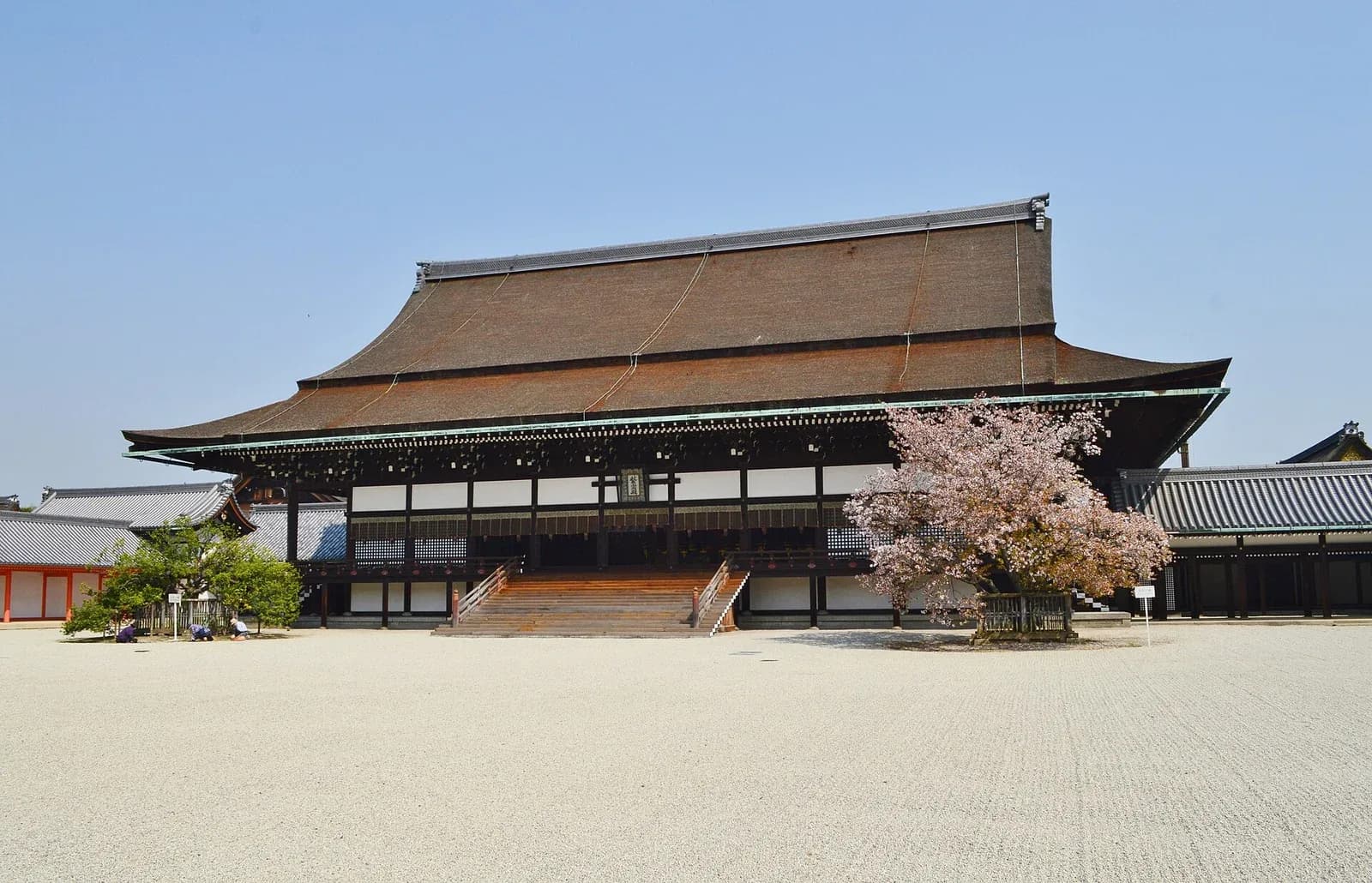
The Imperial Palace was the residence of the emperors for more than a thousand years, until the court moved to Tokyo in 1869.
Two pieces of good news: entry is free, and since 2016 you no longer need to book or show your passport to enter the grounds, which used to be a bit of a process. Closed on Mondays.
Locals use it to catch their breath, and it’s an ideal place to rest between visits.
メモNote
The park around it, the Kyoto Gyoen, is enormous, always open and also free: gravel paths, tens of thousands of trees, and early plums and cherries that bloom before the rest of the city.
One thing to know before going: you can’t enter the buildings — the visit is an outdoor circuit.
You’ll see (from outside) the Shishinden, the ceremonial hall where emperors ascended the throne up to Emperor Taisho (son of Emperor Meiji), with the canopied throne at the back and, in the courtyard, a cherry tree on one side and a bitter orange on the other, planted according to court protocol.
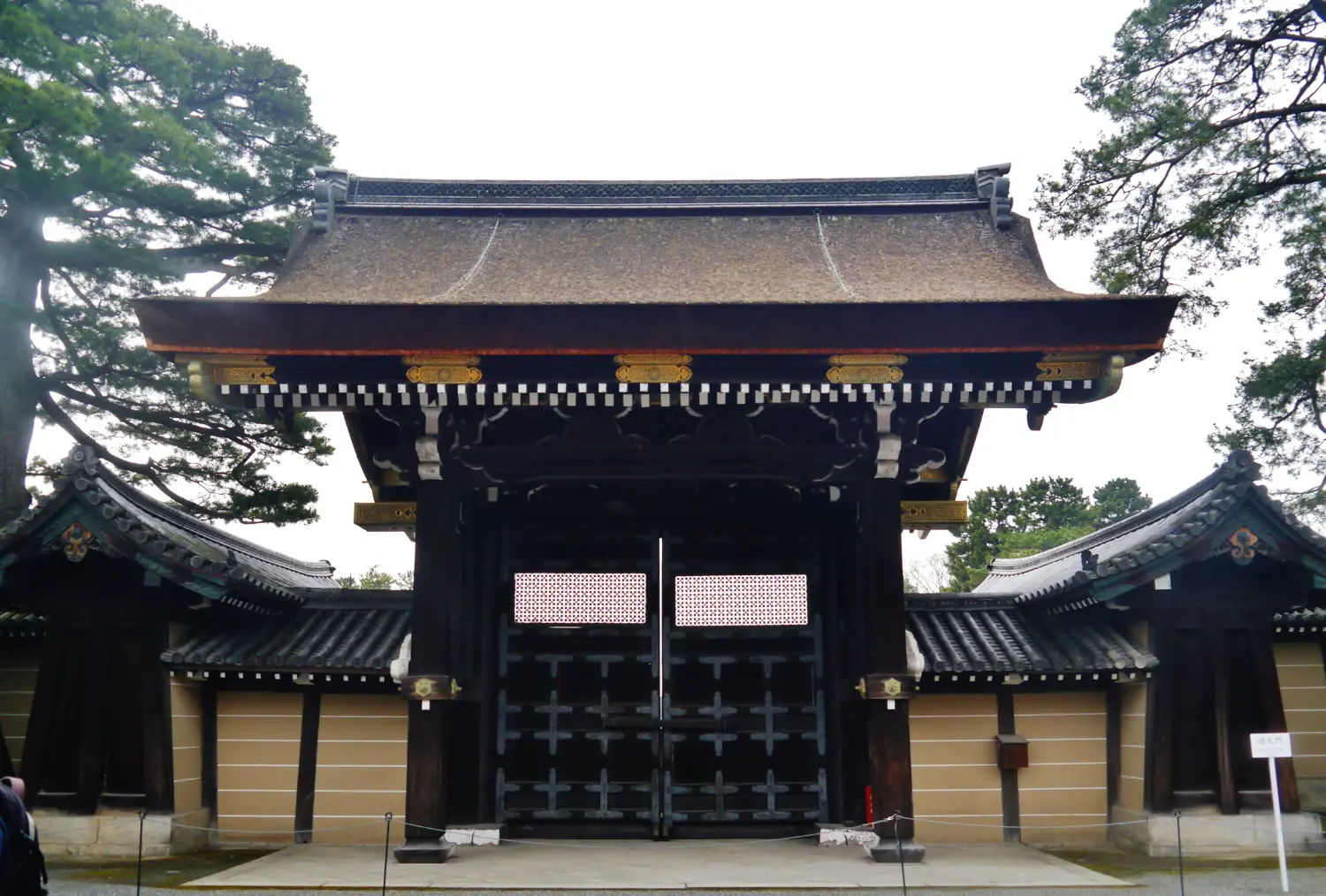
The current buildings are a reconstruction from 1855, because the palace burned down again and again over the centuries. It’s austere, ceremonial and silent, and for anyone who enjoys history, well worth the visit.
Next stop: To-ji, ten minutes on the Karasuma subway line plus fifteen on foot.
25. To-ji: Japan’s tallest wooden pagoda, a step from the station
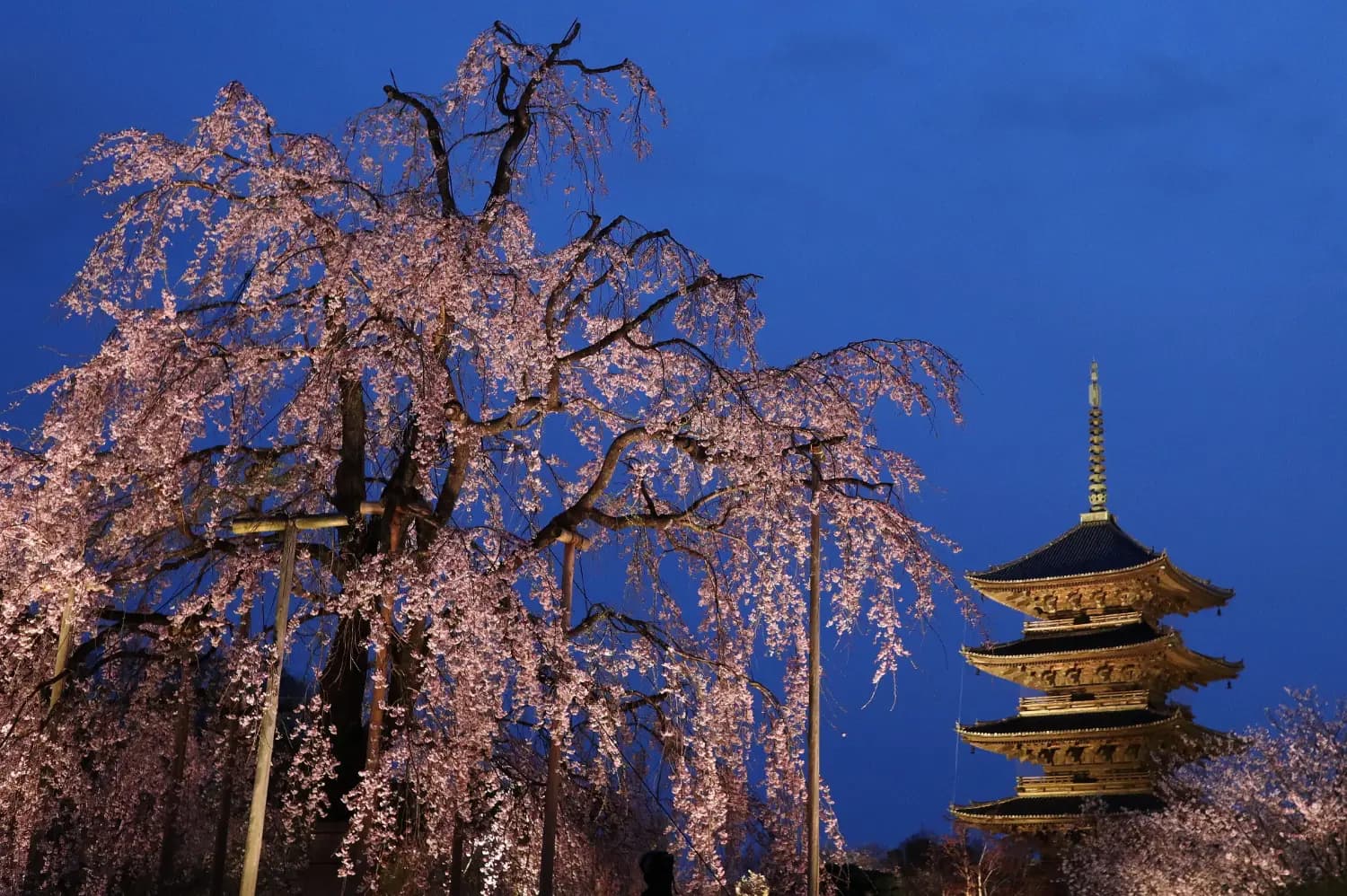
To-ji was, quite literally, Kyoto’s first temple. When the capital moved here at the end of the 8th century, two temples were built to guard the city’s southern entrance, one on each side of the great Rashomon gate. The western one vanished centuries ago; the eastern one, To-ji, has stood in place since the year 796. In 823 the emperor handed it to Kukai — the monk known today as Kobo Daishi — who had just returned from China with Shingon Buddhism, and it has been that school’s mother house ever since.
What you see from the train is its five-storey pagoda: almost 55 metres, the tallest wooden structure in Japan. The current one is from 1644 and was paid for by shogun Tokugawa Iemitsu; it’s the fifth, because the four before it burned down — three of them struck by lightning.
コツLocal tip
Worth knowing before you go: the inside only opens during the special spring and autumn openings, so normally you see it from the outside only.
What truly justifies the ticket is in the Kodo, the lecture hall: twenty-one statues arranged by Kukai himself to form a three-dimensional mandala. Rather than painting it on a scroll, he assembled it life-size so it could be read by walking among the figures. Eleven of them are National Treasures. No photos are allowed inside — which is exactly what makes people stop and really look.
メモNote
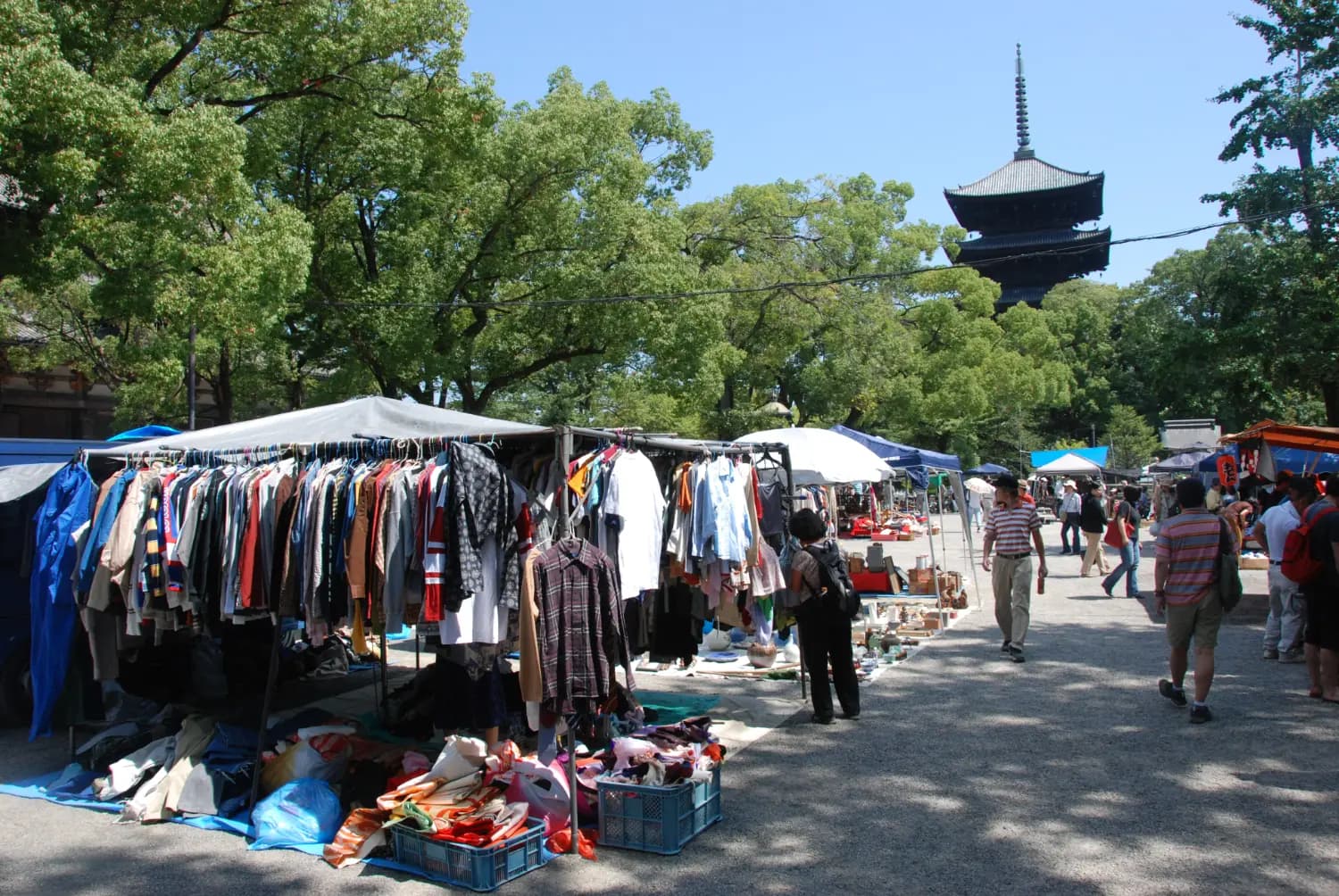
On the 21st of every month the grounds host the Kobo-ichi, a huge flea market that starts at dawn and runs until half past four: second-hand kimonos, ceramics, old bits and pieces, and food. If the date lines up and you come back in the afternoon, it’s one of the best final plans in the city.
To-ji is a fifteen-minute walk from Kyoto Station, which makes it a great closing plan for your last day: drop your suitcase in a locker, see the temple in peace and get back to your train without crossing the city again.
End of the day. From To-ji to Kyoto Station it’s a fifteen-minute walk, or two minutes by train from Toji Station on the Kintetsu line.
Seeing these 25 places in Kyoto at a proper pace genuinely fills a week. But if this is your second visit to Kyoto, or you’re simply after a different kind of plan, below are some beautiful, lesser-known places.
What else to see in Kyoto if you have more days
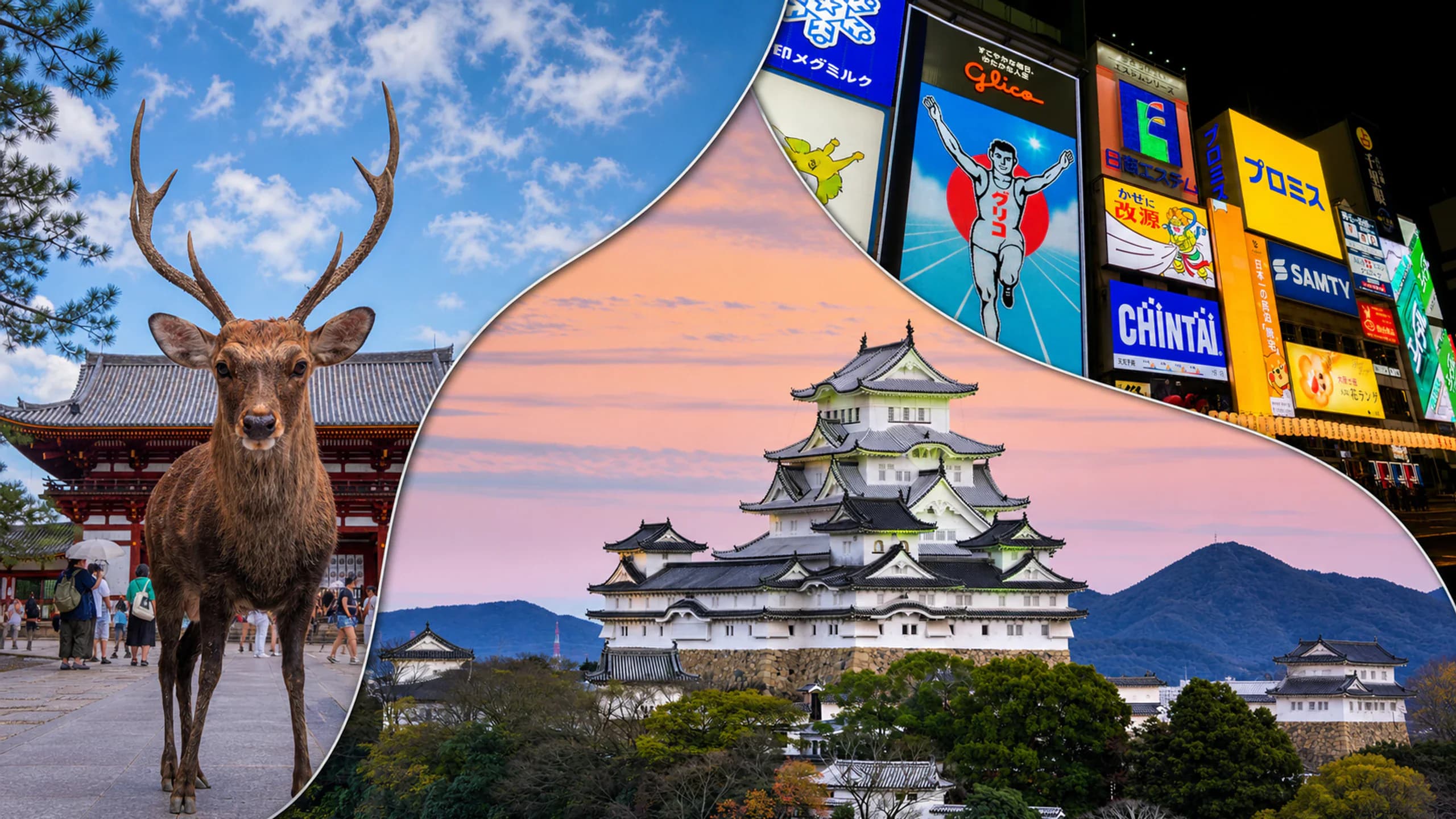
One option if you have more days is to use Kyoto as a “base” for day trips that work out perfectly without changing hotels: Nara (deer, Todai-ji and the giant Buddha, 45 minutes away, which we visit on our Nara tour), Osaka (a completely different energy, probably the best food city in Japan, where we show you the best spots on our Osaka tour), Himeji (for many, the most beautiful castle in the country) or even Kobe.
But if you’d rather see more of Kyoto prefecture itself, some recommendations that are very much worth it:
- Fushimi, the sake district: canals, black-timbered warehouses and a dozen breweries. You visit the Gekkeikan museum, do a tasting, and next door stands the Teradaya, the inn where they tried to kill Sakamoto Ryoma.
- Daitoku-ji: more than twenty Zen subtemples in the north, of which four or five are usually open to visit. One of them, Koto-in, has a walled maple path that in November is among the most beautiful sights in Japan.
- Ohara and Sanzen-in: an hour north by bus, a mountain valley of moss temples and fresh air. In autumn, sublime.
And the day trips we’ll see next: Uji and its tea, Kurama and Kibune through the mountains, or Amanohashidate and the village of Ine for a full day out.
Let’s have a look at them.
What to see near Kyoto: day trips and extensions
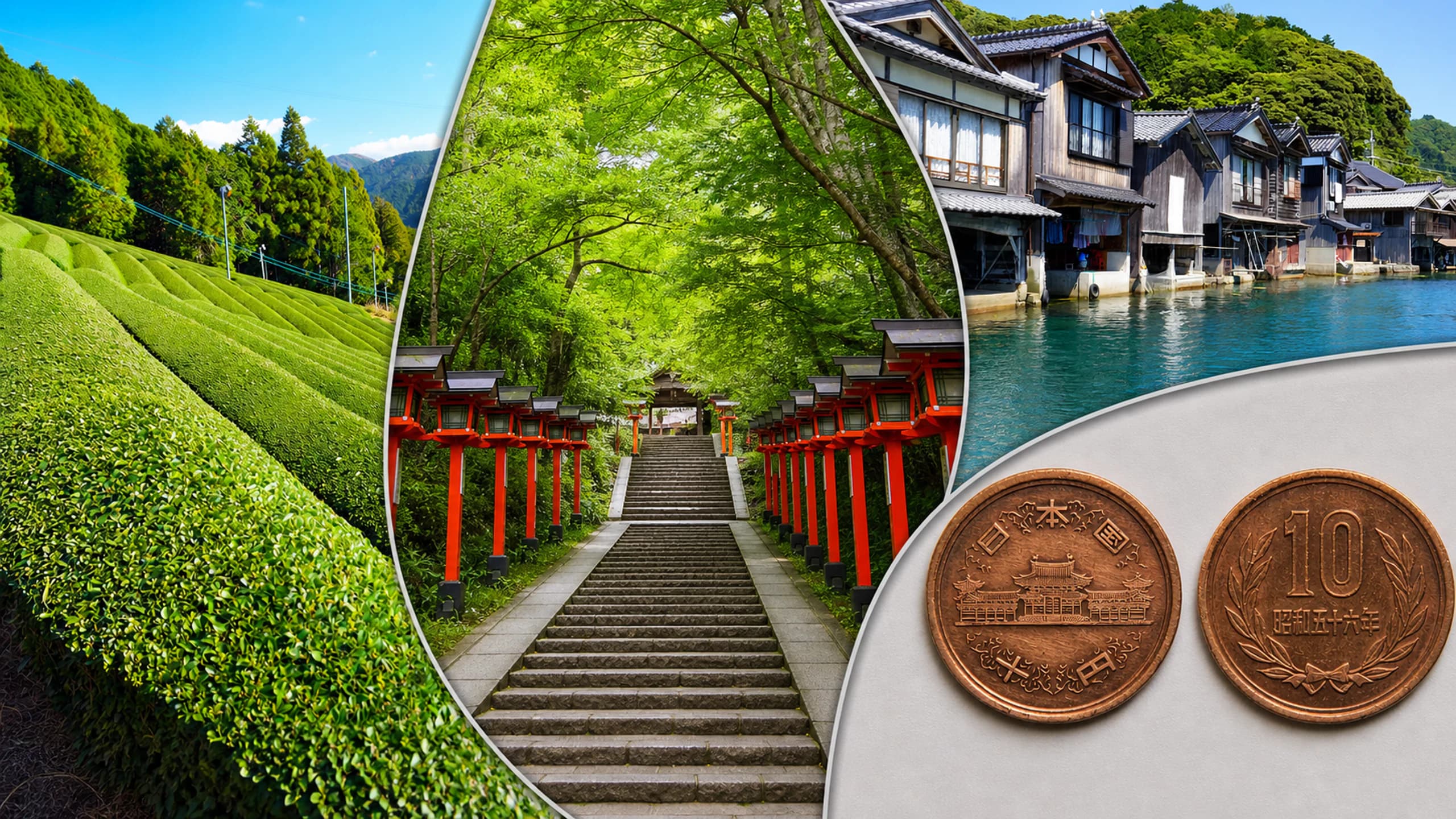
Everything we’ve seen in this article so far is inside the city, but if you have a day to spare — or you already know Kyoto and want something with far fewer people — there are two gorgeous escapes to the north that are very much worth it, and that almost no traveller does.
One is half a day. The other is a full day, and it’s the kind you remember. Neither fits into the city tours, but they’re among the stand-alone days we’re most often asked to build into a bespoke tour.
Uji and the Byodo-in temple: a thousand years gazing at its own reflection
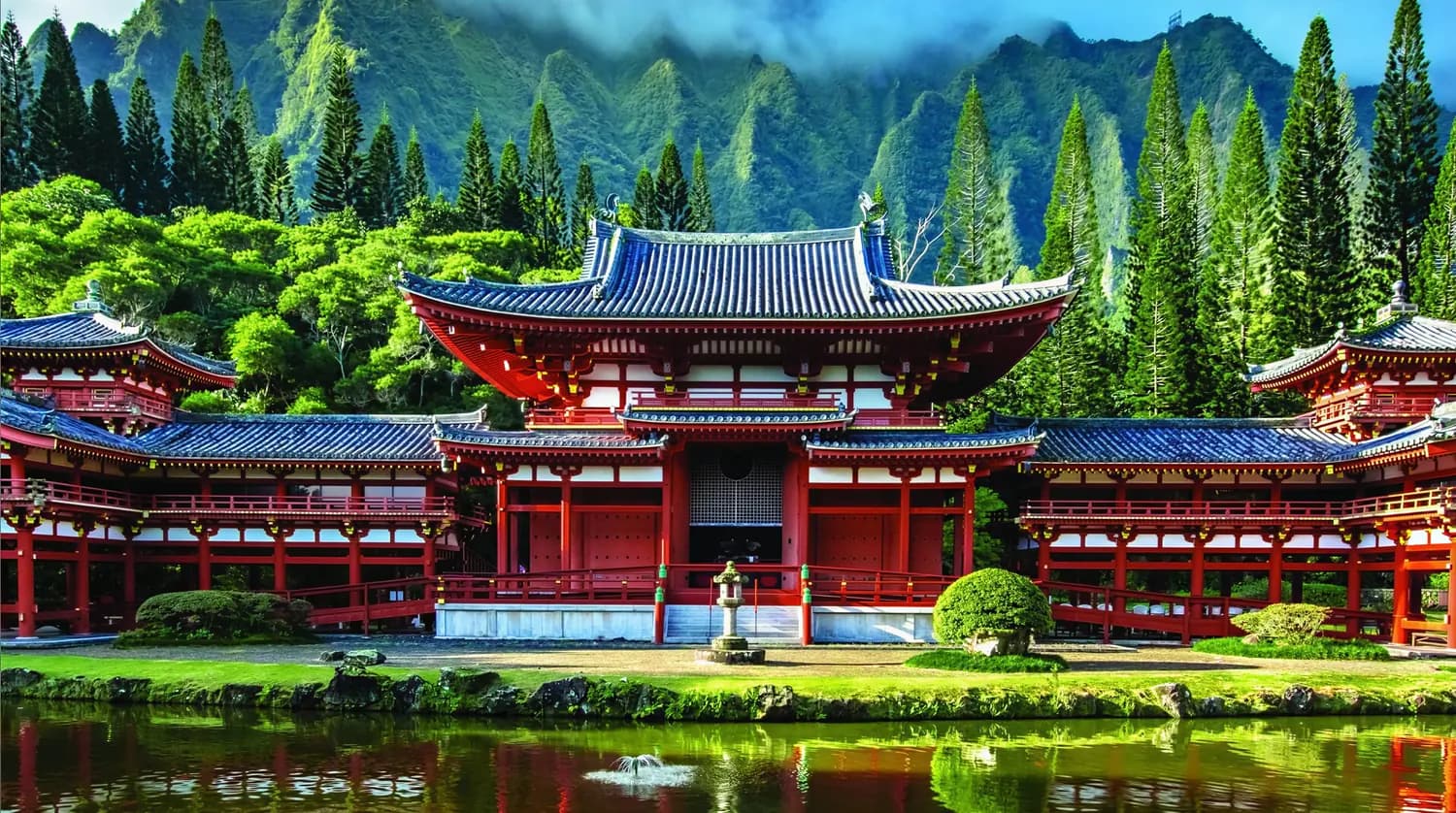
The striking Byodo-in temple is half an hour from Kyoto by train, opens 8:30 to 17:30, costs 700 yen, and for 300 more you enter the hall’s interior in guided slots every twenty minutes.
It’s a little out of the way, yes, but its visit is one of the best-spent half days there is. If you want to go inside the hall, note that in high season the slots sell out, so the sensible move is to book your turn on arrival, not at the end of your visit.
豆知識Fun fact
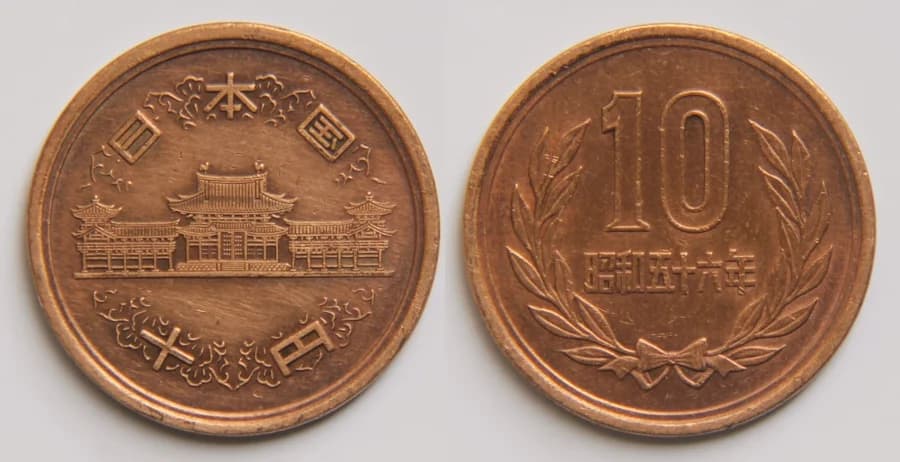
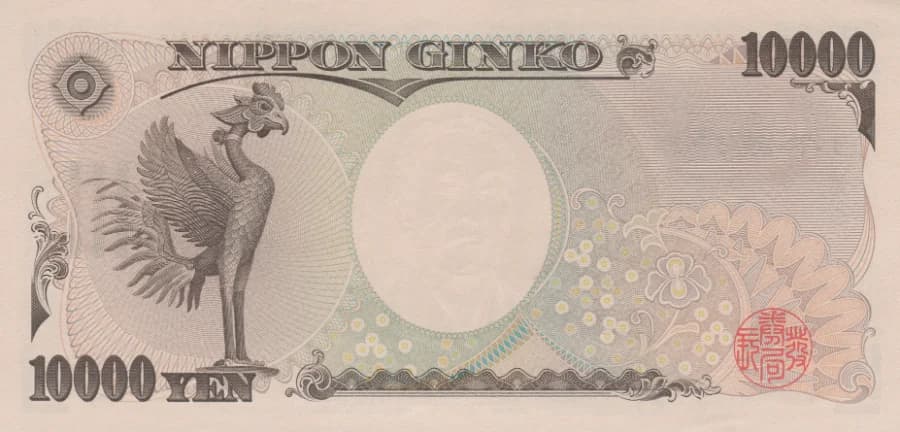
It’s worth a second thought, because this is the Phoenix temple you carry in your pocket: the same one that appears on the 10-yen coins, and its golden phoenix on the 10,000-yen notes issued until 2024.
The hall was built in 1053 and is one of the few buildings of the Heian period still standing: it’s not a reconstruction, it’s the original. It was raised as a representation of Amida’s paradise on earth, with the pond in front so the reflection would double the image — which is why the façade is designed to be seen from across the water.
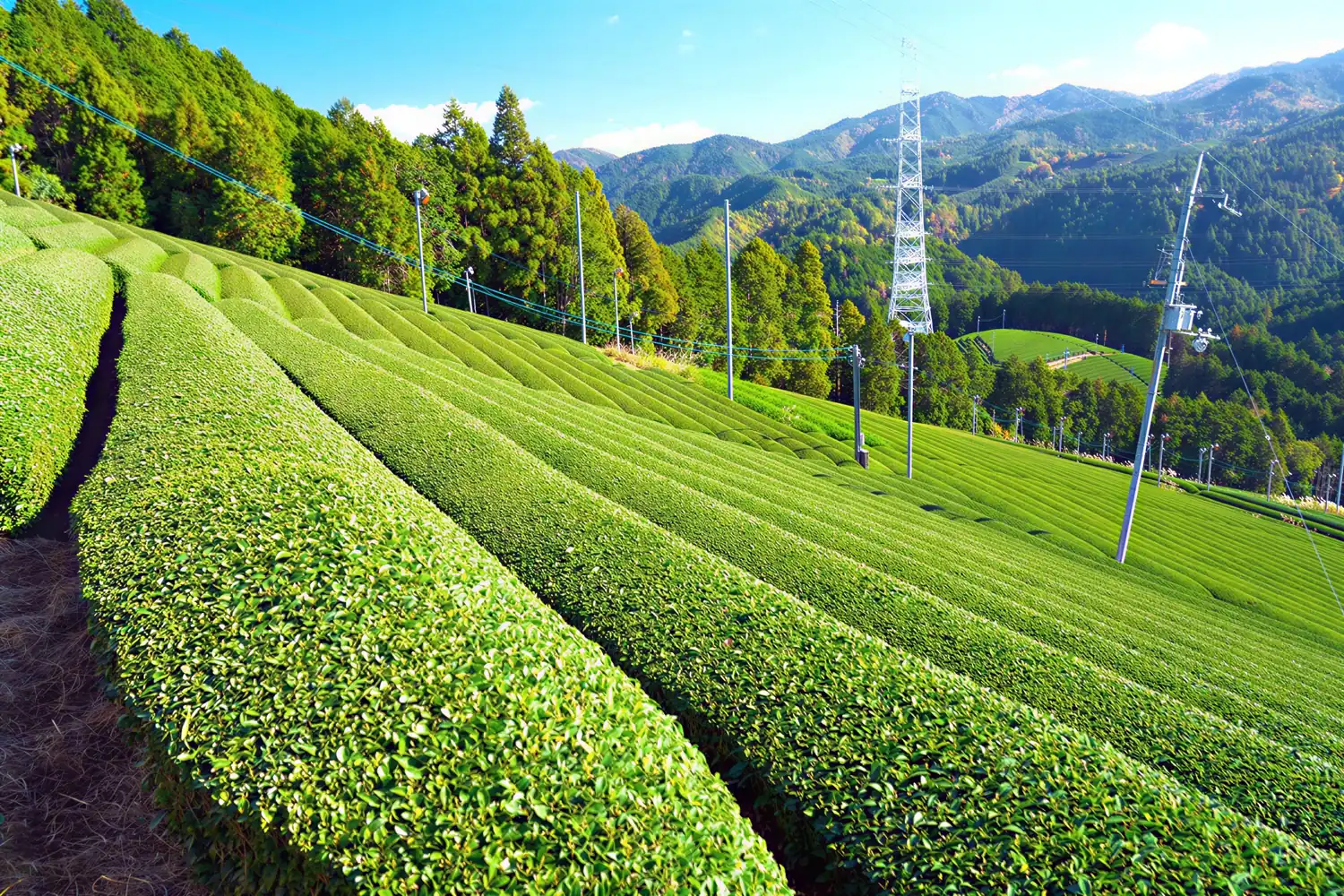
But Uji isn’t only the Byodo-in: it has also been the capital of Japanese green tea since the 13th century, and through its streets the aroma of roasted tea follows you from shop to shop.
メモNote
In Uji you’ll also find teahouses where they teach you to brew a gyokuro (top-grade Japanese green tea) at the right temperature, places to try matcha soba, ice cream with just the right bitterness, and Tsuen, a tea shop by the bridge that opened in 1160 and is still run by the same family — making it one of the oldest businesses in the world.
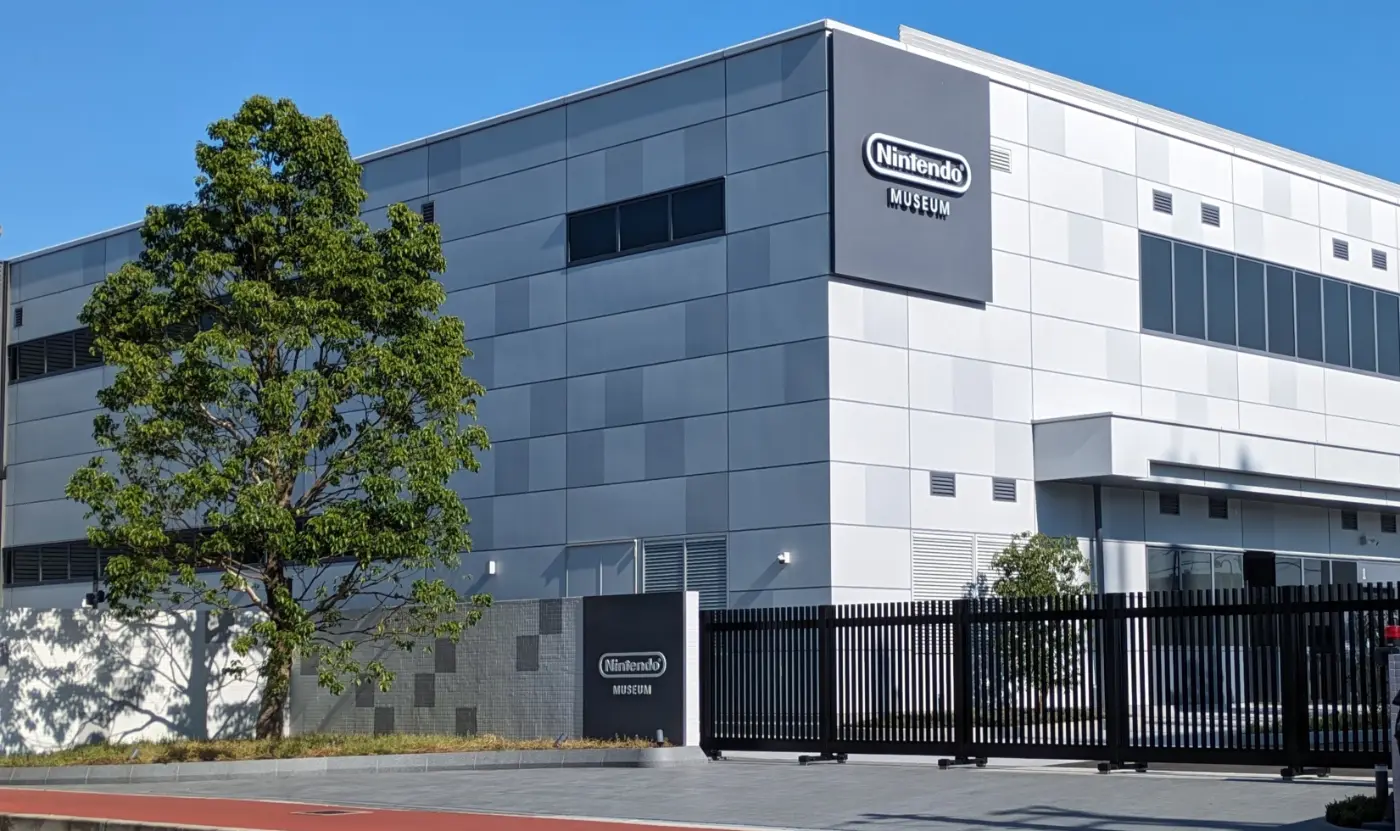
On a completely different note from the temples, Uji is also home to the Nintendo Museum, in the company’s old factory. Tickets cost 3,300 yen and are drawn by lottery three months ahead through a Nintendo account, so if you’re travelling with kids (or grew up with a Game Boy), you may want to check the draw date well in advance.
Getting there: rapid train on the JR Nara line from Kyoto Station, about 20 minutes, or the Keihan line. A perfectly rounded half day.
Return: direct train back to Kyoto Station in half an hour.
We do this day trip with you
Byodo-in, the tea quarter and, if it’s your thing, the Nintendo Museum: we build your Uji day at your pace, with a guide in English or Spanish, just for your group.
Kifune, the shrine of water
In the Kibune valley, a long half hour from the city, the Kifune shrine seems to belong to another age.
You get there on the Eizan line from Demachiyanagi to Kibuneguchi, and from there it’s a five-minute bus ride or a twenty-five-minute walk up the road that follows the river. Entry is free.
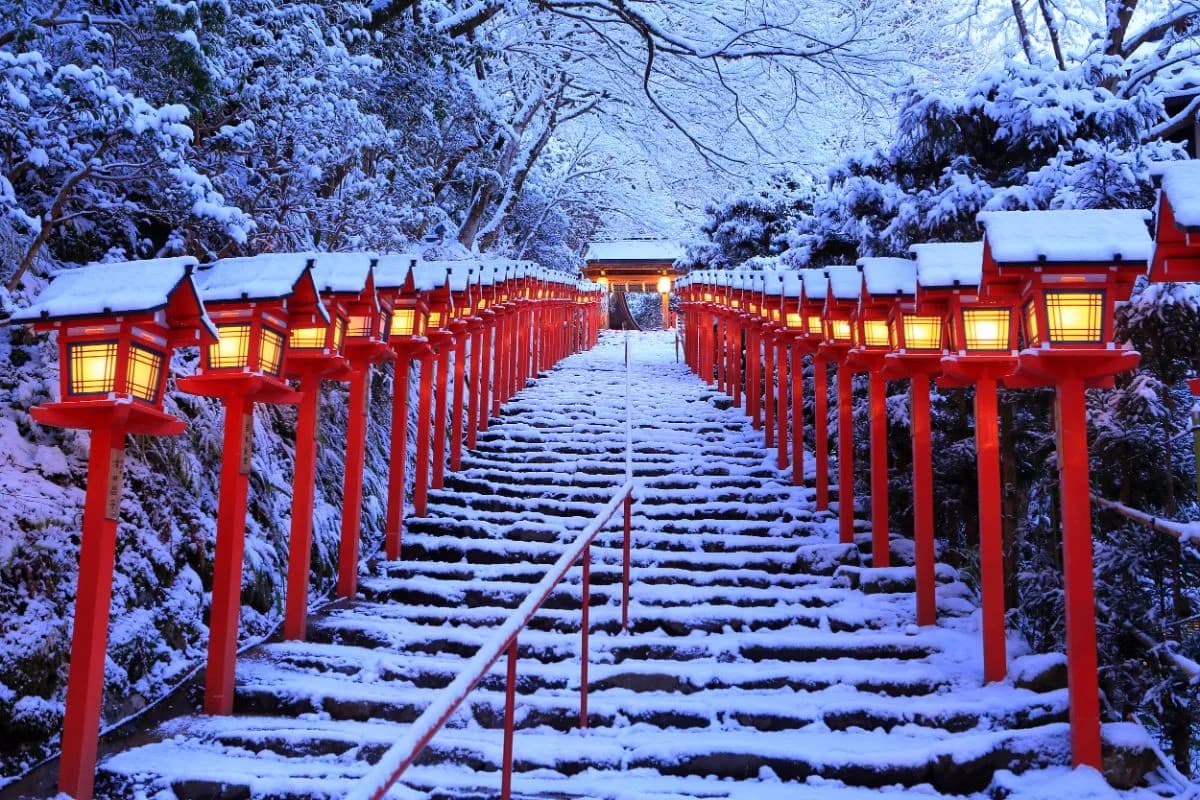
The image that made it famous is its stone stairway flanked by two rows of red lanterns. With the maples in November, or snow in January, it’s probably the most photographed stairway in Kyoto after Fushimi’s — and here you won’t have to queue for the shot.
It’s dedicated to the deity of water, and that’s not decorative: Kyoto’s restaurateurs and sake brewers come up here to pray, because the whole city depends on the quality of its water.
豆知識Fun fact
For 200 yen you can buy fortune strips here that only reveal their text when you dip them in the fountain. Kids find it delightful, every time.
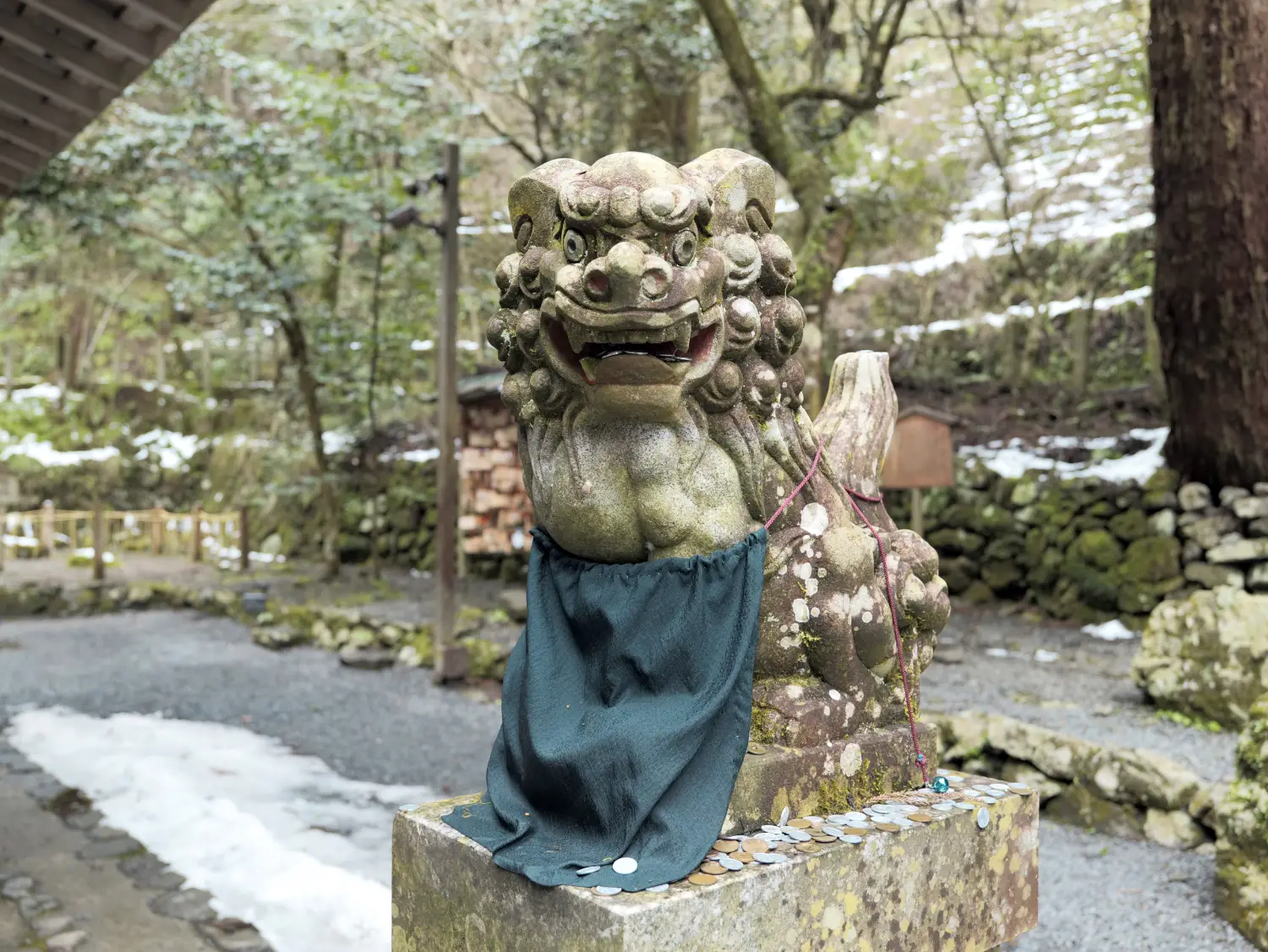
The shrine has three precincts separated by a few minutes’ walk uphill, and the middle one, the Yui-no-yashiro, has spent a thousand years as the place people come to pray for love.
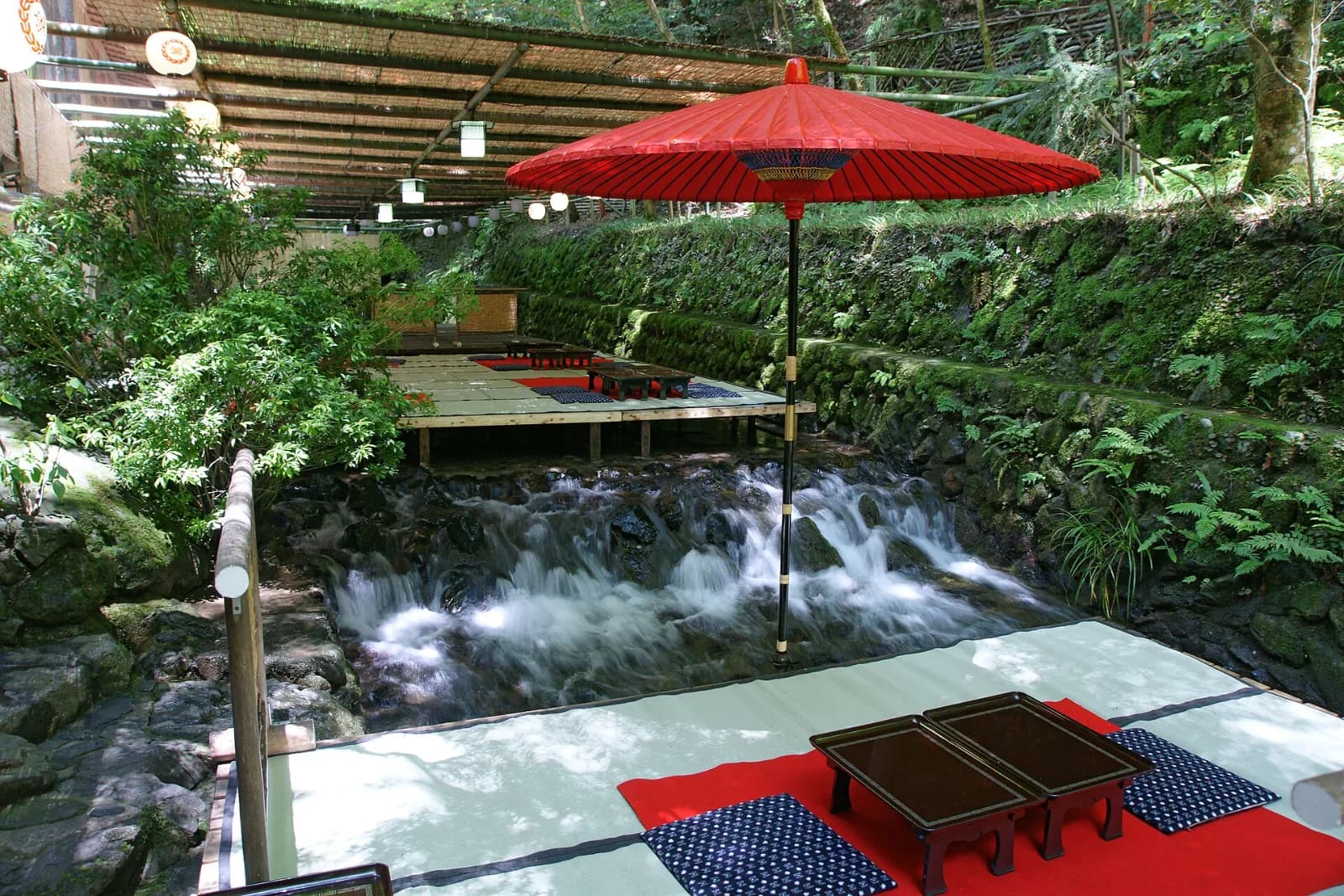
Two more reasons to head up. In summer, the valley’s restaurants build the kawadoko, wooden platforms over the river where you eat with the water running underneath and ten degrees less than in the city.
It’s the perfect escape if you have half a day to spare, above all in July and August, when midday Kyoto becomes hard to bear.
Return: you can walk back down to Kurama over the mountain, an hour and a half.
We do this day trip with you
Kurama and Kibune in a mountain day: the hike, the shrine and the river terraces if it’s the season, organised by us with a guide in English or Spanish.
Amanohashidate and Ine: the bridge to heaven and the village on the water
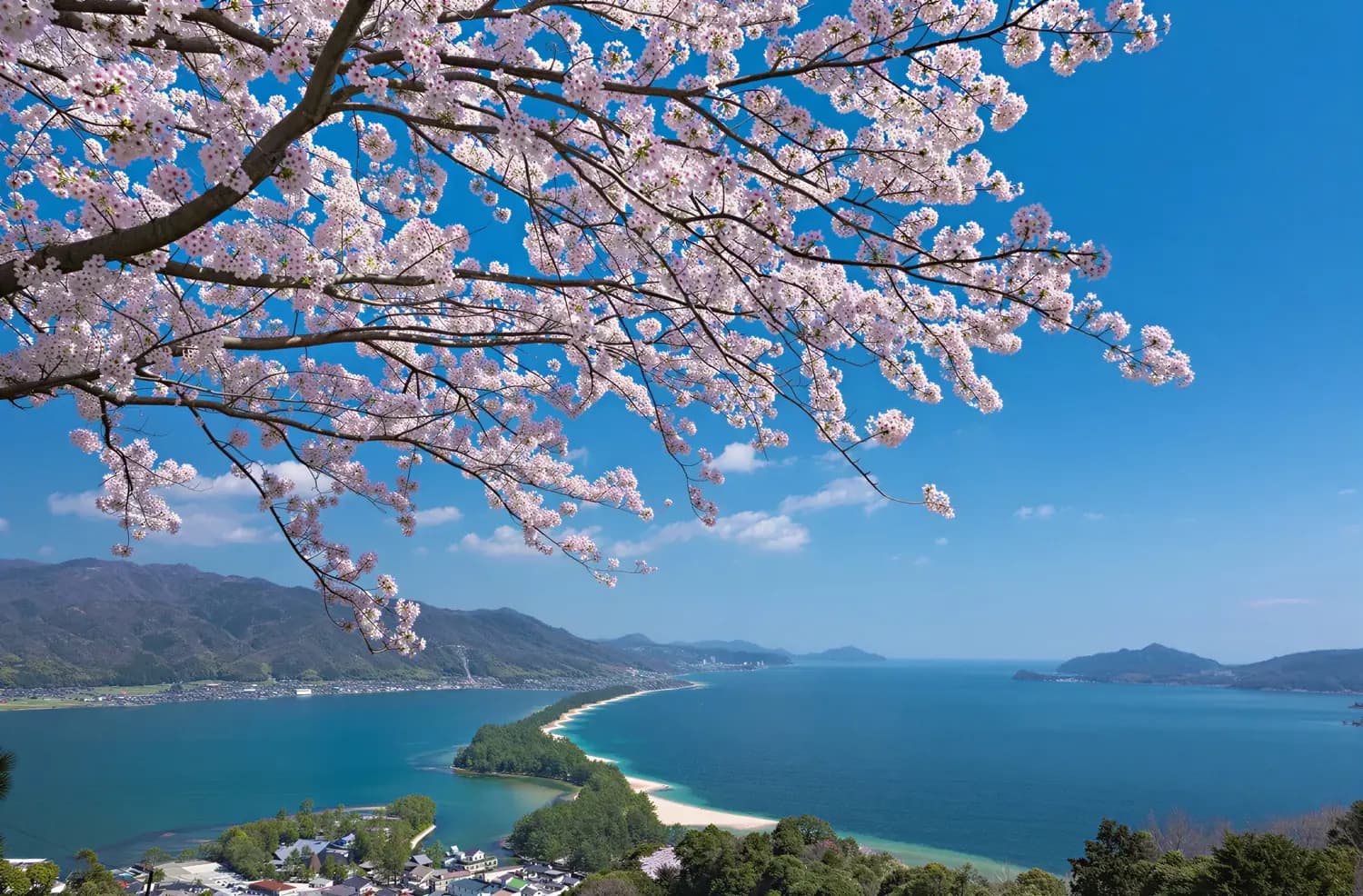
Amanohashidate lies in the north of Kyoto prefecture, on the Sea of Japan coast, about two and a quarter hours on a direct train from Kyoto Station. It isn’t on the way to anything, but it is absolutely worth it.
豆知識Fun fact
Its name means roughly “the bridge that crosses the heavens”, and what’s there is one of the three most celebrated views in Japan, along with Miyajima and Matsushima: a 3.6-kilometre sandbar covered in pines crossing Miyazu Bay from side to side, like a natural bridge.
The local tradition is to look at it upside down, in a rather peculiar way: you climb to one of the two viewpoints, bend over, and look between your own legs. From there the strip of pines looks like a dragon rising into the sky. It’s called matanozoki, every Japanese visitor up there does it, and nobody will look at you funny for joining in. The viewpoints are reached by chairlift or a tiny monorail, and that old-funfair air is part of the place’s charm.
It’s very easy to explore: the sandbar is crossed on foot in about forty-five minutes, or in fifteen on a rental bike, among pines with the sea on both sides. A gorgeous scene.
And if you have enough time, an hour away by bus is Ine, a fishing village with its houses built over the water: boat mooring below, home above. You see it best from a sightseeing boat for about 1,000 yen.
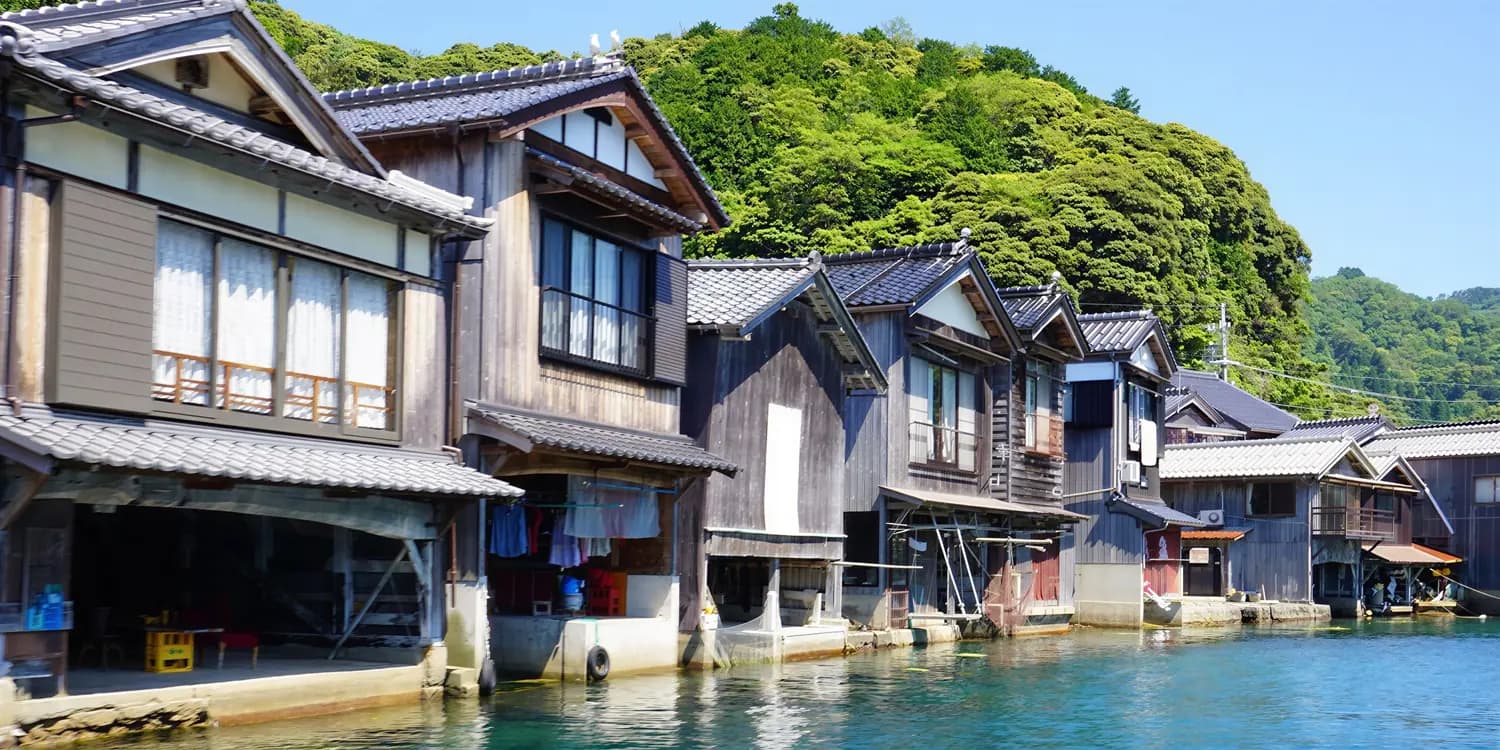
A realistic plan: leave Kyoto around eight, be there mid-morning, give it five or six hours between bike, viewpoint and a fish lunch, and be back in time for dinner in the city.
Return: a good two hours. If you can, sleep there and come back the next day.
We do this day trip with you
Amanohashidate and Ine in one perfectly rounded day from Kyoto: trains, boat and timings all solved, with a guide in English or Spanish.
To wrap up, a mention: Nara and Osaka also work out beautifully from Kyoto, but we’ve left them out on purpose — they have too much to see, and we treat them as full visits in their own right rather than as filler day trips.
If you’d like to do them with us, we have a Nara tour and an Osaka tour designed for exactly that.
We close this guide with a few practical notes.
Practical tips for visiting Kyoto
- A bus ride costs 230 yen and you pay when getting off, with exact change, a travel pass or an IC card. There are change machines inside the bus itself.
- Luggage storage at the station. The public lockers at Kyoto Station fill up before ten. If you arrive with a suitcase, either send it to your hotel by takkyubin, get there early, or leave it at a staffed storage counter inside the station (not the lockers).
- Cash. Many small temples and almost all the Nishiki stalls still take cash only.
- Wear shoes that slip off easily. You may need to take them off several times a day.
- The last train. The Kyoto subway closes around 23:30. If you’re having dinner in Pontocho, keep an eye on the time.
コツLocal tip
Going anywhere first thing in the morning is the best (and only) way to enjoy these places without crowds (or at least, without many). The difference between Kiyomizu at 6:30 and at 10:00 isn’t a nuance: they’re two entirely different experiences.
Frequently asked questions about what to see in Kyoto
What should I see in Kyoto in 2 days without missing the essentials?
One day for the eastern axis and another for the west. The first: Fushimi Inari first thing, Kiyomizu-dera and Higashiyama mid-morning, Kodai-ji and Maruyama after lunch, and Gion Shirakawa and Pontocho at dusk. The second: Nijo Castle at opening time, Golden Pavilion and Ryoan-ji mid-morning, and Arashiyama all afternoon until the Togetsukyo bridge. It’s intense, but it never makes you cross the city more than once a day. Explained in full above.
How many days do I need to see Kyoto?
With 2 days you see the essentials, but it falls short. With 3 you add Northern Higashiyama (Silver Pavilion, Philosopher’s Path, Nanzen-ji and the aqueduct), and you’ll have time to enjoy it all more calmly. With 4 or 5 you can see almost everything major and fit in a day trip like Nara or Osaka. Five days fly by, and there’s no need to stress about not seeing it all: Kyoto is one of those cities you visit several times in a lifetime.
How much does it cost to enter Kyoto’s temples?
The norm is between 500 and 1,000 yen per site, plus supplements for subtemples and gardens (though those are always optional). A day with four paid visits comes to about 2,500 or 3,000 yen per person.
The good news is that many of the best things are free: places like Fushimi Inari, Yasaka Shrine, the Nanzen-ji grounds, the bamboo grove, the Imperial Palace and the park around it, Nishiki Market and the Higashiyama and Philosopher’s walks. You can build a superb full day of Kyoto spending zero on admission.
Can you see geishas in Gion?
It’s possible to cross paths with a geiko or maiko between five and seven in the evening, when they head to their appointments at the teahouses, but it isn’t guaranteed and it’s best not to make it the sole aim of your visit.
Remember that entering the district’s private alleys (signposted) is forbidden, and photographing a maiko without permission can carry fines. A respectful option that’s also a real pleasure is to attend one of the seasonal dance performances or an organised experience.
Is it better to sleep in Kyoto or base yourself in Osaka?
We recommend sleeping in Kyoto even if it’s a little pricier, for one very specific reason: much of the best of this city happens before nine in the morning and after six in the evening, and you only get that if you sleep here.
Osaka is half an hour away by train and a valid base if the budget is tight or you’re after nightlife, but it leaves you arriving at the temples at exactly the hour everyone else does.
Want us to guide you around Kyoto?
We’ll come along. We live in Japan and run private tours in English and Spanish, just for your group.
 Article written by
Miguel
Founder of Japón a Fondo and Japonés a Fondo. A native of Extremadura, Spain, living in Tokyo for almost a decade. A professional translator for years, now a guide at Japón a Fondo and a Japanese teacher at Japonés a Fondo. Walking curious minds through Japan from the inside, through the language and by showing Japan as a local.
See full profile →