

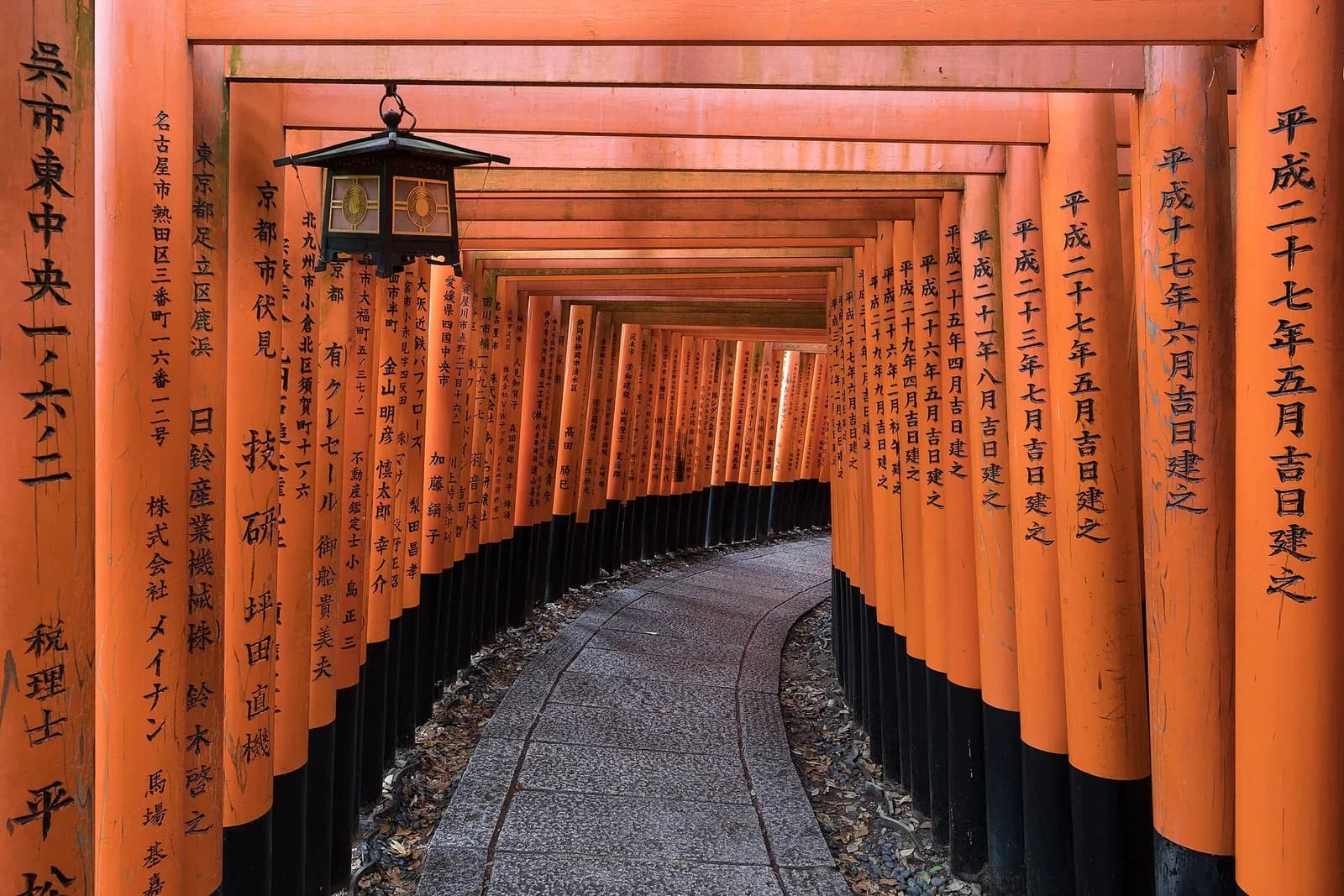
If you have ever seen a photo of Japan with endless tunnels of red gates, it was probably Fushimi Inari. This shrine in the south-east of Kyoto is, according to the tourism industry’s own figures, one of the most visited places in the whole country, with numbers hovering around 10 million visitors a year. And I completely understand why: for me personally, it is perhaps the most striking place in all of Kyoto, and that is saying something in a city full of other incredible things.
That said, if you turn up without knowing a few things, you may not get the most out of it. This guide exists so that you come away with the best memories and the best photos of somewhere this magical.
To fit the visit into your itinerary, see our guide to what to see in Kyoto by area, with maps, opening hours and other places you can visit on the same day.
In this article7 sections
Shrine or temple? Let us clear that up first
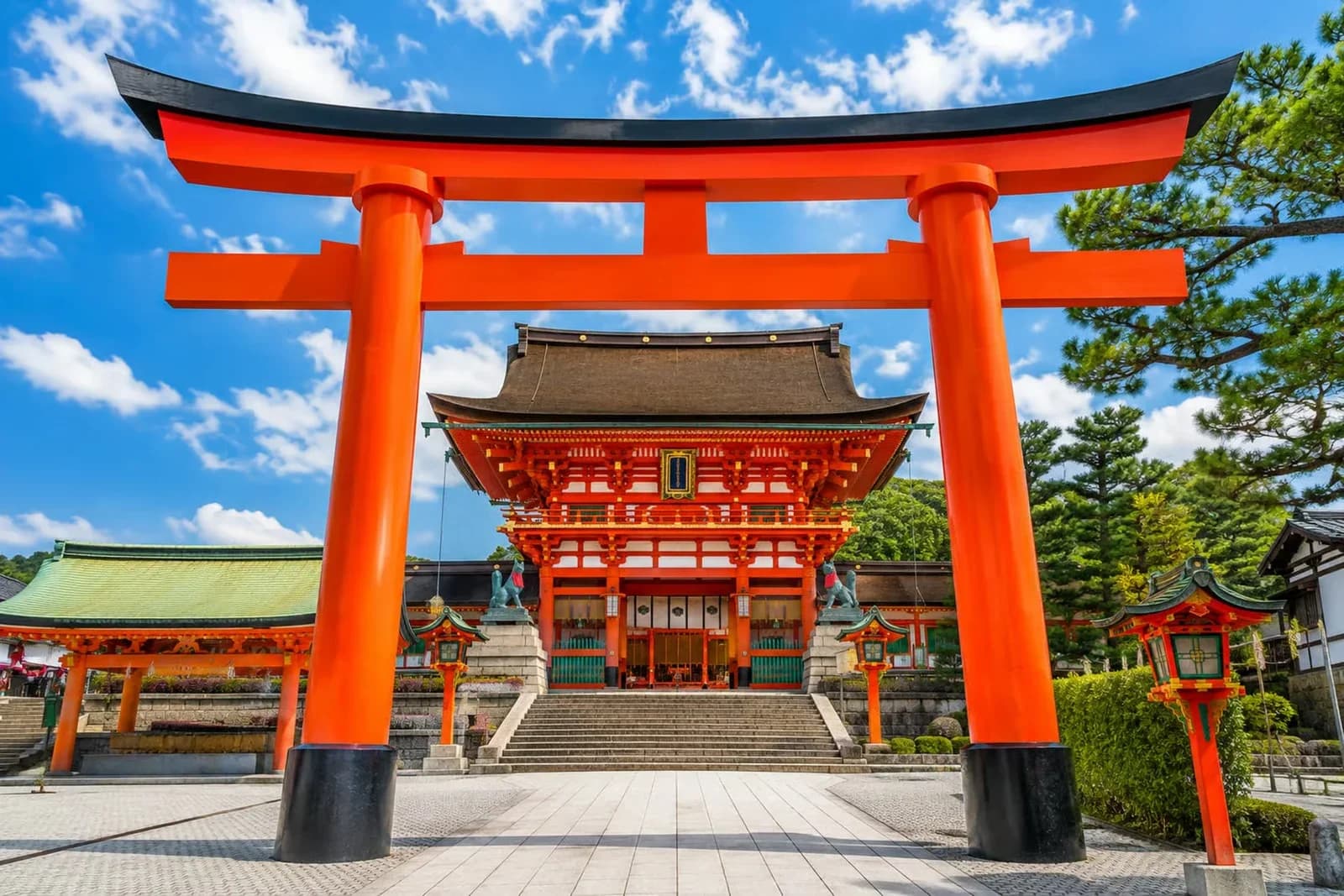
A lot of people search for “Fushimi Inari temple” and that is fine, we all know what is meant. But strictly speaking, Fushimi Inari Taisha is a shrine (Shinto), not a temple (Buddhist). An important difference. That “Taisha” in the name means it is the head shrine of all those dedicated to Inari, the deity of rice and prosperity, and its history goes back to the year 711, according to the official website. Over 1,300 years of history, which is no small thing.
Unlike other remarkable places in Japan such as Todaiji in Nara, what makes Fushimi Inari unique is not a single building but the whole thing: an enormous complex, with plenty of corners worth exploring if you have the time, climbing all the way up the slope of the sacred Mount Inari, with countless smaller shrines scattered up the mountain.
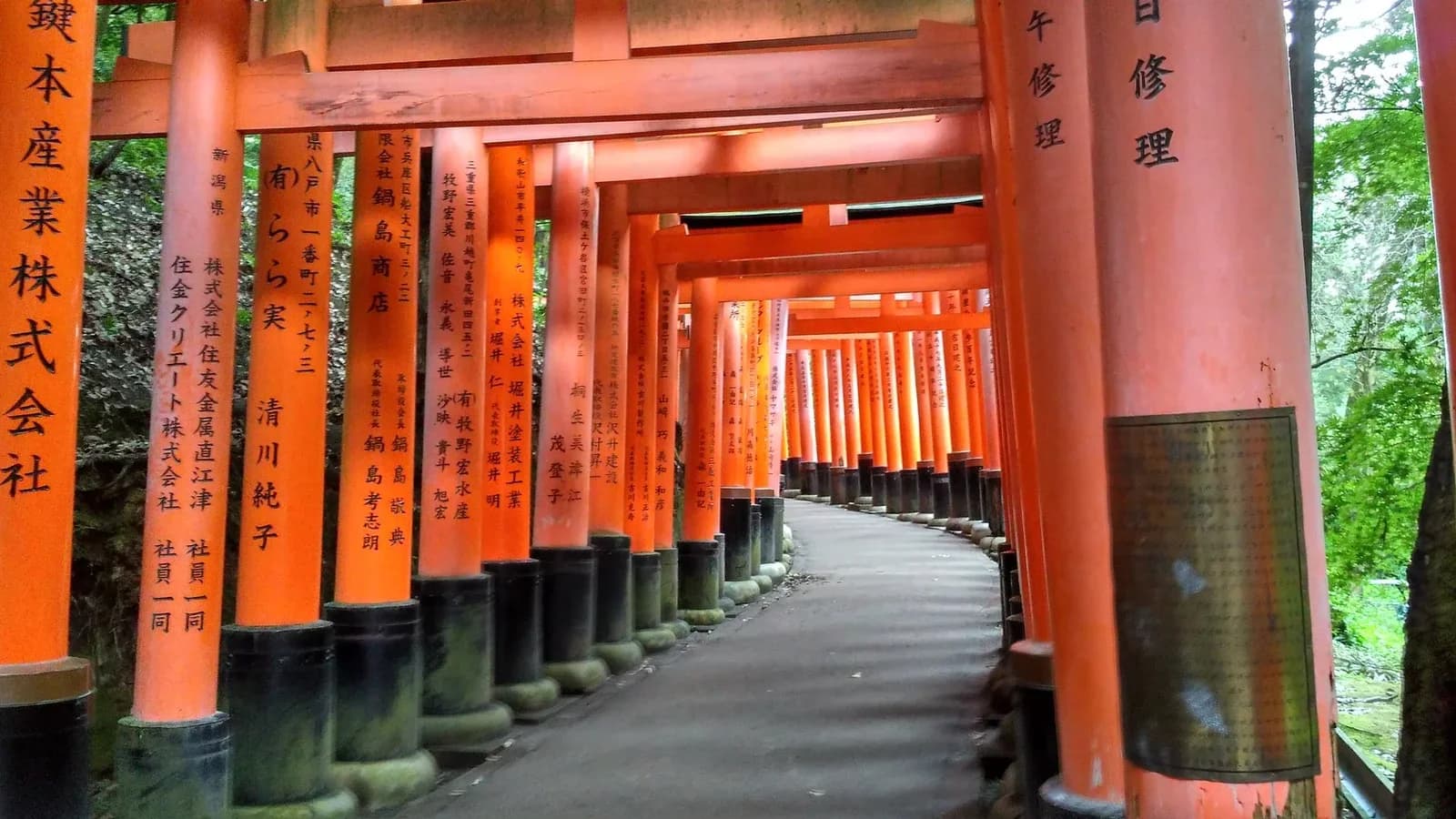
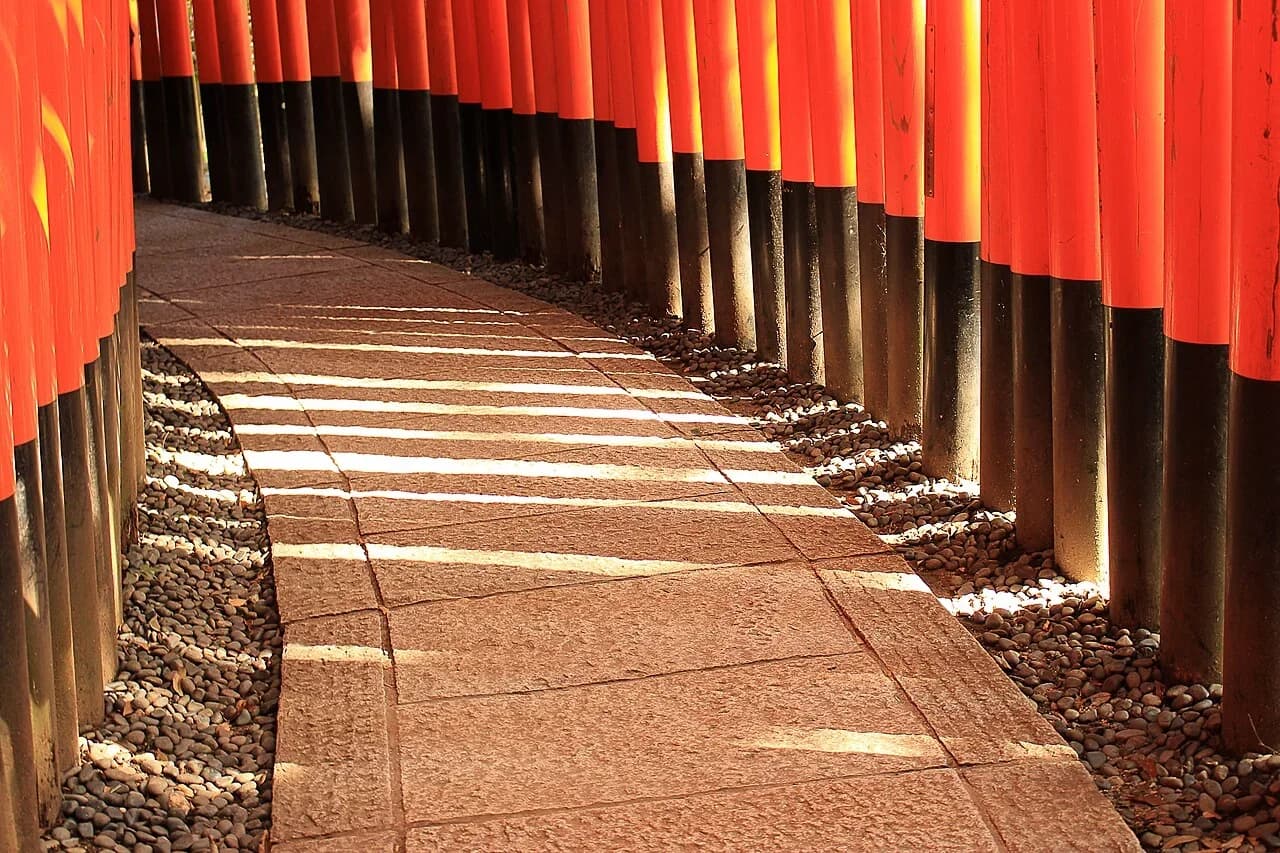
The torii, those vermilion gates that mark the entrance to sacred ground and that form the famous “tunnels”, are donated by companies and individuals to support the shrine and ask for prosperity at the same time, and they are constantly renewed (in fact, they usually last only 5 to 10 years at most).
メモNote
Every torii has the name of whoever donated it and the date carved into it. They are the most recognisable symbol of Shinto, and are often associated directly with Japan or Japanese culture (they are part of our logo, in fact).
Climbing to the top: is it worth it?
What most visitors do is head to the entrance, stay down at the bottom, take the photo in the Senbon Torii (the “corridor of 1,000 torii”, although there are actually around 800) for social media, and then leave to tick another place off the list.
There is nothing wrong with that, but not exploring any further would be a big opportunity missed.
Visiting Japan is the closest thing to visiting another planet without actually visiting another planet.
— We say it all the time, and Fushimi Inari proves it
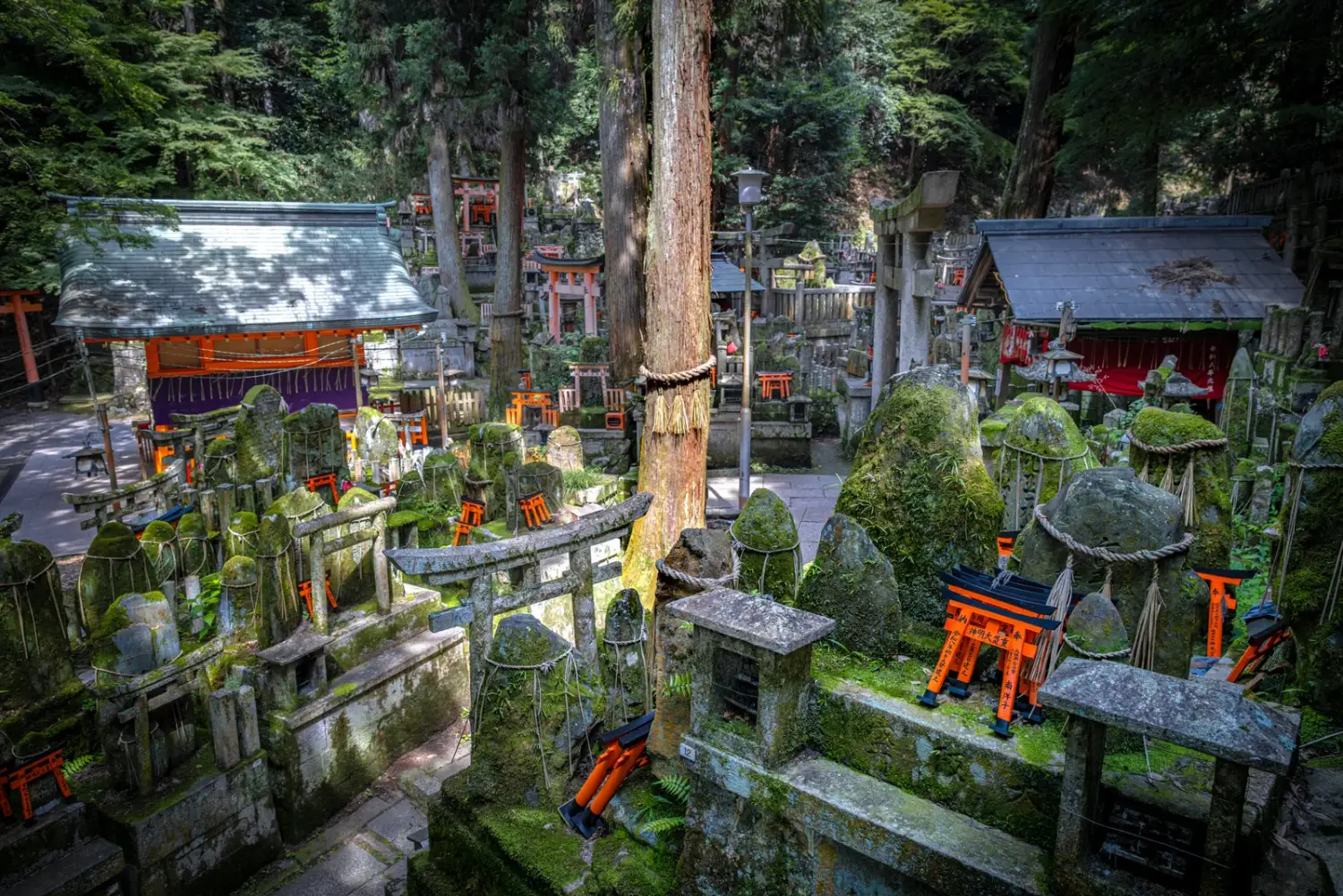
Exploring it, slipping behind the stone torii that have been standing there for who knows how long, only to find more paths, more torii, more striking monuments tangled up with the forest, each with its own history and reason for being there… it is something magical, almost otherworldly, and it turns into an experience a thousand times deeper than simply “going for the photo”.
Basically, the higher you get, the more you see:
- Hidden shrines among the trees.
- Altars with hundreds of miniature torii.
- Stone foxes everywhere.
- Halfway up, the Yotsutsuji viewpoint with panoramic views over Kyoto.
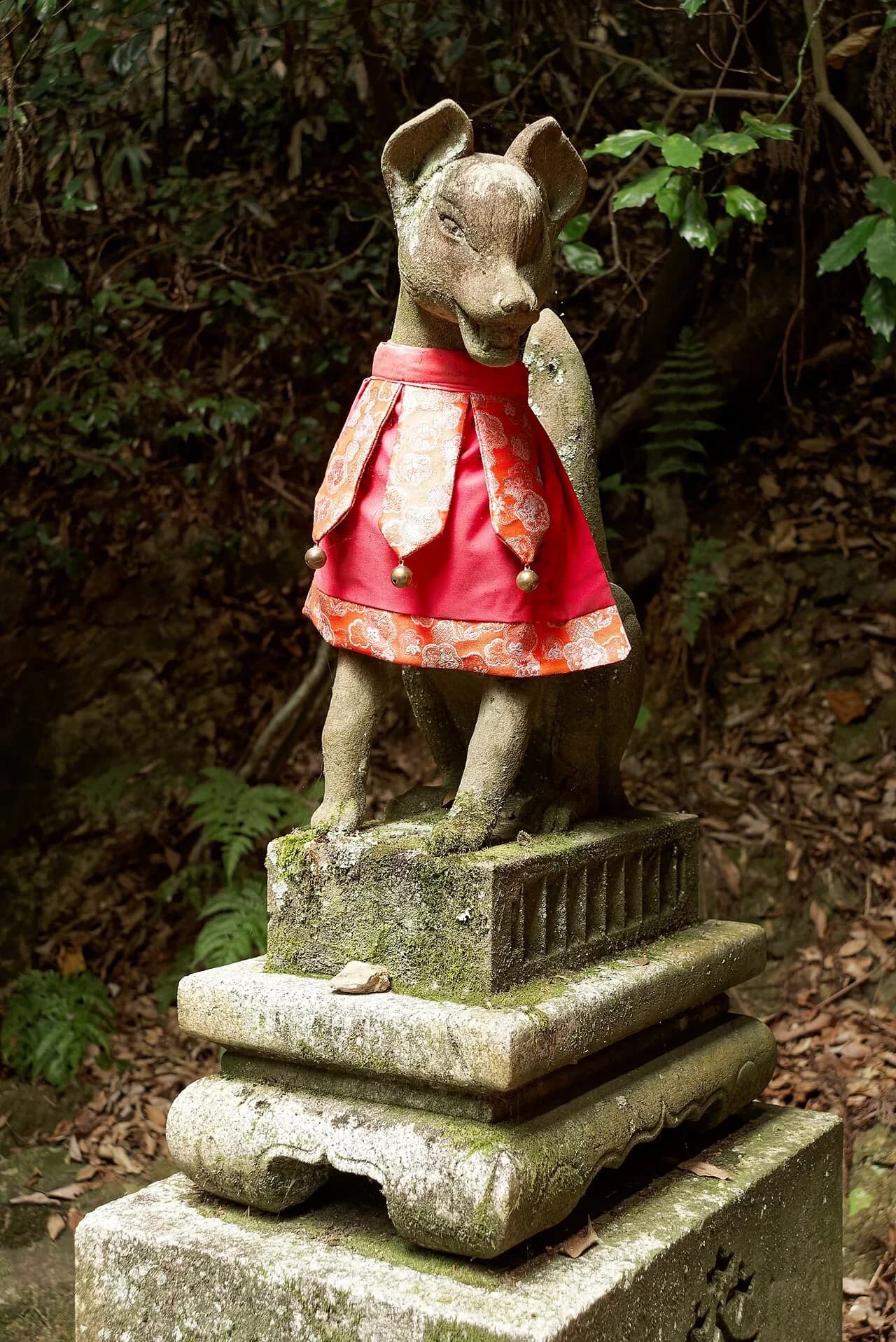

If your legs and the heat allow it, my recommendation is to go all the way to the top. It is about two hours up and an hour and a half back down, with a fair few stairs along the way. It sounds a bit tough, but the mountain path is well set up: there are stops all along the route where you can buy a drink, get some water and sit down for a while.
コツLocal tip
The last stretch with stalls is about 40 minutes from the summit, so that is the place to stock up before the final push.
Is it worth the effort? If you are up to it physically, in my opinion, absolutely. There are far fewer people up top, the atmosphere changes completely, and the feeling of having walked the whole mountain is one of those that stays with you.
Fushimi Inari opening hours and how to get there
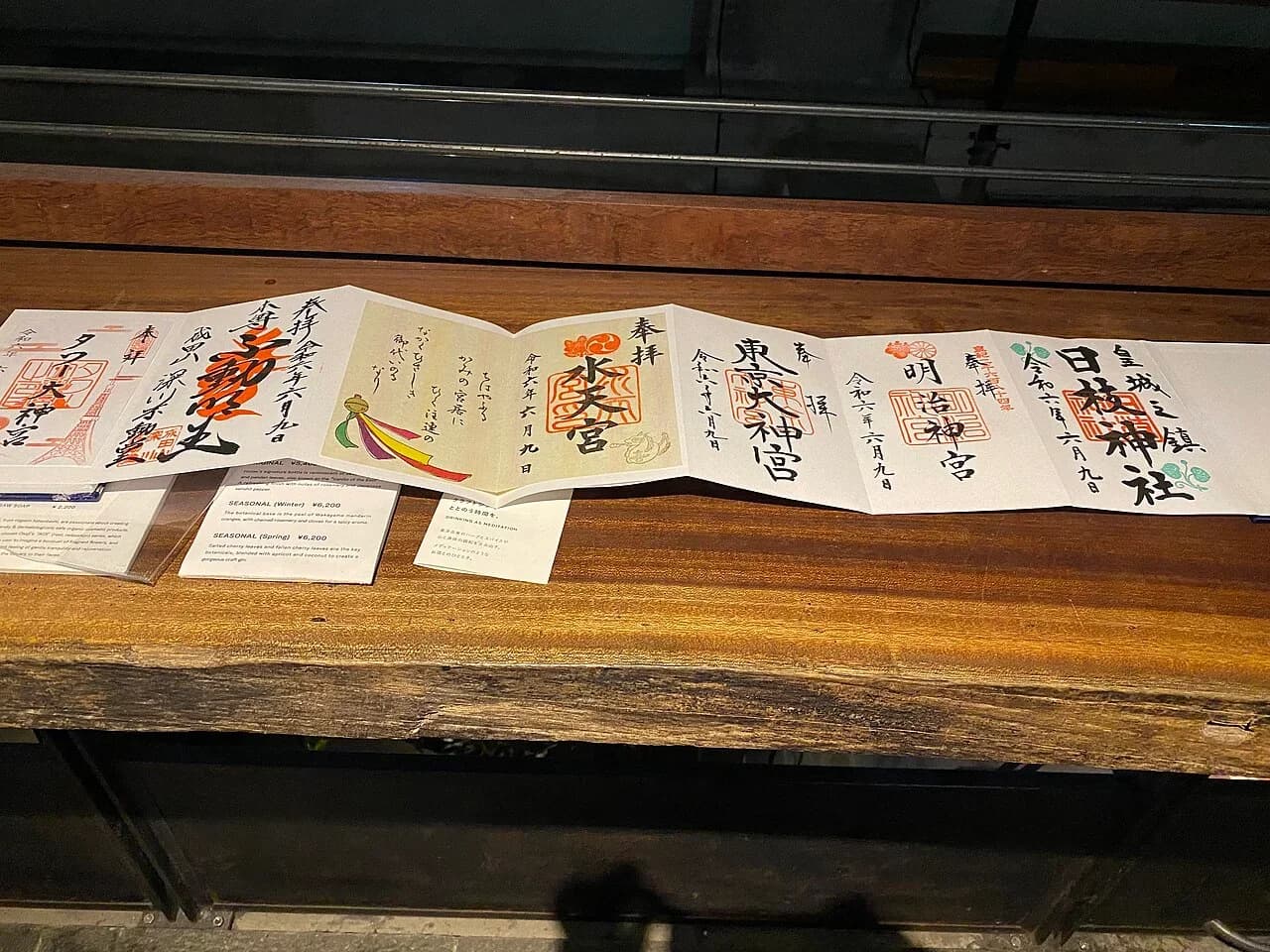
Fushimi Inari is open 24 hours a day, 365 days a year, and entry is free (as it is at most Shinto shrines). There are no ticket offices and no queues to get in. The shops and stalls inside the grounds, however, only run from roughly 9:00 to 17:00, which is when there are staff at the shrine. Worth knowing if you want to buy souvenirs, or get your goshuin stamp.
Fushimi Inari Taisha · the practical details
- HoursOpen 24 h, 365 days a year
- EntryFree, no ticket office and no queues
- Shops and stallsFrom 9:00 to 17:00 approx.
- Getting thereJR Nara line to Inari (5 min from Kyoto) or Keihan to Fushimi-Inari
Getting there is easy and there are several ways, but the simplest is probably from Kyoto Station, taking the JR Nara line, which drops you at Inari station in about five minutes, right in front of the entrance. You can also use the Keihan line to Fushimi-Inari station, a short walk from the shrine.
Tips if you are going in summer
Unless you are heading to the northern regions, the Japanese summer is fairly punishing. And I say that as someone from Extremadura who has lived through plenty of 44 °C summers in Spain.
The heat and humidity at Fushimi Inari hit twice as hard because of all the stairs (if you plan to go up), and it can leave you properly tired. Even so, I stand by the recommendation to climb, but do it sensibly: take plenty of water and try to avoid the hottest hours.
注意Heads-up
Watch your footing: some flights of steps are uneven and, with tired legs, it is easy to stumble (especially on the way down, when you have already let your guard drop a little).
Particularly in the last few years, with the explosion of tourism in Japan, the further the day goes on, the busier everything gets.
コツLocal tip
The earlier you go, the better: you will not regret the early alarm. If you can, I would aim to be there between 6 and 7 in the morning, whatever the season. In summer you will be walking in cooler air, the light at dawn is beautiful, and you get the torii tunnels practically to yourself.
If you want the classic photo between the red gates without twenty people in the background, this is the only realistic way to get it.
On the way down: stick to the main route
If you have plenty of time for Fushimi Inari, I would explore it slowly, enjoying the feel of the place and poking around as many of the side spots as you fancy. But if you have no more than 4 hours in total, on the way down I would take the main route and have a look at the smaller shrines that appear on your left as you descend. Here is a general map of the area:
The way down by the main route, on foot
From the summit (Ichinomine) down to the exit, through the Yotsutsuji crossroads: this is the main descent, the one that comes out round the back. The smaller shrines are on your left, and the food stalls right at the end.
So, is Fushimi Inari worth visiting?
If you read reviews of Fushimi Inari Taisha online, a clear pattern shows up: the people who got up early and climbed the mountain describe it as one of the best experiences of their trip, and the people who turned up at midday in high season mostly talk about how packed the lower section is. Both are right. Fushimi Inari is remarkable, but it is a place that rewards whoever visits it well, and at the right hour.
My take: it is an essential stop in Kyoto, especially if you can give it some time and get there early. It is certainly not a place to knock out in 30 minutes (which would still be well worth it, but as they say in Japanese… it would be very mottainai).
もったいない
mottainai · “what a waste”
The Japanese word for something squandered when it deserved more. Exactly what rushing Fushimi Inari in half an hour would be.
Would you rather see it without worrying about a thing?
If you would like to discover Fushimi Inari and other magical corners of Kyoto with us, we run a private tour designed so that you come away with the best memory possible.
FAQ about Fushimi Inari
How long does it take to climb Fushimi Inari?
It depends on how much you stop to explore and take photos, but going straight up, the summit of Mount Inari takes around two hours at a normal pace, and about an hour and a half to come back down, short breaks included. If you only want to see the Senbon Torii and the side streets at the bottom where the yatai (food stalls) are, an hour on site could be enough.
What is the best time of day to visit Fushimi Inari?
First thing in the morning, without question. The shrine is open 24 hours, so you can arrive at 6:00 and have it almost to yourself. From 9:00 or 10:00 the groups start arriving and the lower section fills up. Numbers also drop at dusk, although if you are planning to climb the mountain, bear in mind that some stretches are poorly lit at night (and that there can be mosquitoes in summer).
Is it free to enter Fushimi Inari?
Yes, entry to the shrine and to all the mountain trails is completely free, day or night (as it is at most Shinto shrines). You will only pay for whatever you buy at the food stalls, or for charms and souvenirs, which run roughly from 9:00 to 17:00.
 Article written by
Miguel
Founder of Japón a Fondo and Japonés a Fondo. A native of Extremadura, Spain, living in Tokyo for almost a decade. A professional translator for years, now a guide at Japón a Fondo and a Japanese teacher at Japonés a Fondo. Walking curious minds through Japan from the inside, through the language and by showing Japan as a local.
See full profile →