

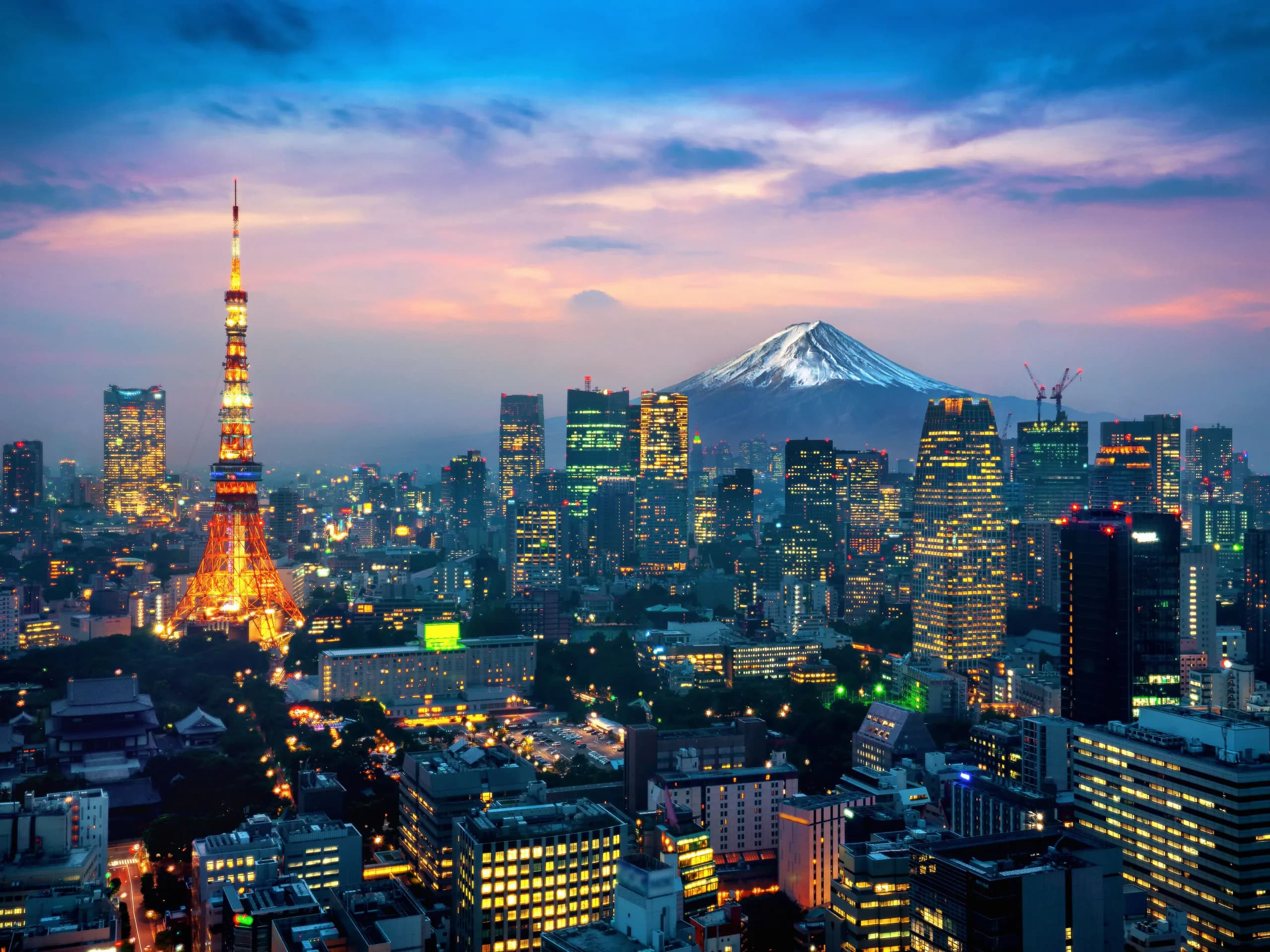
When someone asks us what to see in Tokyo, the answer is usually another question: how many days do you have?
Tokyo and Kyoto are the two great pillars of most first trips to Japan, and both have a huge amount to offer. Depending on the time you have for each city, your tastes and your pace, you will want to prioritise some things over others.
This guide is meant to help with exactly that, drawing on the experience of those of us who walk these streets every day (because we actually live here).
If you are starting from scratch and are not quite sure what to do or visit, on a first trip seeing the best-known places is a good starting point. Here are some of the recommendations we like most, so you can make the most of your visit.
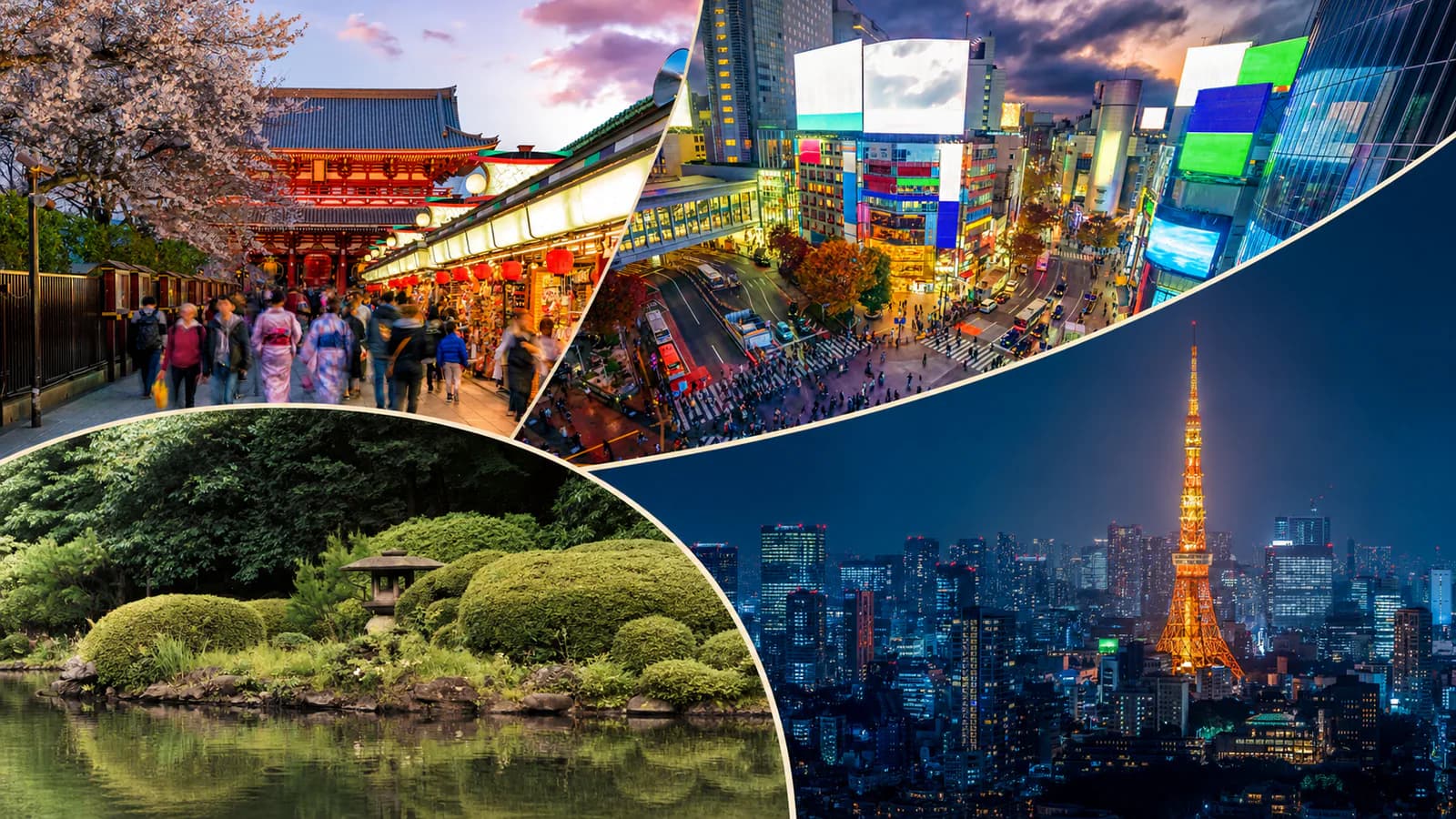
If you are wondering what to see in Tokyo in 2 or 3 days, a good approach is to split the city into two main routes: one day for Tokyo’s more traditional side and a few historic districts, and another for its neon-lit modern side.
This is exactly the logic we follow in our Traditional Tokyo and Modern Tokyo tours, because after years guiding around the city we know this is the way that works best to get the most out of your time.
With a third day you can add contemporary Tokyo or keep it for something more relaxed, depending on your interests and the pace of the trip.
In this article9 sections
What to see in Tokyo depending on how many days you have
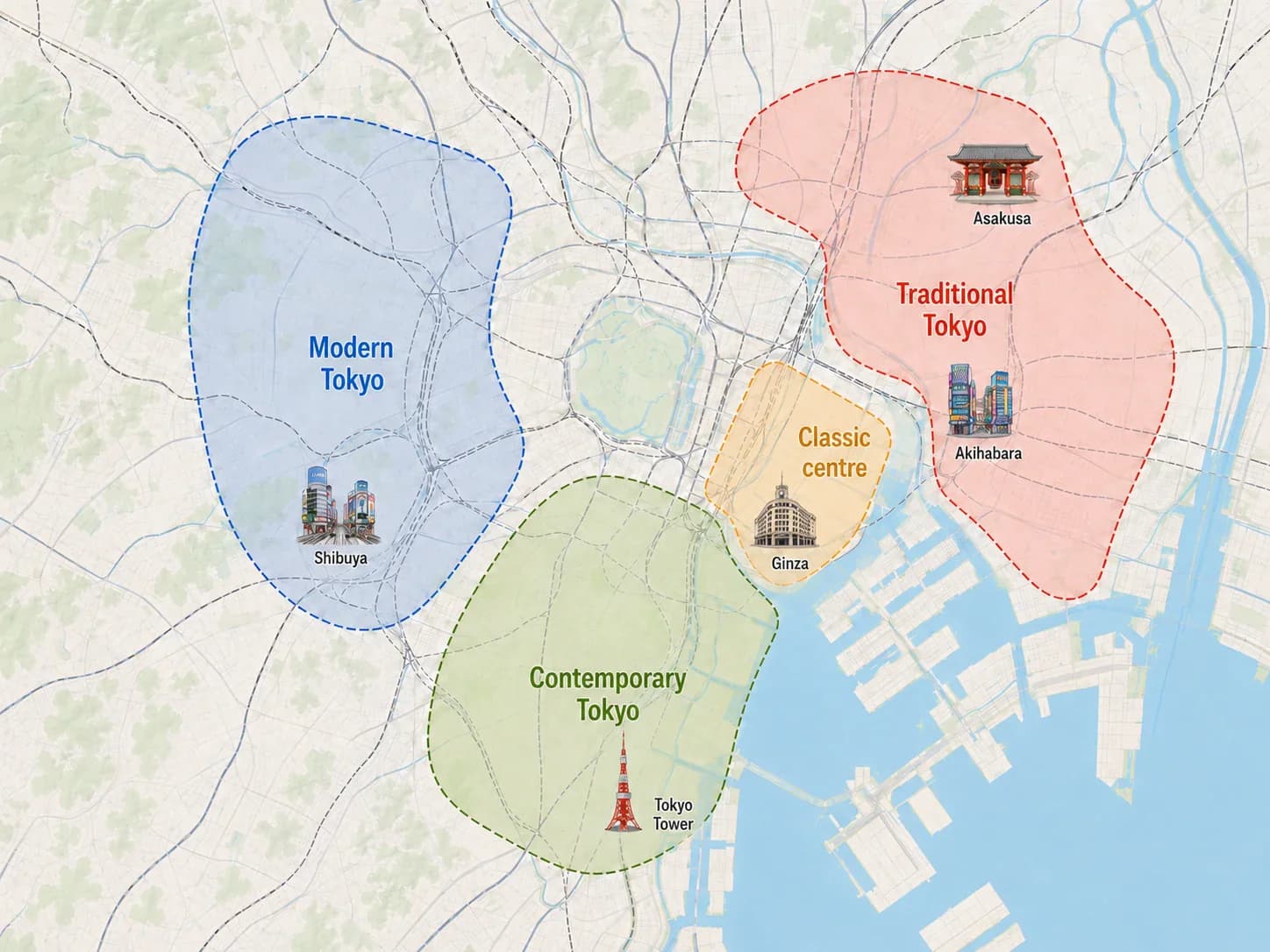
- With2daysThe two classicsOne day for traditional Tokyo and one for modern Tokyo. This is the split that works best, with the classic centre fitting naturally into any spare time.
- With3daysRound out your Tokyo itineraryOur main suggestion is to explore Azabudai, Tokyo Tower, Roppongi and Takanawa. If you prefer a gentler day, you can swap this route for Shinjuku Gyoen, teamLab or Odaiba.
- With4days or moreAdd a day trip from TokyoWithout changing hotels: Nikko, Kamakura, Yokohama or Enoshima, all less than two hours away by train.
Let’s start with some of the best places to visit in Tokyo during those 2-3 days.
Tokyo in practical terms
- How many daysTwo for the essentials, three or four to go unhurried
- Getting aroundA Suica or PASMO card; the Yamanote line links a good part of this guide
- Where to stayIdeally next to a Yamanote line station, to save transfers
- Daily budgetBetween 6,000 and 9,000 yen per person, accommodation aside
- Best timeLate March and April for the cherry blossom; November for the autumn colour
- What tires you out mostChanging trains a lot, not the distances: always note the exit
Traditional Tokyo
The walk at a glance
Short on time?
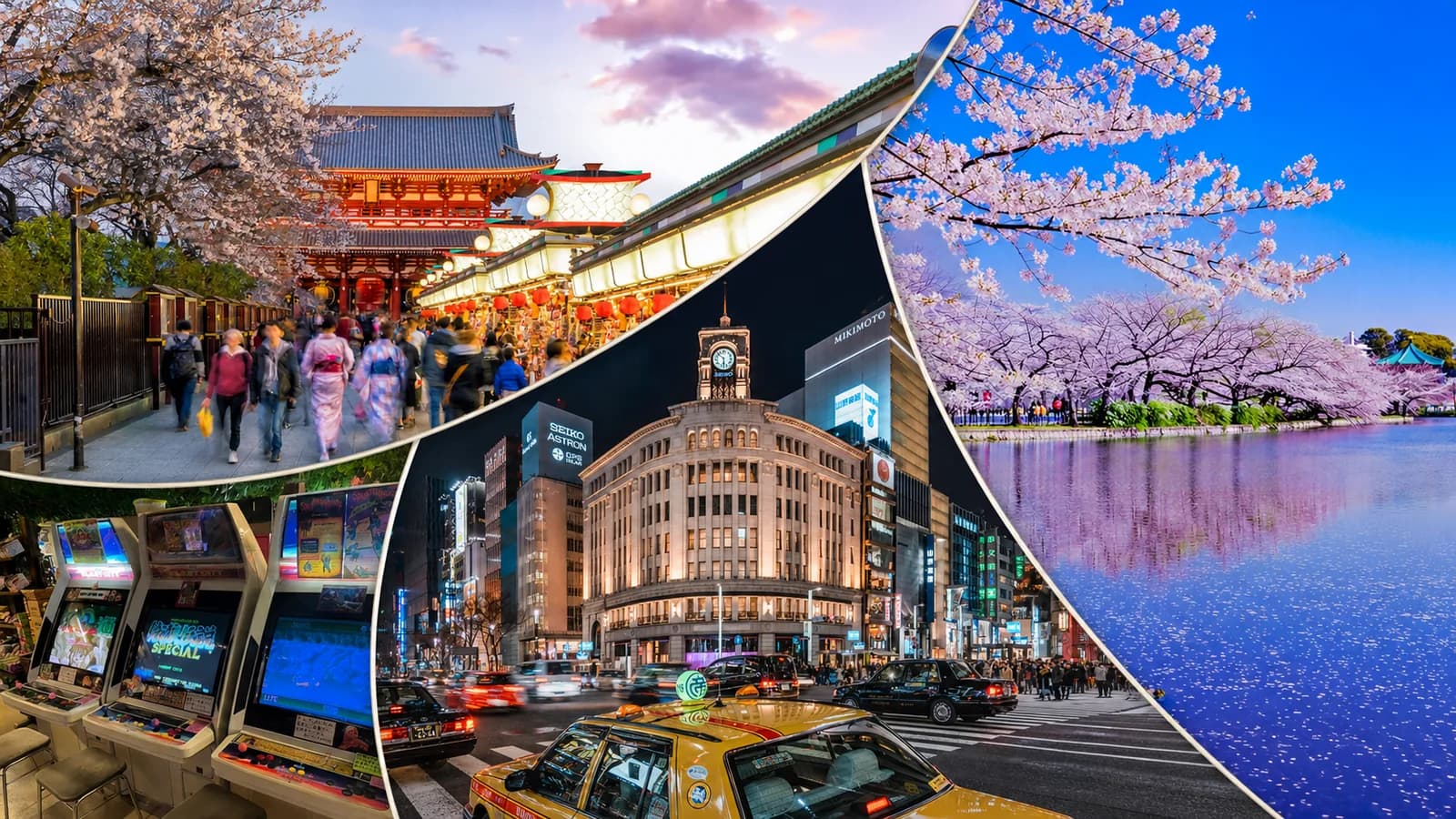
- Don’t missSenso-ji and Nakamise Street, Akihabara or Ginza.
- OptionalTokyo Skytree, Ueno Park and its museums, and Ameyoko market.
- If you only have half a dayAsakusa early, then Ginza; leave Ueno for another day.
Day 1, stop by stop
Asakusa → Skytree (20 min walking along the river) → Ueno (15 min by subway) → Ameyoko → Akihabara.
Senso-ji in Asakusa is the main stop, and it is worth thinking about what time to go: the main hall opens at 6:00 from April to September and at 6:30 from October to March, but the Nakamise shops do not open until around nine, and the street loses half its charm before the stalls are open. The later it gets, the busier it becomes.
From there you can head to Tokyo Skytree (visible from the riverside walk), Ueno with its huge historic park and museums, Ameyoko with its street market, or Akihabara, the mecca of anime and electronics. They are easy to combine in a single day.
This is the route of our Traditional Tokyo tour, in case you would rather have us walk you through it.
We do this area with you
Senso-ji first thing, Ueno without rushing and Akihabara as daylight fades: that is exactly the walk of our private Traditional Tokyo tour, just for your group.
1. Asakusa: Senso-ji temple and Nakamise Street
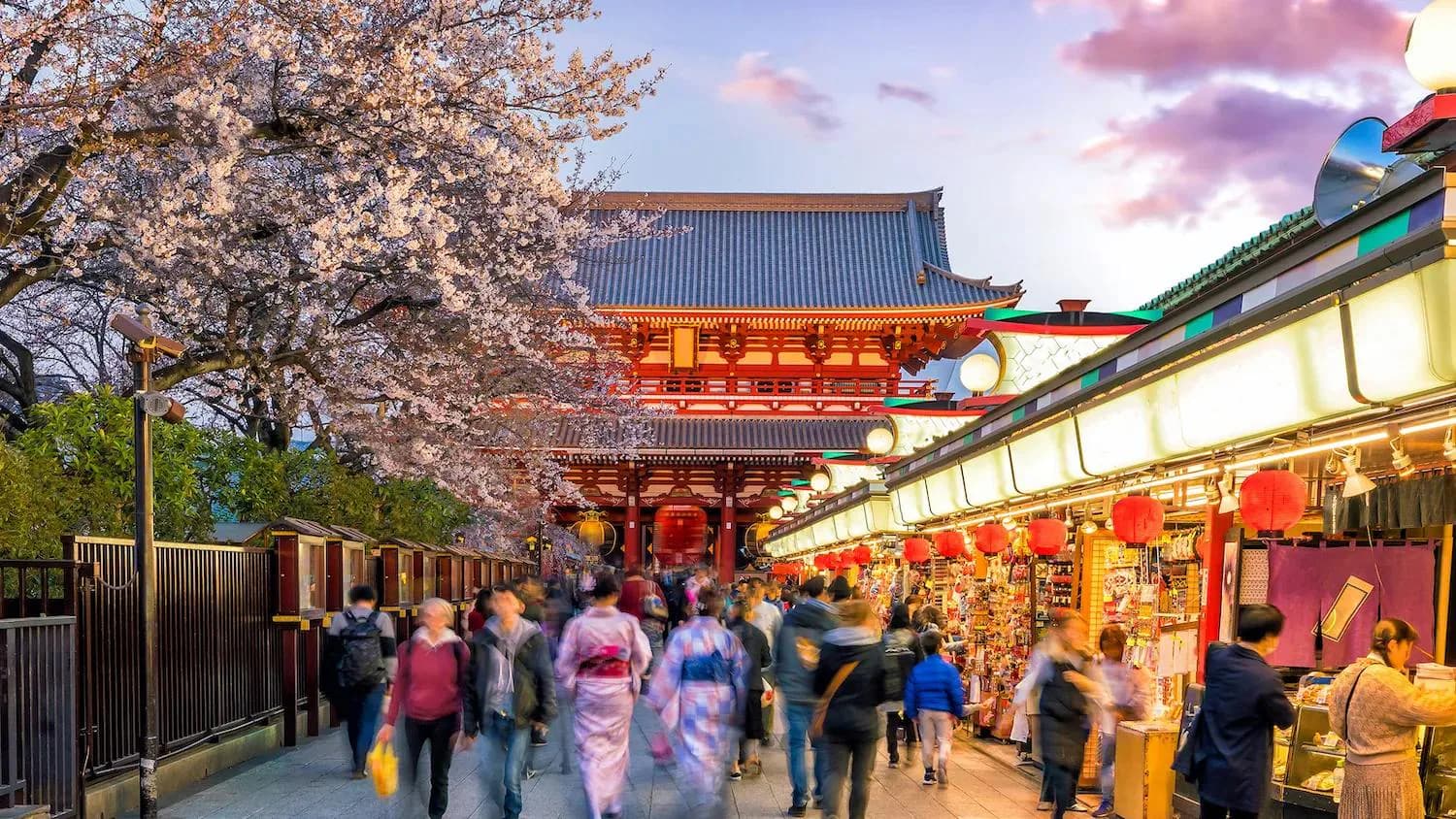
Senso-ji is Tokyo’s oldest Buddhist temple, founded in the 7th century, and the heart of Asakusa. Its famous outer gate, Kaminarimon, with its giant red lantern, is probably one of the most photographed sights in the city.
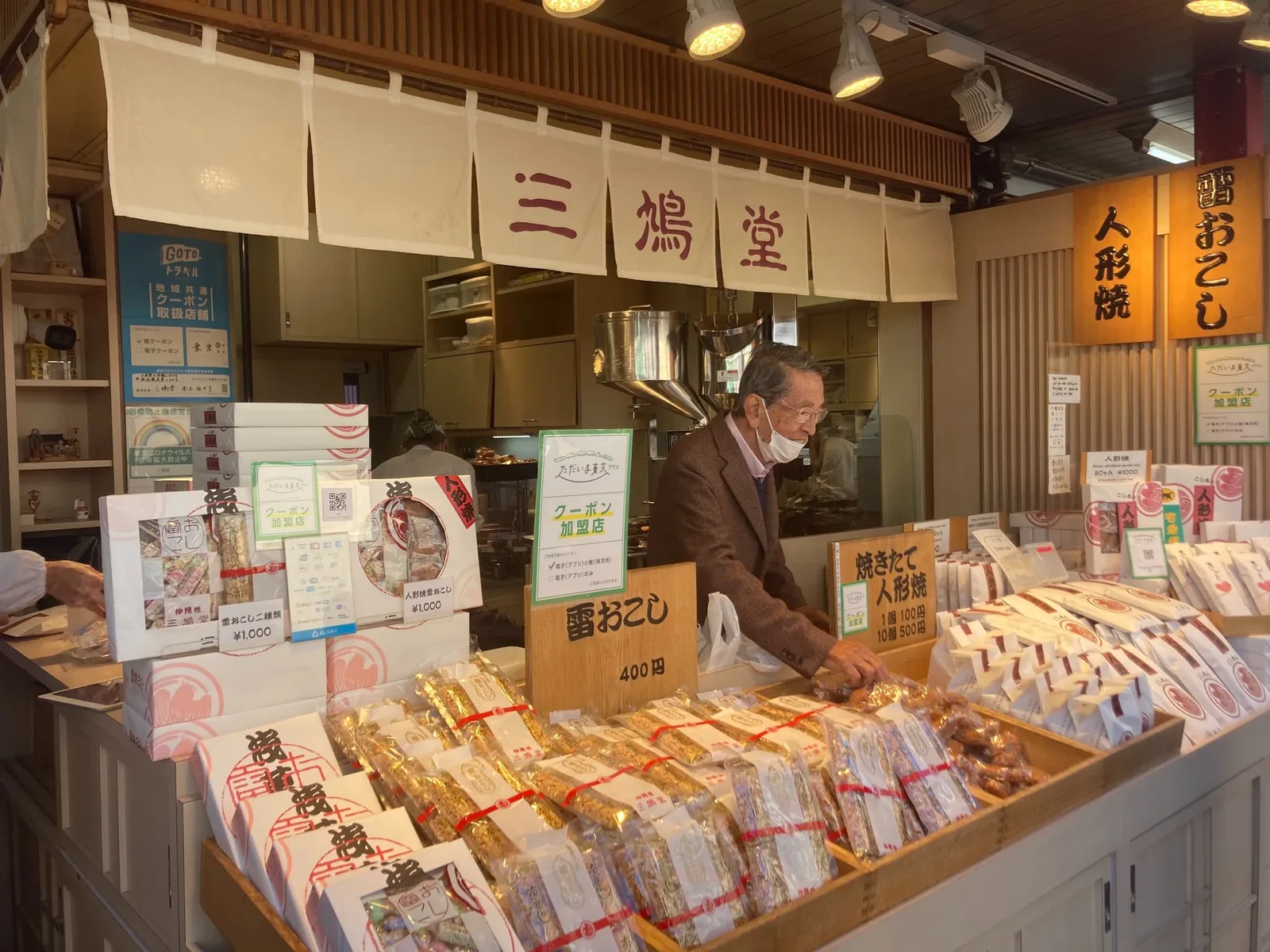
Nakamise Street, which runs straight up to Senso-ji, is one of Japan’s oldest shopping streets. It is worth trying the ningyo-yaki or some freshly made senbei. In summer, kakigori is also well worth trying. Right next to Senso-ji is Asakusa Shrine, which is less popular but still worth a couple of minutes.
豆知識Fun fact
The image of Kannon that gave rise to the temple, the one two brothers fished out of the Sumida river in the year 628, has never been seen by anyone: it is a hibutsu, not shown even to the monks. What is venerated is a copy.
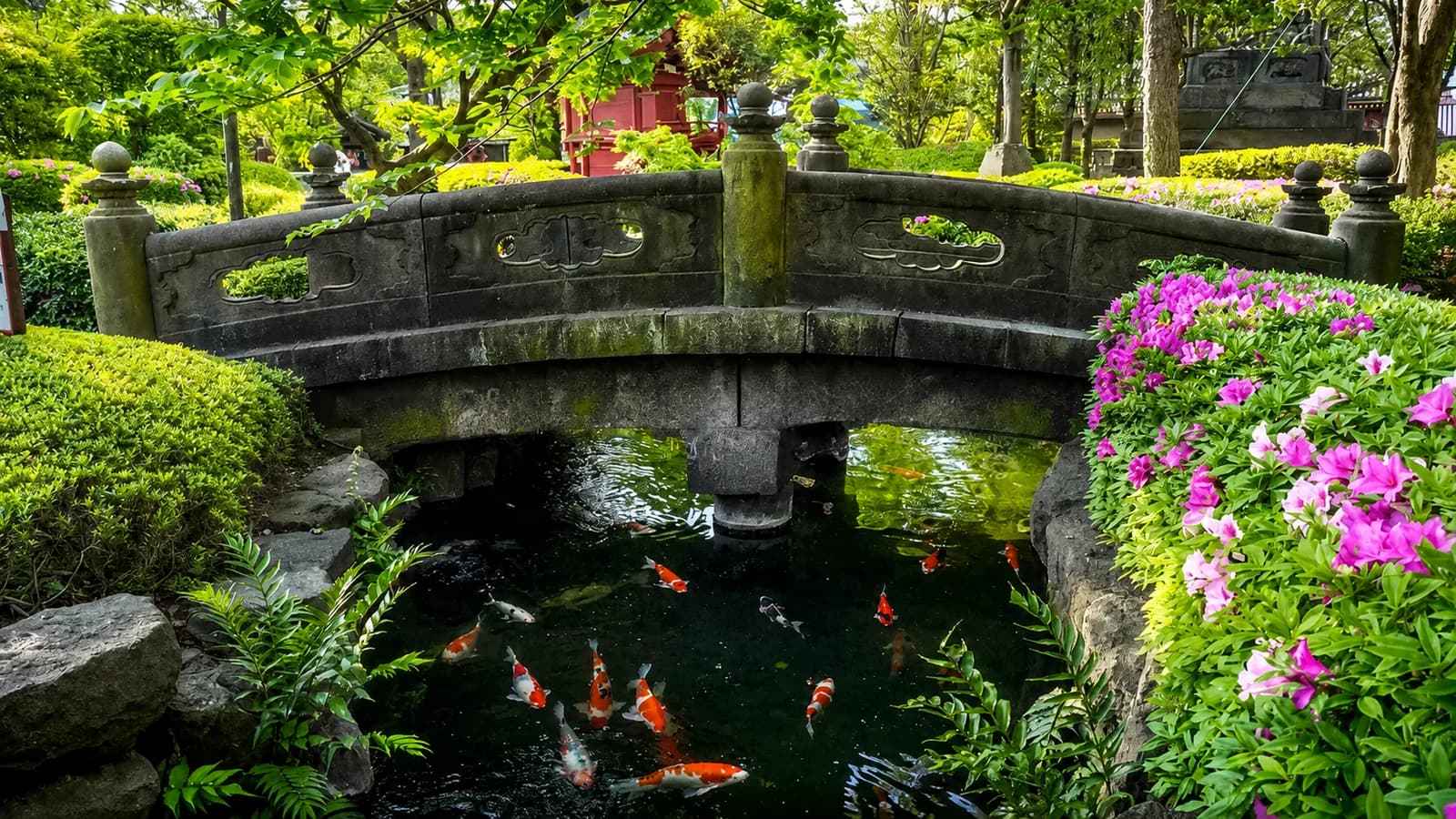
The gardens to the left of the main hall are also very pretty. Running perpendicular to Nakamise, Shin Nakamise Shotengai is lined with restaurants, cafés and souvenir shops selling Japanese knives and other popular omiyage. Its traditional-style shops stretch for more than 200 metres.
All in all, a highly recommended place. The only thing to keep in mind is that the time you visit the area will make quite a difference to your experience. The main hall opens at 6:00 from April to September and at 6:30 from October to March; the shops open at around nine, but from ten onwards there are usually a lot of people, so it is better to plan the visit carefully to get the best possible experience.
メモNote
Senso-ji as you see it today is a reconstruction: the original temple burned down in the 1945 air raids and was rebuilt in 1958 with private donations. Kaminarimon has also been rebuilt several times; the present gate dates from 1960.
Next stop: Skytree · 20 min walking along the river
2. Tokyo Skytree: the tallest tower (not building) in the world
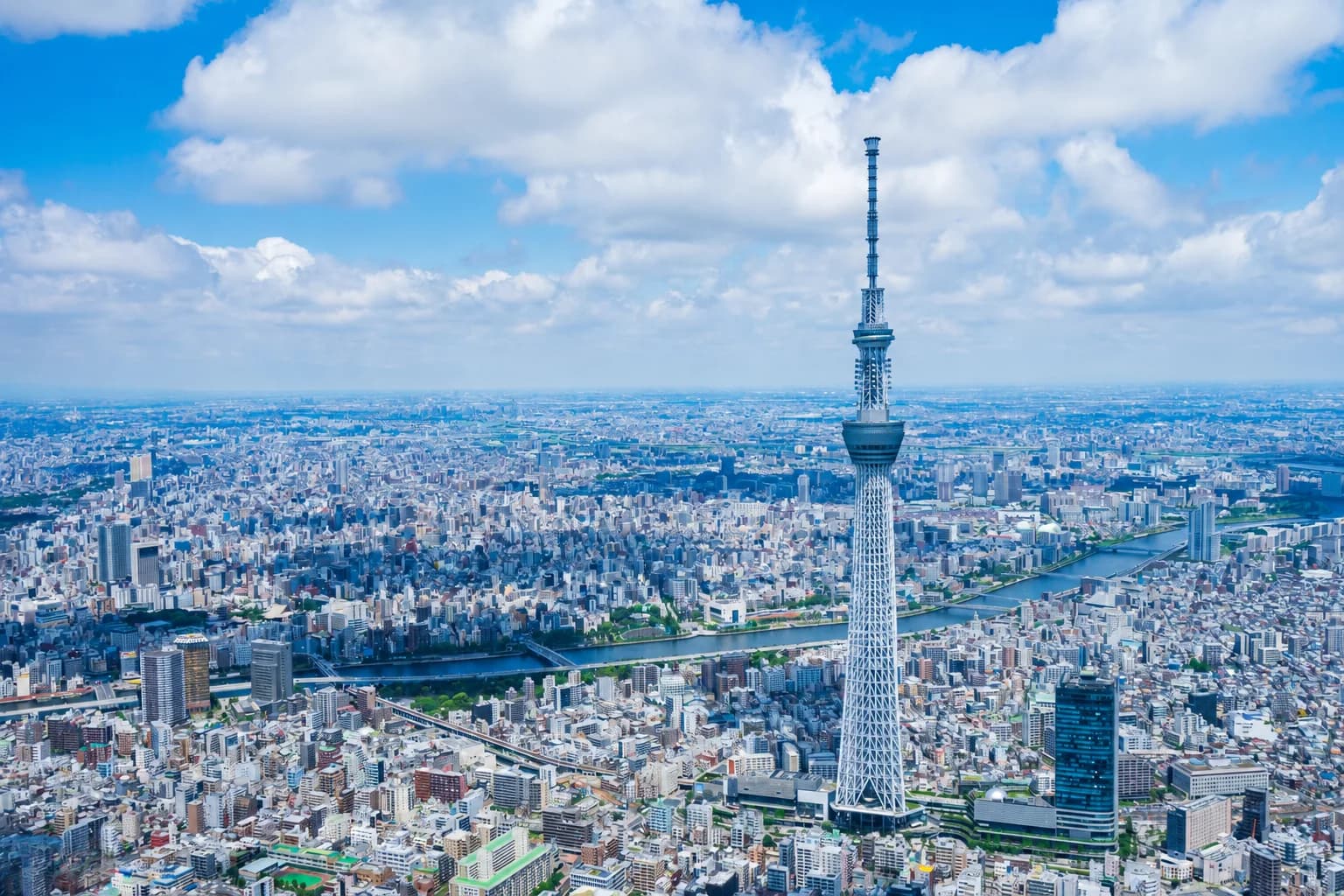
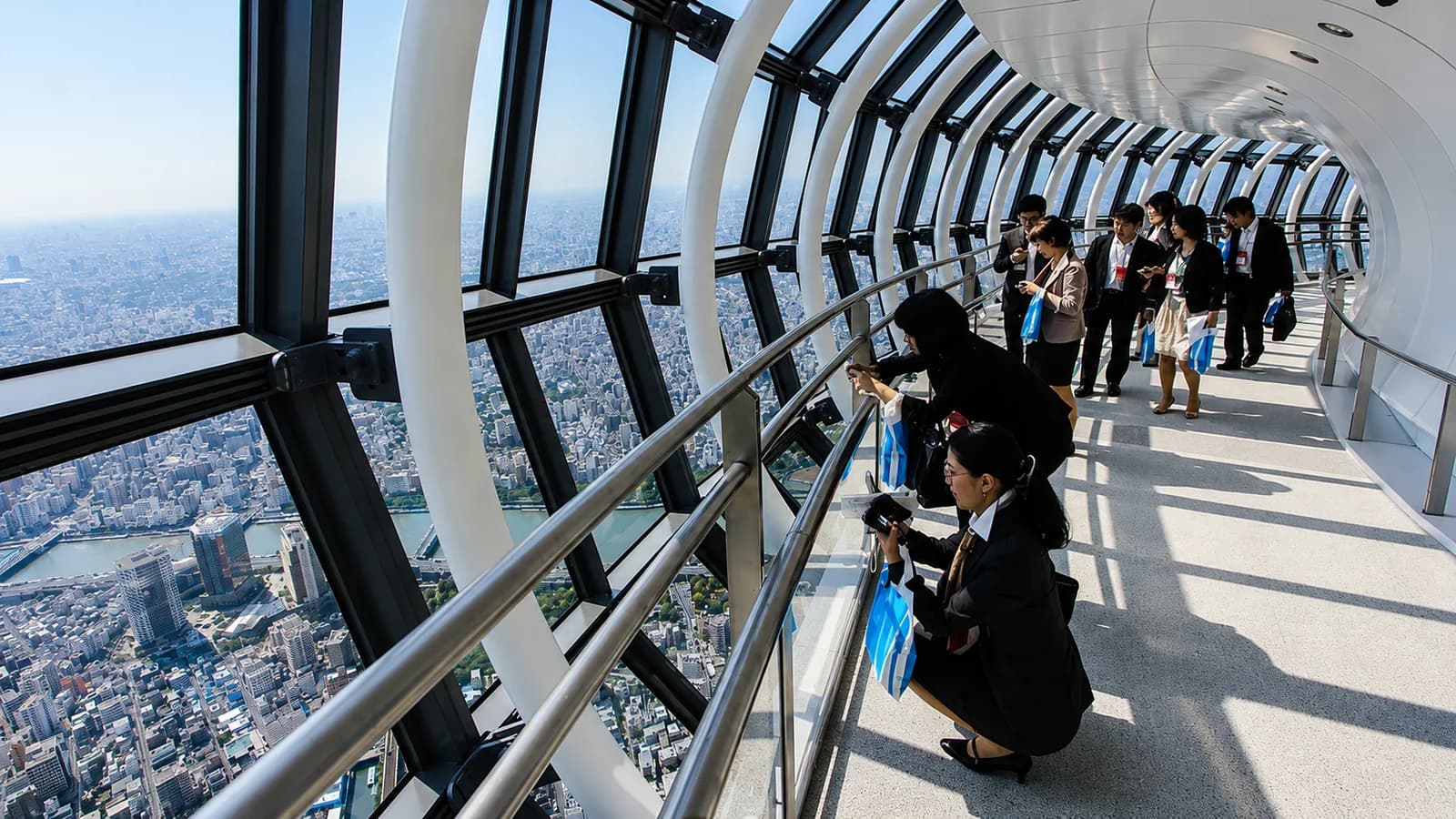
Tokyo Skytree is very close to Asakusa (you can visit it from there on the same route), and it is one of the icons of eastern Tokyo. At 634 metres, it is the tallest tower in the world (tower, not building).
It was built mainly as a broadcasting tower, although most people know it as one of the best places to see Tokyo from above, with an incredible aerial perspective that helps you grasp the scale of the city.
豆知識Fun fact
The 634 metres are no accident: 6-3-4 reads mu-sa-shi, and Musashi was the old name of the province of Tokyo. And to withstand earthquakes it copies the pagodas: a damped central column, like the shinbashira they have had inside them for a thousand years.
It has two levels of observation decks: the Tembo Deck, at 350 metres, and the Tembo Galleria, a glazed corridor that climbs to 450 metres and creates the feeling of almost walking through the sky.
At its foot is the Tokyo Solamachi, a huge complex with more than 300 shops and restaurants, plus the Sumida Aquarium, also highly recommended (especially for the little ones).
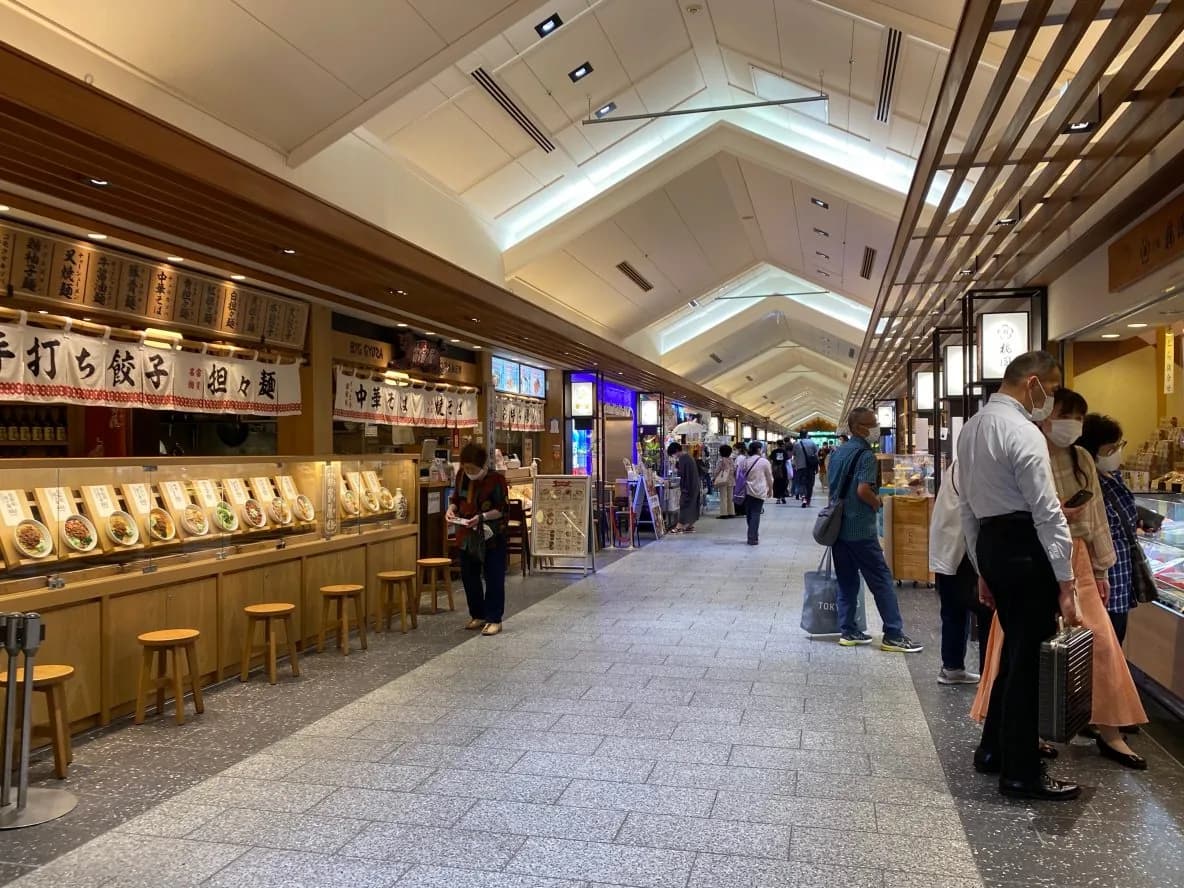
As it is very close, it can easily be combined with Asakusa on a walk along the Sumida, perhaps Tokyo’s most emblematic river.
Next stop: Ueno · 15 min by subway
3. Ueno Park: museums, cherry trees and Japan’s oldest zoo
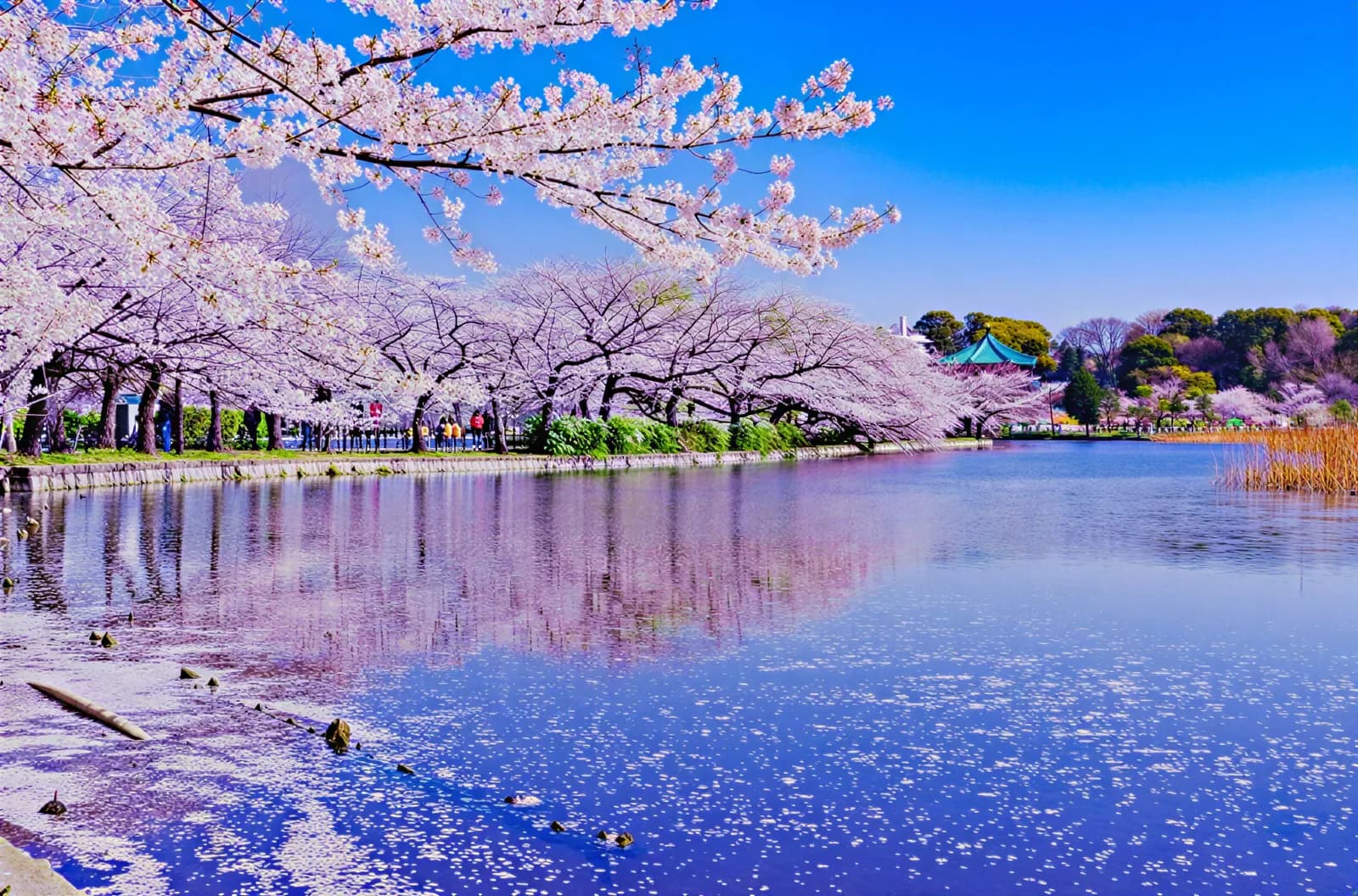
One of the city’s best-loved parks, it has several highly recommended museums such as the Tokyo National Museum, the National Museum of Western Art and the National Museum of Nature and Science. All of them are very interesting, although whether or not to visit them depends on each person’s interests and the time available.
Personally, I find the Tokyo National Museum very interesting, and it also has impressive inner gardens.
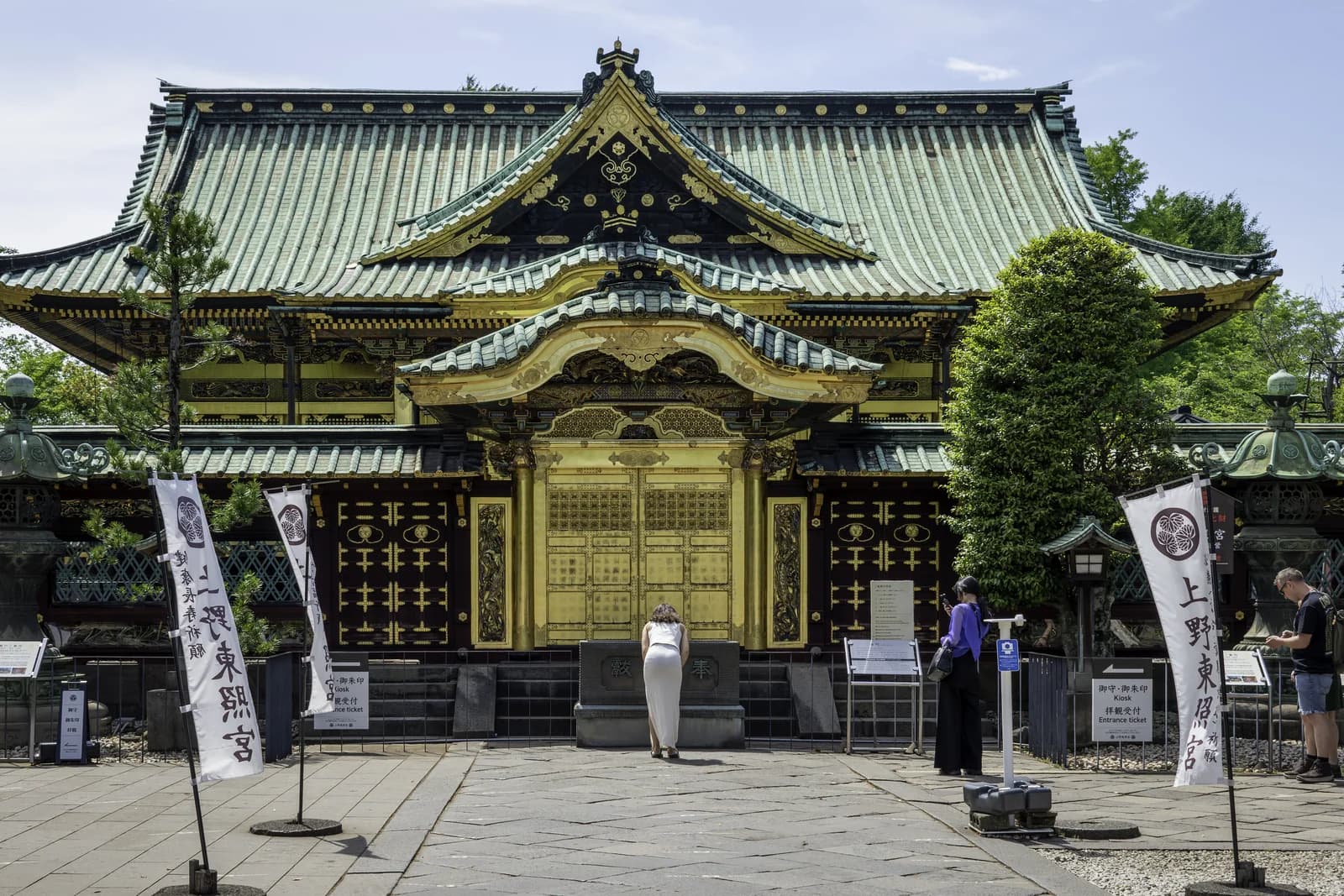
On the way from the station to the museum you also come across the Ueno Toshogu, a very pretty Shinto shrine dedicated to Tokugawa Ieyasu, founder of the Tokugawa shogunate.
豆知識Fun fact
In 1873, Ueno Park became one of Japan’s first five public parks, and its zoo, opened in 1882, is the oldest in the country. The cherry trees are considerably older: they were brought here from Yoshino by shogun Tokugawa Iemitsu in the 17th century, which is why people have been gathering beneath them for four centuries.
In sakura season (the cherry blossom), Ueno Park is full of trees in bloom, and it is in fact one of Tokyoites’ favourite places to enjoy the blossom. It is also well worth it in autumn.
Besides the huge park and the museums, the area is also home to the famous Ueno Zoo, the oldest in Japan, opened in 1882.
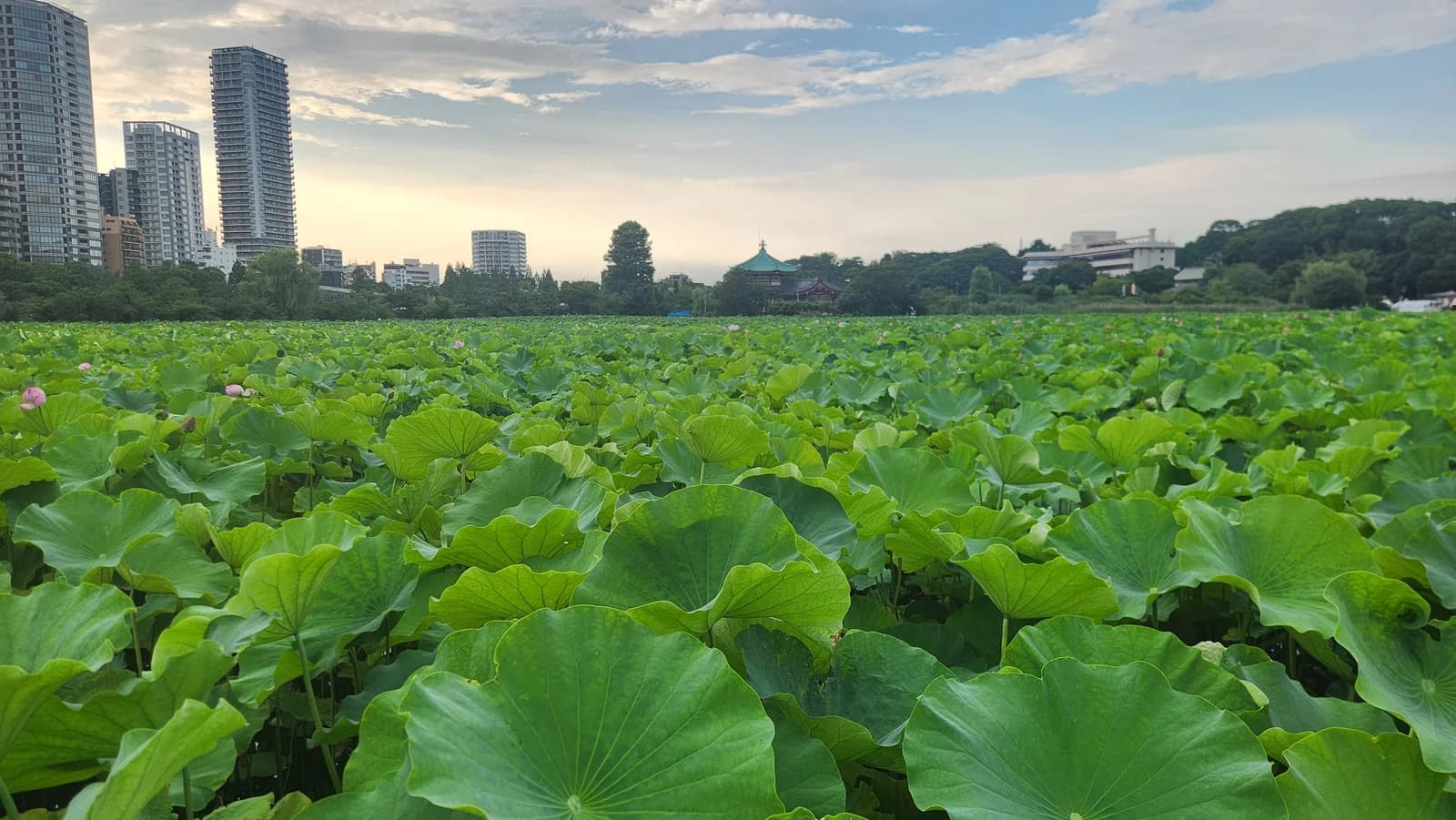
It is a good place to go with your partner, or of course with children, although its famous giant pandas went back to China in January 2026. It also has a pond with enormous lotuses that are quite a sight in summer.
メモNote
The park’s museums close on Mondays, or on the following Tuesday when Monday is a public holiday. During cherry blossom season the park fills up early, and some stretches become one-way.
Next stop: Ameyoko · 5 min walking
4. Ameya-Yokocho: the black market that stayed
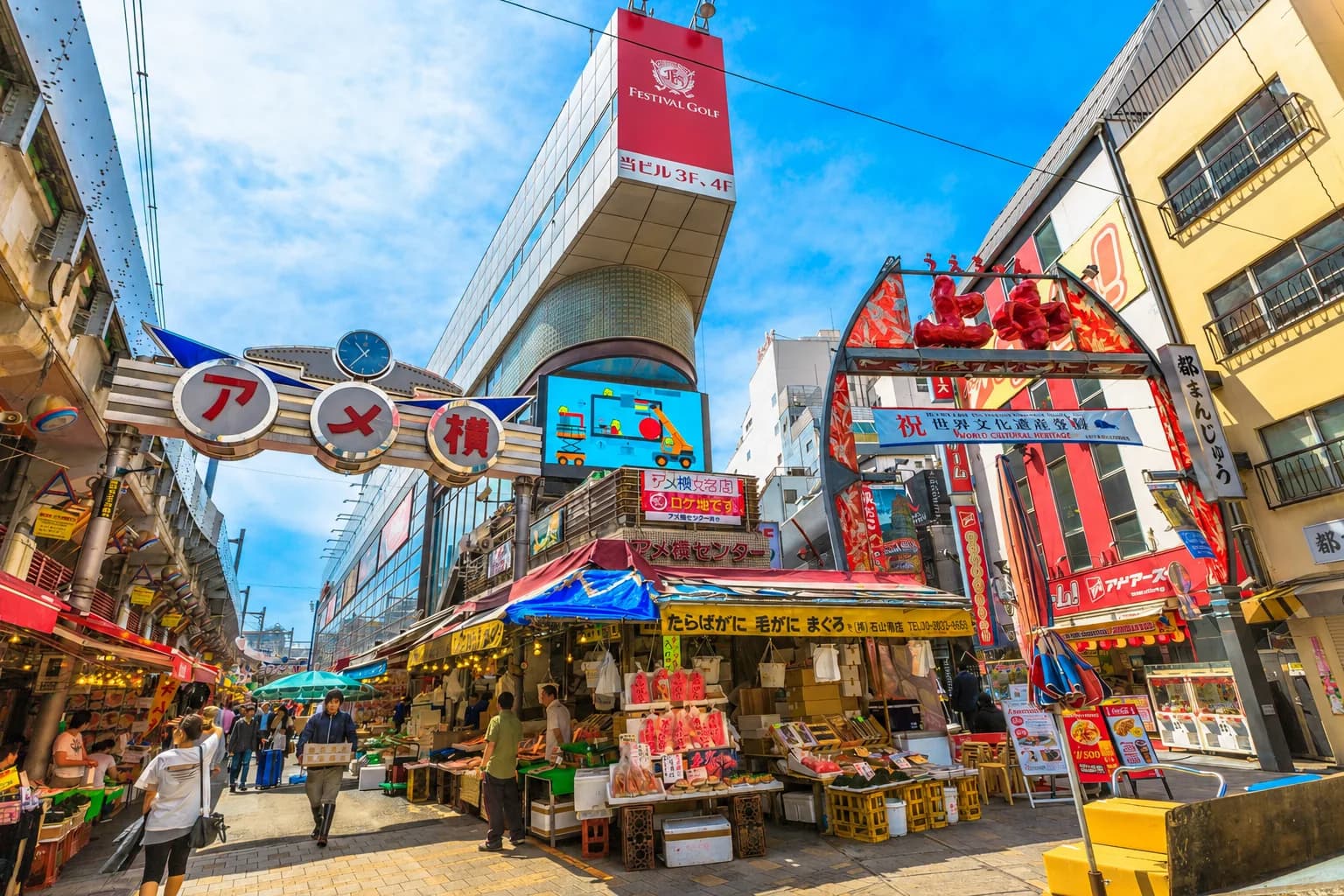
Ameya-Yokocho (often shortened to Ameyoko) is a lively shopping street some 500 metres long that connects Ueno and Okachimachi stations, with a good part of it running under the elevated railway tracks.
Its origins go back to the black market that sprang up after the Second World War (as also happened in Akihabara or the Omoide Yokocho in Shinjuku), and today it brings together around 500 shops and street stalls selling practically everything: fish and seafood, sweets, fruit, clothes…
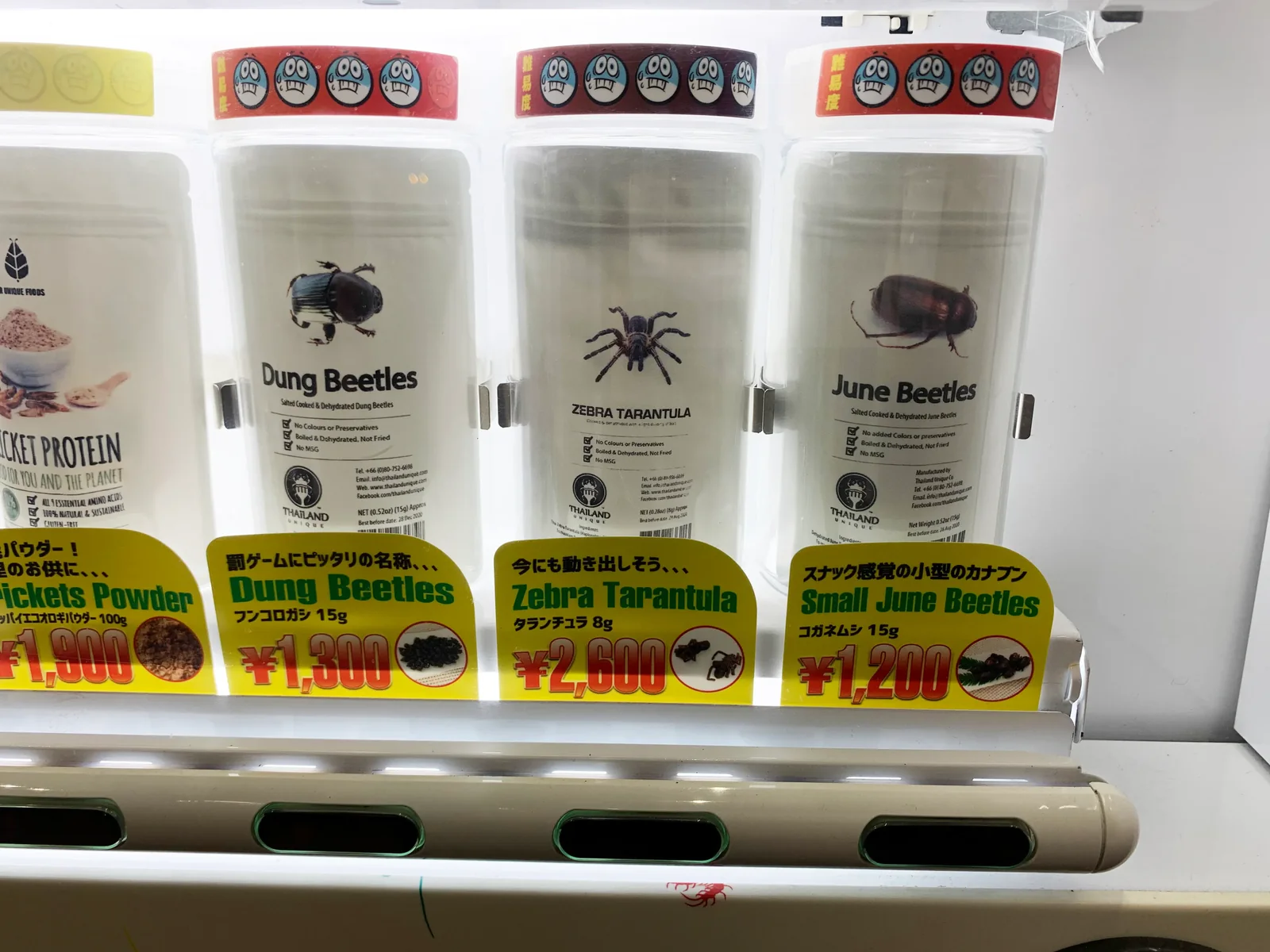
There is even a vending machine for… edible insects! Only for the brave. Fancy a tarantula?
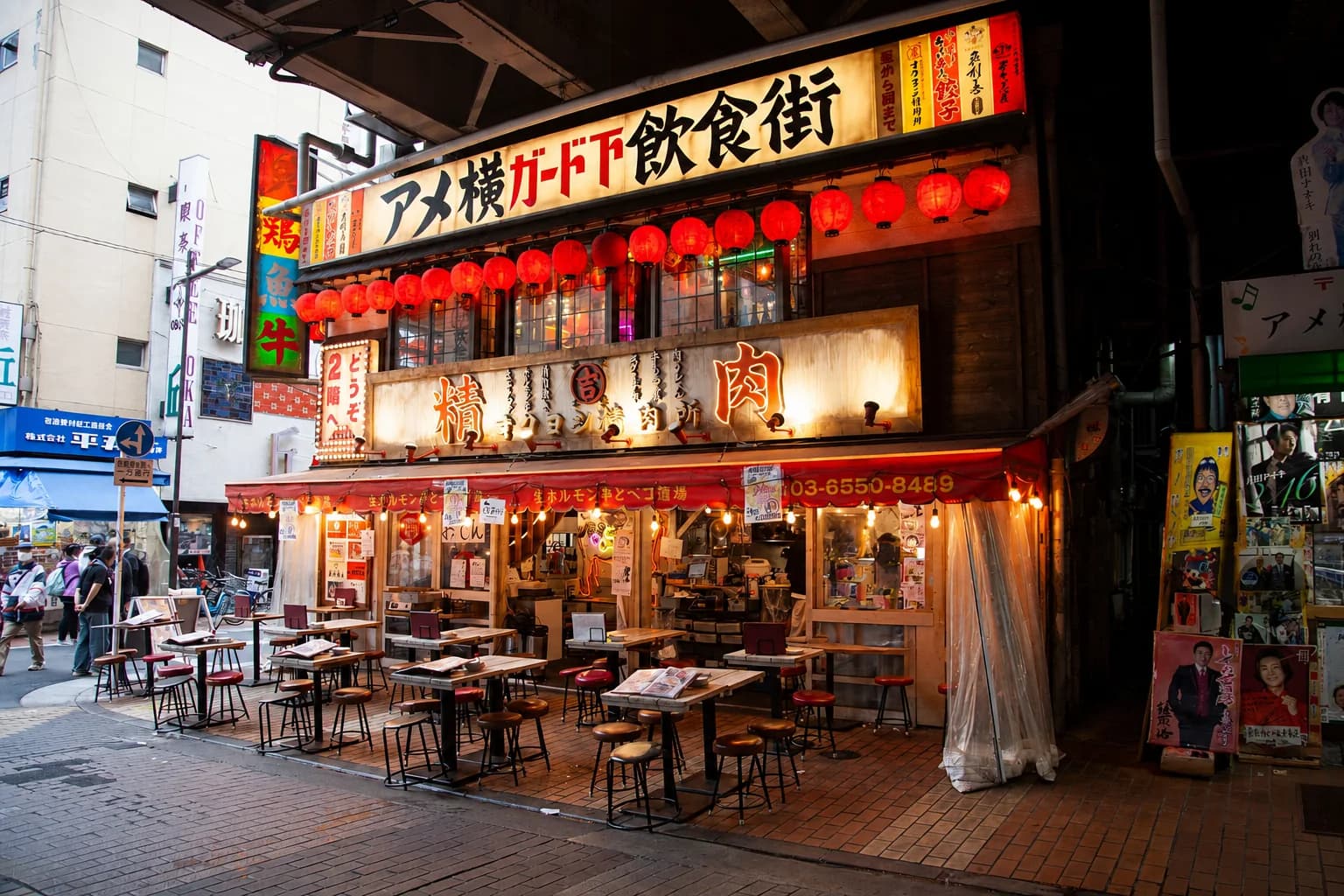
You will also find plenty of international food stalls, casual restaurants and izakaya where you can eat or have a drink practically underneath the tracks. It is not exactly the most refined place in Tokyo, but that is precisely why it offers a more chaotic and local experience than other parts of the city.
It is also right next to Ueno Park, so it is very easy to visit both places on the same day. And then, a few minutes’ walk away, comes the next place we recommend on this list: Akihabara
Next stop: Akihabara · 3 min by train
5. Akihabara: the mecca of manga, anime and electronics
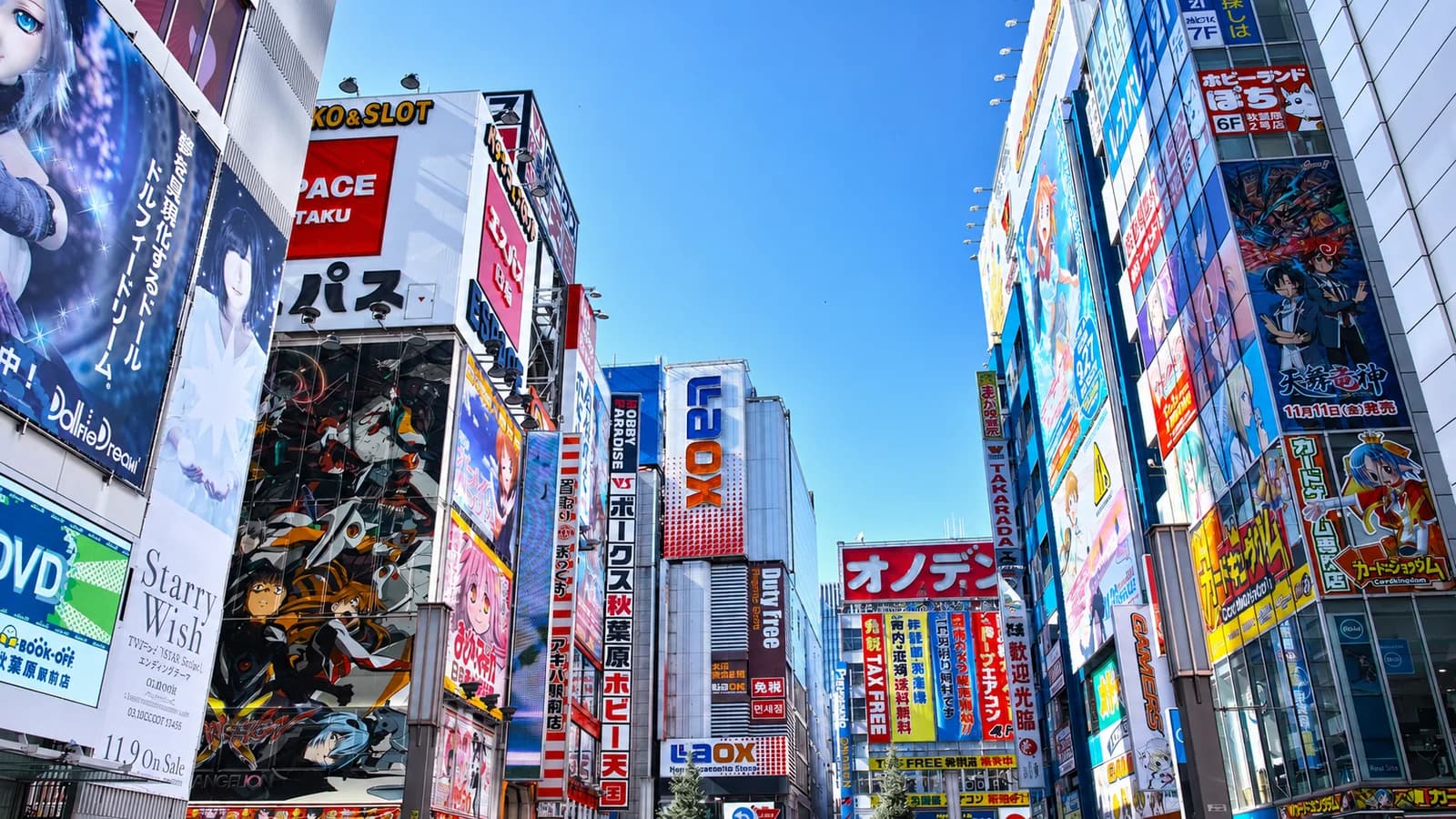
Akihabara is essentially the mecca of manga, anime and electronics. Even if otaku culture is not your thing, walking through Electric Town as daylight fades, with its buildings covered in glowing screens, is an experience in itself.
This is another of the districts that gradually took shape in the post-war years, initially as a place to buy and sell radio components and electrical parts around the station.
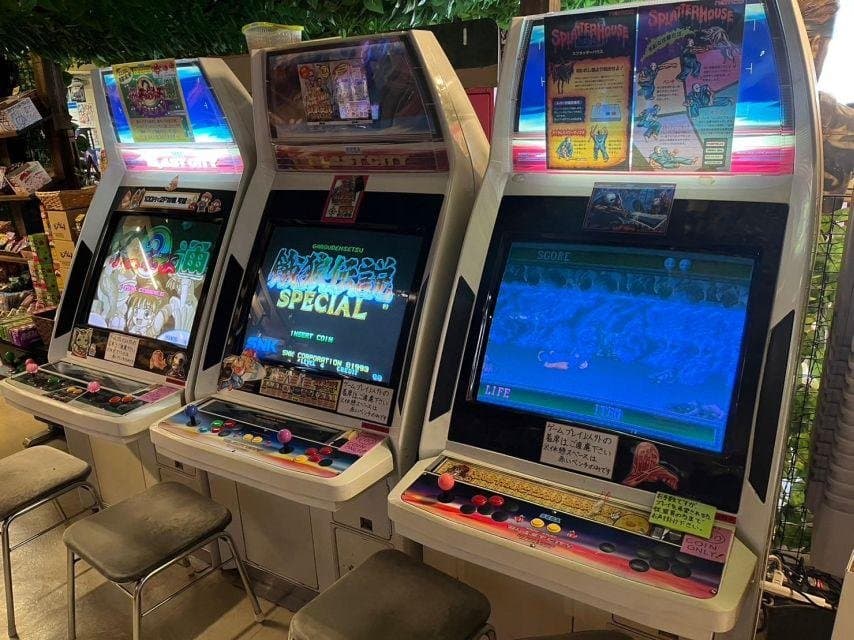
Today, all of that comes with manga, anime and the amusement arcades (the famous Japanese game centres), which are also quite impressive for the organised chaos going on inside.
豆知識Fun fact
Akihabara (秋葉原) reads as “field of autumn leaves”, but the name comes from Akiba (秋葉), the deity who protects against fire, and hara (原), “field”: a shrine was raised here in 1870 after a fire. The electronics part is post-war, when a market for radio parts was born under the tracks: the Denki-gai (電気街), the electric town.
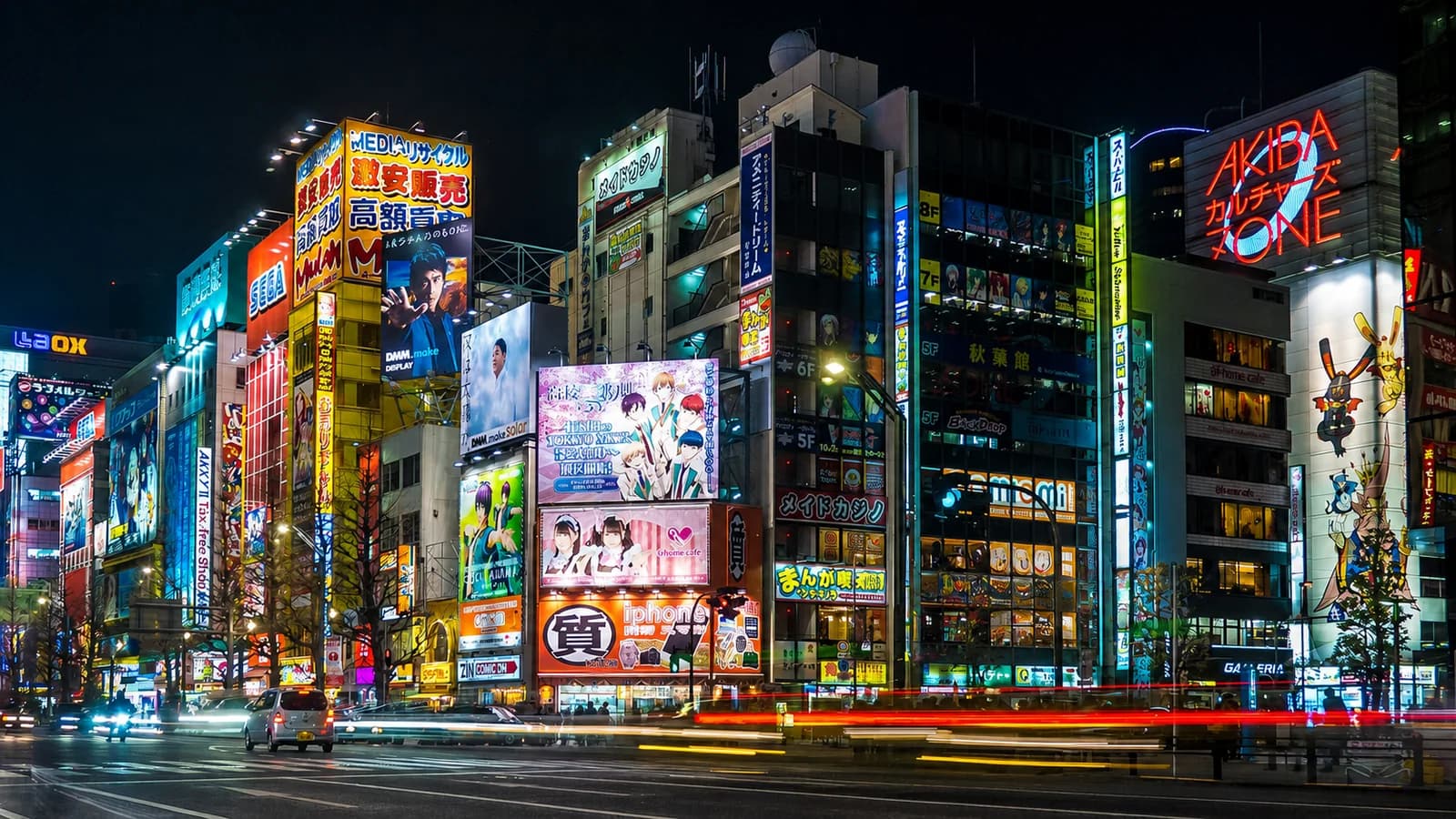
This is one of the areas of Tokyo that perhaps gains most at night, or at least at dusk: the lights, the tall buildings, the giant screens, noisy adverts out in the street…
There are also many, many restaurants serving ramen and other noodles, meat of every kind and, of course, sushi.
別案Variations
- If it rains: Ueno’s museums and Tokyo Solamachi at the foot of Skytree are good alternatives.
- With children: Ueno Zoo and Sumida Aquarium are good options.
- If anime is not your thing: swap Akihabara for a long afternoon in Ueno.
Modern Tokyo
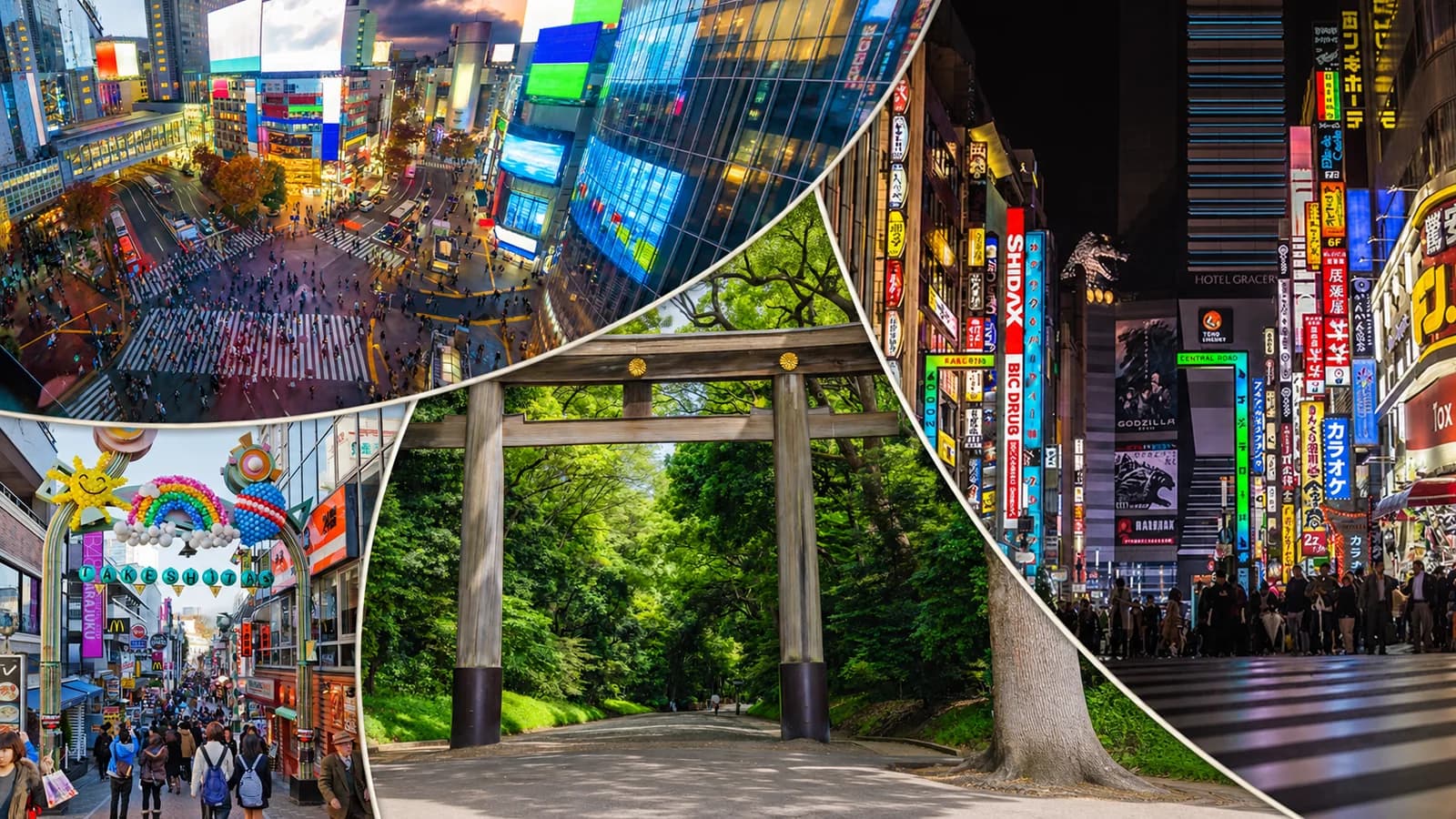
The longest day, and the one that makes best use of the Yamanote line: from Meiji Jingu’s forest at dawn to the neon of Kabukicho at night.
Short on time?
- Don’t missMeiji Jingu and Shibuya Crossing at dusk.
- OptionalTakeshita Street, Omotesando, Shinjuku Gyoen and Kabukicho.
- If you only have half a dayMeiji Jingu first thing and Shibuya at night.
Day 2 on the map
Meiji, Harajuku and Omotesando are close together, with Shibuya a short walk away. Shinjuku is separate (by train) and can be done before or after.
This is the day that makes best use of the Yamanote line. There is no set order, but keep in mind that Shinjuku Gyoen has seasonal closing times, ranging from 4:30 p.m. to 7:00 p.m., and that Kabukicho is best at dusk or after dark.
It is the route of our Modern Tokyo tour, in case you would rather we guided you around the area in person.
We do this area with you
From the Meiji forest to the neon of Shinjuku there are four districts that make a lot more sense when someone walks you through what you are looking at. It is the route of our Modern Tokyo tour.
6. Meiji Shrine: a hundred thousand trees in the middle of the city
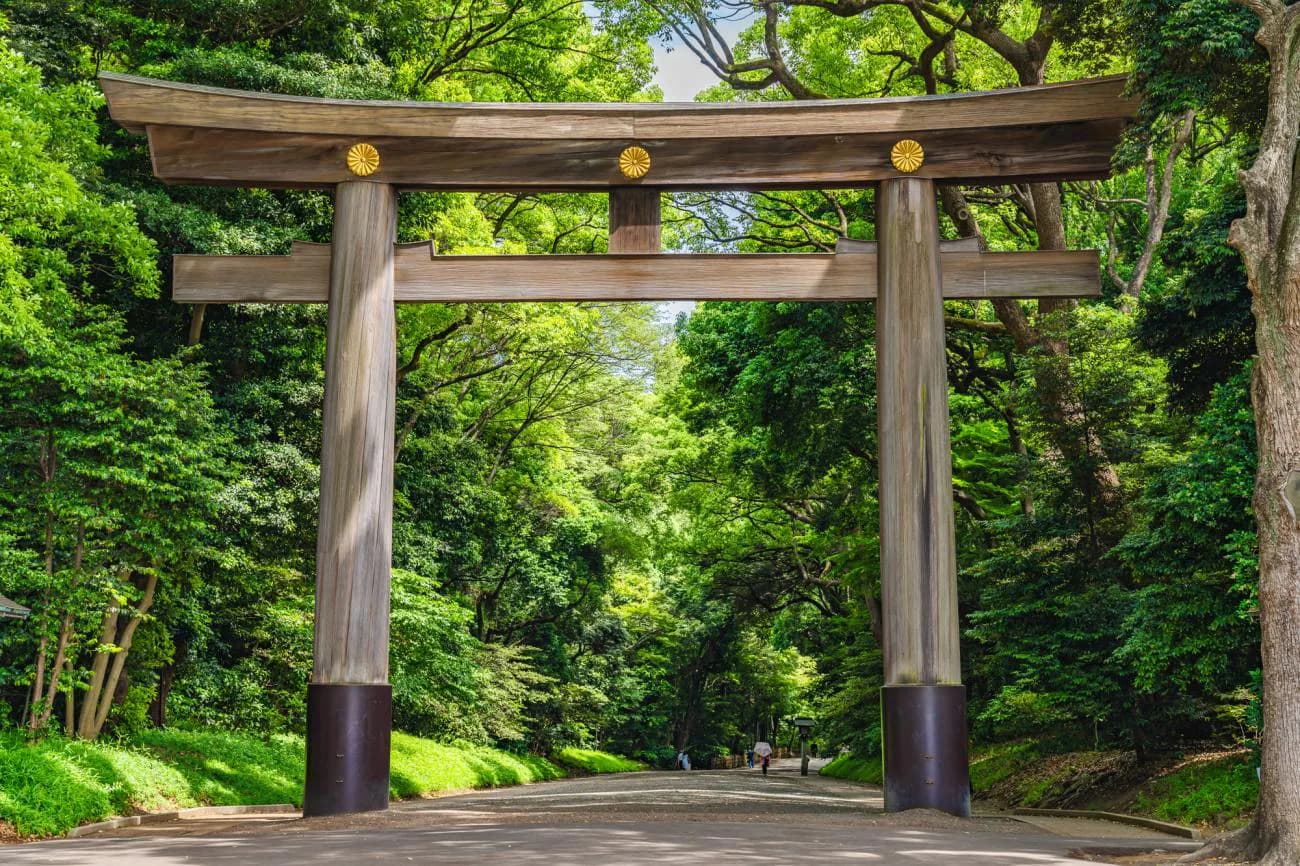
Meiji Shrine, or Meiji Jingu in Japanese, is Tokyo’s largest shrine. It is surrounded by a forest of some 100,000 trees donated from all over the country, as its official website explains.
It is dedicated to Emperor Meiji and Empress Shoken, hugely important figures in Japan’s modernisation during the 19th century. As you cross its great torii, the noise of the city fades away little by little among the trees.
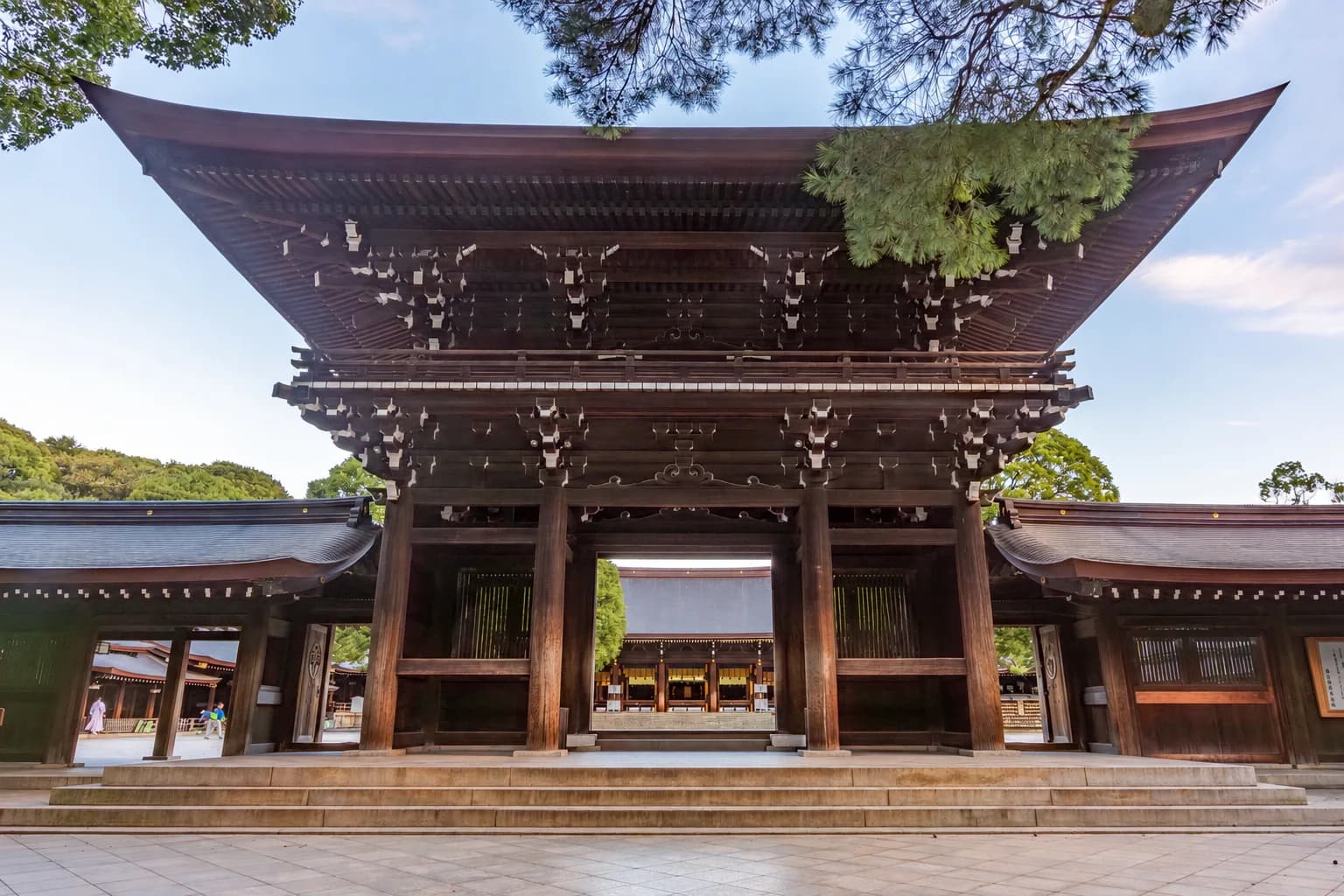
It opens from sunrise to sunset, but the exact time varies with the season. Entry is free, and it is worth visiting early, when there are still few tour groups and the atmosphere is much calmer.
豆知識Fun fact
It is Japan’s most visited shrine at New Year: millions of people come for hatsumode, the first shrine visit of the year, and many Tokyoites arrive on the night of 31 December to welcome the new year here, amid queues and food stalls.
Next stop: Takeshita Street · 5 min walking
7. Harajuku and Takeshita Street: the most eccentric street in Japan
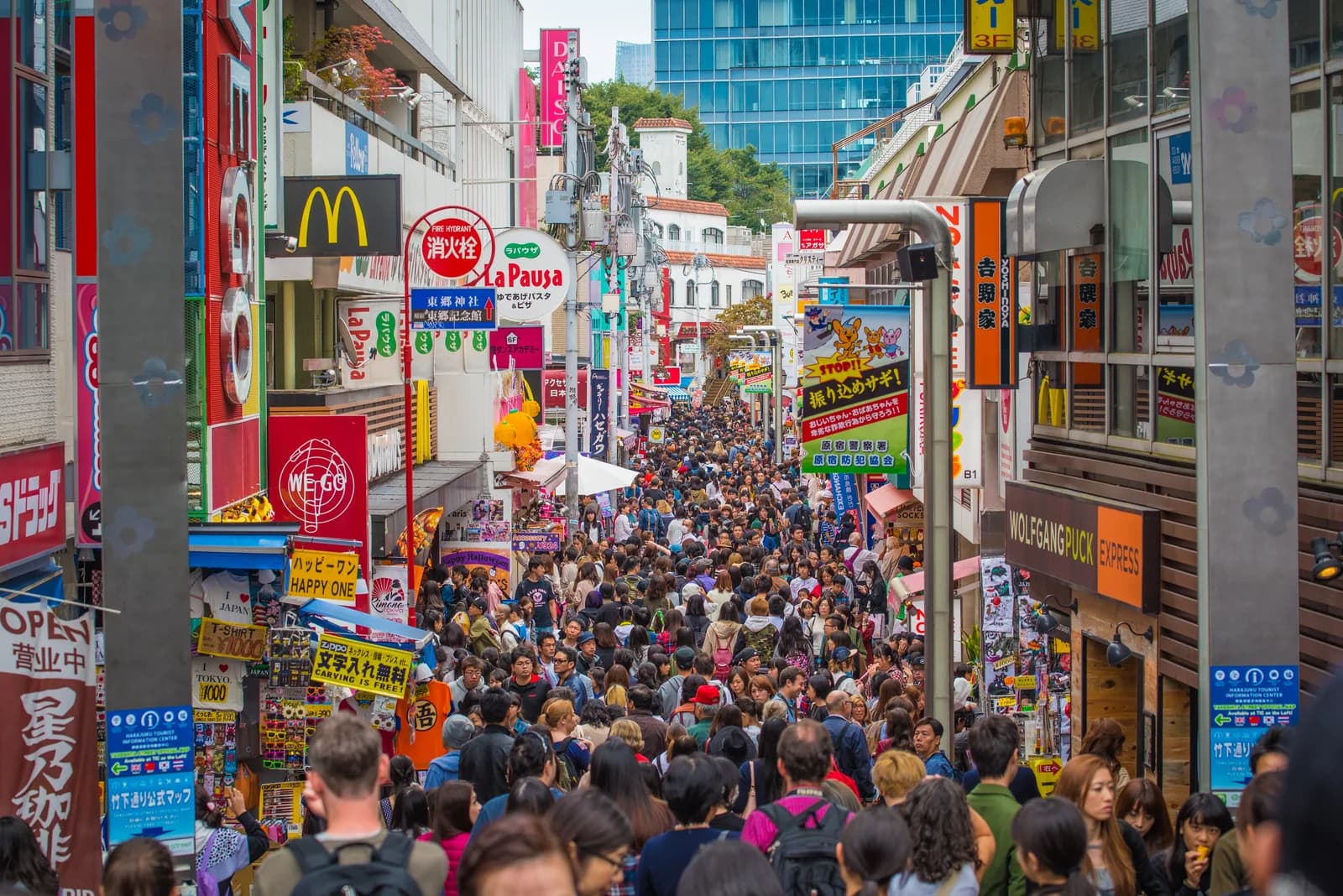
Less than five minutes from the calm of Meiji Jingu lies the opposite extreme: Harajuku and its iconic Takeshita Street (Takeshita-dori in Japanese), Japan’s most eccentric youth-fashion street.
Crêpes, wildly extravagant clothes shops and a lot, a lot of people. If you have time, it is worth exploring the side streets, and the animal cafés are bound to catch your eye, like the now famous “Mi Pig Cafe” (a café where you spend a while with little piglets!), or other themed cafés with owls, dogs, cats and the odd extra surprise.

Because it is both narrow and extremely popular, the street becomes so crowded at weekends that it can be hard to move. If you can choose, visit on a weekday.
Next stop: Omotesando · 10 min walking
8. Omotesando: the avenue of architecture and luxury brands
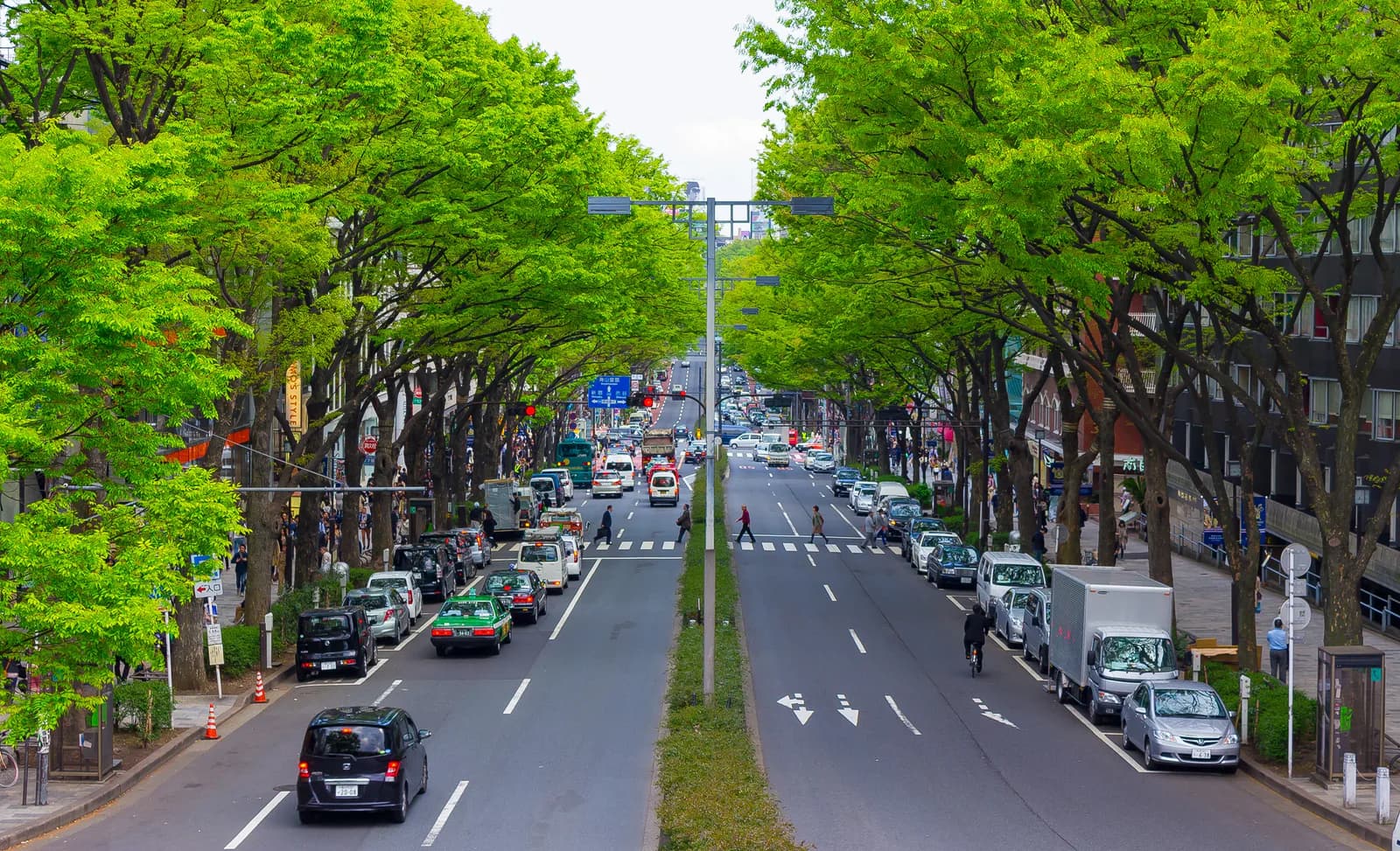
Close to Takeshita Street, Omotesando is the avenue of modern architecture and design stores. It is also called “the Champs-Élysées of Tokyo” and the comparison is a reasonable one.
It is a wide, tree-lined avenue connecting Harajuku with Aoyama, originally built as the approach to Meiji Jingu. In fact, “omotesando” roughly means “the main approach to a shrine”.
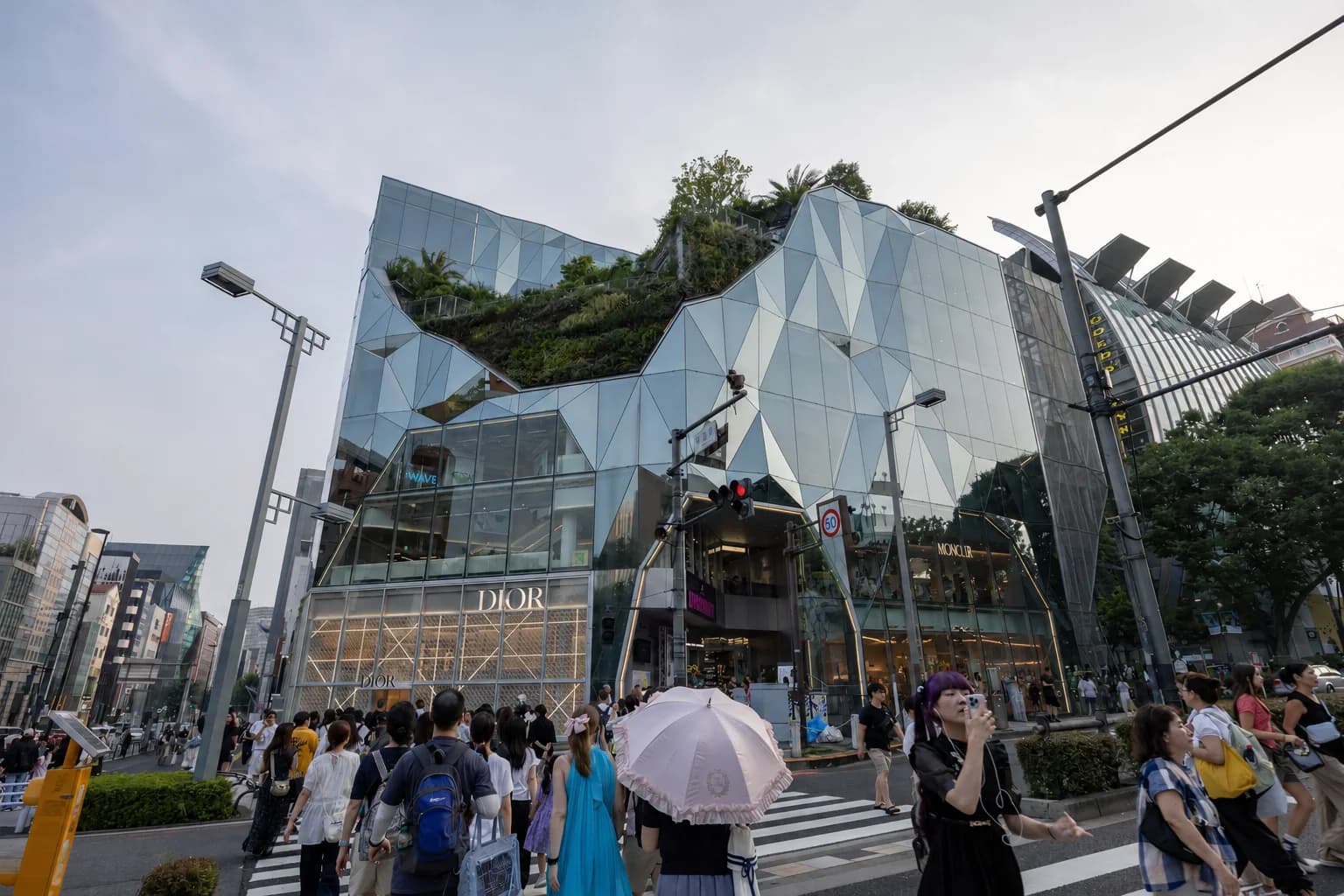
Omotesando’s luxury brands compete façade by façade: Prada, Dior and Louis Vuitton commissioned their buildings from leading architects.
Today it is one of the most elegant shopping areas in Tokyo, with all kinds of luxury and design stores and buildings created by some of the best-known architects in Japan (and in the world). Among them, the Omotesando Hills complex, the Prada Aoyama building and the stores of brands such as Dior or Louis Vuitton stand out.
Even with no intention of buying, the area is worth a visit for the views, the atmosphere and the many cafés and restaurants in the side streets (among which “Cat Street” stands out, a pedestrian street of small shops and cafés that runs down towards Shibuya; recommended if you have the time).
Next stop: Shibuya · 15 min walking down Cat Street
9. Shibuya Crossing and its surrounding streets
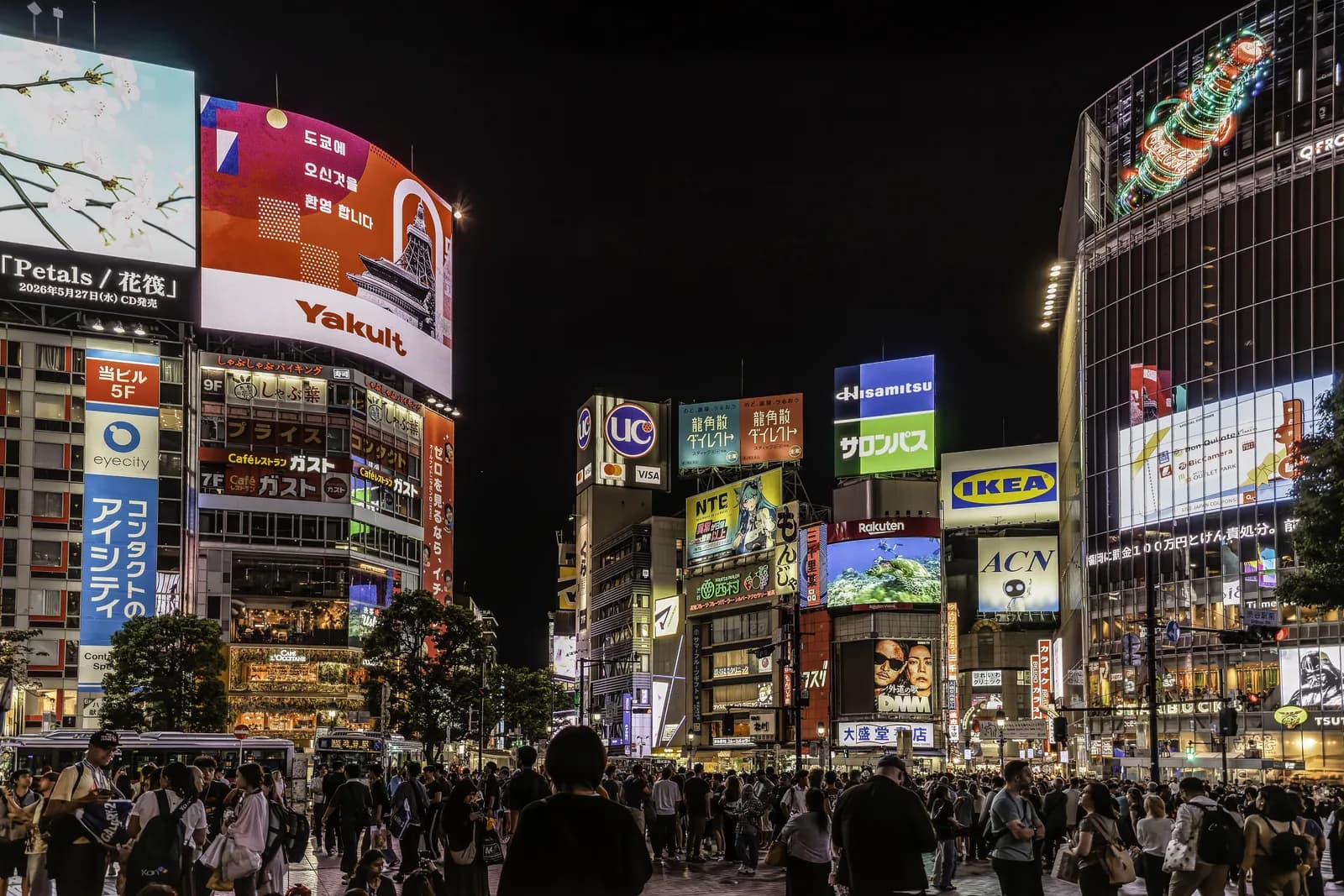
Shibuya Crossing is the world’s most famous pedestrian crossing, used by more than 500,000 people on the busiest days. It has appeared in countless films and millions of Instagram reels.
Crossing it is an experience, but it is even more impressive seen from somewhere high up: from above, the tide of people at each change of the lights is hypnotic, and at rush hour up to about 3,000 people cross on a single green light.
For about forty-seven seconds, the asphalt belongs to pedestrians alone.
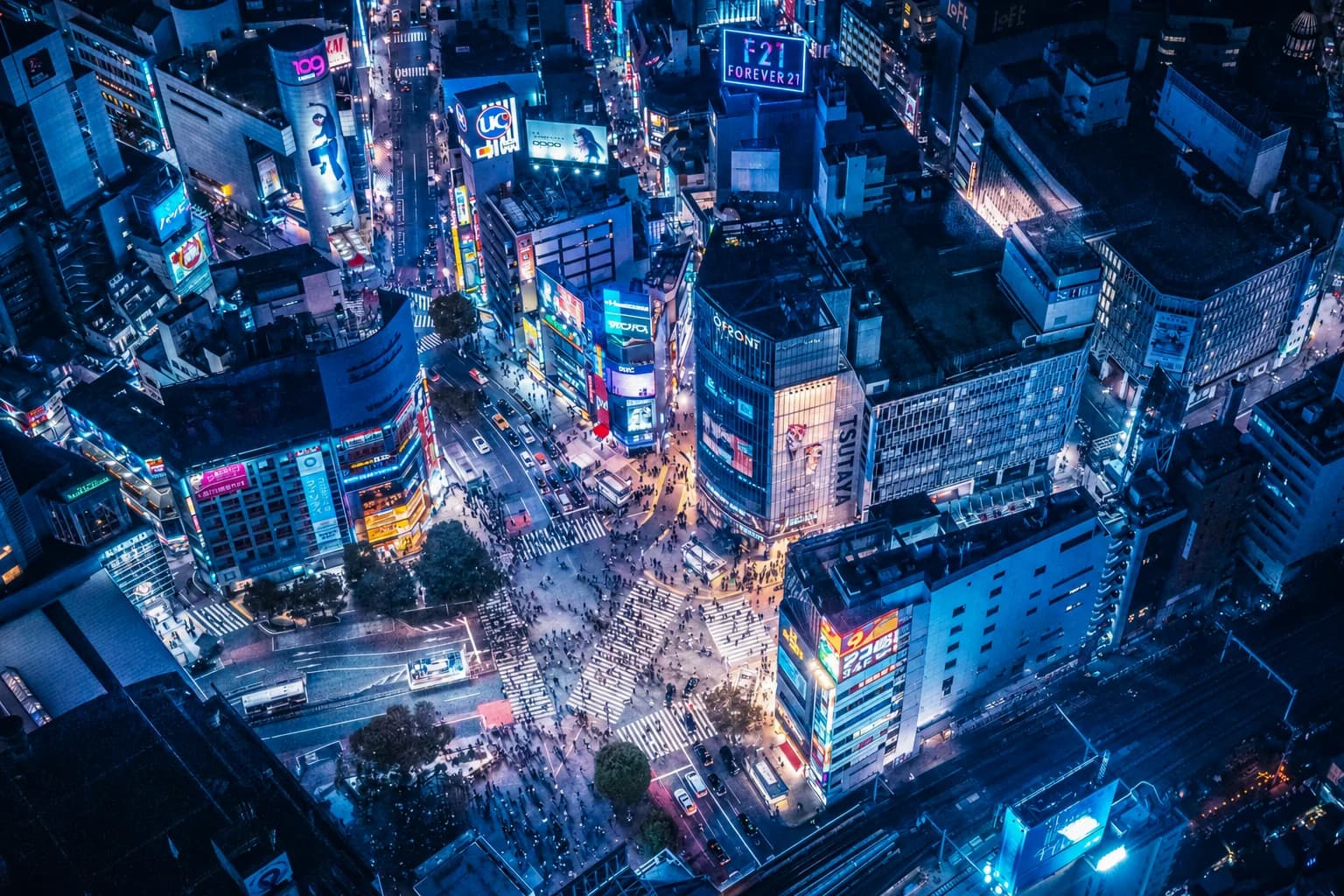
There are a few cafés and viewpoints around the area, such as the hugely popular Shibuya Sky, at the top of the Shibuya Scramble Square building.
Seeing the whole Shibuya area from up here is an experience we would recommend to anyone, but careful: you need to buy the tickets well in advance, and the slots around sunset sell out literally within minutes of going on sale each day.
メモNote
Take all the photos you want and enjoy yourself! But remember that this is also a crossing where children, elderly people and people on their way to work cross every day, not somewhere for tourists to treat as their own private theme park.
Next stop: The Hachiko statue, at the same exit
10. The Hachiko statue: the dog who waited ten years
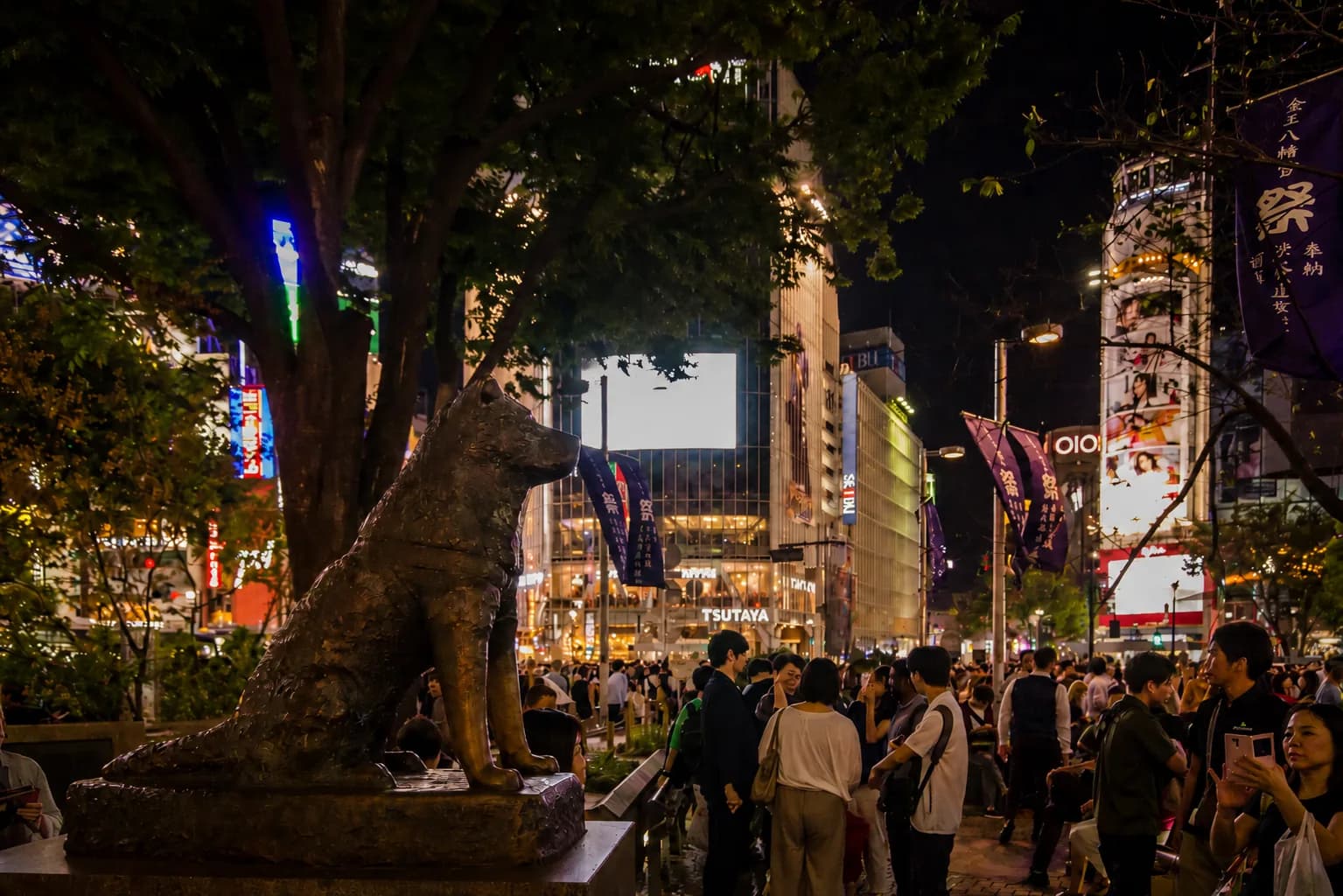
Near one of the main exits of Shibuya station stands the statue of Hachiko, possibly the most famous dog in Japan.
Hachiko was an akita dog who walked his owner to the station every day and waited there for his return at the end of the day. One day his owner died suddenly and never came back to the station, where Hachiko was waiting. Even so, the dog kept turning up at the station for almost ten years, and that is how his story became a national symbol of loyalty and devotion.
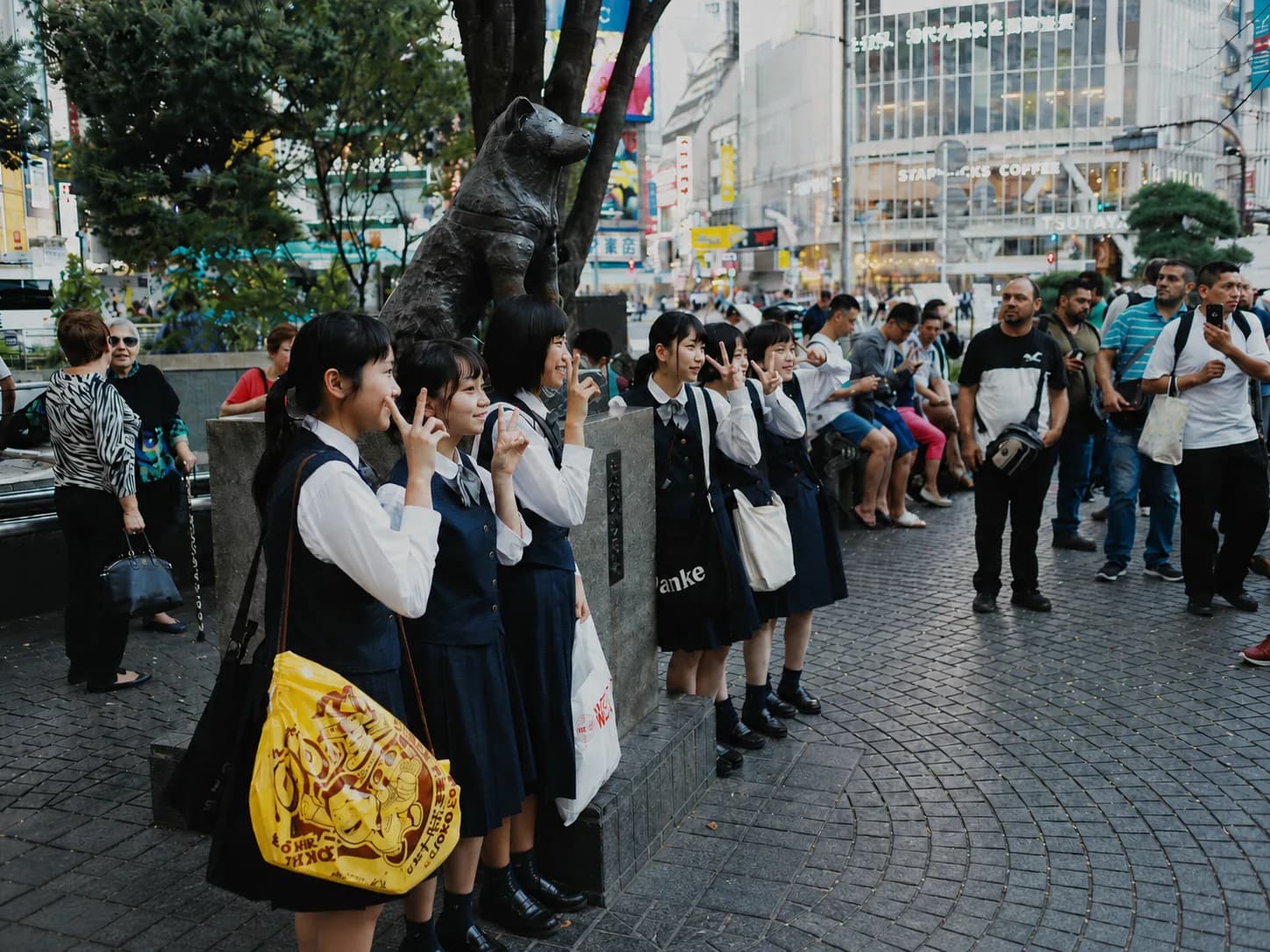
In 1934 a statue was put up in his honour, and since then it has served both as an inspiration and as a meeting point; today it is usually surrounded by people waiting for friends or simply queuing to be photographed with it.
豆知識Fun fact
The original 1934 statue was melted down during the war for war material. Hachiko did get to see that first statue, because he died the year after it was raised. The statue you see today is from 1948 and was signed by the son of the original sculptor.
Next stop: West Shinjuku · 15 min by train
11. Shinjuku and the Metropolitan Government observation deck
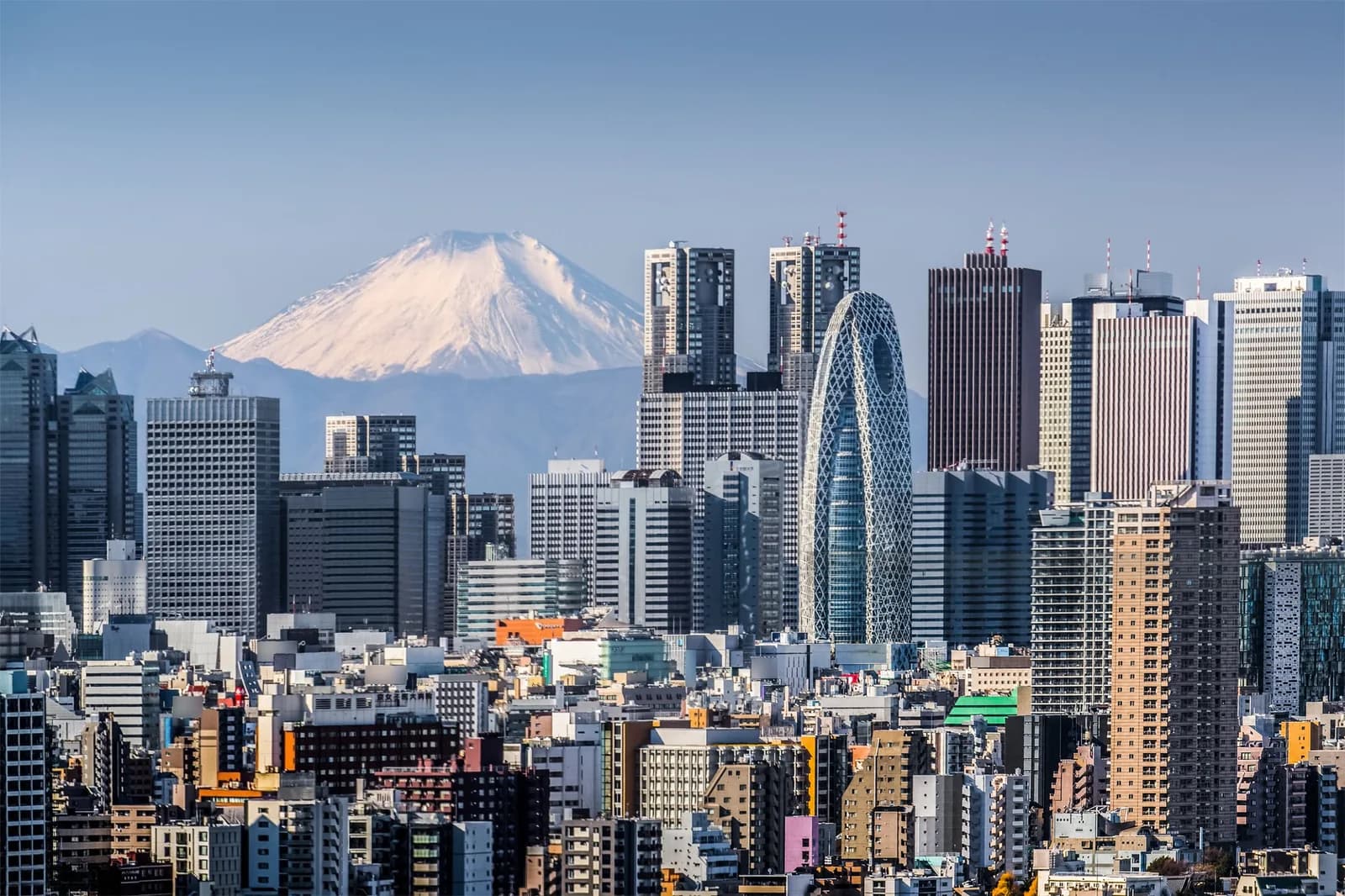
Shinjuku has skyscrapers, entertainment and the busiest railway station on the planet, moving some 3.5 million people a day (curiously, the 2nd and 3rd busiest stations in the world are also in Tokyo: Shibuya and Ikebukuro respectively).
An absolutely wild underground city that is just as impressive at street level, where there are countless leisure, shopping and administrative centres. The station combines buses, numerous train lines and the subway, and is said to have more than 200 exits.
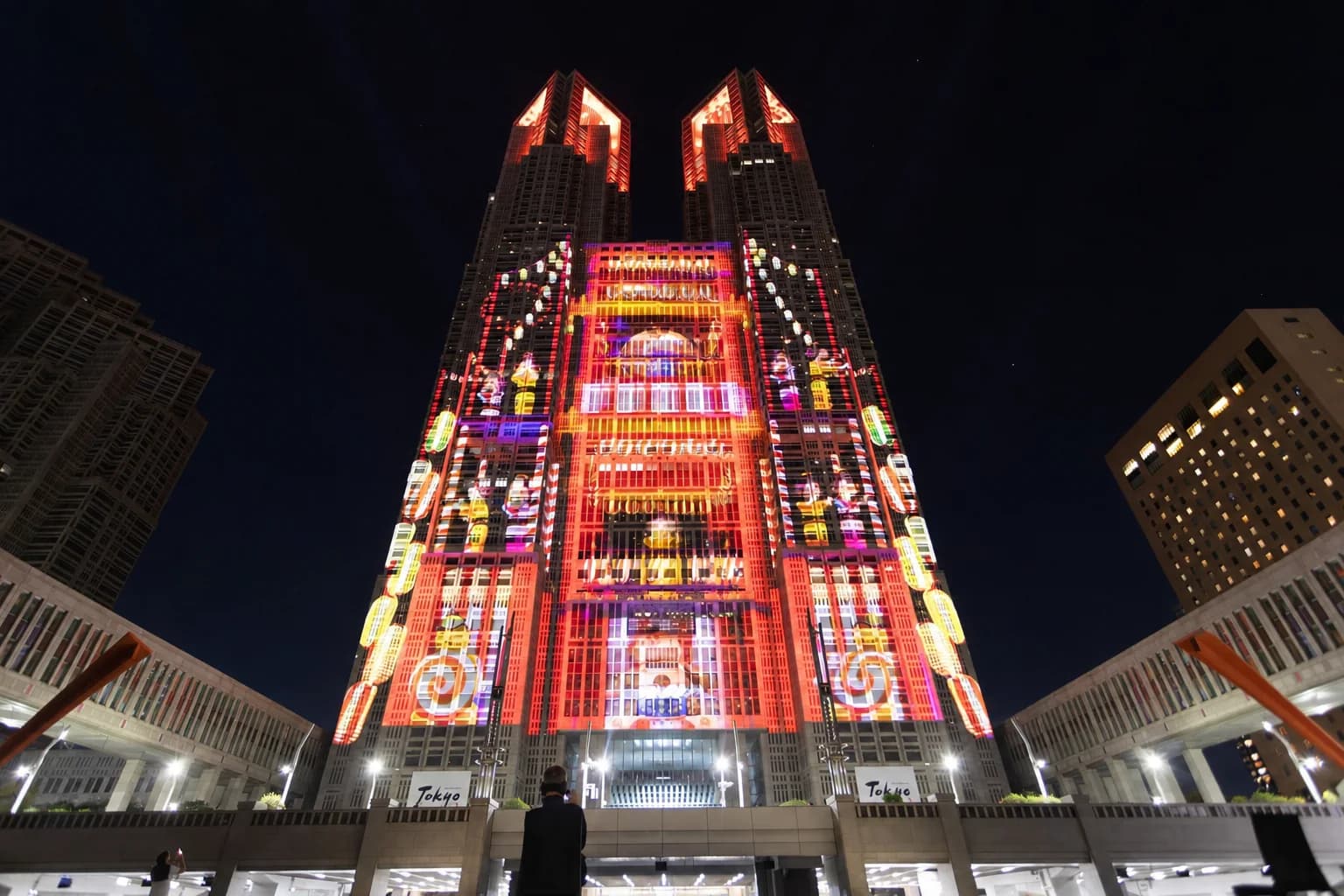
On the western side of the station, in the skyscraper area, stands the Tokyo Metropolitan Government building with its striking twin towers, which have free observation decks more than 200 metres up, where the views are impressive. On clear days, especially in the colder months when humidity is lower, you can even see Mount Fuji in the distance.
In the early evening you can also enjoy the free Tokyo Night & Light show, projected every night unless the weather is particularly bad.
Next stop: Kabukicho · 10 min walking
12. Kabukicho: neon, izakayas and Godzilla’s head
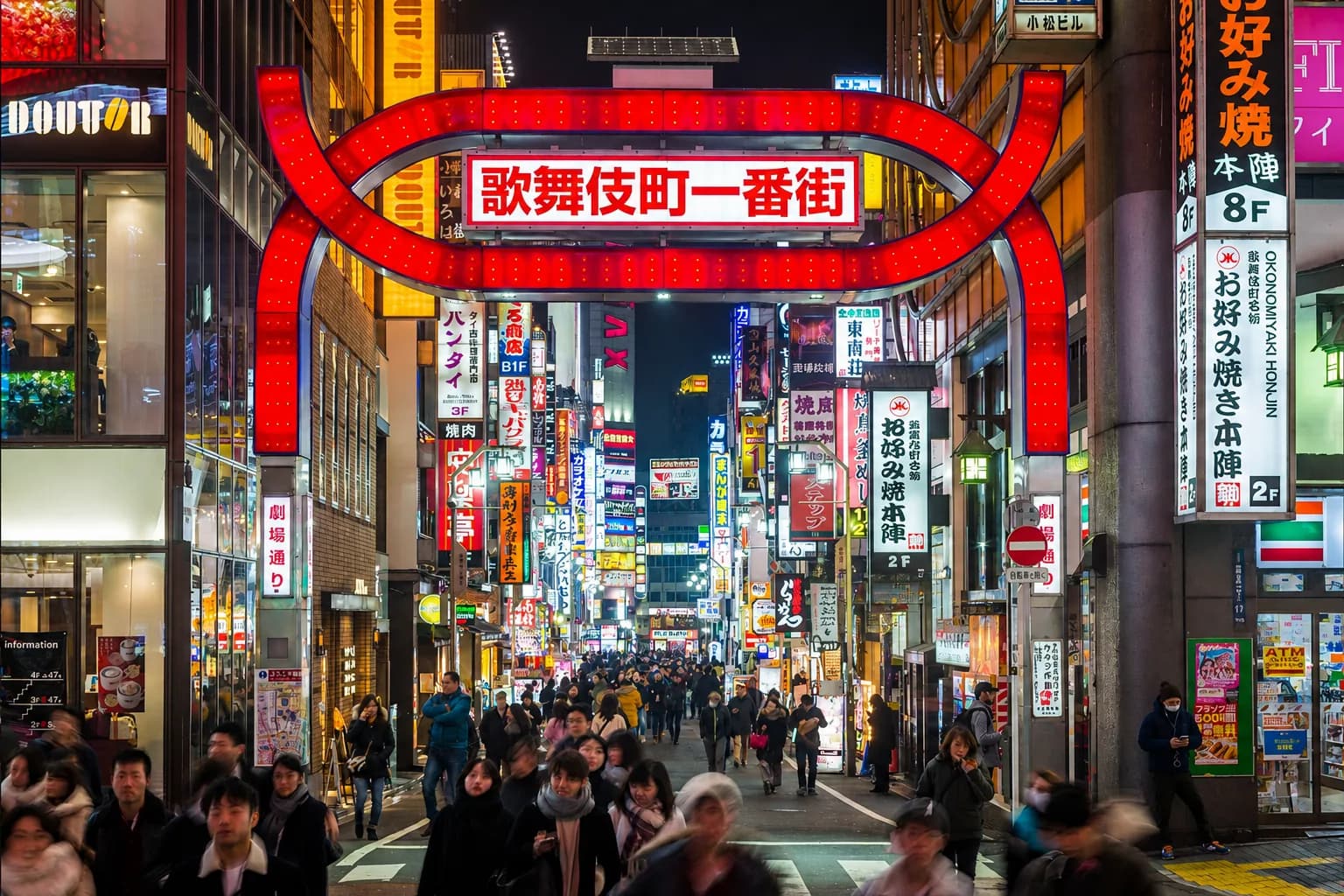
With neon, izakayas and an atmosphere that never sleeps, Kabukicho is inside the Shinjuku district and is the main nightlife hub of the area. One of the most recognisable neon districts in Tokyo, its streets are full of izakayas, karaoke places, hotels, gaming halls and plenty of adult night venues too.
The best-known entrance to Kabukicho is the red arch at the head of the “Kabukicho Ichibangai” avenue, a pedestrian street at the end of which you can see the famous Godzilla head peering over the Shinjuku Toho building (the film company behind Godzilla).
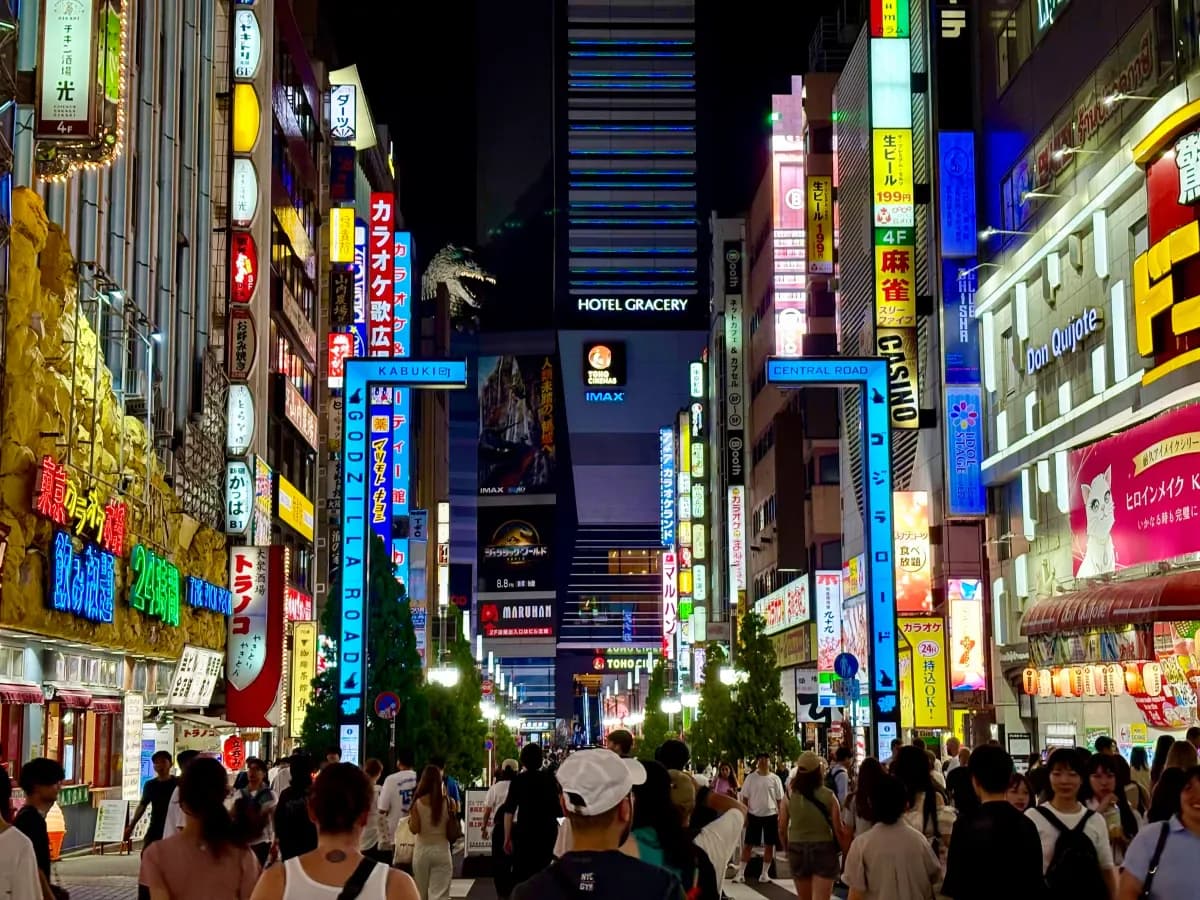
By the way, on the hour from 12:00 to 20:00 a small but striking show takes place here: along with the music from the films, Godzilla’s head lights up, roars and blows smoke out of its mouth.
Around Shinjuku and close to Kabukicho you will also find the popular “Golden Gai”, a curious maze of alleys with tiny bars, and “Omoide Yokocho”, a narrow strip of izakayas and yakitori restaurants that grew up after the war. Kabukicho, Golden Gai and Omoide Yokocho are part of our Tokyo by Night tour.
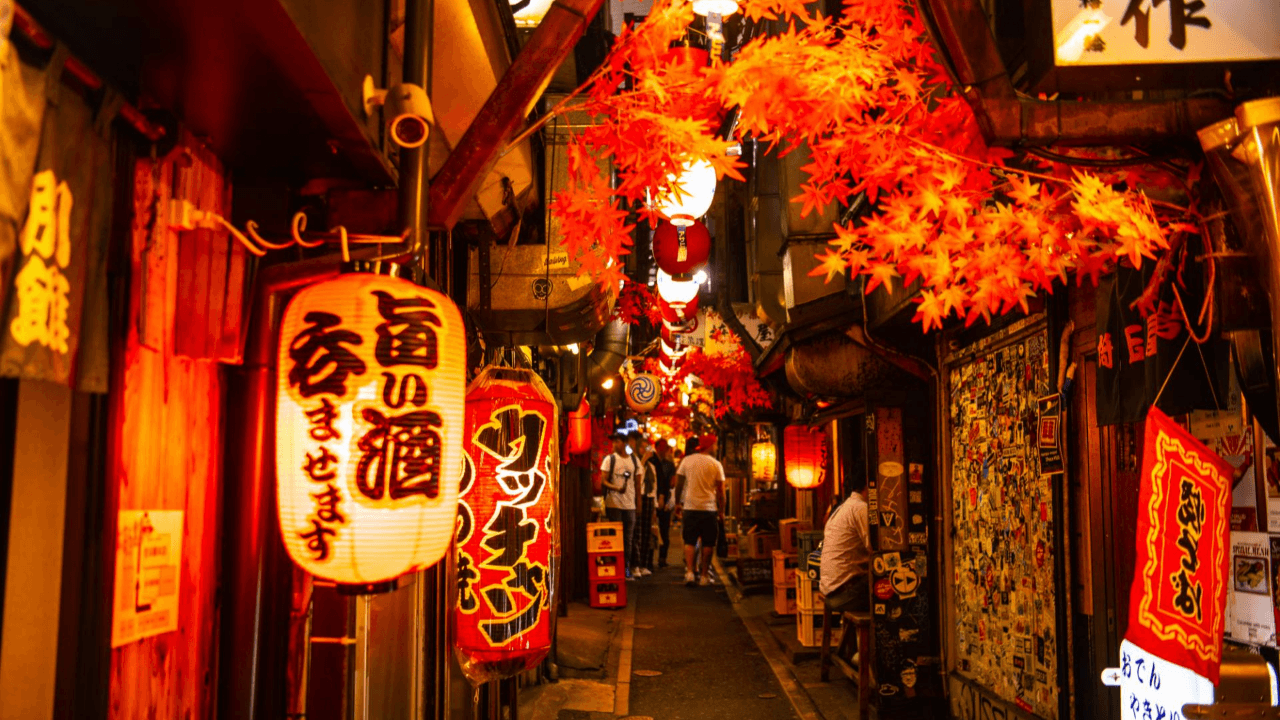
注意Heads-up
One important warning: in this area there are plenty of touts of dubious legality offering access or company at bars or clubs, and I would recommend turning them down without a second thought and without any hesitation. They aim to take “recruited” customers into side streets, where there are venues with abusive prices and rules, and more trouble besides. You will spot them straight away; just ignore them and carry on with your walk.
Optional daytime visit: Shinjuku Gyoen. If you want to include it, visit before the evening stops in Shinjuku and Kabukicho, allowing time for the garden’s seasonal closing hours.
別案Variations
- If it rains: Omotesando and Shibuya’s covered shopping areas work well.
- At weekends: Takeshita gets packed; go on a weekday if you can.
- With children: crêpes on Takeshita, Yoyogi Park next to Meiji Jingu and the free Metropolitan Government observation deck.
13. Shinjuku Gyoen: a green breather in the middle of the city
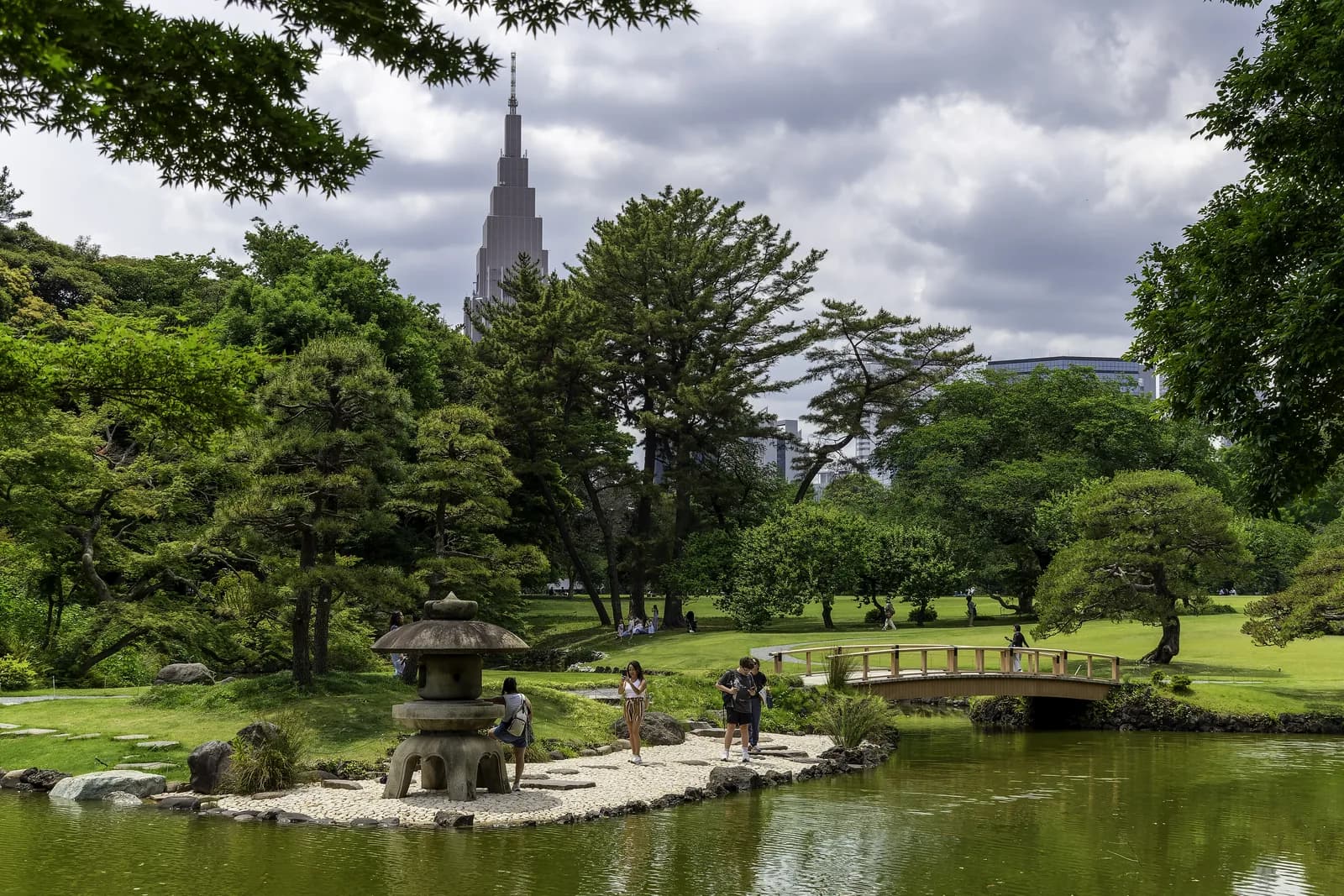
The Shinjuku Gyoen national garden is an enormous green space right in the centre of Tokyo, and a good place to rest after walking the more urban parts of the Shinjuku district.
Ideal for a picnic or simply to lie on the grass for a while; in my opinion one of the most charming places in Tokyo, and one I like to visit several times a year (especially in spring and autumn).
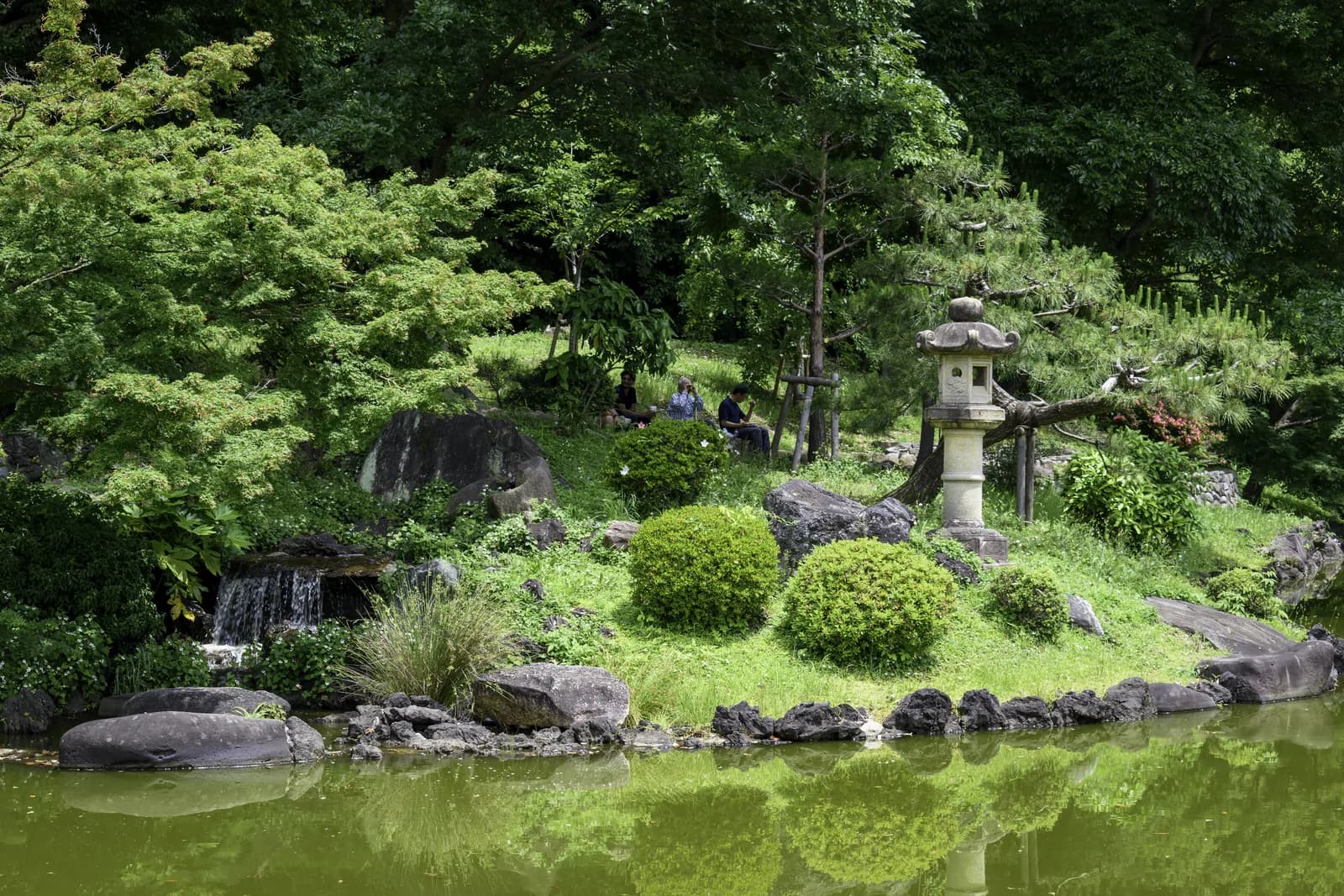
The grounds combine three clearly distinct styles: an enormous and beautiful traditional Japanese garden with ponds and bridges, a formal French-style garden area, and a broad English landscape garden with large stretches of lawn. It even has a greenhouse gathering tropical and subtropical plants.
In spring it is one of Japanese people’s favourite places to enjoy the cherry blossom, since it holds some 900 cherry trees of around 70 varieties with different flowering times (some earlier, some later), and this makes it possible to enjoy the sakura for longer than in other parks in Tokyo.
注意Heads-up
It normally closes on Mondays, but opens daily from 25 March to 24 April and from 1 to 15 November. Last entry is half an hour before closing. General admission costs 500 yen.
The classic centre
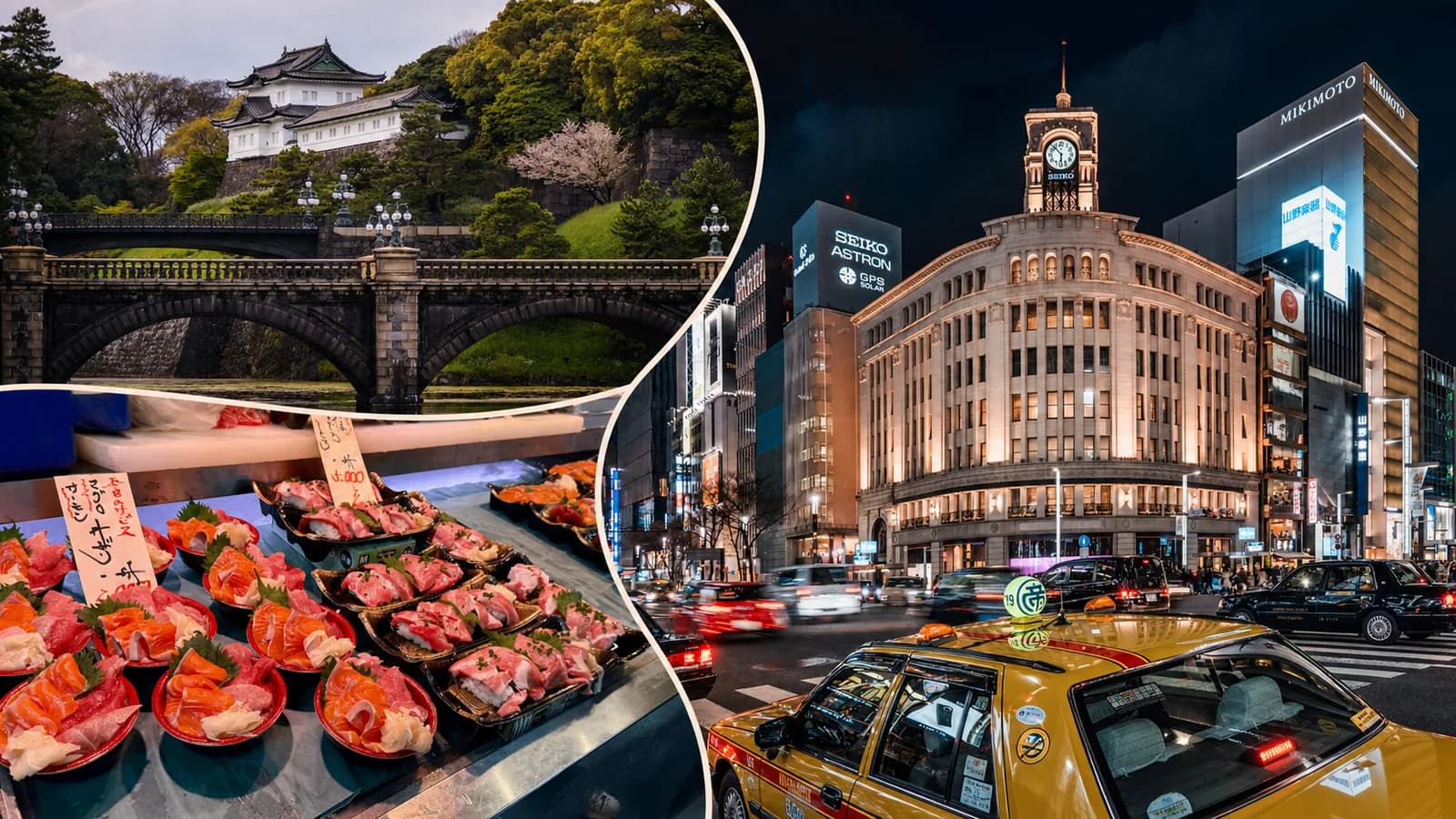
The places we will see next do not need a whole day (although some people happily spend one in Ginza): they fit nicely wherever you have a gap, and they chain together easily on foot. Tsukiji is better first thing, Ginza afterwards (it is very close), and the Imperial Palace gardens are also around here, a few minutes’ walk away.
Short on time?
- Don’t missBreakfast in Tsukiji and the East Gardens of the Palace.
- OptionalGinza at a calm pace, its rooftops and its food basements.
- If you only have two hoursEat in Tsukiji or shop in Ginza.
The centre, stop by stop
Tsukiji → Ginza (10 min walking) → Kabuki-za → Imperial Palace: Nijubashi bridge and East Gardens (15 min walking).
Let’s now look at these places in detail, one by one.
We do this area with you
Tsukiji, Ginza and the Imperial Palace gardens are part of the day on our Traditional Tokyo tour.
And if shopping is your thing, we also run the Tokyo Shopping tour, with the places that are hard to find on your own.
14. Tsukiji Outer Market: a sushi breakfast among the stalls
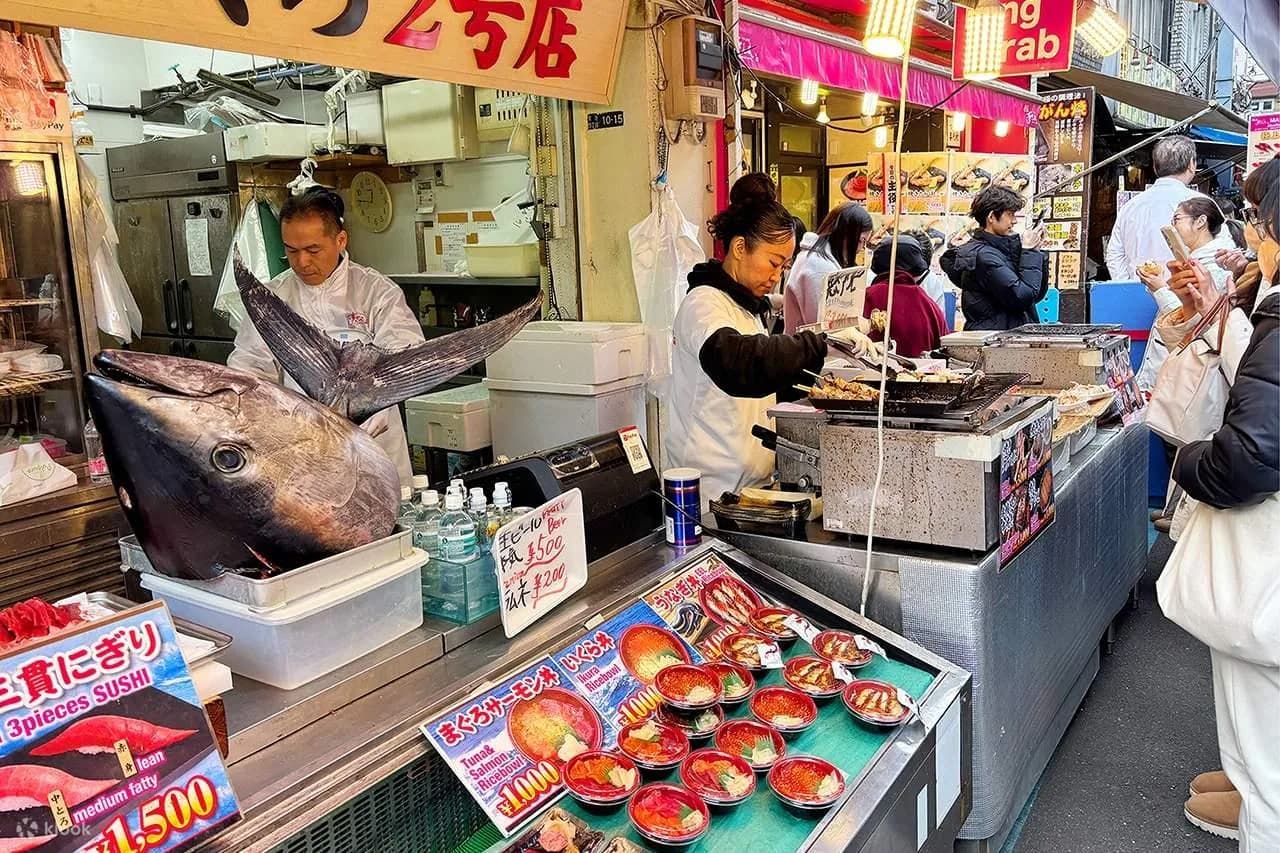
The Tsukiji outer market is one of the best places not only to try super fresh sushi but also to have a really interesting local experience. Until a few years ago the Tsukiji area also had an enormous wholesale market, which in 2018 moved to its current location in Toyosu.
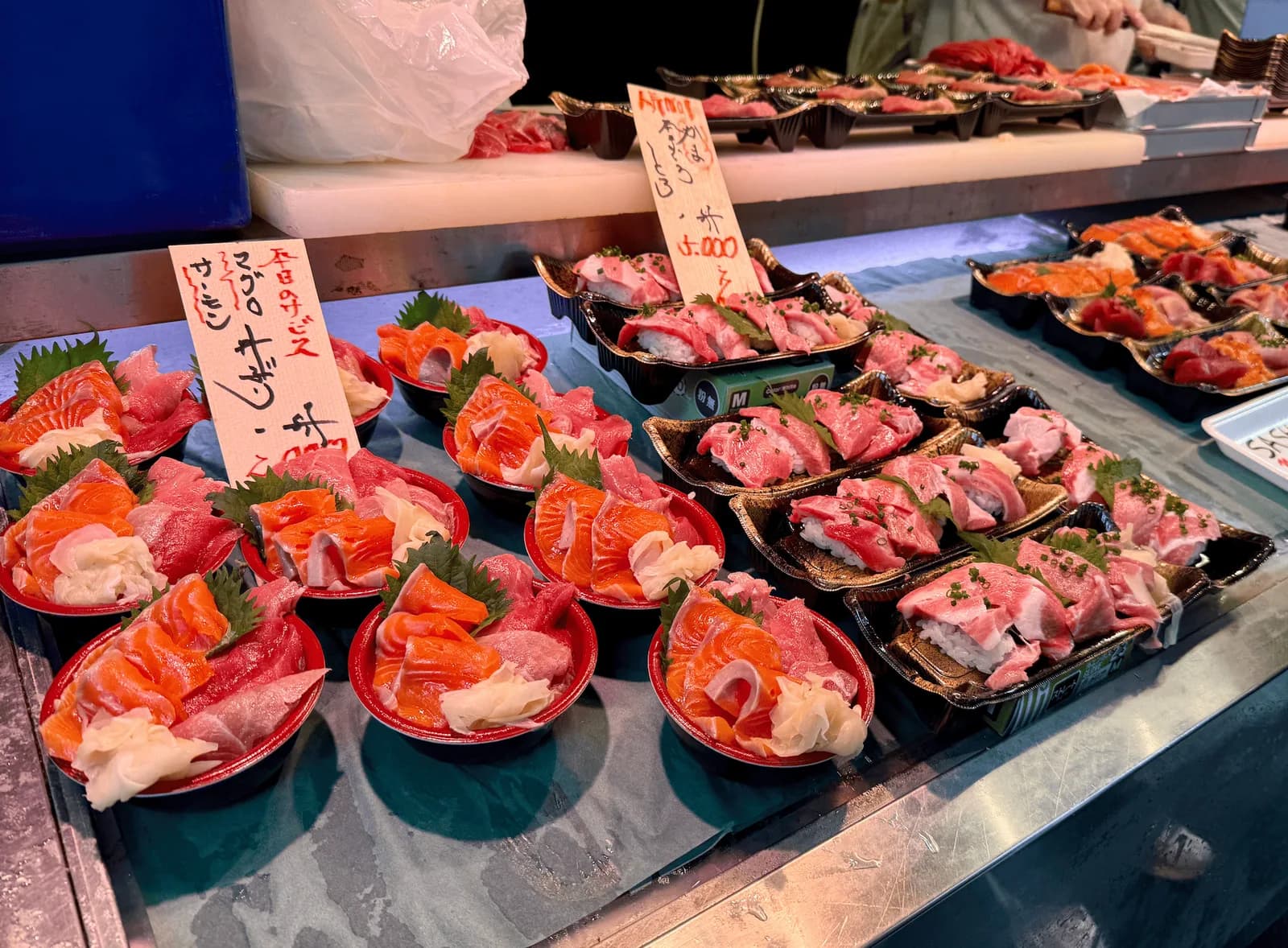
Here you can have sushi or sashimi for breakfast, piece by piece or as a kaisendon, or go picking from stall to stall (eating in front of each stall, not while walking: that is the correct etiquette at the market and in Japan in general). There are also many shops specialising in tea, seaweed, pickles and kitchen utensils, and at some stalls you can even watch the vendors cut and prepare huge pieces of tuna.
豆知識Fun fact
Tsukiji means «built land», and it is literal: the district was reclaimed from the sea with the rubble of the 1657 fire, which razed half the city.
If you have time, very close to the market you will also find the Tsukiji Hongan-ji temple, easily recognisable by its peculiar stone architecture, most unusual for a Buddhist temple.
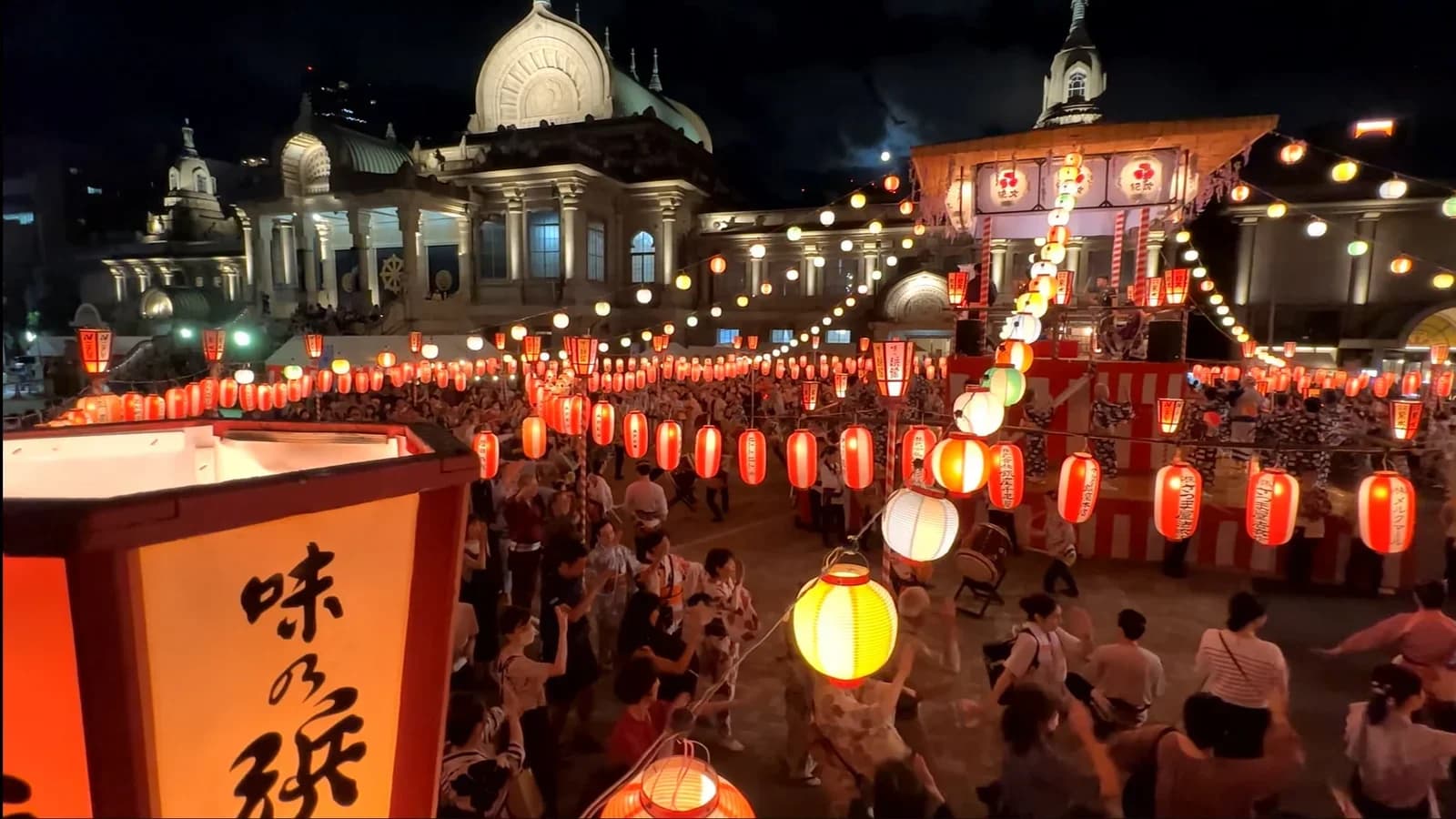
In summer, these grounds host one of the most famous bon odori (traditional dances) in Tokyo. It is well worth it if you visit the city in late July or early August, when it usually takes place.
In any case, the most important thing is to visit in the morning. The professional activity starts very early, while the hours aimed at the public are usually concentrated roughly between 9:00 and 14:00.
One of those places that not only catch your eye, but also go straight to your stomach.
メモNote
Many stalls shut up shop after midday, and quite a few take Sundays, some Wednesdays and public holidays off. It is worth checking the official calendar before going. A good time to visit Tsukiji is between 9:00 and 11:00.
Next stop: Ginza · 10 min walking
15. Ginza: Tokyo’s most elegant district
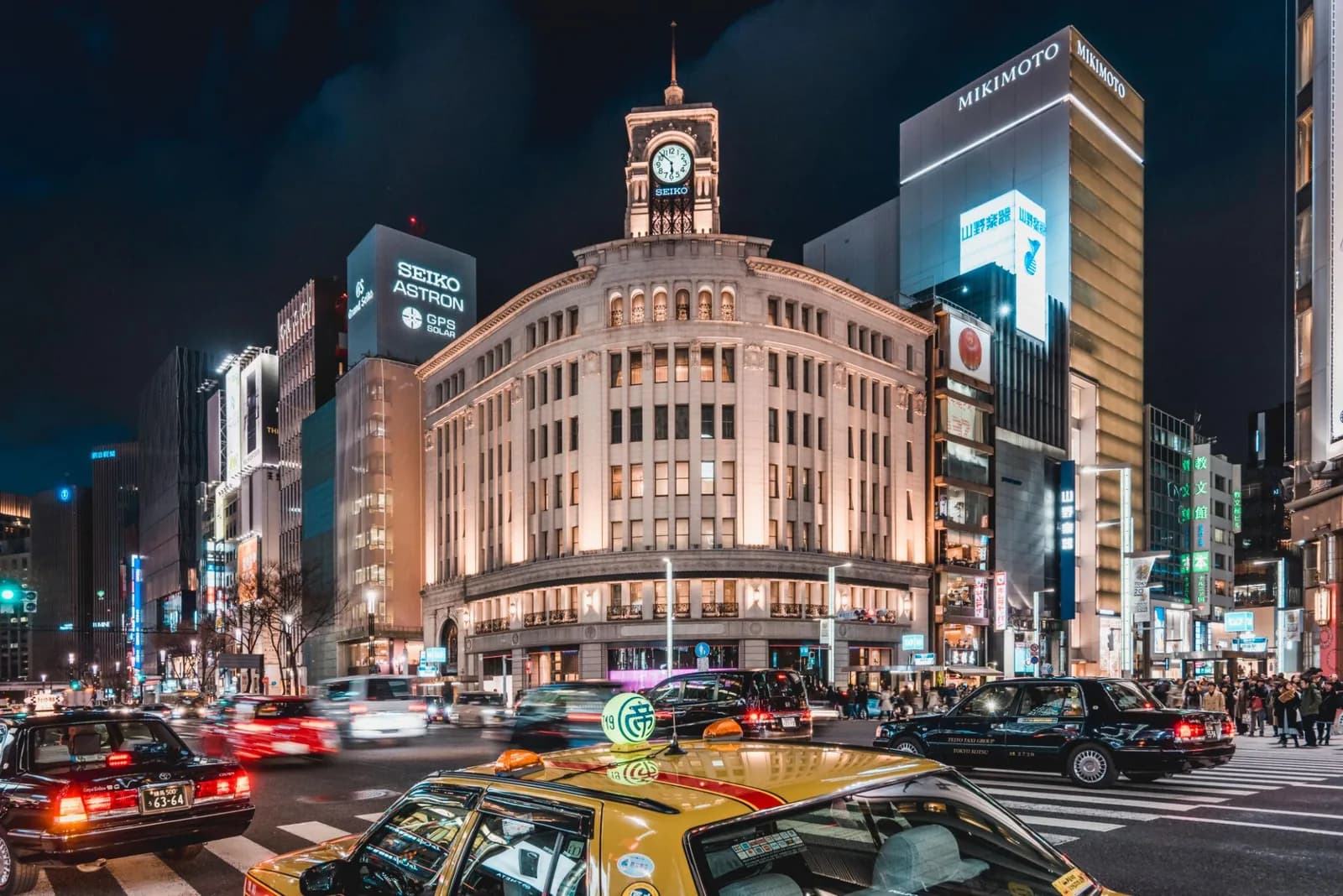
Ginza is probably the most elegant shopping district in Tokyo (yes, the one mentioned in the Shiseido cosmetics adverts on TV). It is known for its luxury stores, historic department stores, restaurants and modern architecture.
Its central avenue, Chuo-dori, is lined with emblematic establishments such as Ginza Mitsukoshi, Matsuya, Wako and Ginza Six. UNIQLO also has a big presence here, with a flagship store of no fewer than 12 floors of quality clothes and accessories at reasonable prices.
豆知識Fun fact
Gin means “silver” and za is the guild that minted it. The name comes from the silver mint that the Tokugawa moved here in 1612.
While practically any luxury brand you can think of has a branch here, you really do not need a big budget to enjoy the district. Besides the shopping, the side streets hide plenty of cafés, small restaurants and specialist shops.
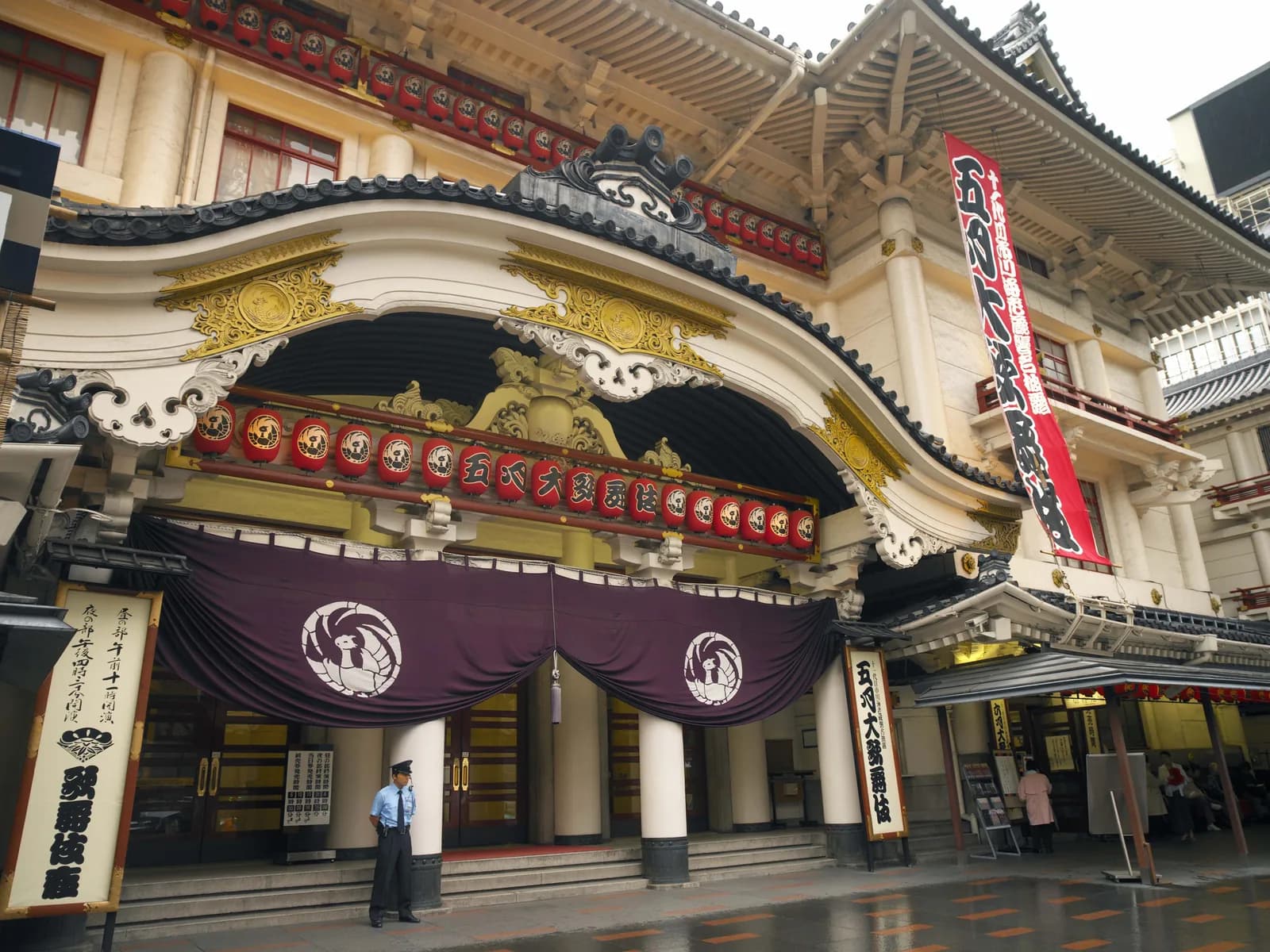
The Kabuki-za theatre is also very close by, one of the main places in Japan to watch kabuki performances (the Japanese theatre known for its exaggerated acting, striking make-up and elaborate costumes).
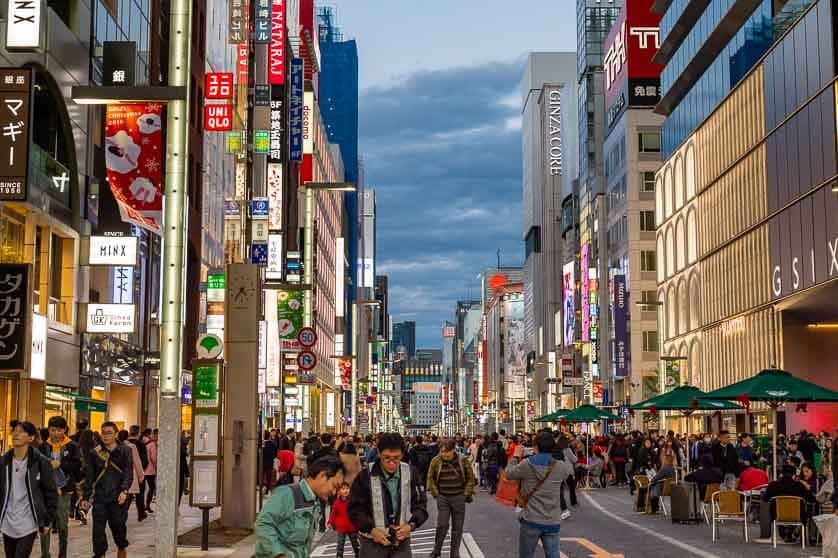
If you can choose when to visit Ginza, the best moment would be at weekends and on public holidays, when part of Chuo-dori is closed to traffic and turns completely into a pedestrian zone.
メモNote
Ginza’s pedestrian zone opens at weekends and on public holidays from 12:00, and lasts until 17:00 from October to March and until 18:00 from April to September.
Next stop: Imperial Palace · 15 min walking
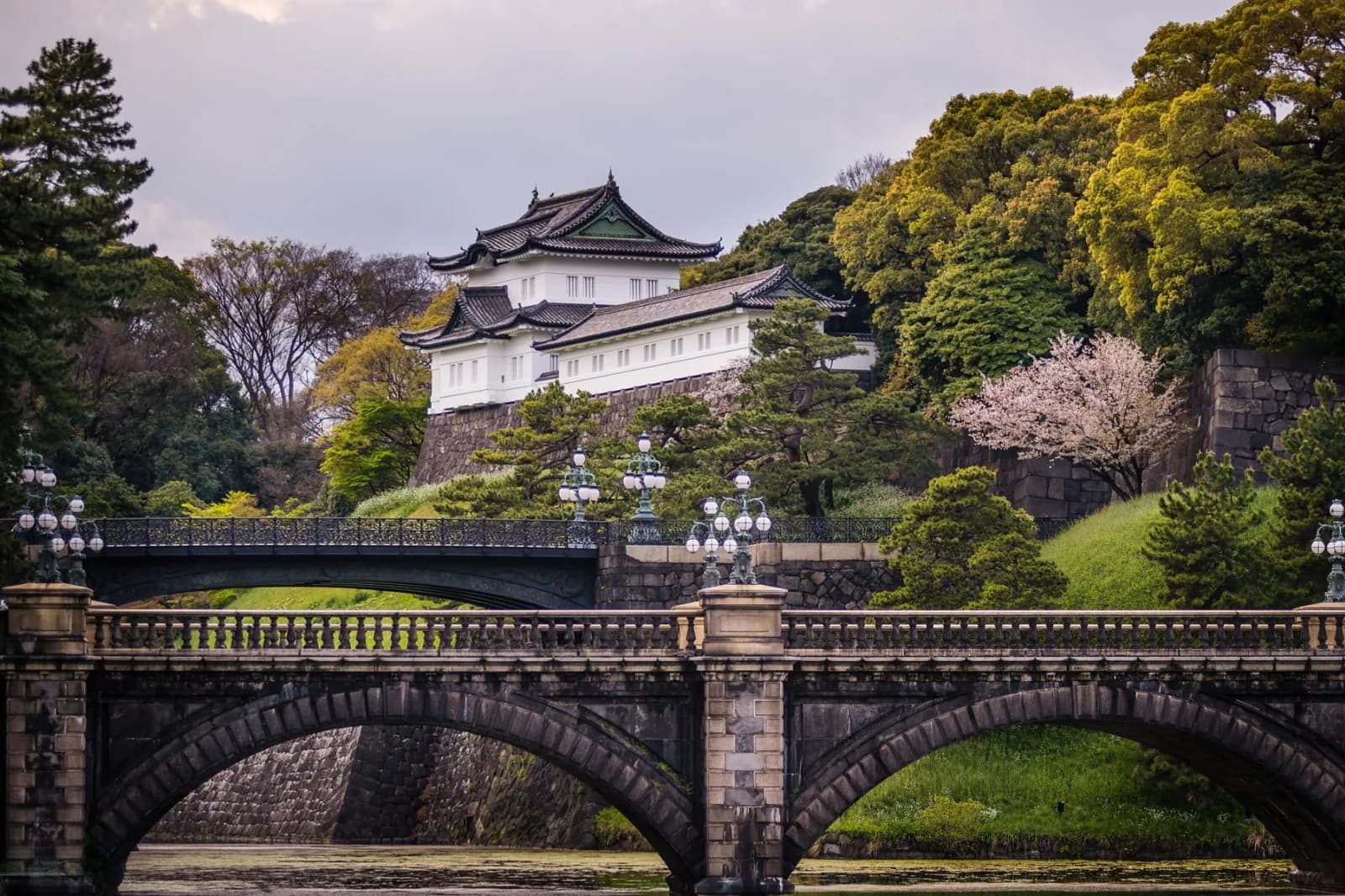
16. The Imperial Palace and the East Gardens: what is left of Edo castle
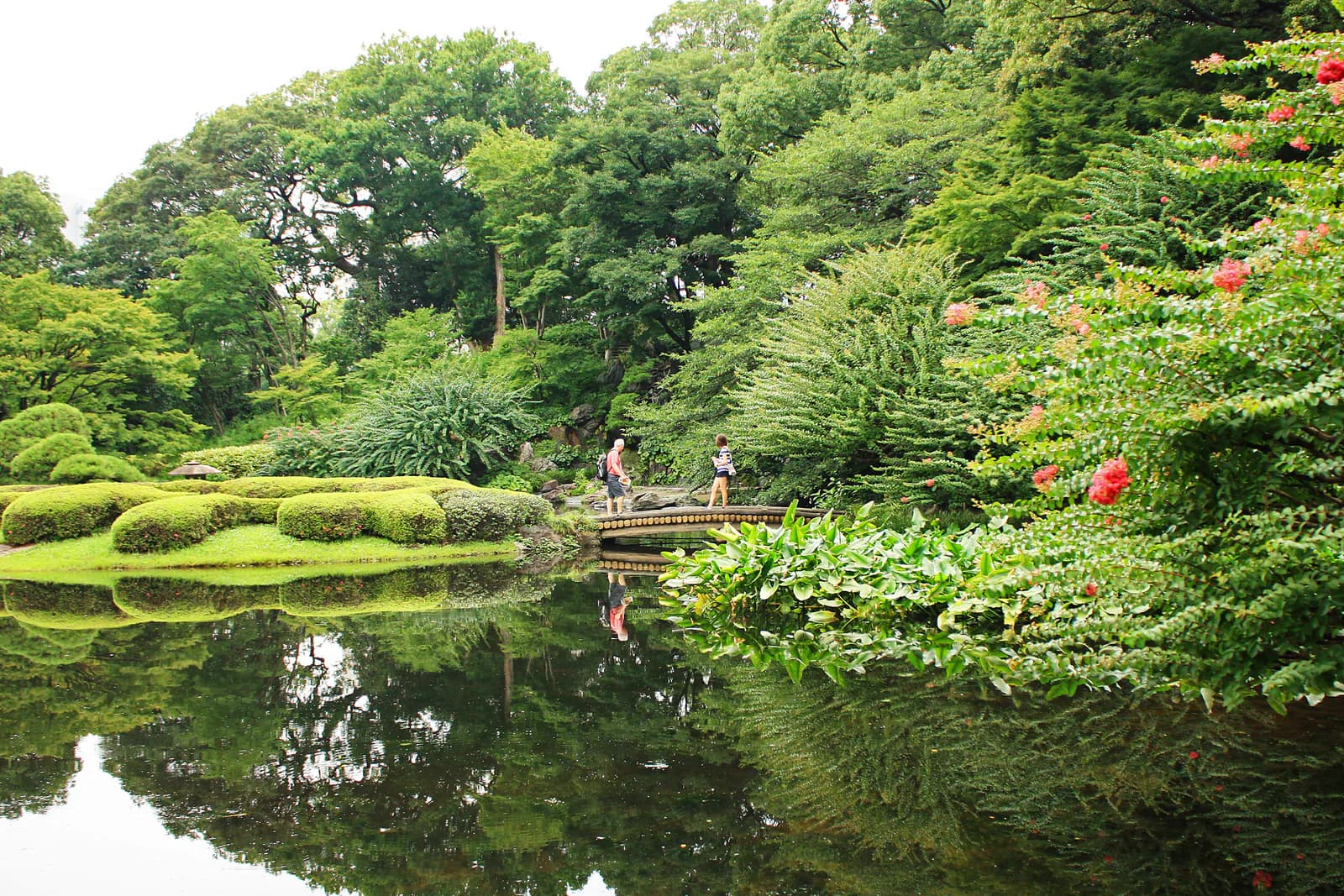
The Imperial Palace of Tokyo stands on the ground once occupied by the castle of Edo, from where the Tokugawa shoguns governed Japan for more than 250 years. Today it is the emperor’s main residence. Under the Japanese Constitution, the emperor is the symbol of the State and does not exercise governmental powers.
The usual visit starts in the outer gardens, where you find the moats, the enormous stone walls and the area near the famous Nijubashi bridge, one of the most recognisable images of the imperial palace, used for official ceremonies.
注意Heads-up
It is worth making clear that the main palace buildings cannot be visited freely, nor can they be clearly seen from outside.
The most interesting part open to the public is the East Gardens of the Imperial Palace, free to enter, built on the former main enclosures of Edo castle.
There you can still see defensive gates, guardhouses, Japanese gardens and the enormous stone base on which the castle’s main keep once stood. The gardens normally close on Mondays and Fridays, as well as on some special dates.
メモNote
There is a chance to enter part of the grounds on an official guided tour run by the Imperial Household Agency. You can book in advance or try for one of the limited same-day places. It is worth checking the official calendar, because some sessions are cancelled depending on the date.
別案Variations
- Weekend: Ginza’s Chuo-dori is pedestrianised; it is the best day.
- Monday or Friday: the East Gardens are closed; swap them for the Kabuki-za.
- If it rains: Ginza is all indoors and arcades.
Contemporary Tokyo
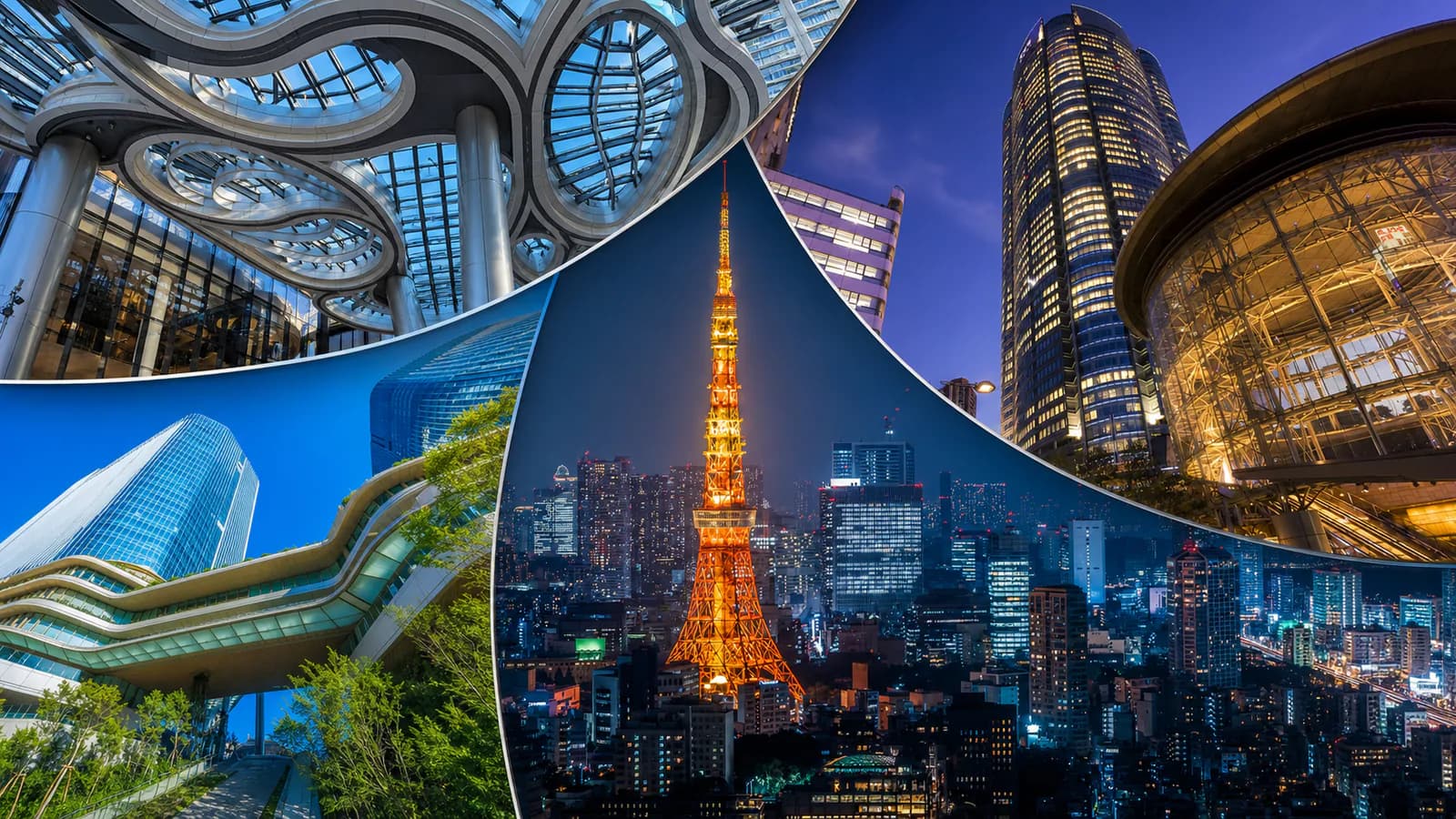
If you have extra time in Tokyo, consider visiting some impressive places that are harder to fit into the usual routes. Several of them are also included in our Contemporary Tokyo tour.
Short on time?
- Don’t missTokyo Tower at night and, if you can buy the ticket in advance, teamLab Borderless.
- OptionalRoppongi Hills and the Mori Tower inside it (with its observation deck), and Takanawa Gateway.
- If you only have half a dayAzabudai Hills and Tokyo Tower.
Day 3 or 4, stop by stop
Azabudai → Tokyo Tower (10 min walking) → Roppongi (15 min walking) → Takanawa (20 min by train).
This is the Tokyo that almost nobody fits into a first trip, and it is a shame, because it is the one that has changed most in the last five years. The first three stops are done on foot and are right next to each other; Takanawa is a separate extension, reached by train.
We do this area with you
Azabudai, Roppongi and Takanawa show Tokyo at its most contemporary and cutting-edge, making this one of the routes where a guide from our team adds the most value.
17. Azabudai Hills: Japan’s tallest building and teamLab Borderless
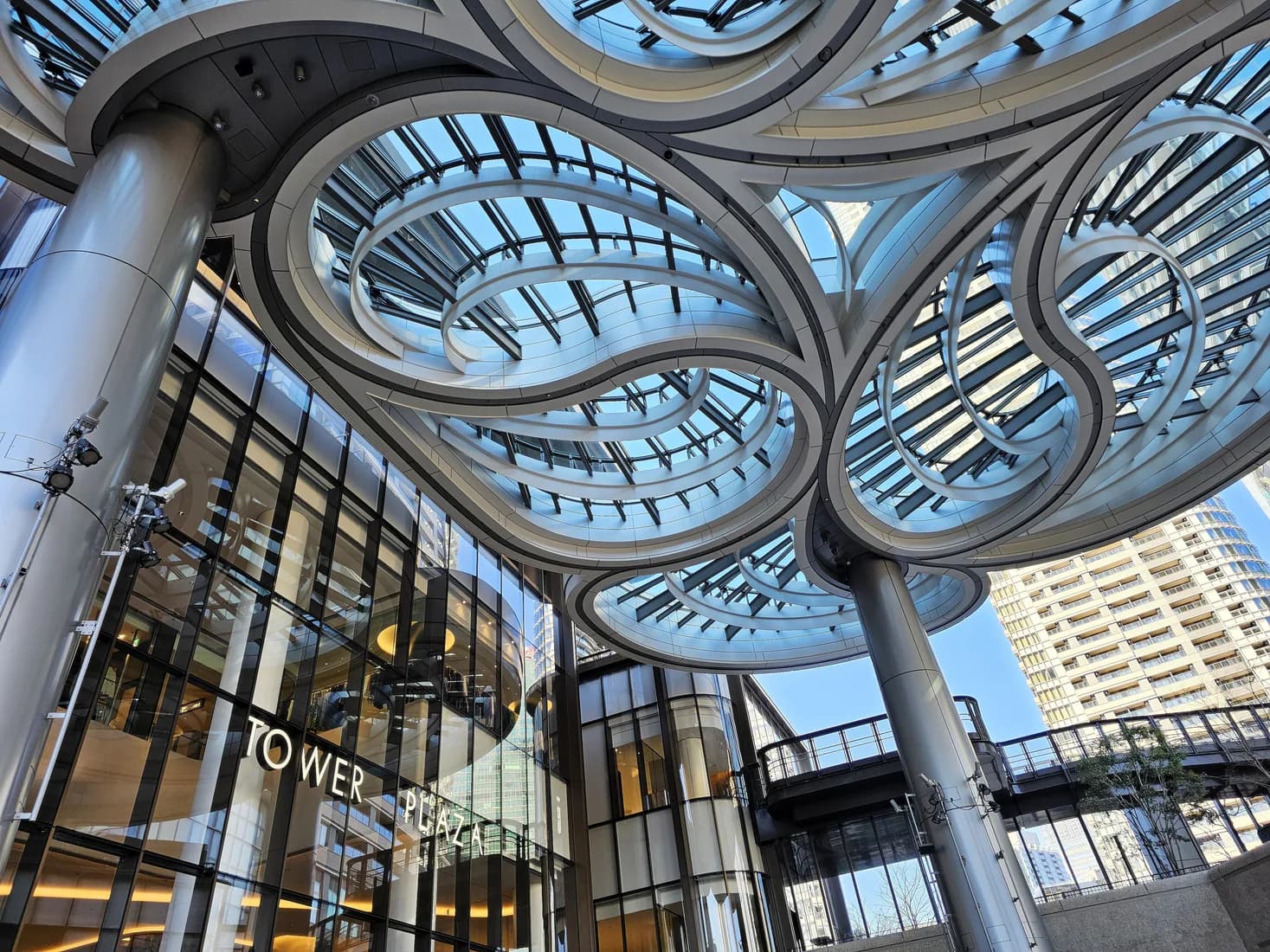
Azabudai Hills is one of the most modern urban complexes in Tokyo, opened at the end of 2023 and completed in 2025, between the Roppongi and Toranomon areas. As well as working as a luxury shopping centre, it also functions as a small city in itself, bringing together homes, restaurants, shops, and even art galleries and large landscaped squares.
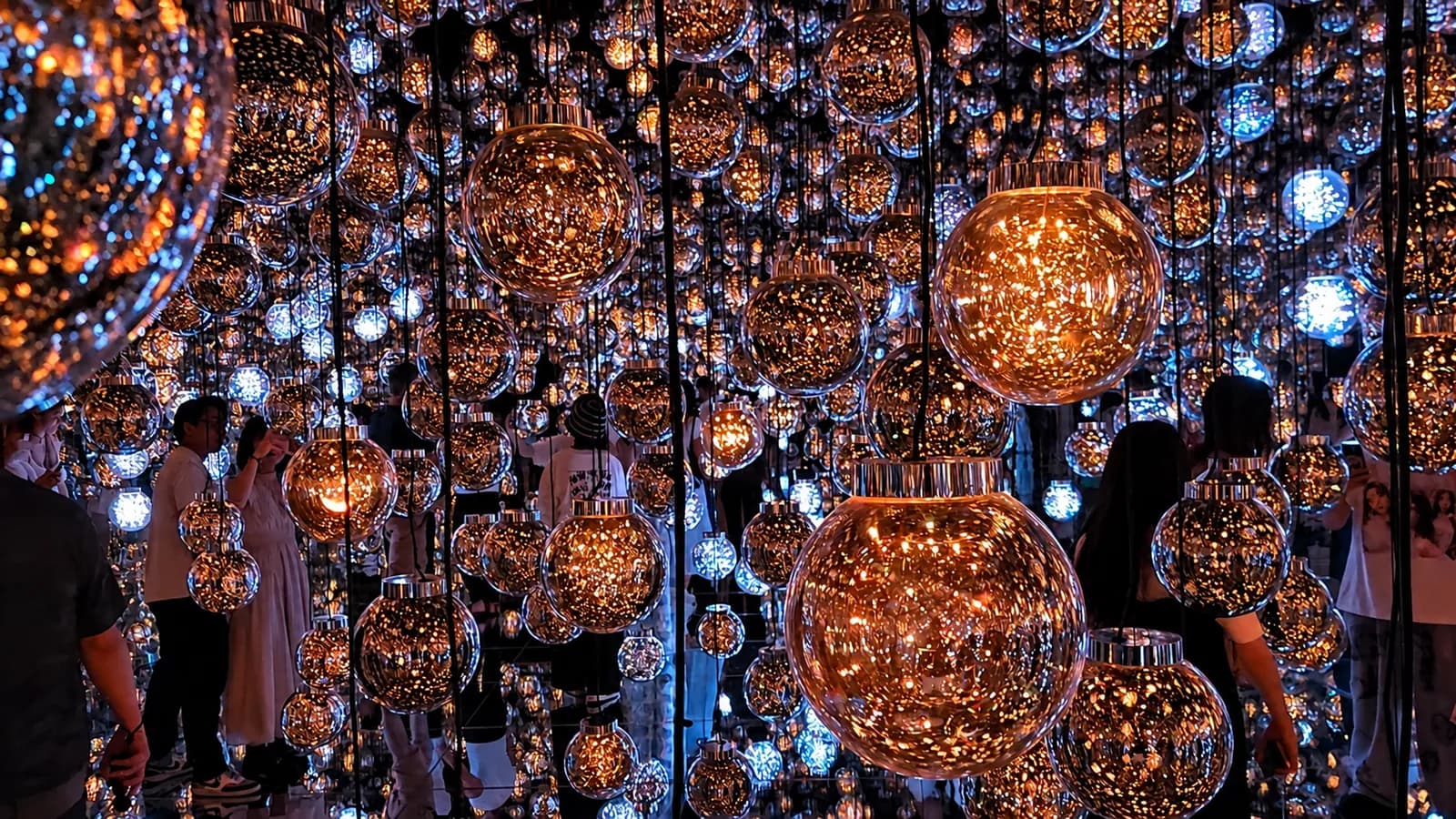
This is also home to the famous teamLab Borderless, which describes itself as an “immersive digital art museum”. A visit becomes a magical, physically interactive experience that we highly recommend, especially for couples and families with children.
At its centre stands the Mori JP Tower which, at 330 metres and 64 floors, is currently the tallest building (not tower) in Japan.
What is more, as Azabudai Hills is very close to Tokyo Tower, from its buildings and gardens you get great views of the tower. Being so close together, both places can comfortably be visited on the same walk.
Next stop: Tokyo Tower · 10 min walking
18. Tokyo Tower: 333 metres above the heart of Tokyo
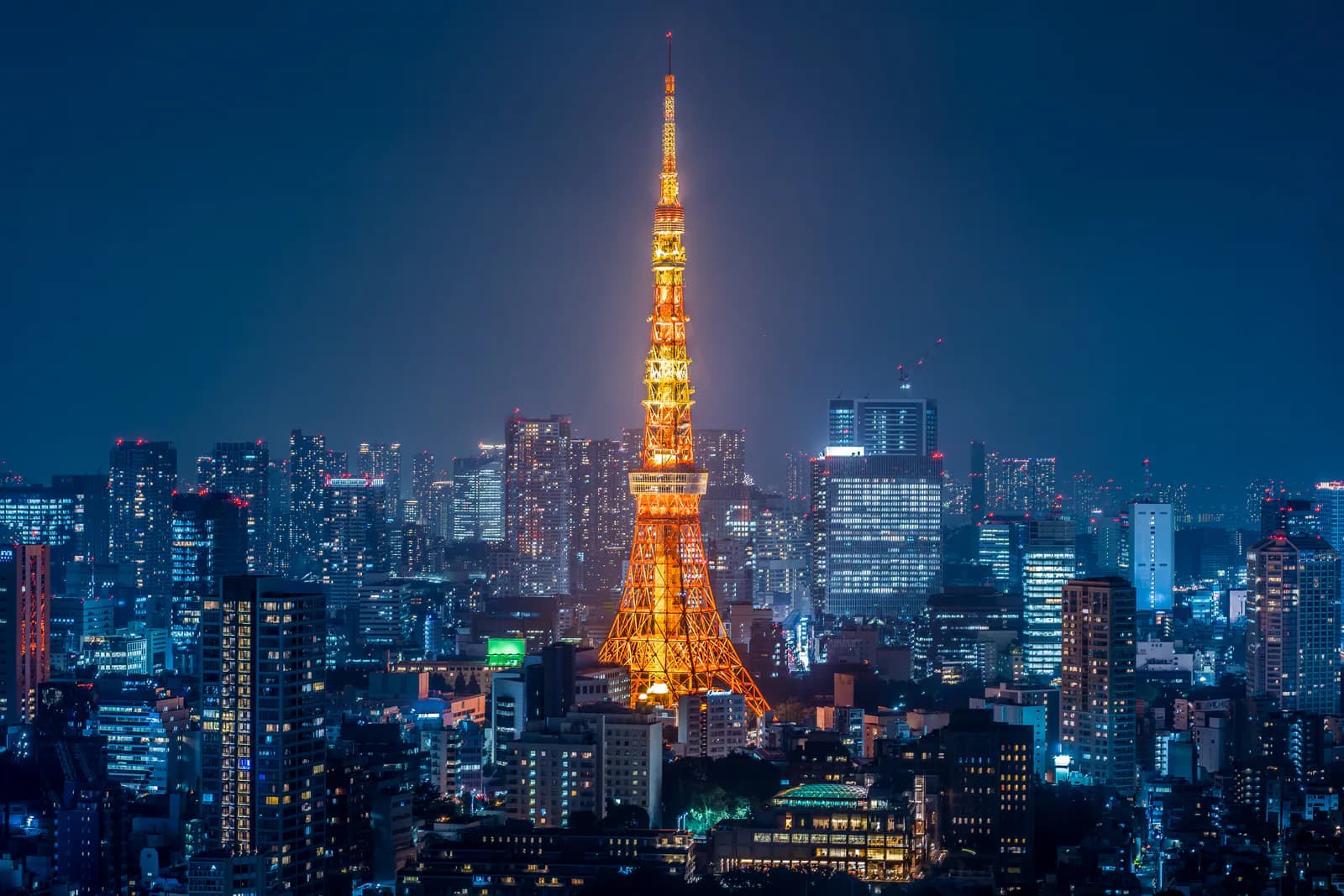
One of the most recognisable symbols of the Japanese metropolis (and even of Japan), Tokyo Tower was completed in 1958, at first purely as a communications tower, and at 333 metres tall it stood for Japan’s post-war modernisation and economic recovery.
Its steel structure is inspired by the Eiffel Tower, although Tokyo Tower is slightly taller, and although its “standard” colour is white and orange, at night it is lit differently every day: you can see it green, blue, red, white, and in any combination you can imagine.
豆知識Fun fact
Part of the 4,000 tonnes of steel used to raise it in 1958 came from American tanks damaged in the Korean War, bought as scrap.
It is worth seeing the tower up close, but also going up to its observation decks: the Main Deck, at 150 metres, and the Top Deck, at 250 metres.
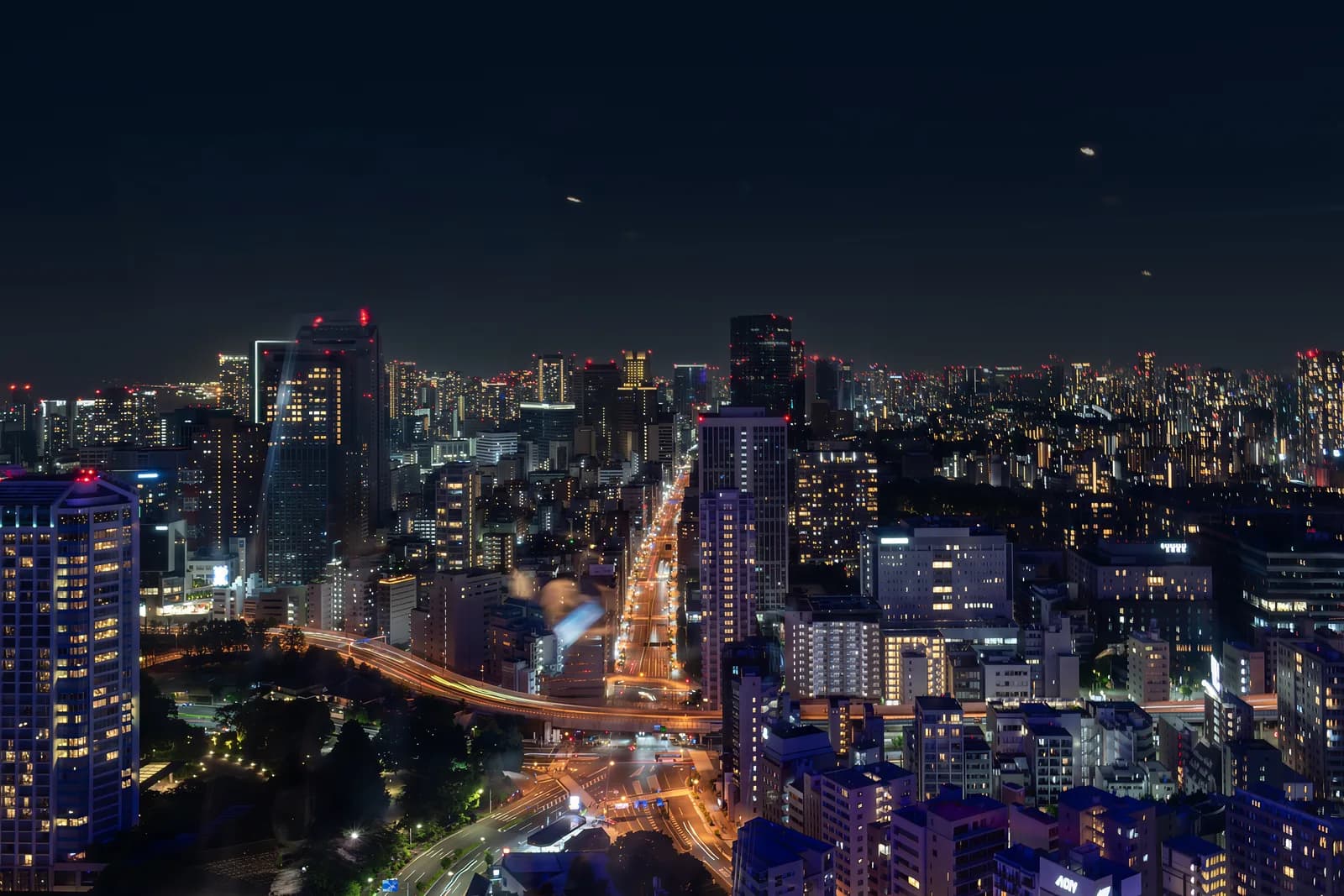
Although going up to the Top Deck is an option, given the difference in ticket price I personally think that going up to the Main Deck at 150 metres is enough to fully enjoy the experience. From here the views are impressive, and you will also find several glass panels in the floor through which you can look straight down to street level. It can be a little scary, but it is great fun.
On the lower floors there are souvenir shops and a “food court” (dining area) where you can have dinner before or after going up the tower.
注意Heads-up
Many of the restaurants and shops close at around 21:00.
A trick for appreciating the tower better from outside is to go to the Zojoji temple next door (the family temple of the Tokugawa shoguns); from there you can take a lovely photo with the temple’s main hall in the foreground and the tower right behind it.
Also very close is Shiba park: a green space with grass and benches where you can sit down and take in the scene, watch the tower and the line of nearby buildings.
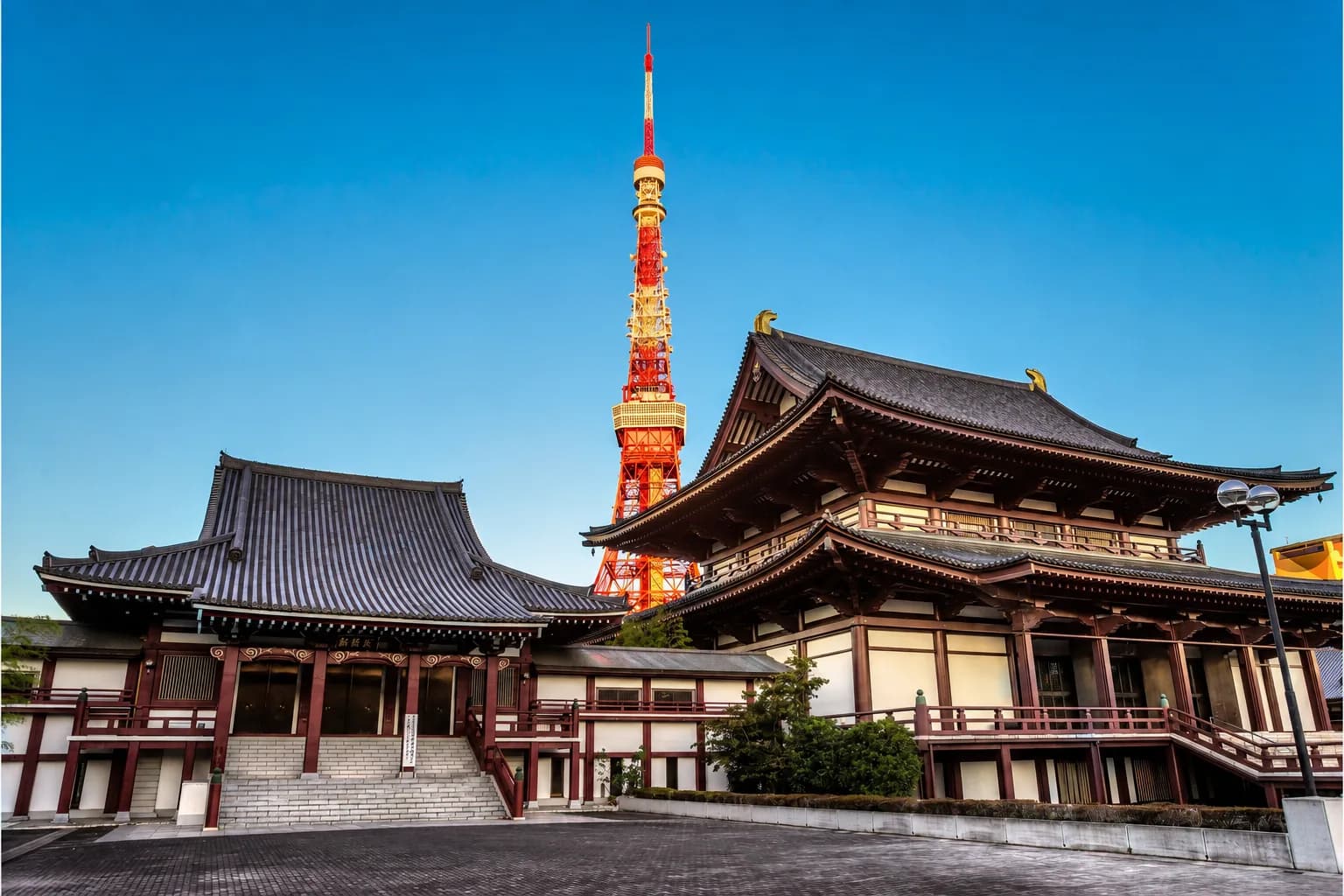
As we mentioned earlier, Tokyo Tower is very close to Azabudai Hills, so both places can be visited on the same walk.
Next stop: Roppongi · 15 min walking
19. Roppongi Hills and the Mori Tower: art, views and nightlife
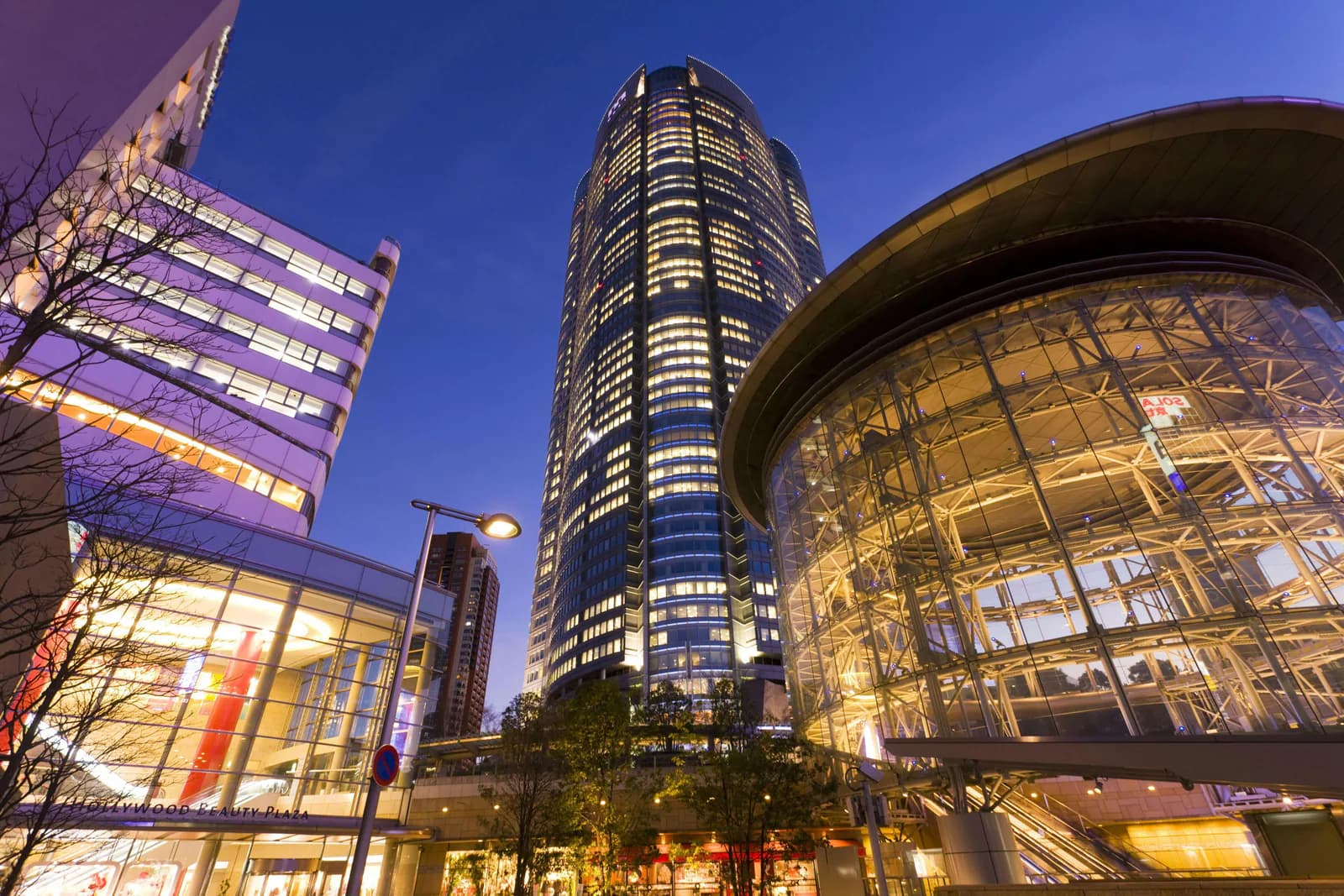
Roppongi Hills is a large urban complex with a little of everything: designer and luxury shops, restaurants, offices and several leisure spaces devoted to art and culture.
Its central and most striking building is without doubt the Mori Tower (the one in the photo above), a 238-metre, 54-floor skyscraper that turns blue at night and dominates the Roppongi skyline.
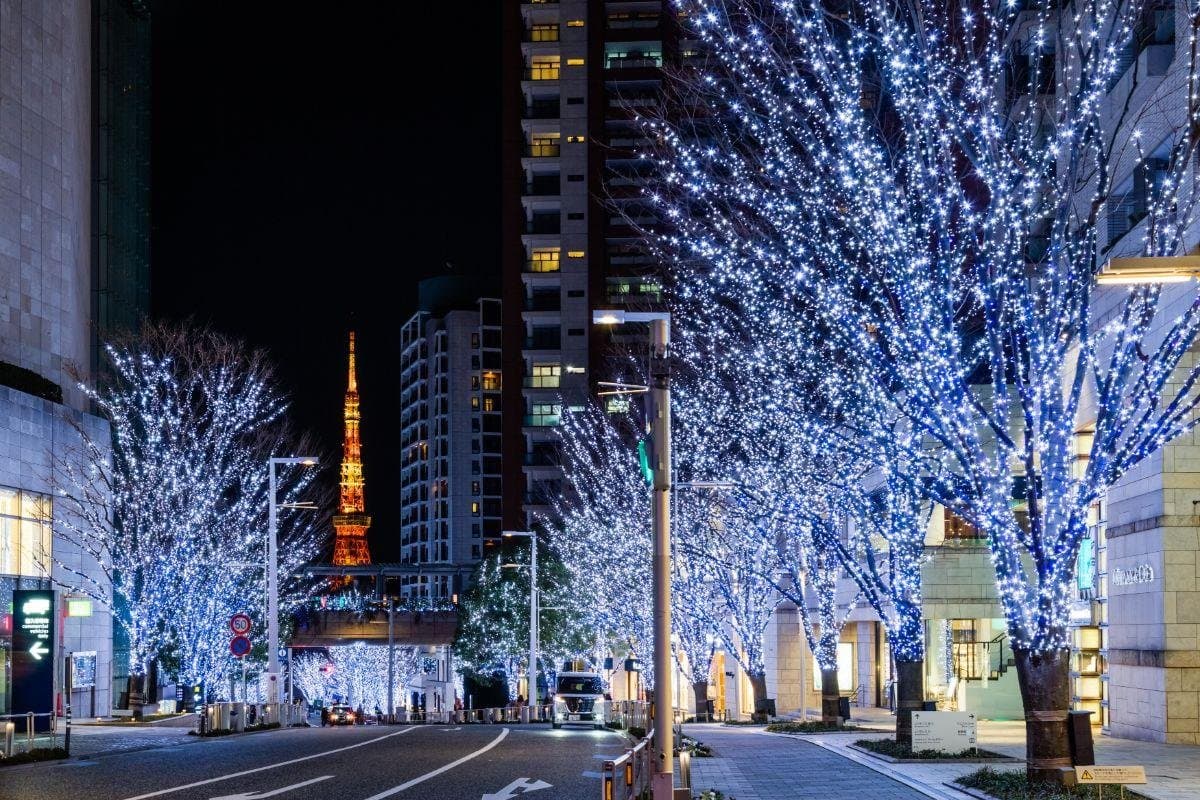
From the observation deck you get panoramic views of Tokyo Tower, Tokyo Skytree and, when the sky is clear enough, even Mount Fuji. The upper levels hold two of the complex’s main attractions: Tokyo City View, an indoor observation deck on the 52nd floor, and the Mori Art Museum on the 53rd, devoted mainly to contemporary art.
At the foot of the tower stands “Maman”, the enormous spider sculpture by Louise Bourgeois (yes, the same one as at the Guggenheim Museum Bilbao!), one of the complex’s most recognisable symbols.
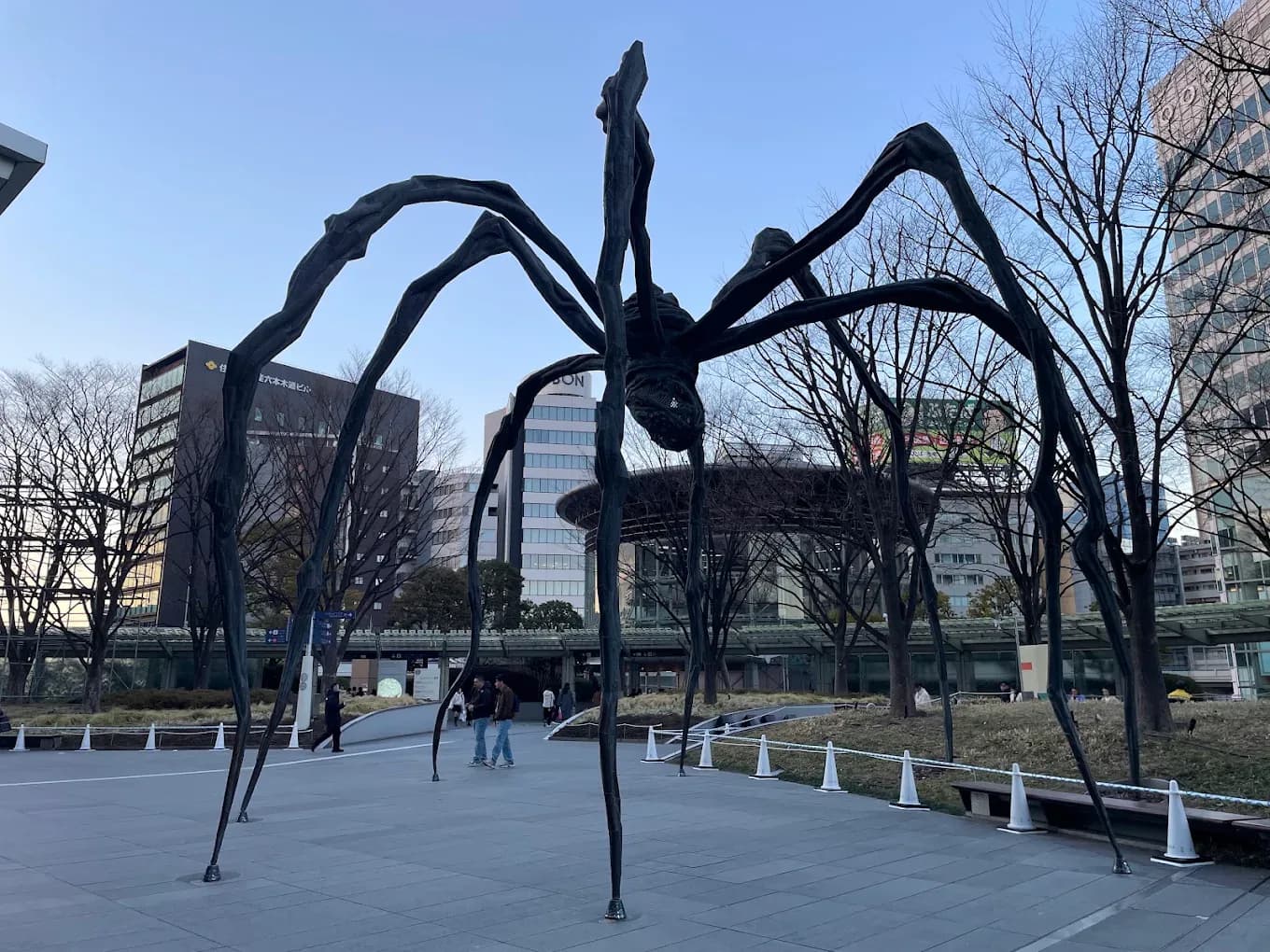
Roppongi Hills can easily be combined with the rest of the district, known among other things for its metropolitan feel and its nightlife.
Next stop: Takanawa Gateway · 20 min by subway and train
20. Takanawa Gateway: the mini-city of the Tokyo of the future
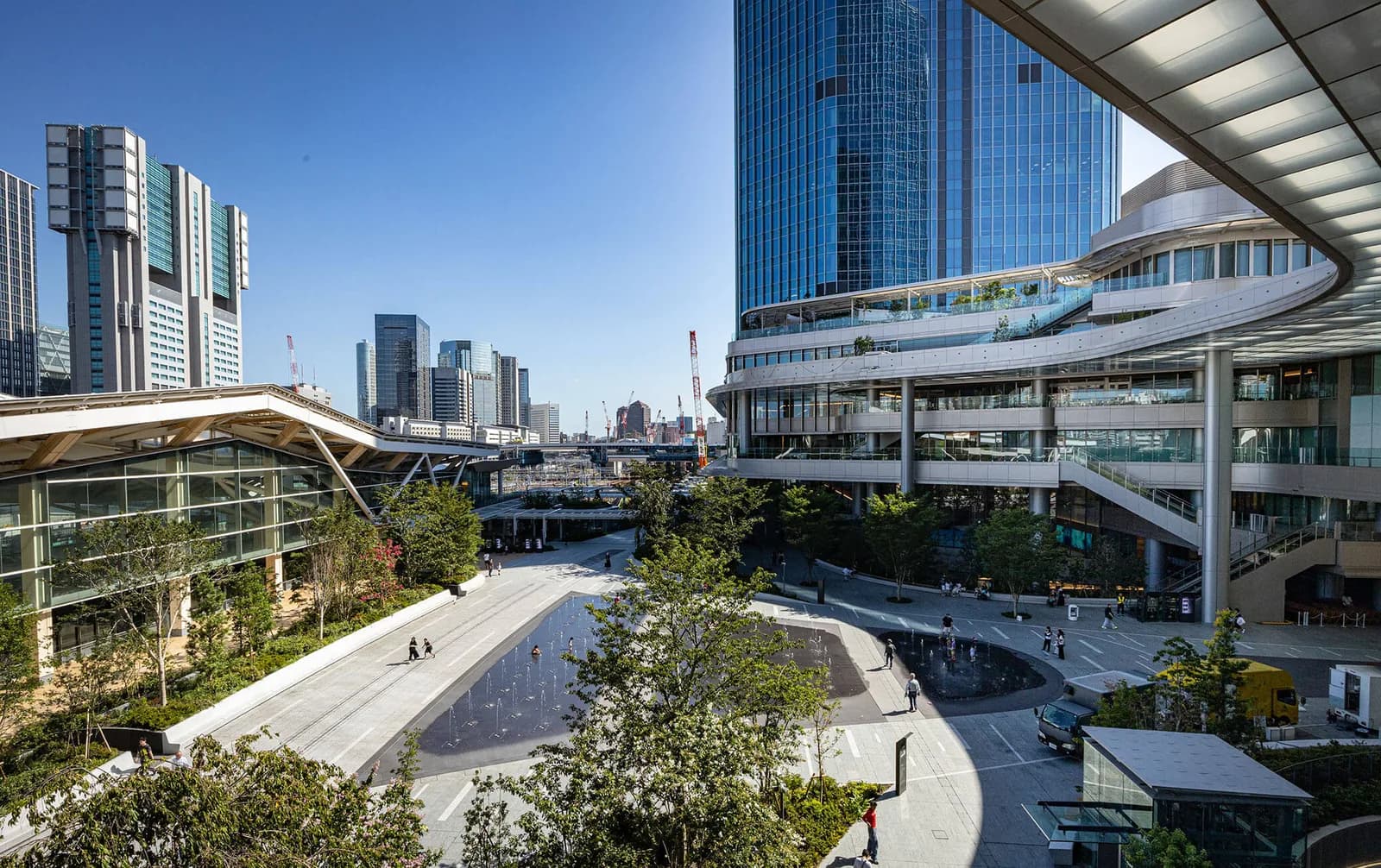
Takanawa Gateway is a newly opened mini-city that stands for the Tokyo of the future, setting out across the area a vision of humans and nature coexisting in a modern way. Very tall buildings, plants everywhere, robots that carry you from one place to another, a water show with a coloured fountain, areas for children, cafés and restaurants among other things. It is an area that is hard to explain in words, and personally one of my favourites to visit on our Contemporary Tokyo tour.
It is a complex on such a scale that it has even forced the creation of a new stop on the Yamanote line (Tokyo’s loop line, the busiest train line in the world), and it holds places such as the “Museum of Narratives”, where exhibitions and events are held, and the “Link Pillar”, enormous towers full of shops, restaurants and cafés, with an entire top floor covered in greenery.
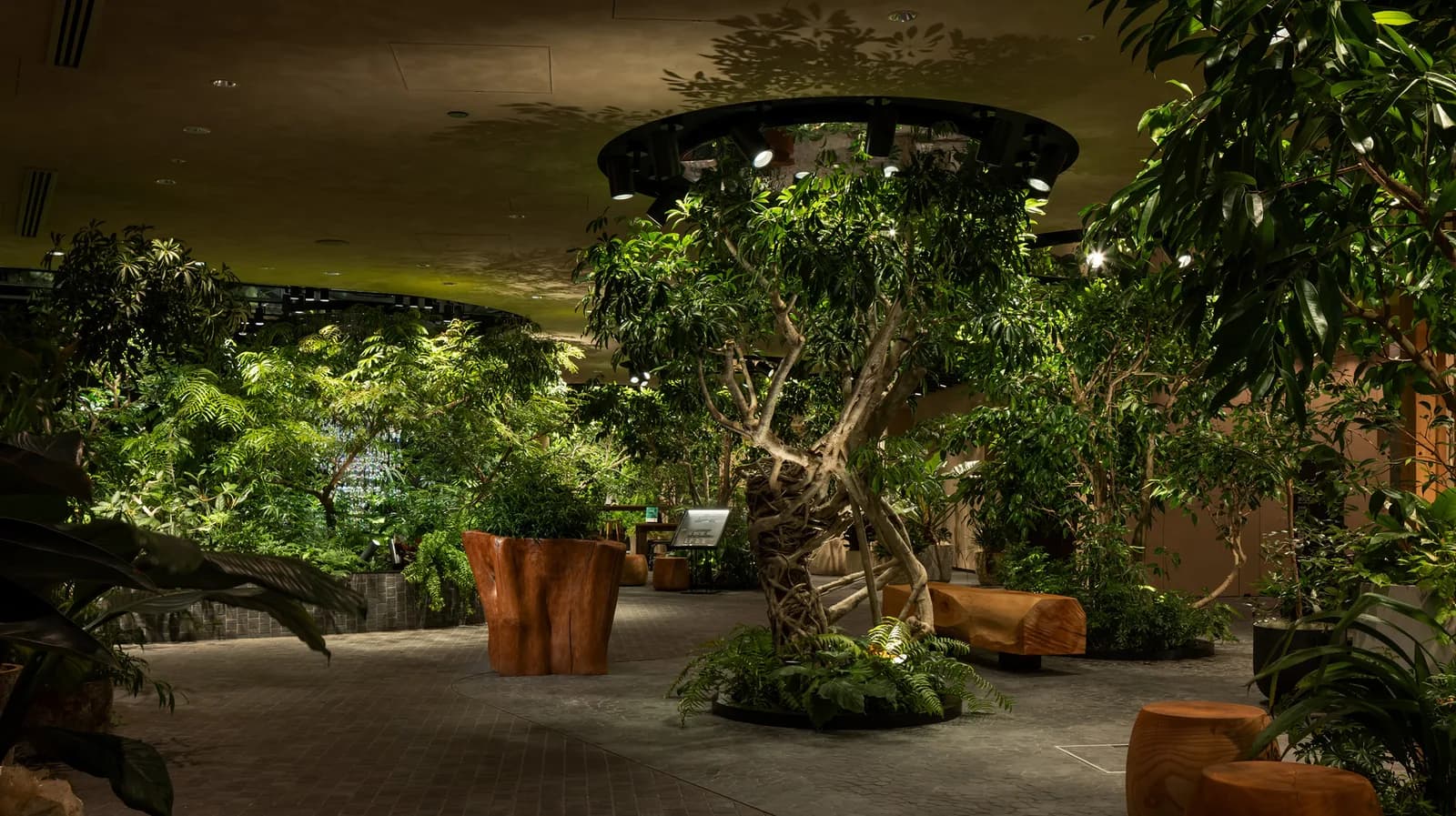
The surroundings of the complex are not completely finished yet, but it is already drawing worldwide attention for its visionary, futuristic design, at once human and closely tied to nature. A gem still undiscovered by most.
別案Variations
- If it rains: it is the best block of all, almost everything is indoors.
- With children: the teamLab is the highlight of the trip.
- Short route: Azabudai and Tokyo Tower, and off to dinner.
And if I have more days in Tokyo?
If you have already covered the places mentioned in this article, you have seen what almost everyone comes to see. From a fifth day onwards, what you want is to wander the streets, get to know the city in depth and visit those hidden gems that are not on the usual routes.
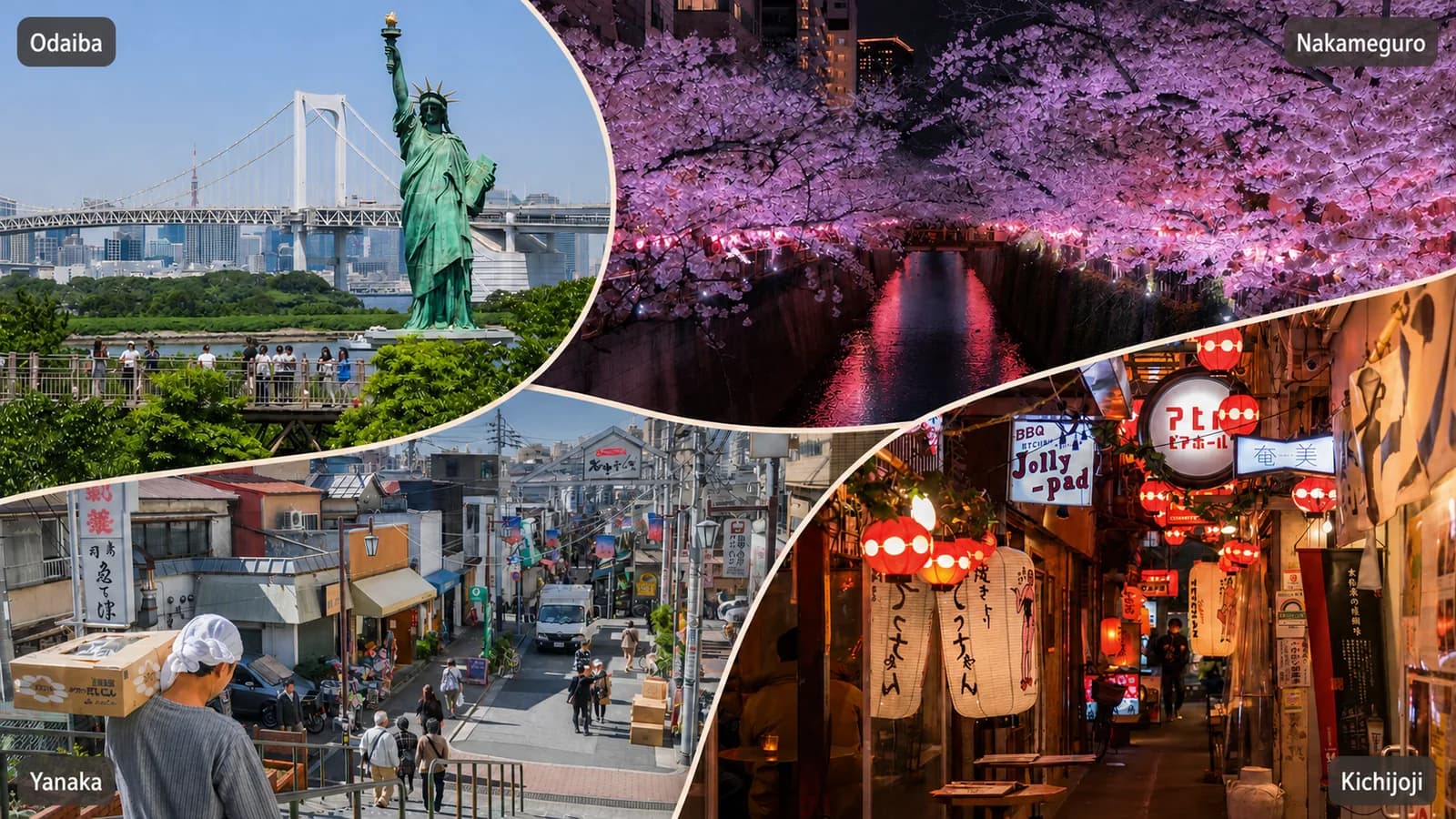
These are some of the places we most like to recommend, all of them less than half an hour from the centre:
- Yanaka: low houses, a tree-lined cemetery and a shopping street where things are still sold by the gram. The closest thing to pre-war Tokyo.
- Shimokitazawa and Kichijoji: second-hand shops and small cafés in both, with Shimokitazawa also having little theatres, and Kichijoji a lake with rowing boats and the Ghibli museum next door.
- Nakameguro: a canal lined with cherry trees and, under the tracks, a row of shops and bars in the arches of the viaduct.
- Toyosu and Odaiba: the wholesale market with its tuna auctions, and the artificial entertainment island in the bay, reached on the Yurikamome, an automated driverless train that runs on rubber tyres.
There are also two additions that depend on the calendar: the sumo tournaments in Ryogoku, held over fifteen days in January, May and September, and the temple flea markets, such as the one at Nogi or at Hanazono, which usually fall on a Sunday.
Of course, another highly recommended option is to do some of the day trips we will see next: Nikko and its shrines in the mountains, Kamakura and the Great Buddha, Yokohama half an hour away or the charming island of Enoshima. Let’s look at these escapes one by one.
What to see near Tokyo: day trips and extensions
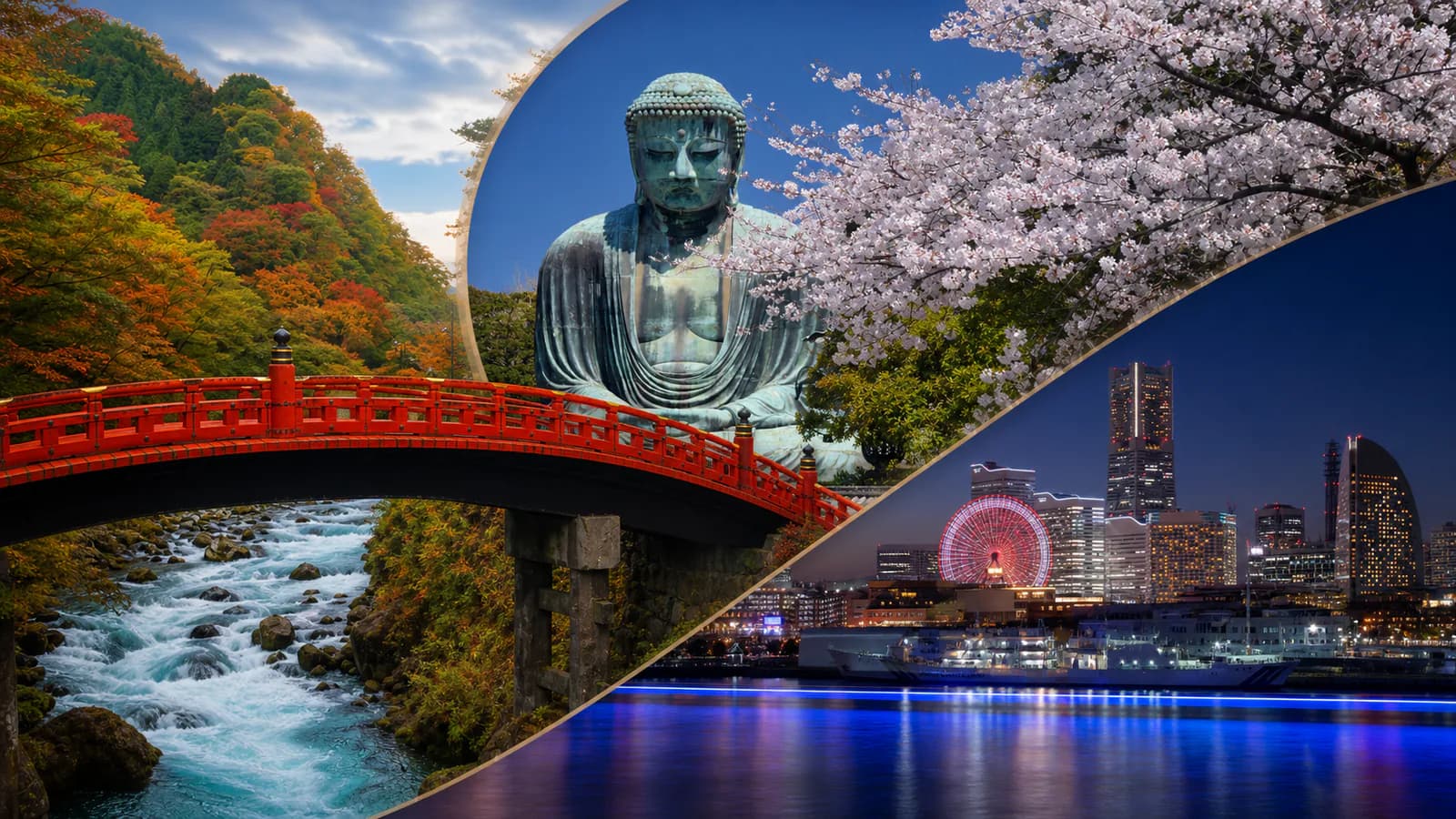
Tokyo is an enormous city. And without much effort you can find interesting places to visit for as many days as you like. But assuming you are coming to Japan for 7 to 14 days, perhaps after the first two or three days in the capital it is worth visiting nearby places you can go to and come back from on the same day without changing hotels, keeping Tokyo as your base.
There are several excellent day trips from Tokyo, including Nikko, Kamakura and Yokohama, Japan’s second-largest city by population.
All of these places are less than two hours away by train and are escapes into a different atmosphere. Let’s get to know them one by one.
Nikko: ornate shrines among cedars and waterfalls
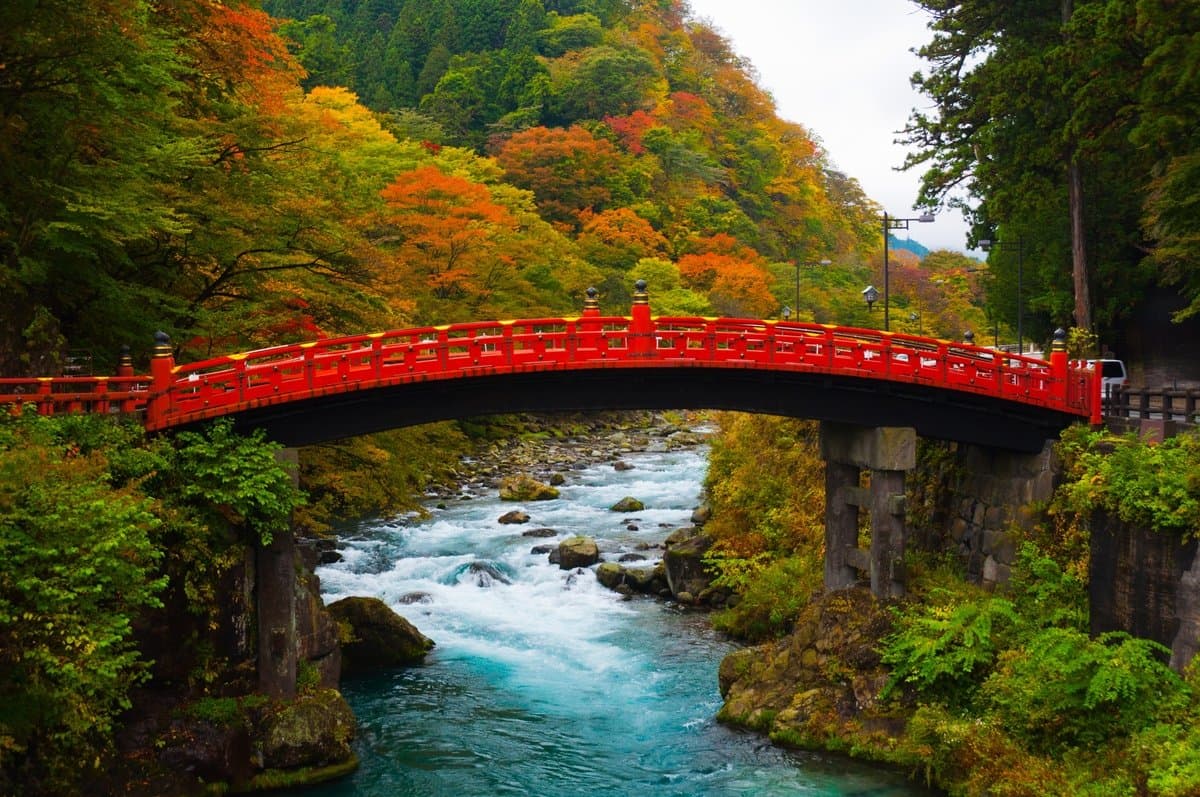
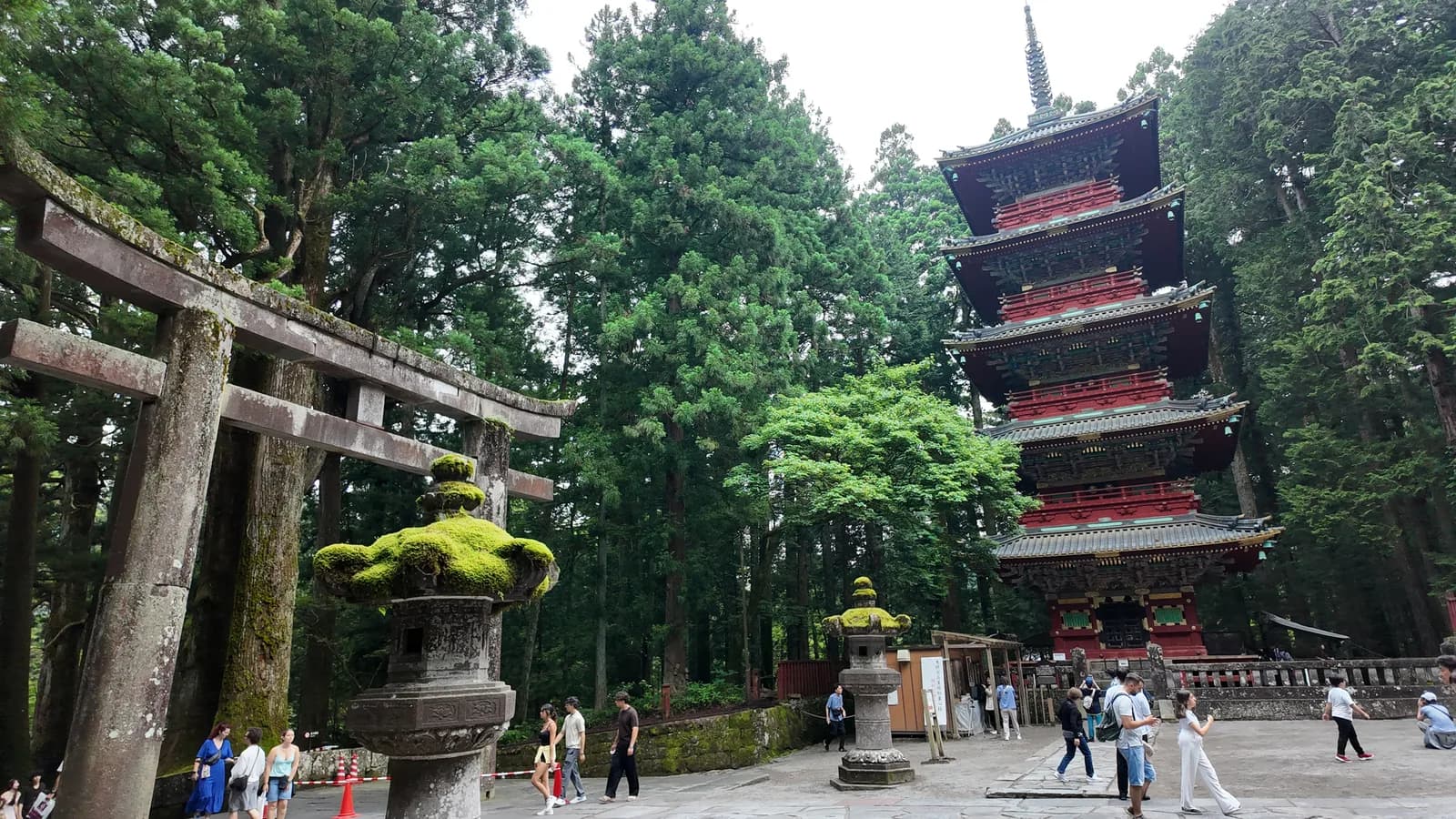
Nikko is two hours from Tokyo and it is the opposite of the city: mountains, four-hundred-year-old cedars and a group of shrines declared a World Heritage Site. The Toshogu, where Tokugawa Ieyasu is buried, is one of the most “decoratively ornate” shrines in Japan: gold leaf, coloured carvings and the three famous monkeys, all at once.
If you get up early and plan a long day, it is worth taking the bus up to Lake Chuzenji and the Kegon waterfall, which drops almost a hundred metres. It is some forty minutes of winding road from the shrines, although the buses can be delayed by traffic or snow.
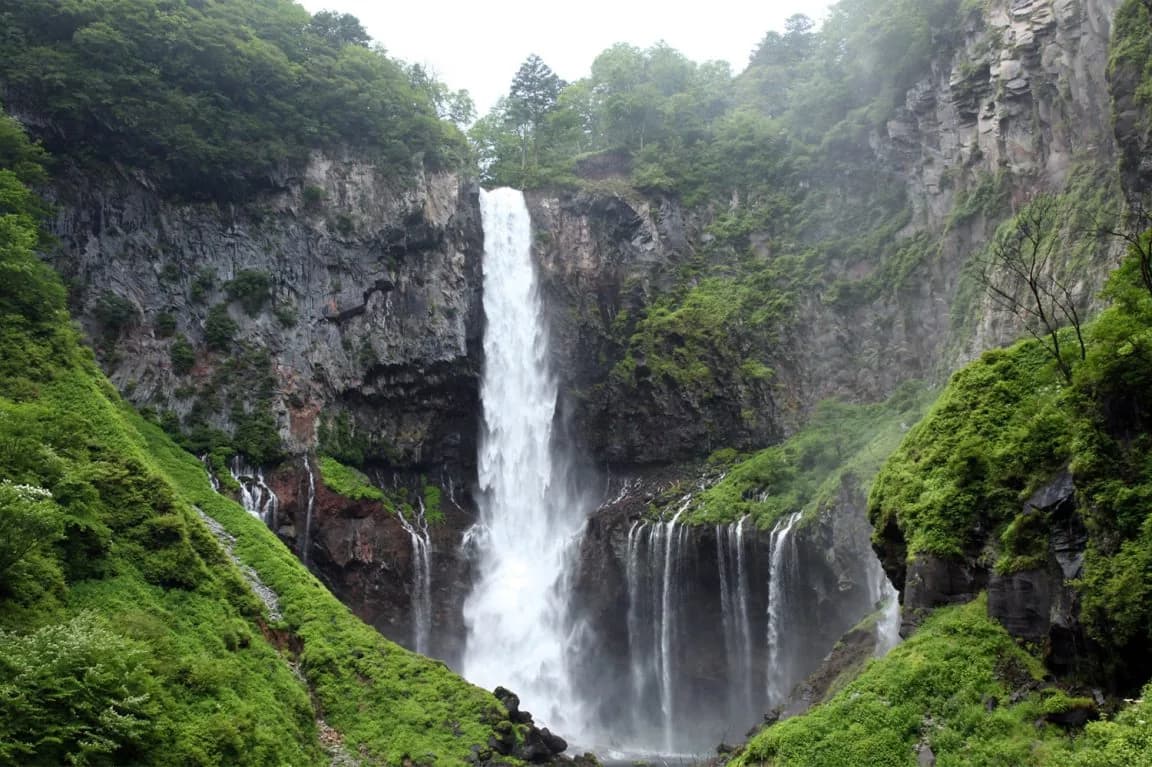
It is a long day, with an early start and plenty of time on buses, yet almost nobody regrets it: Nikko is one of those places people are still talking about years later.
We do this area with you
Nikko has a really interesting history, and without someone to tell it, it stays a pretty place. We pick you up in Tokyo, go into the shrines while they are still quiet and come back in the afternoon, without you having to think about trains or buses.
Kamakura: the Great Buddha, the temples and the sea
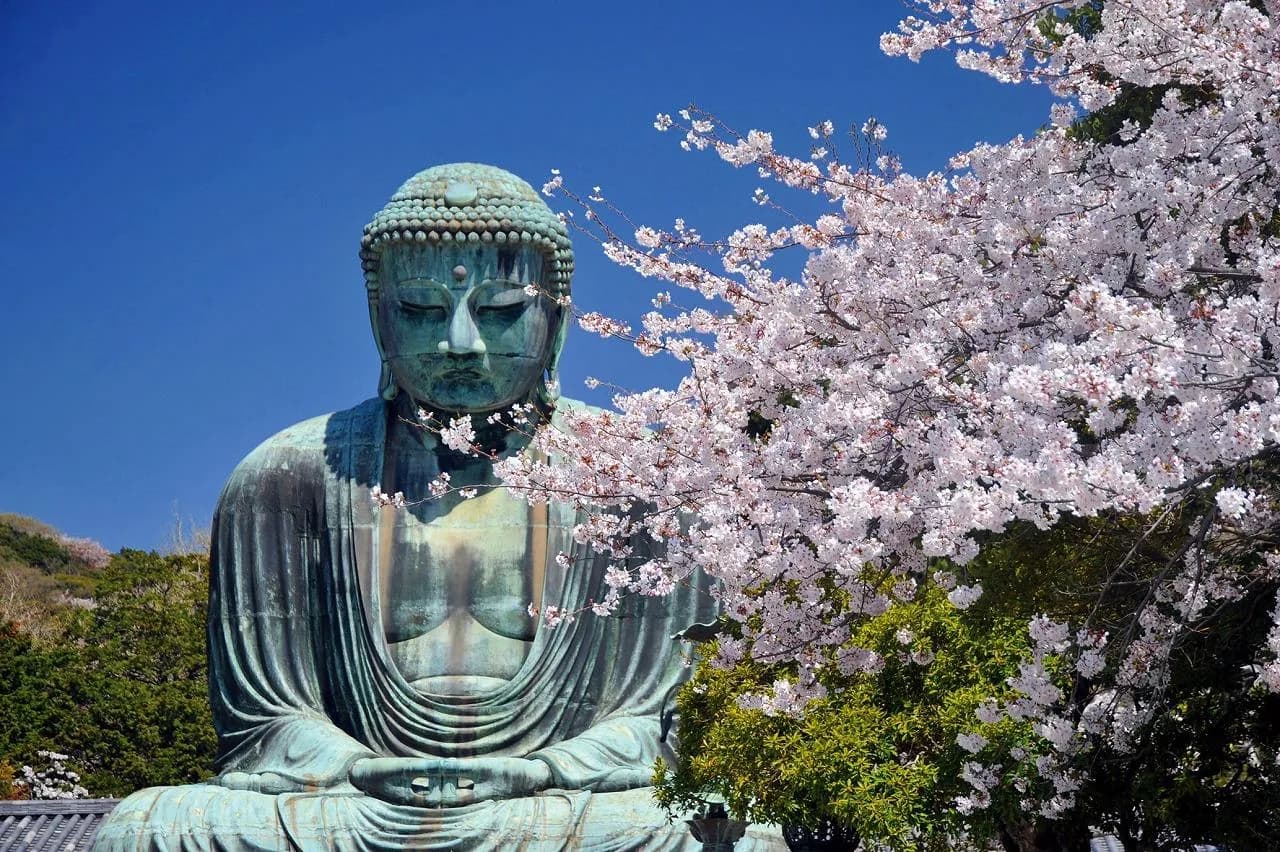
Kamakura is where the era of the shoguns and samurai power in Japan began. For close to a century and a half it was the capital of the country, and dozens of temples and shrines from that time still survive, as well as its famous bronze Great Buddha of some 13 metres, which you can go inside if you want (yes, inside the statue itself).
Just an hour from Tokyo and right by the sea, in summer its beaches fill up with people from the capital. Another of its great attractions is the Hase-dera temple, with terraced gardens and views over the bay, plus the Komachi-dori avenue, a lively street of market stalls, shops and traditional-style food stands.
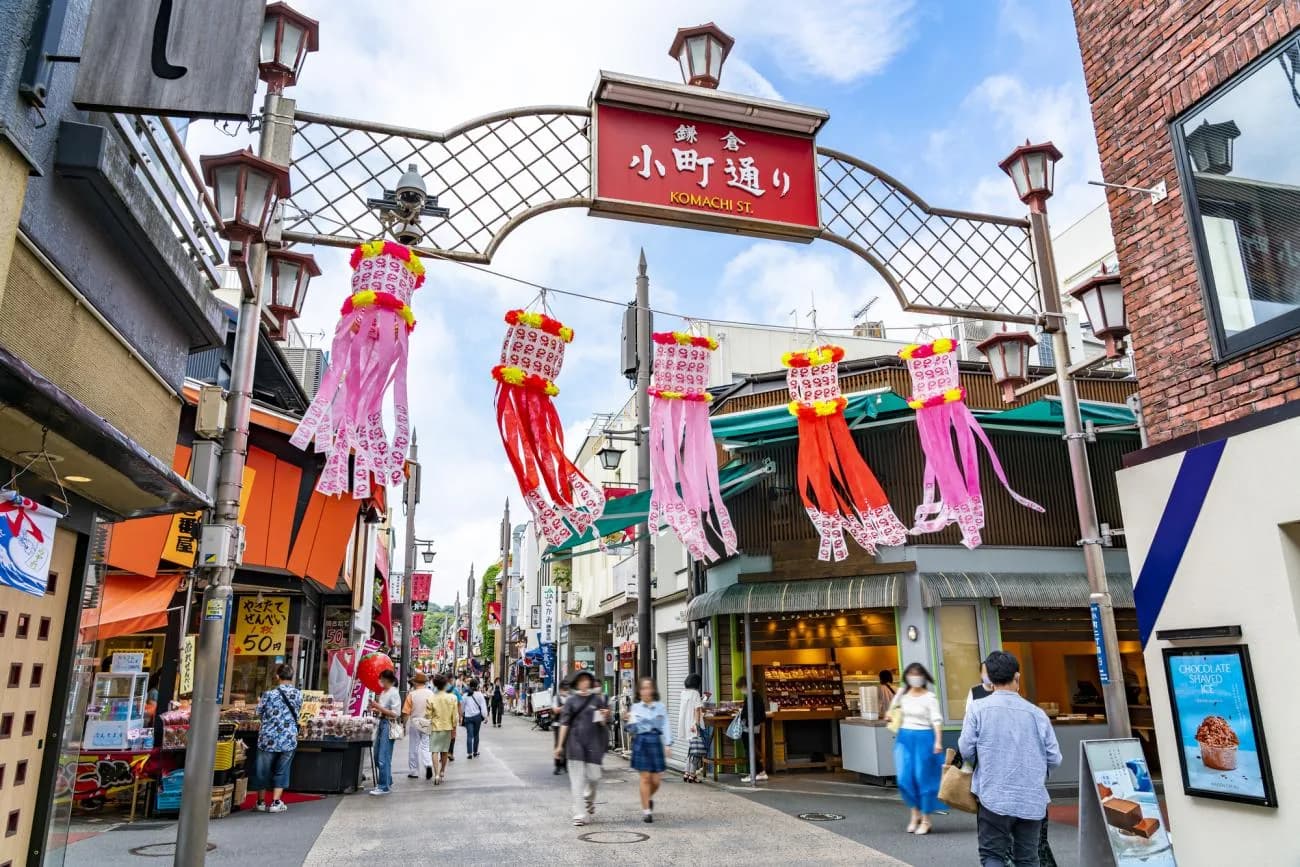
If you have the time, Kamakura also has the Hokoku-ji (a very pretty temple with a bamboo grove inside), the Tsurugaoka Hachimangu (an enormous shrine with a lot of history behind it), and many other interesting places to explore.
It is an ideal day trip if you want to spend a full day exploring without rushing.
We do this area with you
Kamakura is twice as enjoyable when you know what you are looking at: why a shogun chose this valley, what is inside the Great Buddha or what time of day is worth it for each temple. A full day at your own pace, with someone who lives in the area.
Yokohama: the port that opened Japan to the world, half an hour from Tokyo
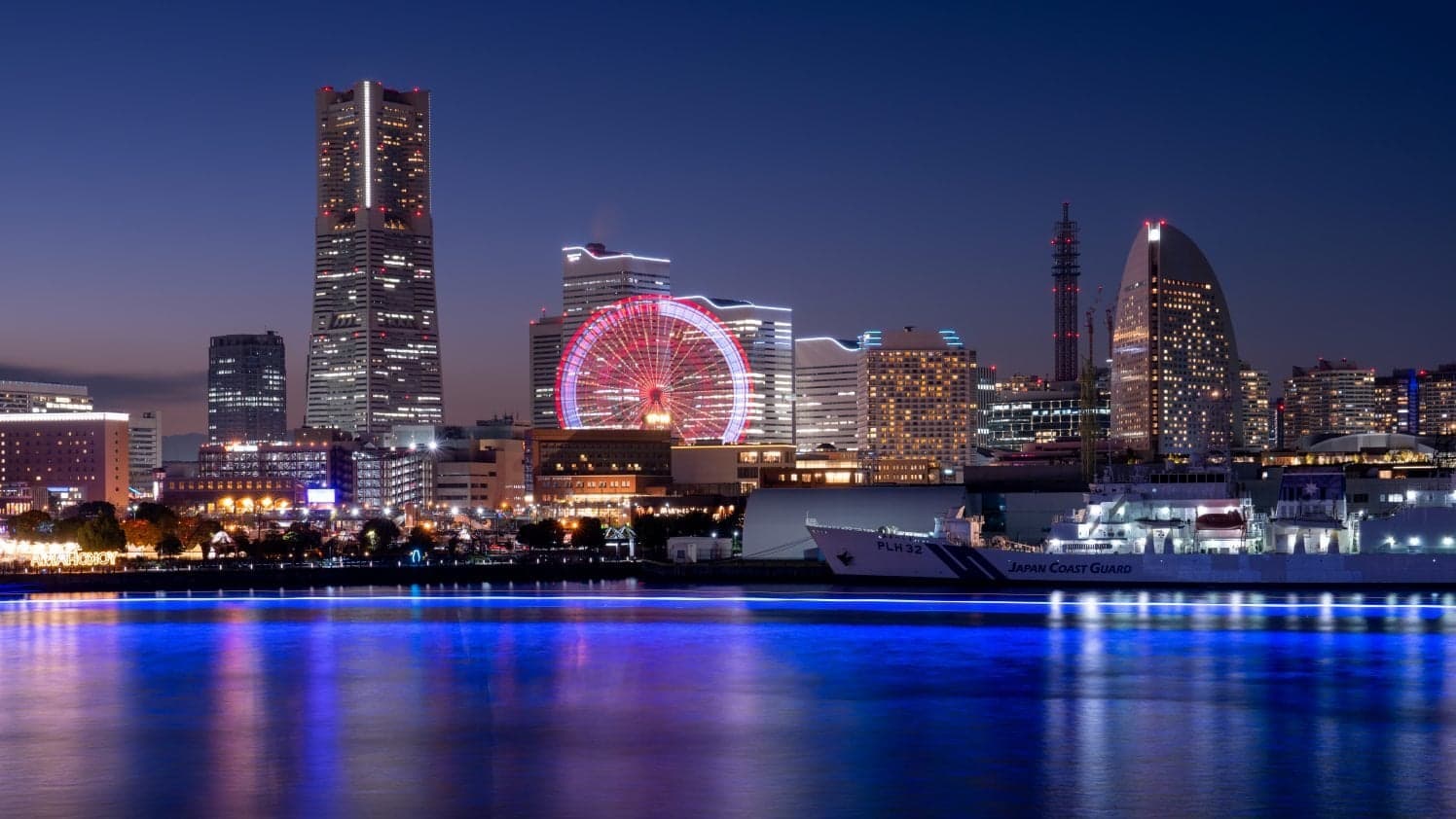
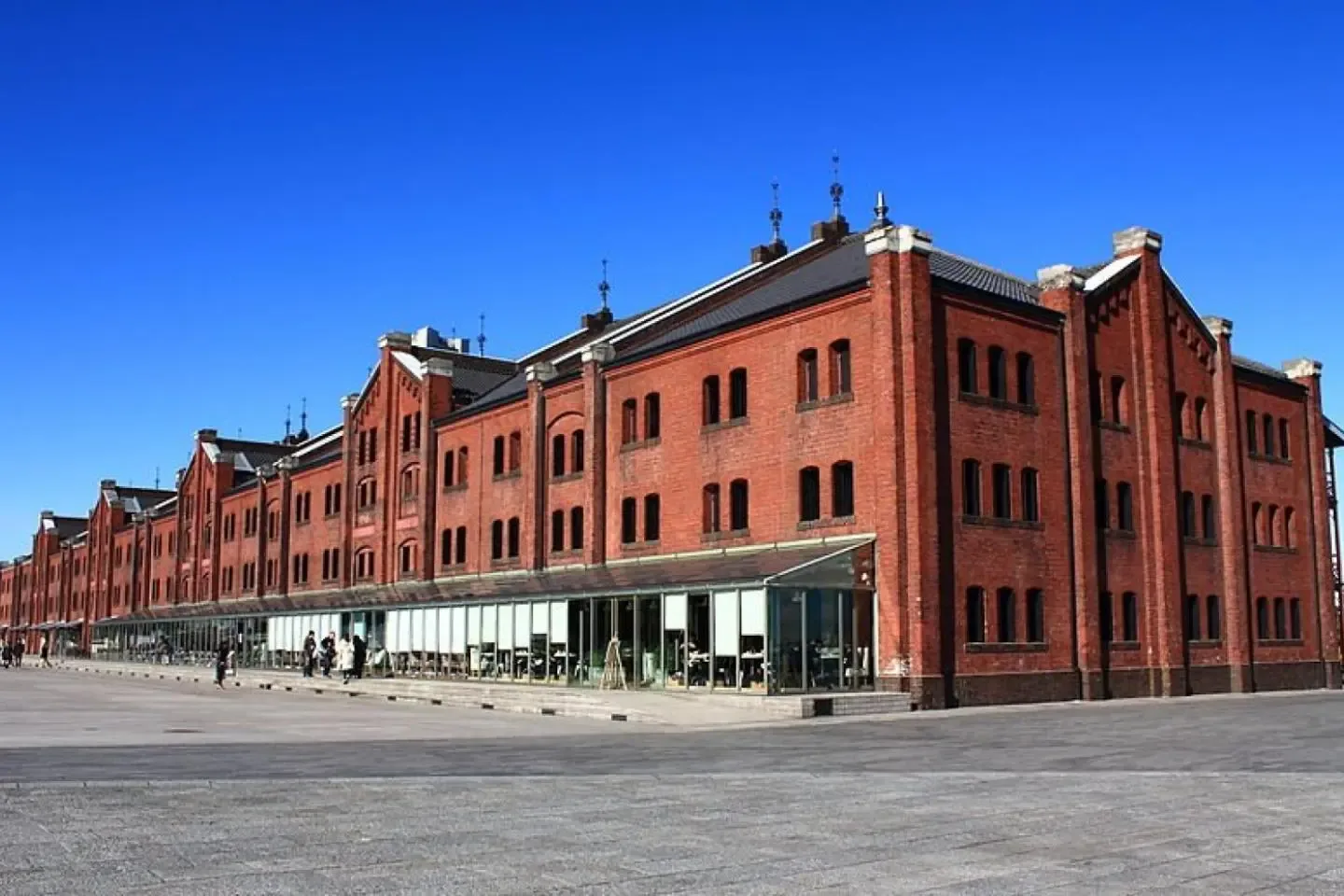
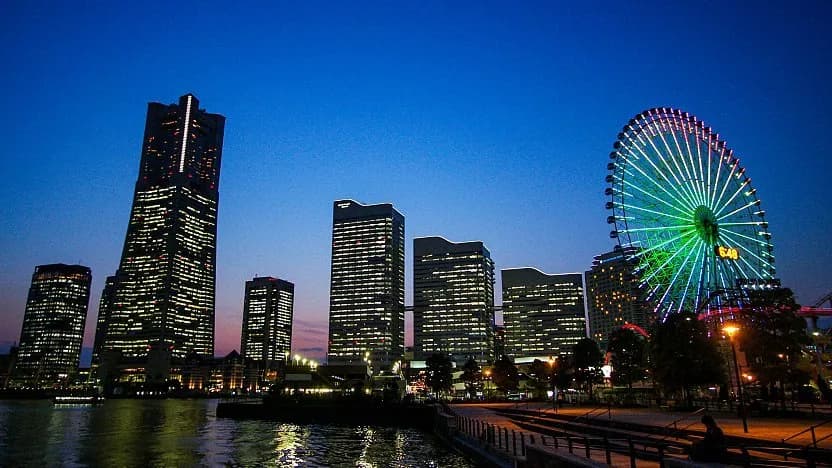
Yokohama is Japan’s second-largest city by population, and it is only half an hour from Tokyo. It was one of the country’s first ports to open to international trade, in 1859, and that history is still visible today: Japan’s largest Chinatown, former red-brick bonded warehouses converted into shops and restaurants, and a waterfront promenade overlooking the Minato Mirai skyline at dusk.
Yokohama’s Chinatown, known as Chukagai, covers a handful of blocks marked by ten colourful gates, with more than two hundred restaurants and stalls selling nikuman: steamed meat buns best eaten beside the stall. Enter through the main gate, Zenrinmon, and wander as far as Kanteibyo, a temple ablaze with red and gold. It is a perfect lunch stop before walking down to the harbour.
The Minato Mirai area, with its Ferris wheel and its seafront promenade, is the best place to watch dusk over the bay. And if you are travelling with children (or in any case, really), the instant ramen museum is also great fun: you make your own noodles right there.
We do this area with you
Yokohama is Tokyo with room to breathe: harbour views, the bay and a full afternoon away from the crowds, with someone who knows the best places to eat and where to watch the Ferris wheel light up. If you want to stay on, the bay is an excellent area for dinner.
Enoshima: a small island with a shrine, caves and views of Fuji
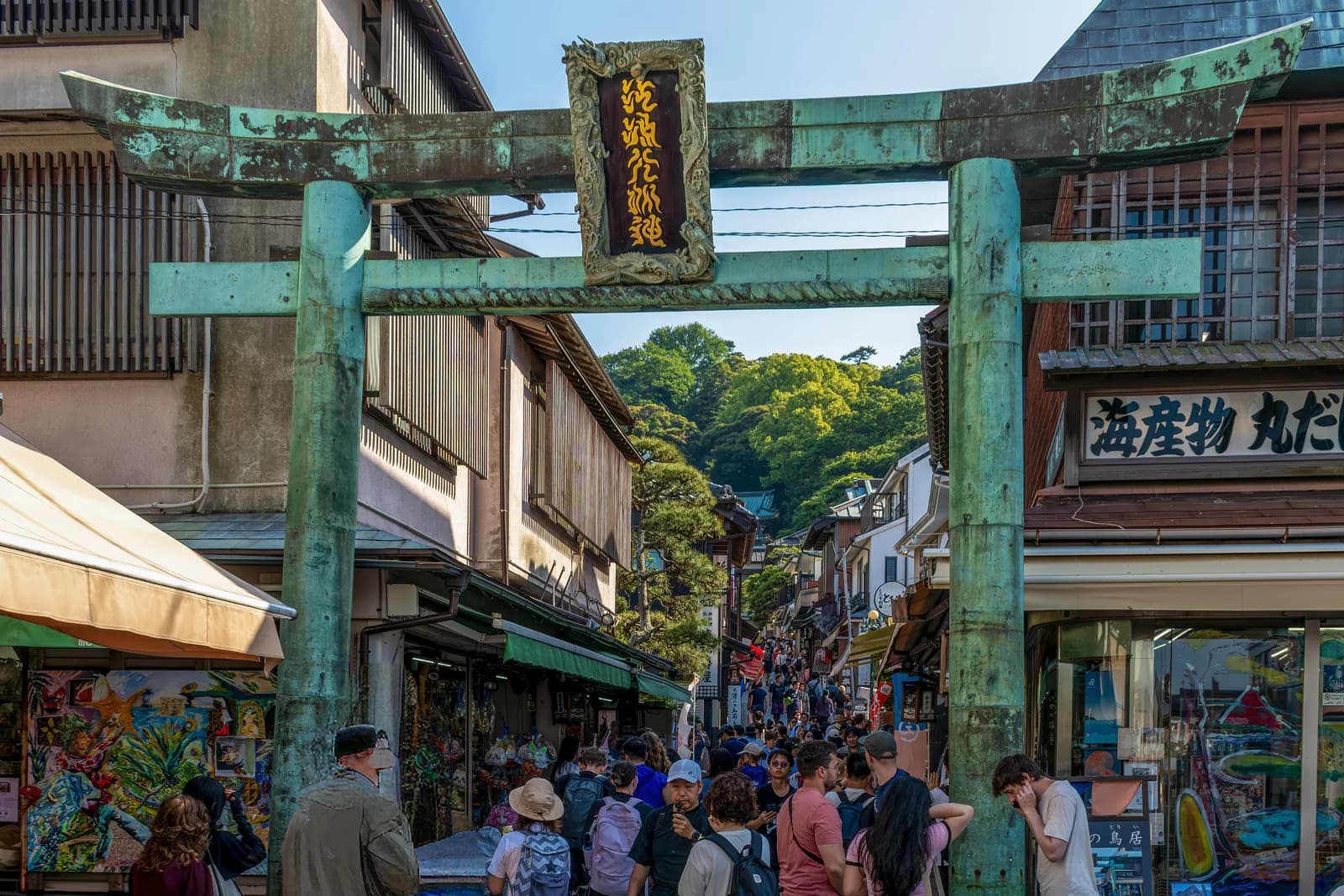
Enoshima is a small island off the coast of Kamakura, joined to the mainland by a bridge you cross on foot. Inside there is a shrine dedicated to Benzaiten, a garden with a viewpoint and some sea caves on the far side.
What makes it special is the view: on clear winter days, Mount Fuji comes fully into view across the bay. You get there on the Enoden, whose seaside journey is half the experience.
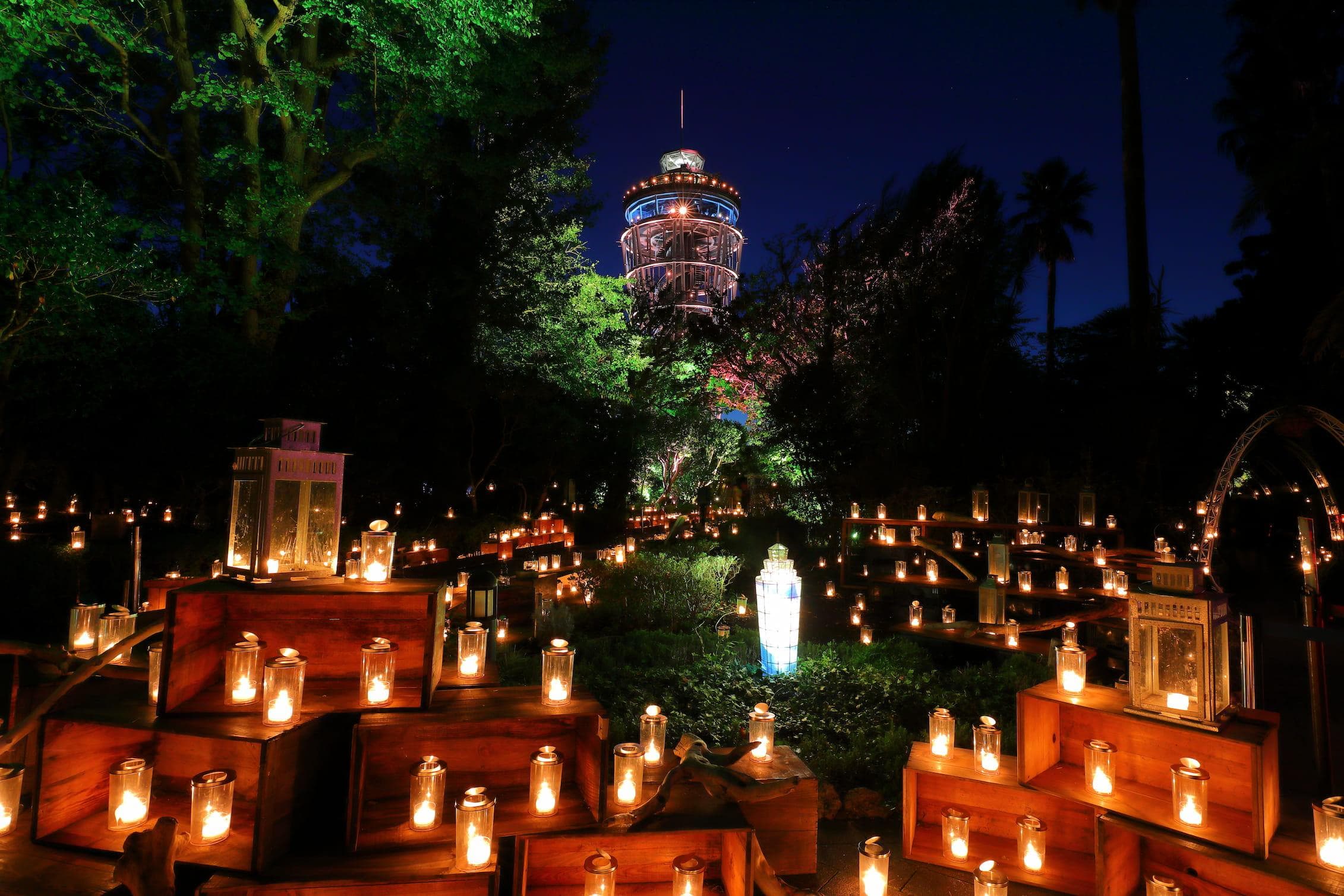
As soon as you cross the bridge, the Benzaiten Nakamise slope begins: a narrow street of shops and restaurants climbing towards the shrine’s torii. The island’s speciality is shirasu, tiny pale fish served here raw over rice, along with pressed octopus crackers made in front of you. At the top stands the Sea Candle lighthouse, whose observation deck becomes the centre of the winter illuminations.
We do this area with you
An island with a shrine, sea caves and, if the weather is kind, Mount Fuji behind it. It pairs naturally with Kamakura in a single day.
Hakone: hot springs and Fuji from the lake
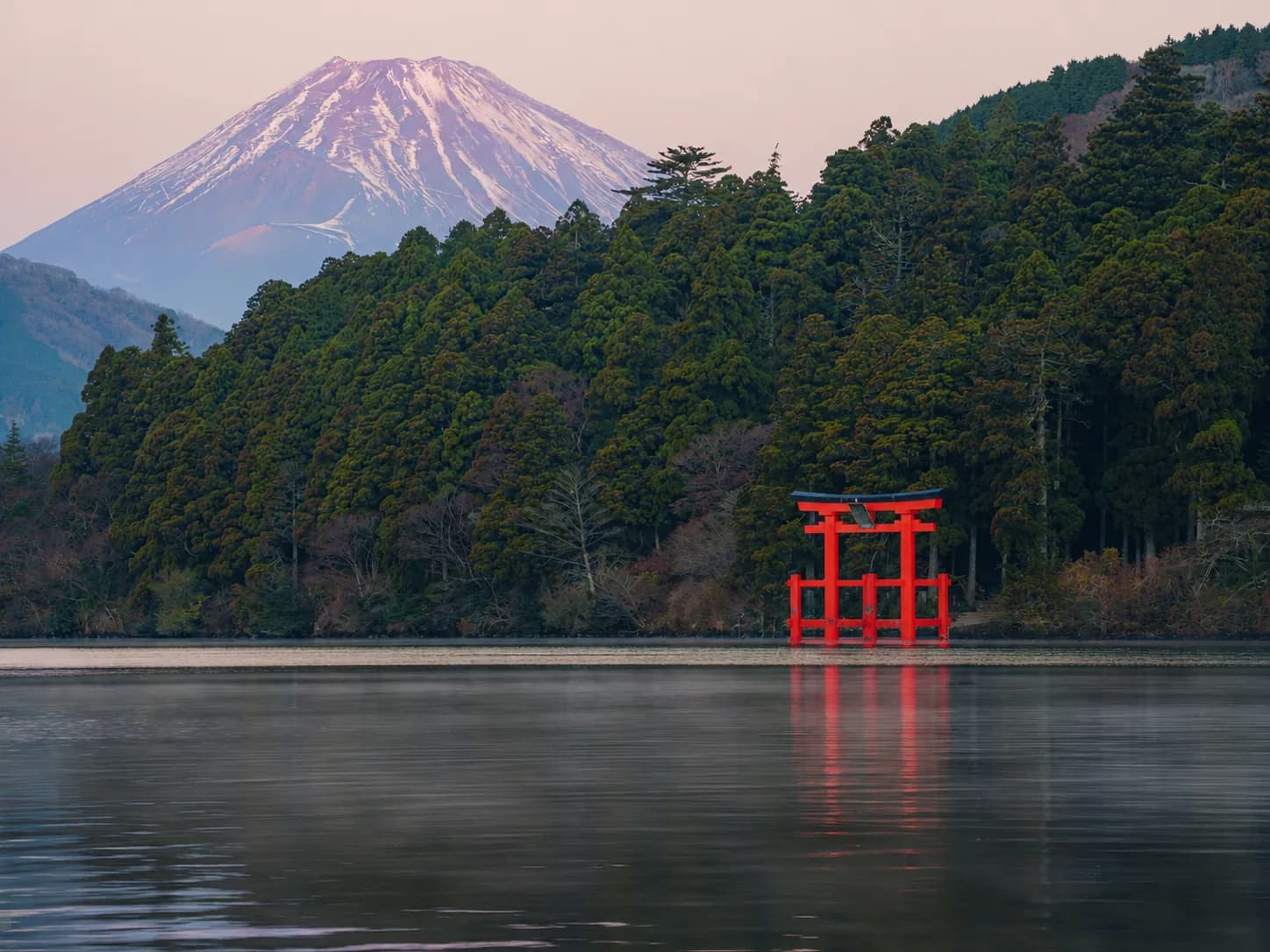
Hakone-Yumoto is around an hour and a half from Shinjuku on the Romancecar and is the gateway to Tokyo’s hot spring escape: a volcanic valley full of onsen and ryokan, with Mount Fuji rising over Lake Ashi on the days the sky plays along.
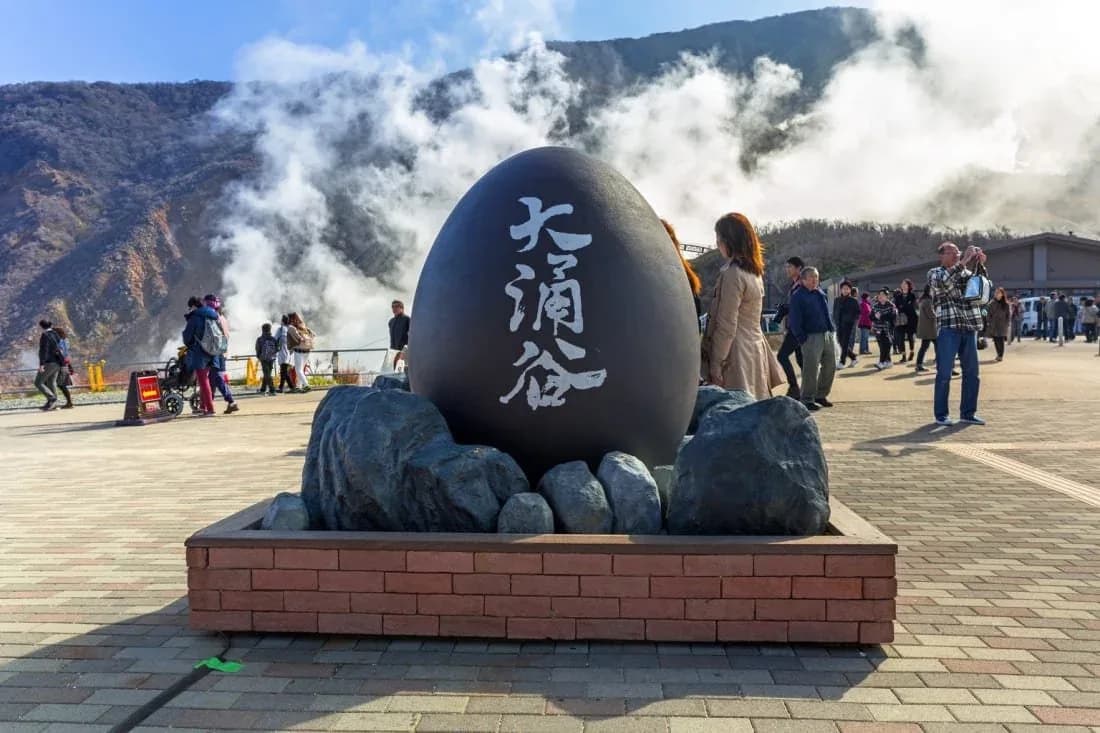
The classic visit is a circular route: the little Hakone Tozan mountain train, a funicular and a cable car that passes over the sulphur fumaroles of Owakudani (where they sell the black eggs cooked in the volcanic steam) before dropping down to Lake Ashi.
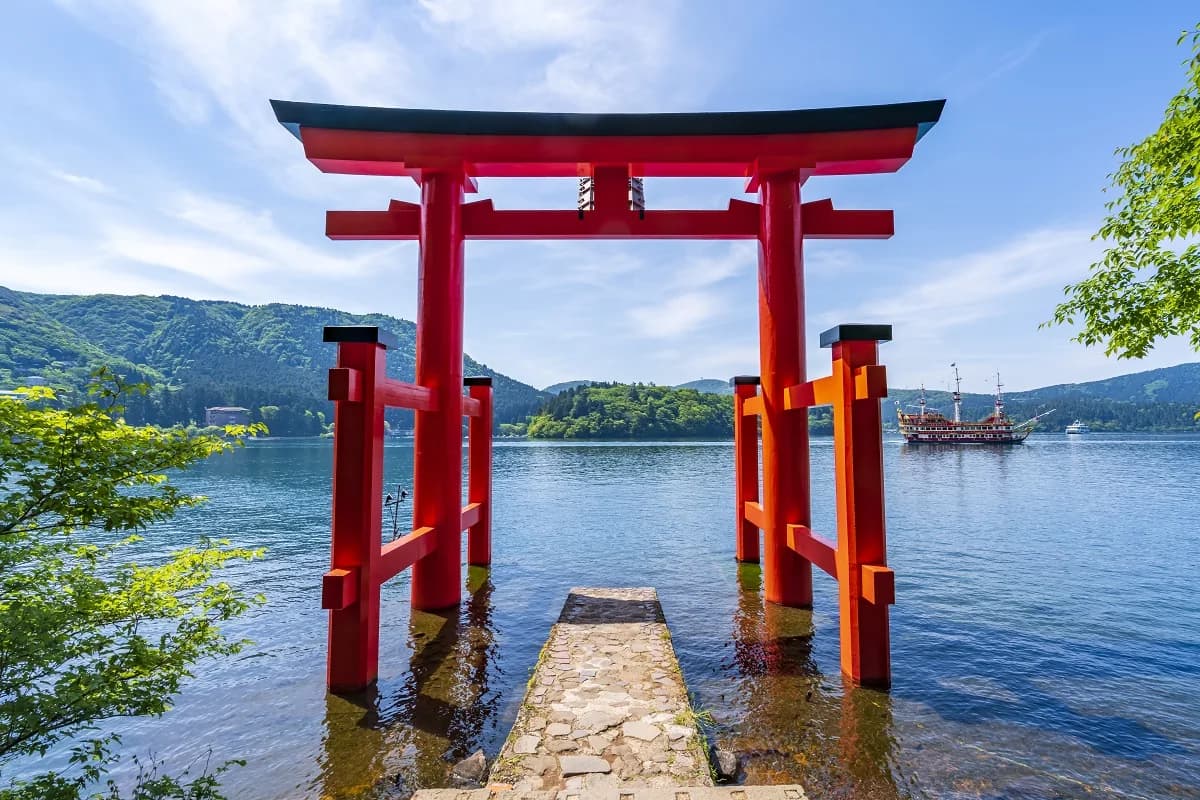
The best thing here is the Hakone shrine (Hakone Jinja), hidden among enormous cedars, with its red torii planted in the water and a stairway that rises out of the lake itself. The «pirate» boats that cross it, on the other hand, are a papier-mâché attraction aimed at tourists: I would skip them.
The Hakone Freepass, an Odakyu pass valid for two or three days, covers a round trip from Shinjuku on regular Odakyu services and the main transport around the circuit. The Romancecar supplement is paid separately, and it is worth checking service updates before setting off. Hakone can be visited in a day, but it benefits enormously from a night in a ryokan: a seasonal dinner, a hot-spring bath with a view and a quiet breakfast before heading back to Tokyo.
We do this area with you
If you want to include Hakone in a tailor-made trip, we can design the route around your time and your priorities. It is organised to fit you, with someone who lives in the area.
And if you would rather go anywhere without a worry, alongside someone who lives here explaining every detail and showing you the corners only locals know, at Japón a Fondo we run private tours around all the areas mentioned in this article, and a few more besides.
Tips for getting around Tokyo
Getting around Tokyo
- Yamanote or subwayThe Yamanote line is “Tokyo’s loop” and connects a good part of this article; the rest uses the subway. The subway is usually faster for crossing the centre.
- Station and exitIn Shinjuku or Shibuya, knowing the station is not enough. Note the exit: Shinjuku has more than two hundred and getting it wrong can cost you a fair amount of time.
- TransfersAllow 5–10 minutes per transfer inside the same big station. They are often connections with long corridors.
- Rush hoursFrom 7:30 to 9:00 and from 18:00 to 19:30. Take care using public transport at these times (especially with suitcases).
- WalkingBetween 12,000 and 20,000 steps a day on days 1 and 2. Bring comfortable shoes.
- Rainy daysThe contemporary day is almost all indoors, and so is the classic centre. Save days 1 and 2 for the good weather
- Choose an IC card (Suica, PASMO, etc.) rather than a pass: These rechargeable cards work on most trains, subways and buses, as well as in many shops and vending machines. Passes such as the Tokyo Metro 24-hour ticket can be worthwhile on specific routes, but their limited coverage makes them less convenient for most visitors.
- Staying near a Yamanote Line station is handy: If your hotel is close to a station on the loop, you will save a lot of transfer time during your trip.
- Note the specific exit, not just the station: Many stations have dozens of exits —Shinjuku, for example, has more than two hundred— and taking the wrong one can add 20 minutes to your walk.
- Taxis are a little expensive, but plentiful and reliable: They are a comfortable option when you are unsure how to get somewhere, have had enough walking or have missed the last train.
- Left luggage and lockers: Many major stations have lockers where you can leave your belongings while exploring, but the most convenient ones fill up early. Do not assume there will always be one available.
- JR Pass and IC card: In Tokyo, the JR Pass covers the Yamanote Line and other JR services, but not Tokyo Metro or Toei lines. It is therefore still worth carrying a Suica or PASMO, which works on almost all local transport, can be topped up at machines or on your phone, and can also be used in many shops.
Common questions
What to see in Tokyo in 2-3 days without rushing?
It depends on what you enjoy, but for the essentials, spend the first day on the traditional route (Asakusa, Ueno, Akihabara and Ginza), the second on the modern route (Meiji, Harajuku, Shibuya and Shinjuku), and the third on the contemporary route (Azabudai, Tokyo Tower, Roppongi and Takanawa). For a more relaxed pace, swap the third route for Shinjuku Gyoen, one of the two teamLab museums or Odaiba. You can also create your own itinerary and explore it with a guide from our team through one of our tailor-made tours.
What are the 10 things to see in Tokyo if I am really short on time?
It is a common question, although we would not recommend treating Tokyo —or anywhere in Japan— as a checklist. If we had to choose ten sights above all others, they would be Asakusa with Senso-ji and Nakamise Street, Meiji Jingu, Takeshita Street, Shibuya and its crossing, Shinjuku at night, Akihabara, Ueno Park, Tokyo Skytree, Ginza and Tokyo Tower. We recommend at least three days to see them properly, although Tokyo deserves much more.
Is it better to spend more time in Tokyo or Kyoto?
It depends on what you are looking for. Tokyo is the great metropolis, with a wider variety of neighbourhoods and things to do. Kyoto, on the other hand, brings together temples, gardens and Japan at its most traditional. For a first two-week trip, we recommend four or five days in Tokyo and five or six in Kyoto, including day trips from both. The two cities are extraordinary in completely different ways.
How much should I budget per day in Tokyo?
Excluding accommodation and flights, budget around 6,000 to 9,000 yen per person for a typical day in this guide, including mid-range meals, and a little more on days with several paid attractions. Urban transport may cost around 800 to 1,200 yen per person per day; a snack from a konbini costs less than 600 yen; a meal at a neighbourhood restaurant costs around 1,000 to 2,000 yen; and a relaxed dinner around 2,000 to 3,500 yen. There are, of course, much more expensive options.
Admission prices also vary considerably: some places, such as the Imperial Palace East Gardens, are free, while many paid attractions cost between 500 and 1,000 yen.
Is a subway pass worth buying, or is a Suica card better?
For almost everyone, a Suica or PASMO card is the more convenient option. Both work on most trains, subways and buses, and can also be used in konbini, some shops and many vending machines. The Tokyo Metro 24-hour ticket costs 700 yen but only covers that network, not Toei or JR lines. It usually becomes worthwhile from around four Metro journeys in one day. A JR Pass is not cost-effective for getting around Tokyo alone; it is designed mainly for longer intercity journeys by shinkansen.
Want us to guide you around Tokyo?
We’ll show you around. We live in Japan and run private tours exclusively for your group.
 Article written by
Miguel
Founder of Japón a Fondo and Japonés a Fondo. A native of Extremadura, Spain, living in Tokyo for almost a decade. A professional translator for years, now a guide at Japón a Fondo and a Japanese teacher at Japonés a Fondo. Walking curious minds through Japan from the inside, through the language and by showing Japan as a local.
See full profile →